Garlic IPM Newsletter

May 7, 2026 - Week 2

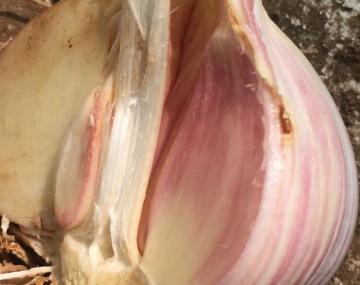
As you scout your garlic, you may notice areas where plants haven't emerged or where young foliage is distorted. Unfortunately, there are several possible causes for this erratic emergence and growth. That is because the growing point of garlic is its basal plate, where the roots meet the fleshy clove. When the growing point is damaged, stunted and/or distorted growth can result. This is why the symptoms of so many soilborne pathogens and root-feeding organisms are indistinguishable in garlic, and why looking more closely at the clove and basal plate is necessary for determining the cause. Here are a few possible culprits:

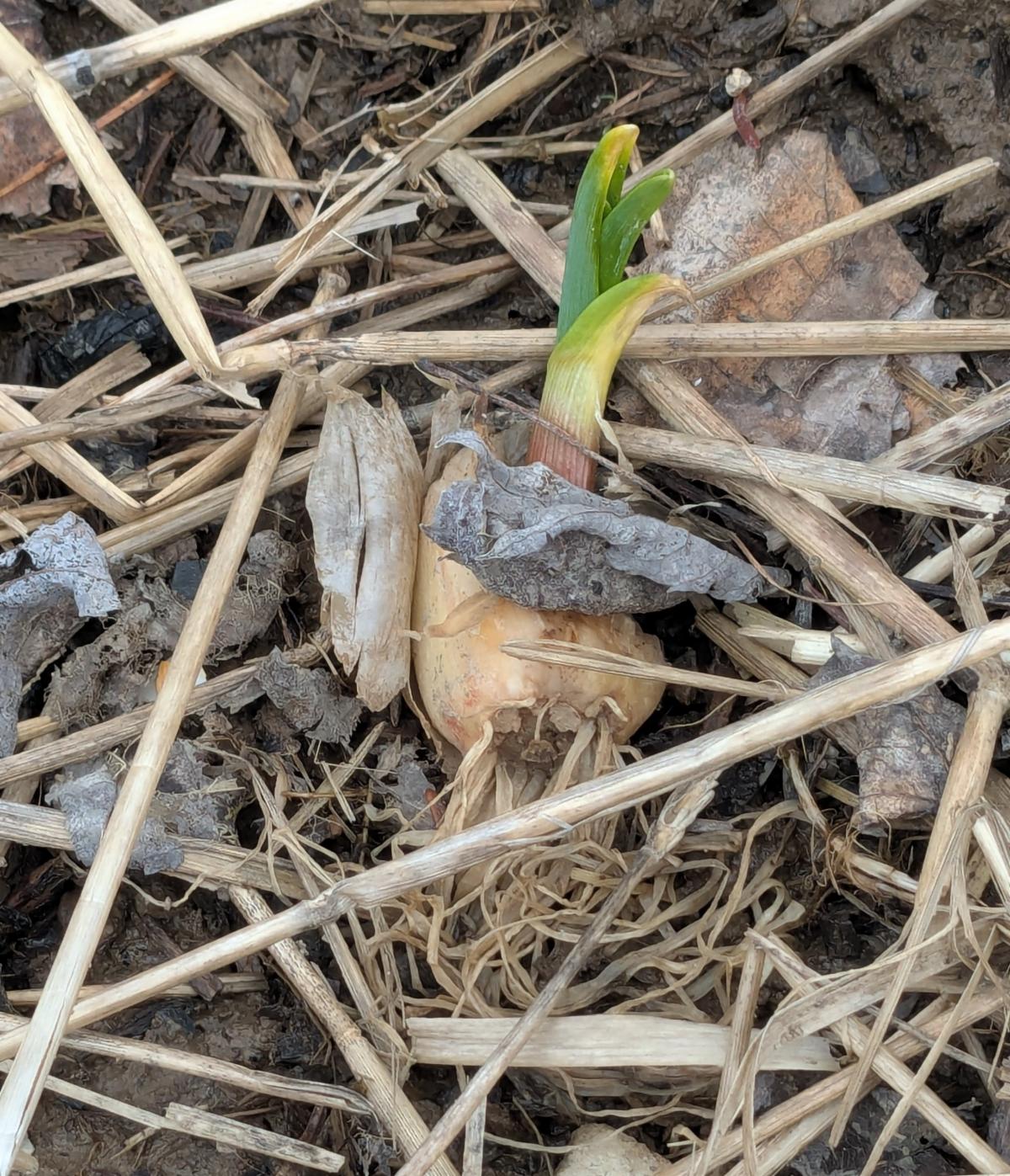
Garlic clove heaved to the soil surface by freezing and missing some roots. Photo by Peyton Ginakes, UMaine Extension.

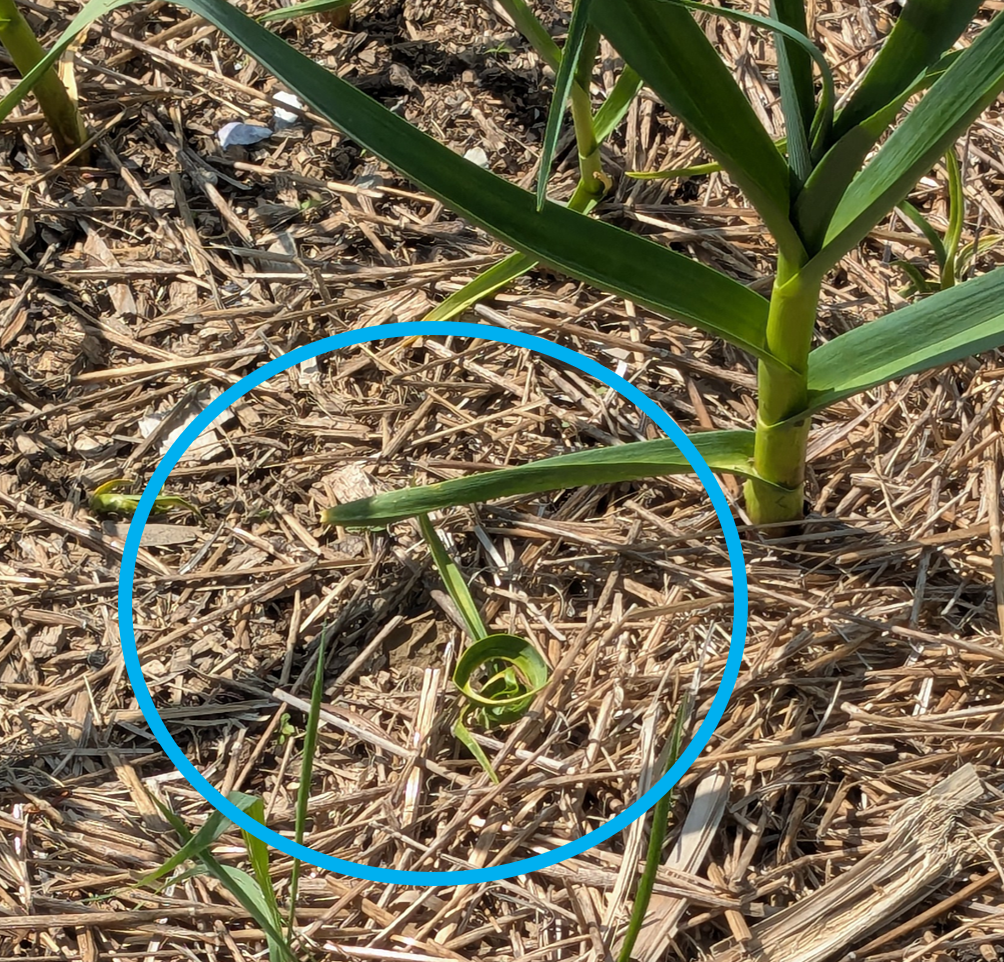
Stunted garlic plant with curled leaves infected by Fusarium.

Photo by Peyton Ginakes, UMaine Extension.

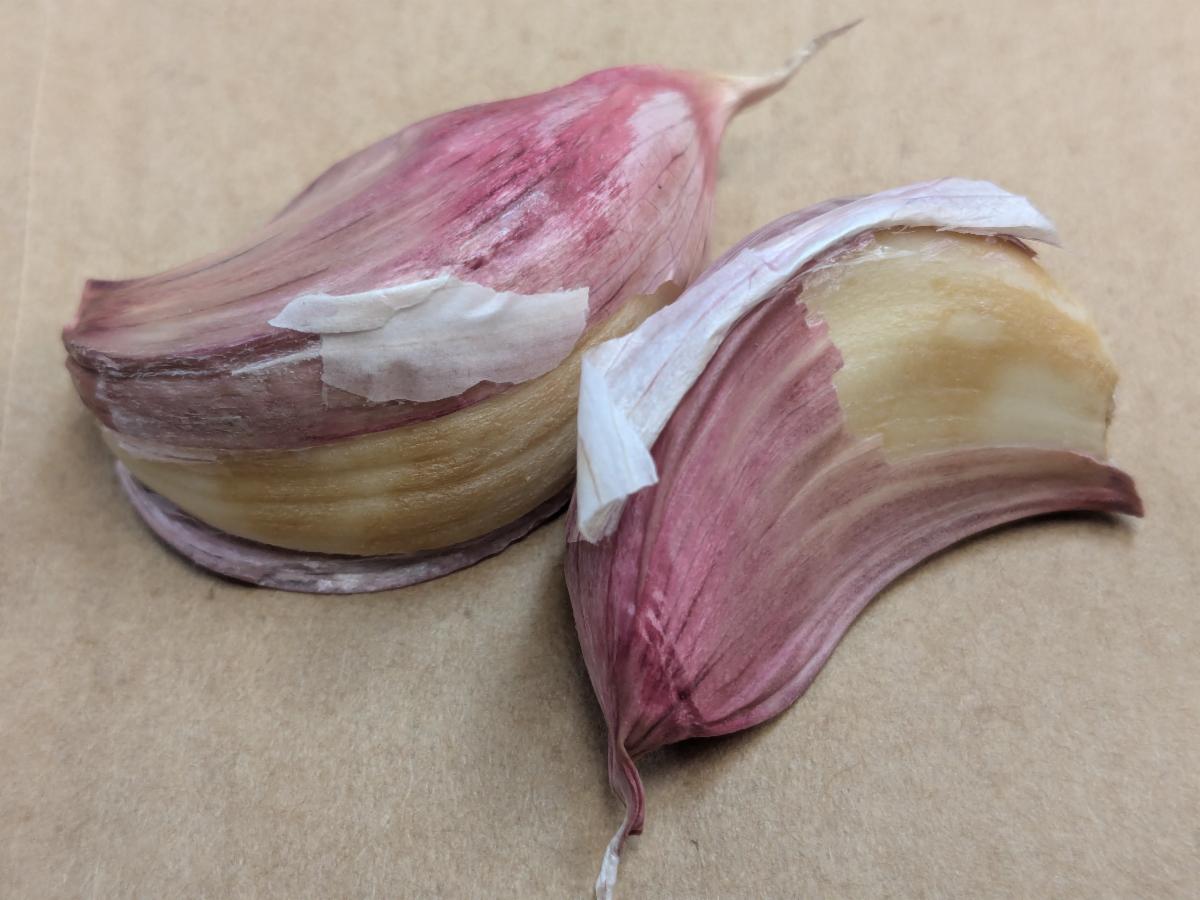
Dusty brown cloves indicative of dry bulb mites.

Photo by Peyton Ginakes, UMaine Extension.

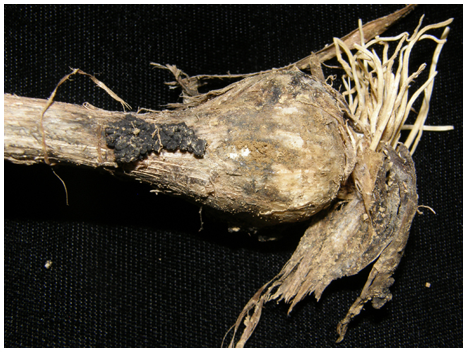
Hard black Botrytis porri sclerotia on garlic neck.

Photo by Steven B. Johnson, UMaine Extension.


  • Frost heaves: Mulching over winter insulates cloves against freeze-thaw cycles in the soil. When mulch isn't thick enough, cloves can get heaved to the soil surface, often tearing the roots from the basal plate and sometimes resulting in poor growth or death.
  • Mites: Two types of mites that feed on garlic cloves/bulbs, including the basal plate, commonly persist in soil and on seed cloves. The feeding of Rhizoglyphus spp. results in raised brown bumps on cloves, while dry bulb mites, Aceria spp., cause sunken brown circles from feeding and give cloves a frosted, desiccated appearance.
  • Onion or seedcorn maggot: Larvae of these flies feed on root systems, typically resulting in young plants that wilt and then die - but distorted growth can occur with later generations that feed on established plants as well. These insects are especially problematic in high organic matter soils.
  • Fusarium basal rot: Fusarium spp. are a relatively common fungal pathogen of garlic, spreading on seed cloves, in soil, on people and equipment, and through soil water. Infections tend to occur in wet conditions, causing distorted growth, stunting, yellowing, wilt, or death.
  • Blue mold: Usually considered a storage disease, the distinctive blue to blue-gray mycelium of Penicillium spp. fungi can sometimes go unnoticed when cracking bulbs for planting, spread among seed stock, and then cause poor emergence.
  • Bloat nematode: These nematodes feed on root systems and garlic cloves themselves, resulting in reduced or absent root and puffy, bloated bulbs, respectively.
  • Bulb rots: Both white rot (Sclerotinia cepivorum) and botrytis neck rot (Botrytis porri) are serious fungal pathogens of alliums that can persist in soils for a very long time. Although neither specifically infect the growing point, they can result in similarly patchy stands, and their identification is crucial for controlling spread.

These issues vary in their severity and persistence, and plants may grow out of some of them if conditions do not favor continued pathogen development, pesticides are applied, etc. In many cases, the best way to avoid these problems is to avoid introducing them. Buy seed from a reputable source (ideally one with clean seed garlic test results) and be discerning when popping cloves for planting. Submit unhealthy clove or plant samples to the UMaine Plant Disease Diagnostic Lab to identify the cause and management strategies.

Allium Leafminer

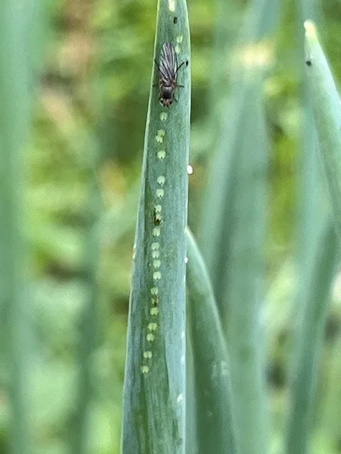
As the weather warms, insect pests are becoming active. One such pest to keep an eye out for is allium leafminer, which emerges in early spring, at 350 GDD1°C. While this pest has not been detected in Maine, it has been found in much of the rest of New England.


When females emerge in spring, they begin laying eggs on the leaves of allium plants and leave behind distinctive ovipositioning marks. This is the first and most obvious sign of ALM to scout for. While these marks themselves don't do much damage to garlic, the larvae that hatch from the eggs can then mine down the leaves and into the base of the plant where they will pupate. The mining damage and pupae can render bulbs unmarketable, in addition to spreading the pest.

Ovipositioning marks on onion made by allium leafminer.

Photo by Tim Elkner, Penn State Extension.

Allium leafminer pupae on garlic bulb.

Photo by Teresa Rusinek, Cornell Univ.

Again, ALM is not known to be present in Maine. But, when 350 GDD1°C accrue in your area, keep an extra eye out for these telltale marks and report any possible signs of the pest to Peyton Ginakes. Durham and Rochester, NH have surpassed this threshold, Augusta is forecasted to on May 11, and Lewiston and Monmouth are likely to surpass it later next week. To use the NEWA Degree Day Calculator for this purpose, choose the weather station nearest you, select a start date of Jan 1, and set the base temperature to 1°C.

Peyton Ginakes, Fruit & Vegetable Researcher

University of Maine Cooperative Extension at Highmoor Farm


52 US-202 (PO Box 179), Monmouth, ME 04259

peyton.ginakes@maine.edu | (207) 933-2100


Email or call to subscribe, unsubscribe, or change your subscription preferences.

DACF_Logo_300dpi_Black_Text_360x image

This project is funded by a Specialty Crop Block Grant through the Maine Department of Agriculture, Conservation, and Forestry. Funding for the Maine 2024 Specialty Crop Block Grant Program was made possible by a grant/cooperative agreement from the USDA Agricultural Marketing Service. Its contents are solely the responsibility of the authors and do not necessarily represent the official views of the USDA.


Where brand names or company names are used, it is for the reader's information. No endorsement is implied nor is any discrimination intended against other products with similar ingredients. Always consult product labels for rates, application instructions and safety precautions. Users of these products assume all associated risks.


University of Maine Cooperative Extension is an equal opportunity institution and provider committed to nondiscrimination. For more information, visit extension.umaine.edu/nondiscrimination.

University of Maine Cooperative Extension | 15 Estabrooke Drive | Orono, ME 04469-5741 US