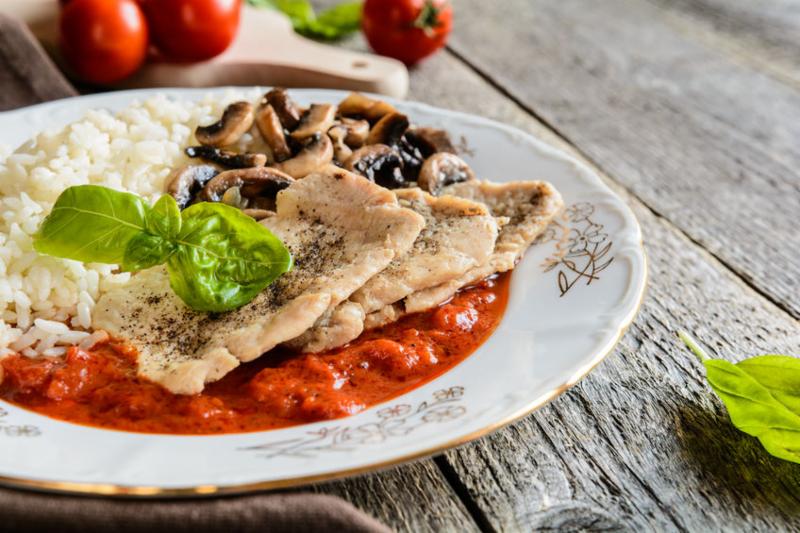
It is often said that we eat with our eyes before our mouths. A garnish adds a little embellishment to any plate of food, making it more appealing to the eye and, research shows, more delicious when eaten.
Whether or not you choose to eat a garnish is most often a matter of personal preference. But as with all matters of etiquette, your choice may also be based on the situation at hand.
Cocktail Garnishes
A garnish perched on the side of a glass or resting on the top of your drink will always make cocktail hour more appealing.
But aside from the eye-candy aspect, a cocktail garnish is typically used as a flavor enhancer. The sweetness from a maraschino cherry, the olive and onion in a martini, the citrus-sweet blend of chopped fruit in sangria, the mint in a mojito - they all serve a flavor purpose.
The twist of citrus peel rubbed on the rim of a glass adds oil that enhances certain cocktail blends as well.
Which garnishes can you eat and which should be left in your glass?
Edible:
Most fruits and vegetables served on or in a cocktail are fine to eat. But consider the situation and environment you are in before digging out that maraschino cherry from between the ice cubes or biting into the celery stalk from your Bloody Mary.
The most appropriate way to eat a cocktail garnish is when you can take it into your mouth as you drink, or when you can bite it off a toothpick or cocktail skewer.
However, it's better to wait until most of your drink is consumed before snacking on these flavor boosters.
Inedible:
- Cocktail umbrellas - they're plastic!
- Herbs - great flavor enhancers, but not so tasty on their own or after they've been soaking in your cocktail.
- Citrus peel - far too bitter to be eaten on its own.
- Uncovered or unrefrigerated garnishes - if you're visiting an establishment that keeps their garnishes in open containers at the end of the bar, you might want to reconsider snacking on them. You never know who's dirty fingers have been in them or what type of bacteria may be growing there!
Edible Food Garnishes
The vast majority of food garnishes are edible. Whether they're appetizing may be the more pertinent question.
Herbs and greens like parsley, chives, watercress, and arugula are used to add appeal to many plates. They also happen to be very nutritious! In addition to their vitamin content, parsley and mint help freshen your breath after a meal.
Vegetables carved into roses, sliced and swirled, or julienned and laid into fancy patterns on the plate are also tasty and nutritious.
You may eat any edible garnish with your knife and fork. During a casual meal, a sprig of parsley or mint can be eaten with your fingers.
Sauce or gravy garnishes can be eaten by spearing a food item, then dipping it into the sauce before taking a bite.
Be cautious of hot peppers, wasabi, or other spicy garnishes. Once you take a bite of these, you could be sorry you did.
Inedible Garnishes
Anything that is not food, should not be eaten. For example, baran, the plastic grass that garnishes sushi, is not meant to be eaten.
In spring and summer, you may see dishes adorned with fresh flowers. If you have the slightest question of their pesticide or poison content, please do not eat them!
Which brings me to holiday time. Holly is a traditional winter holiday decoration, but its leaves are thorny and the berries are poisonous. Use it as a centerpiece or elsewhere in your tablescape, but avoid placing it on food.
What are your favorite garnishes? Are you one to eat a garnish, or push it aside?