Week InReview

Friday | Sep 6, 2024


Trouble reading this briefing? View as webpage.

All eyes on much-awaited US jobs report.

Jobs wait | The wait is almost over for US jobs data that will be key to the Federal Reserve’s decision to cut interest rates. Ahead of Friday’s release, the S&P 500 Index and two-year Treasury yields — among the most sensitive to policy expectations — fell in tandem for a third straight day. The nonfarm payrolls figures are expected to show that hiring and wage growth picked up in August. They will come after a private report from ADP on Thursday showed that the US added the fewest jobs since 2021. While the private figures have been a poor prognosticator of payrolls in recent years, the correlation between the two data sets has been improving.


Bold bets | The payrolls data will help determine whether the Fed can lower borrowing costs by a quarter-point this month — or deliver a larger, half-point reduction, as the likes of Citigroup and JPMorgan predict. Ahead of the report, traders are fully pricing a smaller cut but continue to see some chance of a bigger move. If market-implied expectations shift decisively toward one outcome or the other, wagers on a 25-basis-point move will “make a little or lose a lot — and the opposite if you’re betting on 50 basis points,” according to Matthew Raskin, US head of rates research at Deutsche Bank. Looking ahead to the end of next year, billionaire John Paulson said his “best guesstimate” is for borrowing costs to be around “3%, perhaps 2.5%.”


OPEC+ pause | OPEC+ postponed its oil supply hike by two months, but the move wasn’t enough to roll back steep losses in crude prices. Key coalition members won’t now increase production by 180,000 barrels a day in October and November, according to a statement on OPEC’s website. Yet their longer-term plan to revive 2.2 million barrels a day of idle supplies gradually over the course of a year remained in place, with the completion date pushed back two months to December 2025. OPEC’s rethink came after downbeat economic data from China and the US — the biggest consumers — sent crude prices below $73 a barrel earlier this week, reaching the lowest since late 2023.


let's recap...

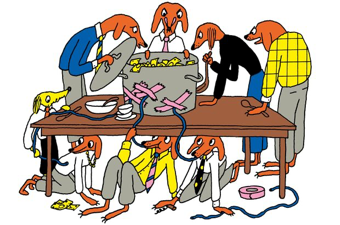
Debt financing turns cutthroat. Illustration: Anna Haifisch | Bloomberg

US market selloff stokes recession fears, trounces rate cut cheer

Mounting unease over the US economic outlook and a seasonally weak month for stocks have created another perfect storm of global market volatility, leaving investors scrambling for protection and fearing another round of currency chaos. Following a rapid recovery for risky assets such as stocks and high-yield bonds from a chaotic early August selloff, traders have lost their short-lived optimism that US interest rate cuts would support growth. (Reuters - free registration | Sep 5)


US yield curve disinverts as soft labor data fuels Fed cut bets

A key segment of the US Treasury yield curve briefly turned positive as weaker-than-anticipated labor-market data bolstered bets on steep interest-rate cuts by the Federal Reserve. Treasuries jumped on Wednesday — led by shorter-maturity notes that are more sensitive to the Fed’s monetary policy — after US job openings fell in July to the lowest since the start of 2021 (Bloomberg Markets | Sep 4) see also Goldman's Rubner sees potential correction if jobs data is weak (Bloomberg Markets | Sep 4)


Debt financing turns cutthroat in war over fine print

At the foundation of credit markets is one very basic idea: If I lend you money and you can’t pay me back, I’ll seize your assets and pay myself. That bargain is written into debt terms known as covenants that have long been regarded as iron-clad. But two things have happened over the past decade: Covenants grew weaker, as investors frustrated by the low interest rates prevailing in most of the market competed more fiercely than ever to lend to riskier companies that paid more in interest. Companies facing credit squeezes came up with a bag of tricks to get around some covenants, often by pitting one set of creditors against another. (Bloomberg Law | Sep 3)


T+1 switch is proving tougher than anticipated

This year’s seemingly smooth transition to a faster settlement regime for US stocks turns out to have been far from plain sailing for many industry players, according to Citigroup Inc. From overhauling arcane funding processes to relocating traders across oceans, the late-May switch to the system known as T+1 proved more challenging than expected, the bank found in a survey of market participants. (Bloomberg via Yahoo! | Sep 4)


SEC: Ratings providers to pay more than $49 m over recordkeeping

Moody’s Investors Service and S&P Global Ratings are among six providers of debt ratings that agreed to pay total penalties of more than $49m to settle SEC claims over recordkeeping, the agency said in a statement.

  • Moody’s and S&P to each pay $20m; Fitch to pay $8m
  • HR Ratings de Mexico to pay $250,000, A.M. Best to pay $1m, Demotech to pay $100,000
  • There were “significant failures by the firms and their personnel to maintain and preserve electronic communications,” the SEC said

(Bloomberg Markets | Sep 3)

SEC charges six credit rating agencies with significant recordkeeping failures

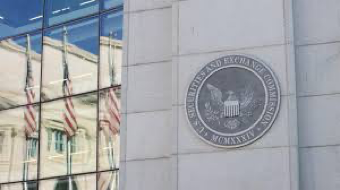
(Sep 3) — The Securities and Exchange Commission on Tuesday announced charges against six nationally recognized statistical rating organizations, or NRSROs, for significant failures by the firms and their personnel to maintain and preserve electronic communications. The firms admitted the facts set forth in their respective SEC orders; acknowledged that their conduct violated recordkeeping provisions of the federal securities laws; agreed to pay combined civil penalties of more than $49 million, as detailed below; and have begun implementing improvements to their compliance policies and procedures to address these violations.

  • Moody’s Investors Service, Inc. agreed to pay a $20 million civil penalty;
  • S&P Global Ratings agreed to pay a $20 million civil penalty;
  • Fitch Ratings, Inc. agreed to pay an $8 million civil penalty;
  • HR Ratings de México, S.A. de C.V. agreed to pay a $250,000 civil penalty;
  • A.M. Best Rating Services, Inc. agreed to pay a $1 million civil penalty; and
  • Demotech, Inc. agreed to pay a $100,000 civil penalty.

Each of the credit rating agencies, with the exception of A.M. Best and Demotech, is also required to retain a compliance consultant. A.M. Best and Demotech engaged in significant efforts to comply with the recordkeeping requirements relatively early as registered credit rating agencies and otherwise cooperated with the SEC’s investigations, and, as a result, they will not be required to retain a compliance consultant under the terms of their settlements.


a little bit of cyber

Rear Admiral Grace M. Hopper salutes crew members as she comes aboard the US Constitution in Boston's Charlestown section for her retirement ceremony 8/14. Hopper, the US Navy's oldest commissioned officer on active duty, retired after serving over 40 years in a Navy uniform. The NSA recently released a lecture she gave on base in 1982. Photo: Getty Images

Unearthed video footage shows a computer science legend predicting pressing cyber issues

Both the public and private sectors need to make vast improvements to their cybersecurity posture. All of those sentiments ring true in 2024. Yet they were all expressed 42 years ago by one of the country’s foremost computer science experts — Rear Admiral Grace Hopper, a computer science legend — in a speech at the National Security Agency. That speech is now viewable on YouTube, thanks to a fulfilled records request from the nonprofit MuckRock Foundation and some technical work from the National Archives. 

— CyberScoop


US standalone cyber insurance market could reach $45bn in premiums by 2034

In a new report based on CyberCube’s cyber risk aggregation tool, Portfolio Manager, mid-range projections suggest that the US standalone cyber insurance market could reach $45 billion in premium by 2034, marking a five-fold increase from today. CyberCube’s report, “Projecting Cyber Insurance Growth: A 10-Year US Market Outlook”, noted that this rapid growth would be driven by the increasing digitization of the global economy and rising concerns about cyber risk.

— Reinsurance News


binge reading disorder

The vagus nerve sprawls from the brain through the body, innervating our organs and managing life support and emotion. Illustration: Sally Caulwell | Quanta Magazine

How our longest nerve orchestrates the mind-body connection

Like a highway system, the vagus nerve branches profusely from your brain through your organs to marshal bodily functions, including aspects of the mind such as mood, pleasure, and fear.

— Quanta Magazine


Want to decorate your home like a true jet-setter? Try this hack.

After years on the road for work as a magazine editor, Jeremy Murphy has some tried-and-true tricks. Journalist and media commentator Murphy, 49, co-founded the public relations firm 360bespoke. Before his move into marketing, he spent more than a decade globe-trotting in celebrities’ wake as the editor of Watch magazine. Now, Murphy has turned that experience into a book, Too Good to Fact Check: Flying the Skies with Stars, Scotch, and Scandal (Mostly Mine), a combination of memoir and dish-spilling.

— Bloomberg Pursuits


We tested WiFi on over 50 flights. It often stinks, but it's about to get better.

Airlines use a patchwork of connection technologies, and often they’re old. Real old. But new satellite technology is about to blow our tray tables off. Whether you’re a seasoned business traveler or just trying to stream some “Peppa Pig” for the kids, buckle up — there’s a significant internet upgrade coming to the skies.

— The Wall Street Journal

 
220 x 128 px