|
There’s a moment in most disputes when the language changes.
Not the facts… the tone. The texture, and…
… with it, the chances of a deal.
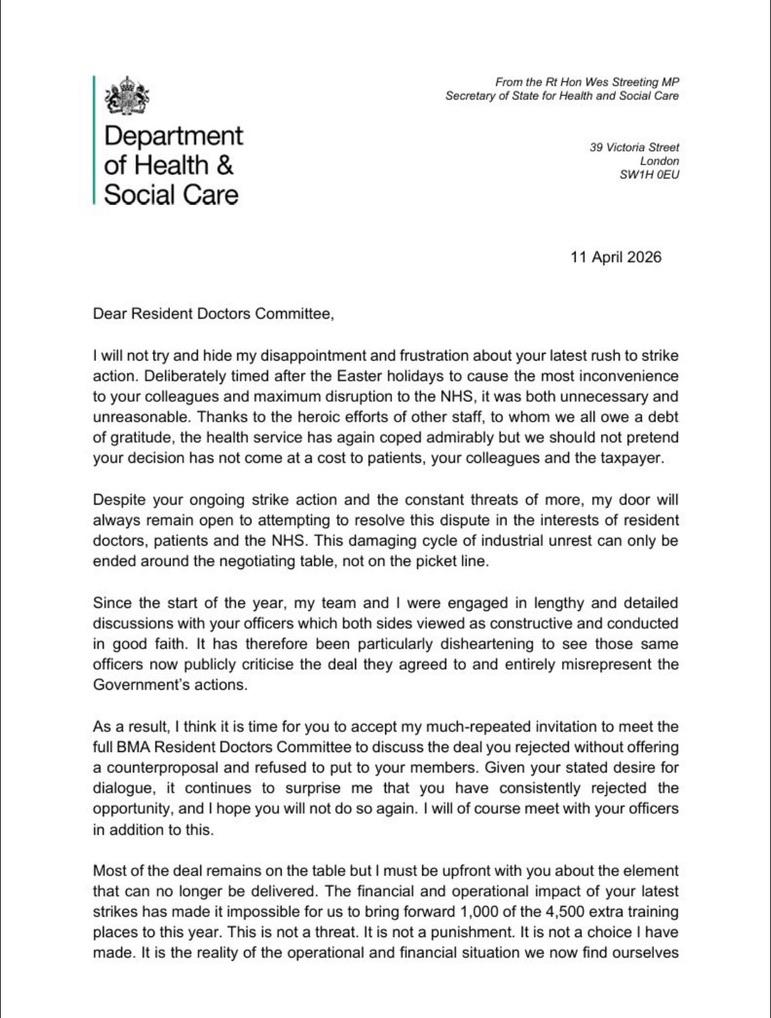
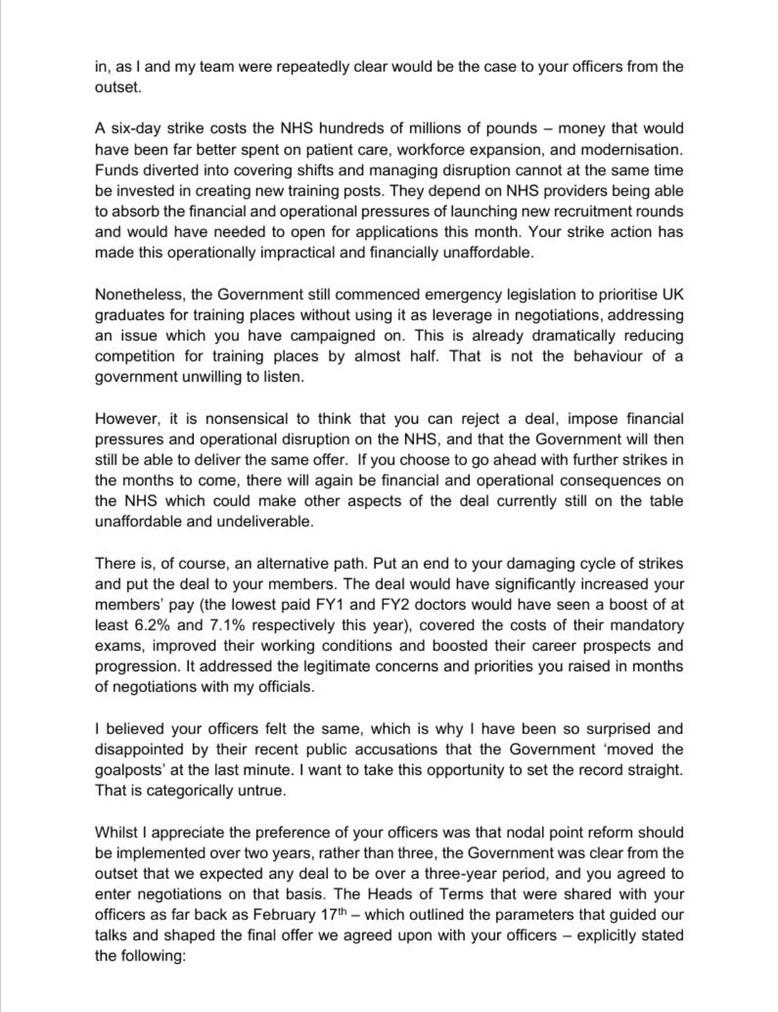
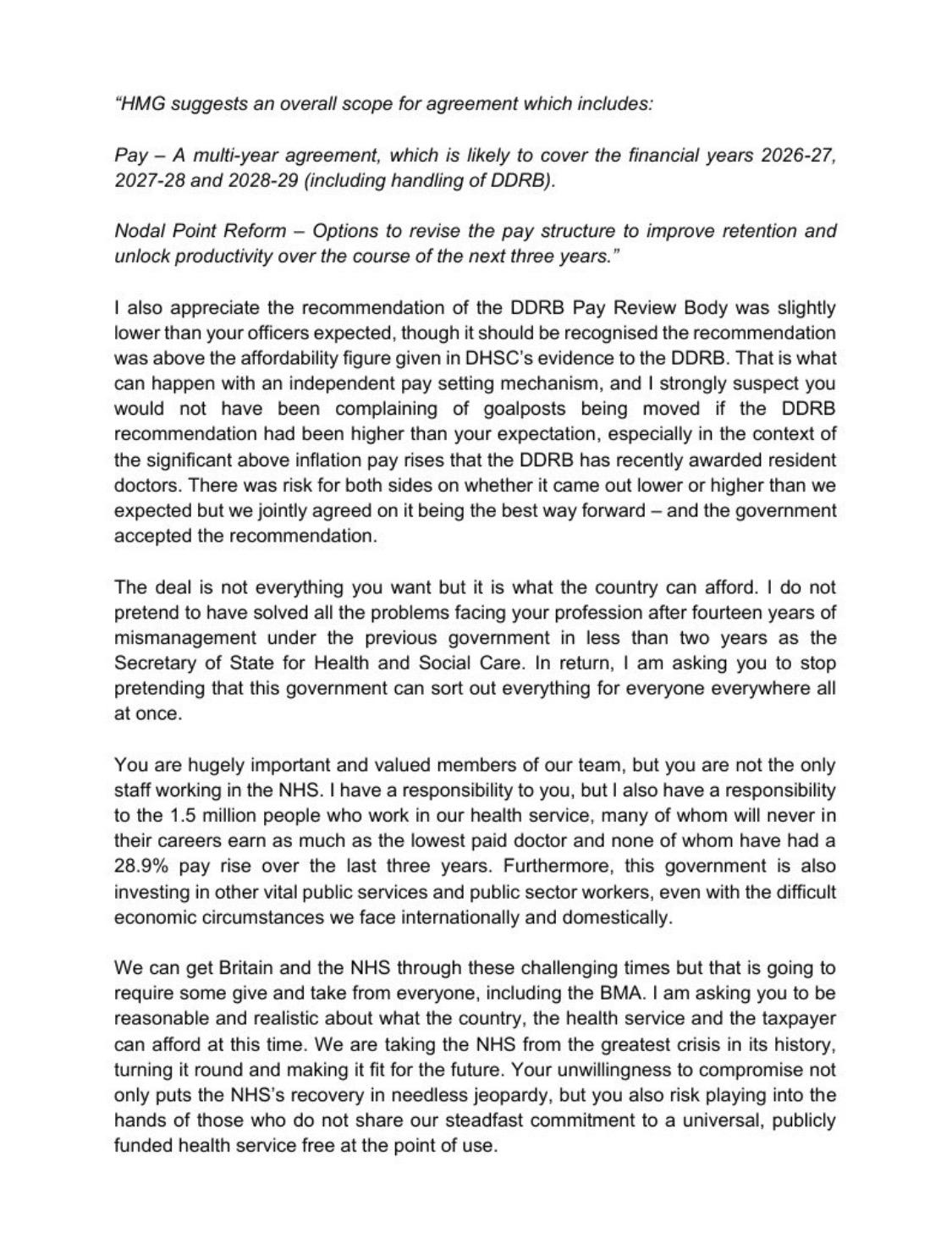
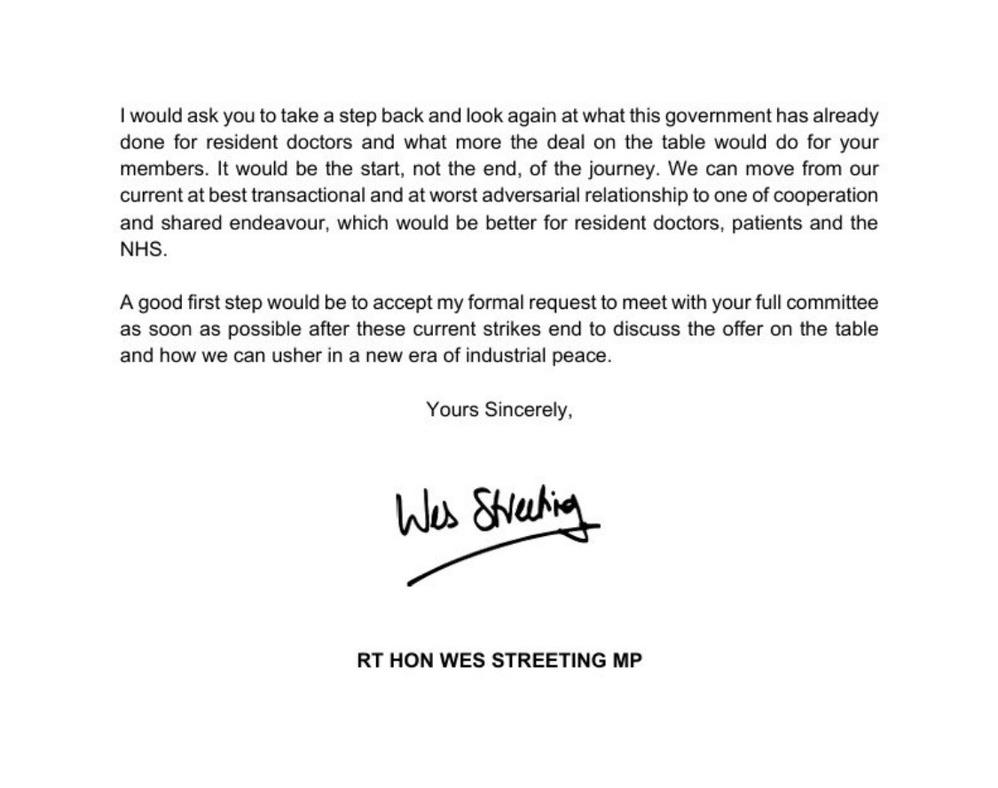
Our great leader has written (another) letter to resident doctors, creating one of those moments. (In full below)
On the surface it’s an invitation back to talks. In reality, it does something else…
... it hardens positions...
... shifts the argument from what is affordable to who is at fault. Once you cross that line, compromise becomes capitulation.
Look at the letter’s structure. The opening paragraphs set the mood;
- disappointment,
- frustration,
- accusation.
The strikes are ‘unnecessary and unreasonable'. The 'timing is deliberate'. The consequences laid squarely at the door of the profession.
That may play well politically but in practice it doesn't create any negotiating space.
The BMA has two options. Accept the characterisation or reject it. No union, least of all this one, is going to accept it.
So, they'll reject it…
… publicly. Forcefully. Then what? Positions harden. The middle ground narrows.
The real point of failure, however, sits deeper in the text. It’s not the rhetoric. It’s the time horizon for a settlement.
Two years. Three years. Perhaps five?
That’s the nub of the argument…
… strip everything else away and this is a disagreement about how long the system is prepared to take to repair pay-erosion and crucially, how long the government is prepared to commit resources.
Which brings us to the unspoken truth…
- A two-year deal is, in effect, a bridge to the next election.
- A three-year deal straddles it.
- A five-year deal outlives it.
Each carries a different political risk and a different financial exposure.
That’s why this matters. Not because of the mechanics of pay progression, but because it defines who owns-the-problem and for how long, and…
…here’s where affordability comes in.
The letter gestures towards it, but never quite lands it. Instead, affordability is implied through consequence… strikes cost money, money can’t be spent twice... therefore parts of the deal fall-away.
It’s important to realise; affordability is not a tactic. It’s the constraint.
Say it plainly and the argument changes.
Say this is what the country can afford and within that, what do we prioritise?
Don’t say it; and the dispute becomes moral theatre… good faith versus bad, reasonableness versus militancy.
That’s a much harder place to reach agreement.
Streeting has reversed himself into a strategic choice…
… continue down the current path; pressure, rhetoric, incremental consequences, taking components off the table and hope fatigue sets in…
… BMA unity fractures?
Not impossible. A Resi-Doc who has taken part in most of the strikes is likely to have lost somewhere in the region of £7,000 to £10,000 in income, depending on grade and rota.
Or…
... public opinion shifts… which it is, but the RDs don’t care…
Or…
… he can do something more radical; acknowledge the limit, reset the terms, and invite the profession into the trade-offs.
Paradoxically…
… the first looks strong but is brittle…
… the second looks risky but is durable.
There is a third option. Perhaps the inevitable option?
Abandon the search for settlement.
Gear-up the NHS for a long haul. Expand alternative roles, physician associates and others.
Reduce dependency on resident doctors.
Physician associates, stand at around 3,500. The plan is for 10,000 PAs and 2,000 anaesthesia associates in the next 5 years.
Small numbers now, but making a very big point about the future direction.
Let the internal dynamics of the profession play out, and... wait.
The strategy of attrition has a double appeal. HMG has the perfect excuse for not reducing waiting lists, creating closer ties with the private sector and the greater use of AI decision support at the patient-facing edge of care...
but…
… it comes at a cost. A damaged relationship with a generation of doctors, a slower service, and a system that adapts around absence rather than resolving it.
Once you start down that road, redefining the future of the NHS, it is hard to come back. Trust, once gone, is not easily to retrieve.
This is no longer just a pay dispute. It is a question about how we handle constraint in a system that cannot do everything. The impact of technology and the shape of the workforce to come.
Never, in the history of the NHS was there so much to win and so much to lose.
The trick in life is to be in the right place at the right time. Alas, for us living through all this, Streeting is the wrong man for our times...
... not experienced enough. Too easily seduced by the news-cycle, to easily provoked into ill-judgements.
Watch what happens next. It could shape the NHS for a generation.
|