|
s
As I write this, U.S. and Israeli bombs have fallen on Teheran while Iranian missiles were falling on Tel Aviv and U.S. bases; U.S. Marines are patrolling the streets of Los Angeles; Democratic politicians and office holders have been murdered or imprisoned; undocumented immigrants who have worked, paid taxes, and helped their communities are being grabbed on the street by masked ICE agents and sent overseas in actions supported by the Supreme Court.
Is this the country I grew up in? Unable to do much about any of this beyond protesting last week in Woodstock, VT, I turned to my reading this month to escape reality. Science fiction, detective novels, sports, meditation, travel, poetry, gardening---they all distracted me from the depressing news, immersing me in distant and different worlds. I avoided dystopian novels because today is as dystopic as I could imagine. (Octavia Butler's superb dystopian novel "Parable of the Sower" written 32 years ago describes a world that is looking increasingly like ours with lawlessness, mayhem, chaos, violence, and a government that has failed. A particularly unsettling chapter is headed, "August 17, 2025". Much too close for comfort!)
Here are the books I read in June to hold today's headlines at bay: (As an aside, when a long time loyal reader of these updates emailed that he hadn't realized that the titles were linked to longer, more detailed reviews, I learned that it might not be clear to subscribers that you can read my more extensive review of each book by clicking on it.)
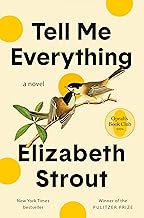
- Tell Me Everything, Elizabeth Strout
- Maigret's Dead Man, Georges Simenon
- Twist, Colum McCann
- The Confessor, Daniel Silva
- The Godwulf Manuscript, Robert B. Parker
- Nightshade, Michael Connelly
- Changing My Mind, Julian Barnes
- J'Aime Paris, Andre Kertesz
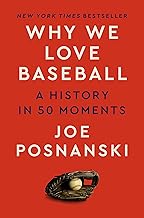
- Why We Love Baseball: A History in 50 Moments, Joe Posnanski
- Meditations for Mortals, Oliver Burkeman
- The Wild Braid: A Poet Reflects on a Century in the Garden, Stanley Kunitz
- The Three Body Problem, Cixin Liu translated by Ken Liu
The two novels I read this month were by favorite authors, Colum McCann and Elizabeth Strout. McCann's previous books "Transatlantic", "Let the Great World Spin", and "Apeirogon" were superb, and while "Twist" didn't quite measure up to those, it was a fine piece of writing. The title is a play on words with twist referring to the glass tubes carrying the internet's messages at the speed of light inside undersea cables as well as describing the mental breakdown of John Conway, the man responsible for fixing breaks in these critical cables. A modern day "Heart of Darkness", the plot, characters, and settings are all top notch, but the real beauty is in McCann's writing--lyrical and strikingly visual.
Elizabeth Strout has created a micro-universe in the Maine small towns of Crosby and Shirley Falls in her 2025 book, "Tell Me Everything". Drawing on the same cast of characters from her earlier books including Olive Kittridge, Lucy Barton, Bob Burgess and introducing a strong new supportive cast, she focuses on the stories of ordinary people (the "unremarkable") to delve into the deepest longings and losses that are inevitable in life whether in the big city or small town, whether in pre-COVID America or in today's chaotic headlines. Nothing fancy, but a fine addition to her work.
Reading four mysteries written at different times, in various styles, and set in locations from Paris to LA was another effective way for me to get out of the daily din. Simenon's "Maigret's Dead Man" was written in 1948, the 29th of his 75 Maigret novels. As with all of his books, one of the pleasures was reading it with my laptop at hand so I could use Google Maps to follow Maigret, the victim, and the bad guys all around Paris. As usual, Maigret dives deeply into the victim's character and inner life until the solution to the murder gradually takes form. In a wonderfully random 'connection', Julian Barnes' book "Changing my Mind" devotes several pages to praising Simenon. He notes that Simenon was outraged that he never received the Nobel Prize, and while I was smiling about the hubris of the Belgian writer of 400 novels, the next sentence informed me that Barnes had joined Faulkner, Gide, Colette, Spark, Mauriac, Eliot, Maugham, and John Le Carre who all agreed that Simenon should have received the Prize. Who knew? I've been suggesting Simenon for years in these updates, and if you haven't yet taken my advice, read one. You'll be hooked and with 75 books in this series, you'll never run out of reading material.
While the Simenon book was written well into his Maigret series, "The Godwulf Manuscript" was Robert B. Parker's first Spenser book, a series which eventually reached 40 novels and sadly, has been continued rather ineffectually by two authors after Robert B.'s death in 2010. The book shows Parker feeling his way with his new character and foreshadows the future greatness of the series in its wise-cracking dialogue and Spenser's "can't let injustice go" attitude. Boston Police detectives Quirk and Belson and the mob boss, Joe Broz appear as they will in later Spenser books, but there's no Hawk, Henry Cimoli, Susan Silverman, Paul Giomatti, or wonder-dog Pearl to enhance the story line. While a bit thin on plot, character, and outcome, it did take me down memory lane with its depiction of 1970's Boston and references to Helen Gurley Brown, Germaine Greer, and Lenny Bernstein. I loved all the Spenser books, and think you will, too, but don't start with this one.
Daniel Silva's "The Confessor" is another book that appeared early in what is now a long series of 25 novels featuring the world-class art restorer and Israeli intelligence operator and assassin, Gabriel Allon. This book has the novel feature of also featuring a Pope and a whole cast of Vatican characters, from a murderous Cardinal to a corrupt Italian chief of national security. Like all of Silva's books, it's a page turner, and if you can manage the tension, well worth the effort. I always look for a Silva book in the three Little Libraries in our Cambridge neighborhood and the one in Brownsville, and I'm seldom disappointed. Great beach read.
I would read anything that Michael Connelly writes including his grocery shopping list, and "Nightshade" once again proved the wisdom of that plan. After writing 38 novels about the LAPD police detective Harry Bosch, Connelly continues to refine the formula for keeping things fresh and moving. In this book, he introduces a totally new character, an LA Country Sheriff on Catalina Island named Stillwell who is tenacious, creative, intelligent, and ultimately successful in solving the two murders on the island. As when he introduced Bosch's half-brother, Mickey Haller aka the Lincoln Lawyer and Renee Ballard, Bosch's new sidekick in solving cold cases, Connelly differentiates himself from most mystery series writers by keeping the cast of characters fresh and new. I think we'll see Sheriff Stilwell and his girlfriend Tash in many upcoming books, and I look forward to meeting them again.
Andre Kurtesz's "J'Aime Paris", provided another form of escapism in this love letter to Paris in black and white photographs. The usual suspects are there---the Eiffel Tower, Sacre Coeur, Montmarte, the Champs Elysees---but most of the photos are of obscure cafes, bistros, empty streets, and the omnipresent Seine and its bridges. The photos are from the 1920's and '30's and recall a Paris that while largely modernized today, remains unchanged in many places. Kertesz who died in 1985 was a classic angst-ridden artist of the 20th C. Born in Hungary, he emigrated to Paris and later fled to New York to escape the Nazis. Though honored late in his life for his photography, he never felt settled or safe. His book, in contrast, provides an ideal place to get away to on a quiet evening---one can always dream of being in Paris.
Julian Barnes' book, referred to above, demonstrates a brilliant mind in a series of brief essays. Essays, the English translation of the French 'to try', are of interest to me because they expose the writer's mind at work, 'trying' to sort out his thoughts on paper, going this way and that instead of being committed to a pre-determined answer. And Barnes does just that, from his thoughts on the eponymous changing of his mind ("who's doing the changing since we are our mind?") to his deliciously slashing descriptions of British politics and his characterization of the his own BBR (Barnes Benign Republic). I've read his novels, but had not encountered his non-fiction, and this book is a fine introduction to the latter. It was published by Notting Hill Editions, a small boutique publishing firm in London founded by the late Tom Kremer who popularized Rubik’s cube. At the age of 80, Kremer set out to revive the art of the essay by “creating exceptionally beautiful books that would be cherished….In an era of information overload, these collectible pocket-sized books distil ideas that linger in the mind.” Having dabbled in their web site and having read Barnes’ contribution, it's clear that Kremer has succeeded, and I hope to read many more of the Notting Hill Editions. Splendid work.
Oliver Burkeman is a British journalist who has written several self-help books, a genre that I generally avoid. He managed to lure me into reading this one by disguising it as a book on meditation, a practice that I continue to find useful in these turbulent times. "Meditations for Mortals: Four Weeks to Embrace Your Limitations and Finally Make Time for What Counts" in some ways, exemplifies the silliness of self-help books, the message that if you follow these five (or 500) steps, you can become an effective, likable, and successful ____ ; you fill in the blank. On the other hand, despite not saying a word about meditation, the book does carry a simple and positive message---embrace imperfectionism, stop doomscrolling, cease preparing endlessly for a perfect future and focus on the world that you have been given. I won't change my mind about self-help books, but this one was pretty good, and I did take away one nugget----embrace imperfectionism.
If one is seeking refuge from the current maelstrom, you can't do better than science fiction a genre specifically designed to take us out of the present. Cixin Liu's "The Third Body Problem" does just that. This Hugo Award-winning novel written in 2006 and translated into English by another outstanding sci fi writer, Ken Liu, is not an easy read. Keeping the characters' Chinese names straight and following the plot through its twists and turns of action that are sometimes 'real' and sometimes a part of a video game was challenging for me, not to mention the complicated quantum mechanics and physics of proton splitting in the final pages. Made into a Netflix series in 2018, the story is brilliant and dovetails nicely with a book I reviewed in May, "The Secret Life in the Universe". The latter was a scientific analysis of the likelihood of intelligent life somewhere among the gazillions of planets in our universe while "The Third Body Problem" takes a fictional and much darker approach to the question. Not for everyone, but if you're a sci fi fan, you'll love it.
And that brings me to the final two books of the month---Joe Poznanski's "Why We Love Baseball: A History in 50 Moments" and Stanley Kunitz's "The Wild Braid". I don't think I could have come up with two more different books had I tried, but in addition to escape each gave me the gift that reading is uniquely designed for---pleasure, information, wisdom, beauty, and connection.
Poznanski is a much heralded sports writer who has given every baseball fan a gift in this book. For someone who can still rattle off the entire starting lineup for the 1959 American League pennant winning Chicago White Sox, the book was the perfect antidote for these times. With actually 108 'moments' not the '50' in the title (by the way there are 108 stitiches in each side of a major league baseball), Poznanski adds details and color to events as familiar as Hank Aaron's 715th home run (moment #1), Willie Mays' amazing catch in the 1954 World Series (#5), Don Larsen's perfect game in the 1956 World Series (#11), and a slew of others, but it's his digging out the obscure details of other moments that delighted me most. Which brother-pair of pitchers won more games, Phil and Joe Niekro or Gaylord and Jim Perry? Who was the youngest player to play in the major leagues, for what team, and how old was he? What four players had 400 homers, 3000 hits, and 200 stolen bases? (I'll provide the answers if you email me with your guesses.) This is a treasure trove for baseball fans especially those of us of a certain age. If you're not in that group, move on to Stanley Kunitz. Otherwise, have fun with Joe!
Kunitz is one of my favorite poets. Honored with a Pulitzer Prize, a National Book Award, the Bollingen Prize and the Robert Frost Medal, and twice the U.S. Poet Laureate, he is also my role model making it to just shy of his 101st birthday while remaining aware and oriented and strong enough to work in his garden. "The Wild Braid" interweaves his observations about poetry and his writing of it, the development of his garden in Provincetown, MA, and seven of his poems in a magical way. I've read the book three times and look forward to reading it again down the road. Four of his poems are reproduced in the links below, and each contains the magic of poetry's ability to put the 'best words in the best order' to create an image that is beyond words. Read these poems for wisdom about time, living, loving, aging, and dying. A great book by a great man.
The Poetry on the Charles this month contains the four poems by Stanley Kunitz alluded to above.
- The Round, Stanley Kunitz
- The Long Boat, Stanley Kunitz
- The Layers, Stanley Kunitz
- Touch Me, Stanley Kunitz
Here are two parting thoughts from men who were neighbors in Concord, MA in the middle of the 19th C. , Ralph Waldo Emerson wrote: "Though we travel the world over to find the beautiful, we must carry it with us or we find it not." and the irascible Henry David Thoreau wrote: "How much of beauty, of color as well as form, on which our eyes daily rest goes unperceived by us." Take the time. Smell the roses. Embrace the imperfect. Hang in there. This, too, shall pass.
|