View as Webpage

X Share This Email
LinkedIn Share This Email

nhsManagers.net

29th June 2026

What you need to know and what you need to think about - all in one place - for free!


News and comment from

Roy Lilley


Getting better...

_____________

Short on time? Get yer ears-on and listen to Roy Lilley read this morning's eLetter... free!

An unusual story caught my eye last week.


The newly appointed NHS chief executive at Doncaster & Bassetlaw has told staff, in effect; behave professionally, treat each other with respect... or leave.


Some will think that's 'rather blunt'. I don't. Oh no...


... I hope she means every word.


Why?


Every new chief executive inherits an organisation they didn't create.


They inherit the finances, the waiting lists, the estate, the reputation...


... and the culture.


The easiest thing in the world is to inherit a culture. The hardest thing is to change it.


In truth, you probably can't.


What you can change is the environment in which people work.


Change the environment and, over time, the culture changes with it.


That's particularly true when an organisation has struggled. Every new boss walks into memories, loyalties, disappointments and well-established ways of doing things.


Some traditions deserve protecting.

Some deserve leaving behind.


Sooner or later every leader has to answer one simple question.


'How are we going to behave

around here?'


That isn't about writing another set of values.

The NHS doesn't need another laminated card telling us about respect, teamwork and compassion.


Most trusts already have excellent values.


The challenge is making them real.


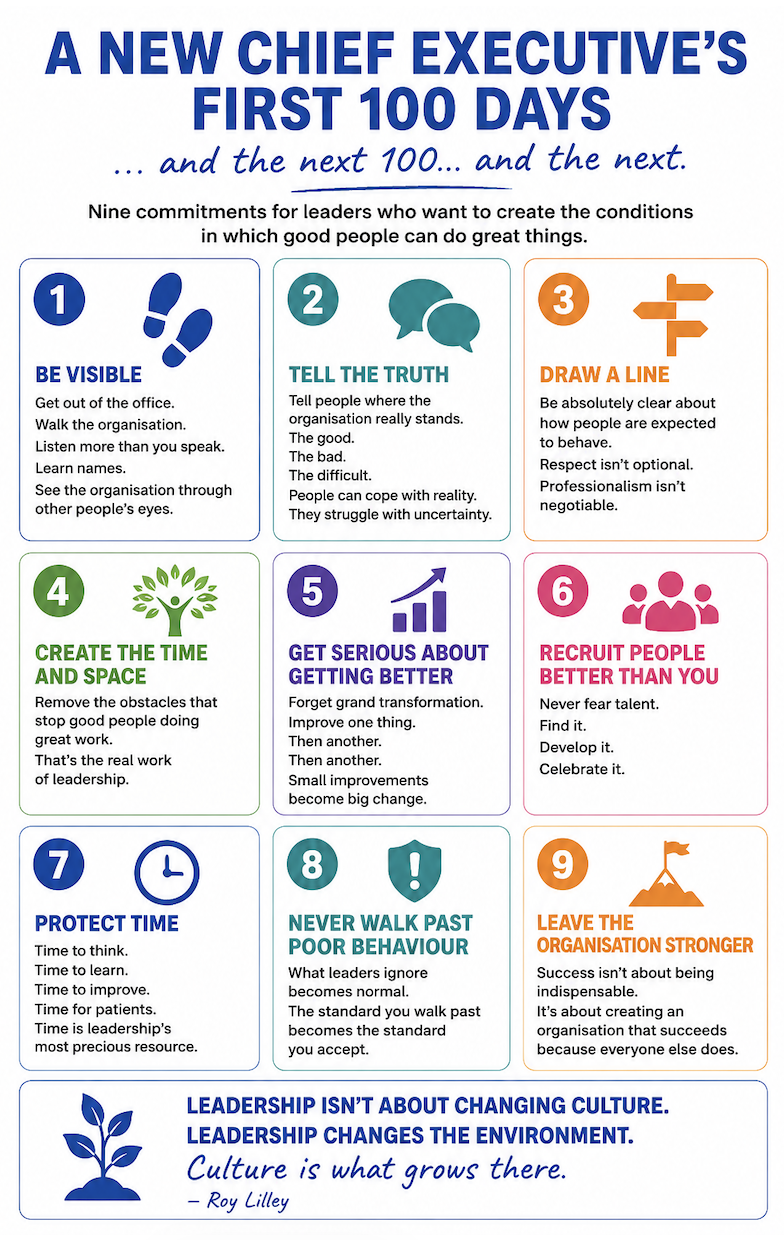
Over the years I've boiled leadership down to three jobs.


First, be visible.


People deserve to know who is leading them and what they stand for.


Second, recruit people better than yourself.


Great leaders are never intimidated by talented people. They seek them out, nurture them and give them room to grow.


The third job is the hardest...


Create the time and space for good people to do great things.


That's the real work of leadership.

Most NHS staff don't come to work looking for trouble.


They come to care for patients, support colleagues and make a difference, but...


They can't do great things if they are worried about being belittled.


They can't innovate if they're frightened to speak.


They can't concentrate on patients if they're spending emotional energy coping with poor behaviour.


Fear is a hopeless management tool. It silences ideas. It wastes talent.


It diverts energy that ought to belong to patients.


The chief executive at Doncaster isn't trying to create a tougher organisation.


She's trying to create a better one.


One where good people know what is expected of them.

One where professionalism isn't optional.

One where respect isn't a slogan but a standard.


Will everyone welcome that? Probably not.


Leadership rarely begins with applause.


Sometimes the first job of a leader is to draw a line and have the courage to stand behind it.


That isn't authoritarian.


It's creating the conditions in which everyone else can succeed.


If we want the NHS to improve, we have to do more than recruit good people.


We have to give them an environment where they can be at their best.


If people are bullied, frightened or humiliated, leaders have failed in one of their primary responsibilities...


... not because they've allowed bad behaviour, but...


... because they've made it harder for good people to do great work.


Leadership isn't about charismatic personalities or clever management techniques.


It's about creating the conditions in which other people can succeed.


That's why I support this new chief executive.


She isn't trying to change a culture. She's changing the environment. She knows the culture will follow, and...


... I know she's 'got serious about getting better'.

NEW PODCAST

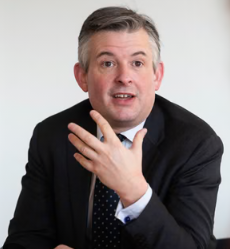
Former Labour MP and shadow minister for health

Jonathan Ashworth

In the last election

Jonathan Ashworth lost one of Labour’s safest seats.


On New Year's Day this year, Jonathan suffered a major stroke, aged just 47.


In this revealing podcast Niall and Roy discover how this former key member of Labour’s leadership views the plight of the government and the Prime Minister he helped to secure the leadership after disastrous Corbyn years  


In a frank exchange, Jonathan explains how and why the two party system has collapsed as well as how he warned his colleagues to back a ceasefire in Gaza, but they point blank refused to listen... and he lost his seat. 

Reflecting on the last two years, he says


Starmer lacked charisma and ‘oomph’. But he is also clear Labour badly needs a policy debate.


They won the election with a slogan of ‘change - not being Jeremy Corbyn and not being nasty Tories. But that was not enough to create a programme for government, based on hard choices.


Jonathan calls for that debate now and for example to flesh out what Andy Burnham means by bringing health and social care together.


As for Andy Burnham, while he notes how he endeared himself to Labour grassroots with his opposition to private sector tendering , Jonathan notes how the Manchester mayor worked pragmatically with the private sector to promote youth employment. 


As for his own stroke and remarkable recovery, he praises the NHS but laments the miserable 6 hours of rehabilitation offered as standard to stroke victims. As a result he claims they are more likely to fall back on health and care services.  


This is a great example of a politician freed from office, able even to admit ‘I am the ultimate hypocrite’. That was because he made endless speeches about the need for men to have check-ups but the ignored the text messages invitations himself.


If I had bothered... maybe I would never have had this stroke in the first place’.

For all the previous

In the Loop

podcasts with

Dr Ian Higgson

President of the

Royal College of

Emergency Medicine.

Prof Jim Blair

Learning Disability expert

Andy Burnham

Mayor of Greater Manchester

Nichola Ranger

ChEx Gen Sec RCN

Tom Dolphin

Chair BMA

David Gregson

founder of BeeWell

Dr Charlotte Refsum

Tony Blair Institute

Rob Webster

ICB CHEx

Sarah Woolnough

CEO of the King's Fund

Sir Jim Mackey

Dame Jennifer Dixon

Lord Darzi

Professor Tas Qureshi

Dr Penny Dash,

chair NHSE

Richard Meddings,

former chair NHSE,

Sir Jeremy Hunt,

Sir Andrew Dilnot,

Paul Johnson

IFS

CLICK HERE


-oOo-


Probably, the most listened to

Podcast in the NHS!

FREE!

Want to contact Roy Lilley?

Please use this e-address

roy.lilley@nhsmanagers.net 

-----------

Know something I don't

email me

in confidence.

Leaving the NHS, changing jobs - you don't have to say goodbye to us!

You can update your Email Address from the link you'll find right at the bottom of the page,

up-date-your-profie,

and we'll keep mailing.

----------

GDPR

We don't sell or give access to your email address to any third parties.

You can unsubscribe at any time.

Click on the link right at the bottom of the page

---------

Disclaimer

... yes, 60 countries listen

to Roy Lilley's podcast, free.

You can, too.

Just click here

Dr Paul Lambden


Cognitive Decline


'... attracting increasing interest in the medical media, and recently there have been articles in newspapers and television suggesting that President Trump may be displaying the signs.' 

News and Other Stuff

---

>> Heatwave - shuts theatres and scanners.

>> Cambridge trust sacks five staff for inappropriately viewing patients’ records - HSJ exclusive. 

>> Doncaster and Bassetlaw Teaching Hospitals Foundation Trust has told staff - if they 'don’t want to be part of this culture… then DBTH isn’t the right place for you'.

>> We’ll change exec contracts to ensure accountability for failings - Mackey.

New report identifies dementia and memory loss as key catalyst for growing homeshare model


This is what I'm hearing, unless you know different. In which case, tell me, in confidence

__________


>> I'm hearing - whilst we are all talking about everything being commissioned from pharmacies; dispensing practices are being left out. They exist in remote, rural and coastal communities where there isn't a pharmacy. 


Question; where do the youngsters go for their Men'gB jabs? They need two, six weeks apart. The most logical place? Their local surgery with their record and address to contact them. 


Apparently, NHSE/DH numpties haven't thought, or cared, enough about this cohort.  Has any health impact equality assessment been conducted on the decision to award the Meningitis B vaccination program to community pharmacies? 


If you know send me a copy!


Were the needs of patients who receive their dispensing services from dispensing doctors, as they are remote from community pharmacy premises, considered?


If not, why not?


Were dispensing GP practices ever mentioned, or considered, as potential suppliers of this service to patients distant from community pharmacy?


Did the DHSC/NHSE consider extending this program to Dispensing Doctors to ensure max-uptake and convenience for patients?


I think we can guess the answers... unless you know different?

More News

...

>> US healthcare gap - is growing.

>> Antisemitism - Doctors demand NHS drops contentious definition and call for “pause” of Mann review.

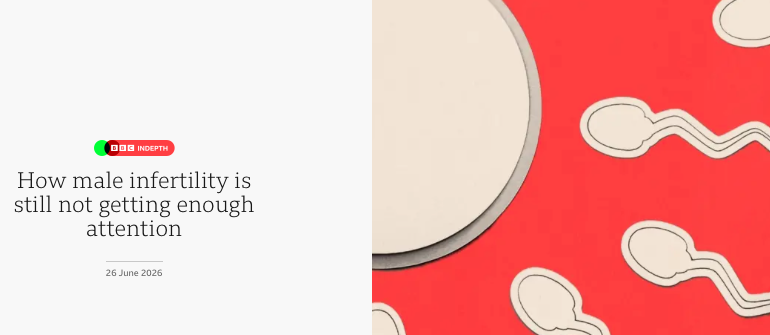
>> Routine PSA Screening - May Do More Harm Than Good.

>> Doctors’ union backs cuts to medical school places - as training system buckles.

>> NHS to offer new immunotherapy - for hundreds of women with aggressive cervical cancer

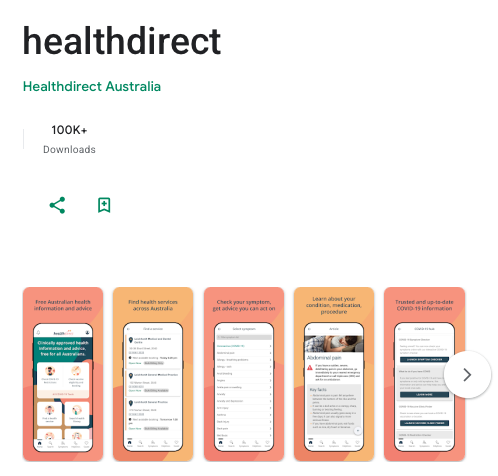
This is how the Australian health App works... sent to me by a reader who helped develop it. Interesting for health app enthusiasts here, to have a look.

Twitter  
Managers Logo