|
Test Runs of Living Shorelines Yield 5-Year Results
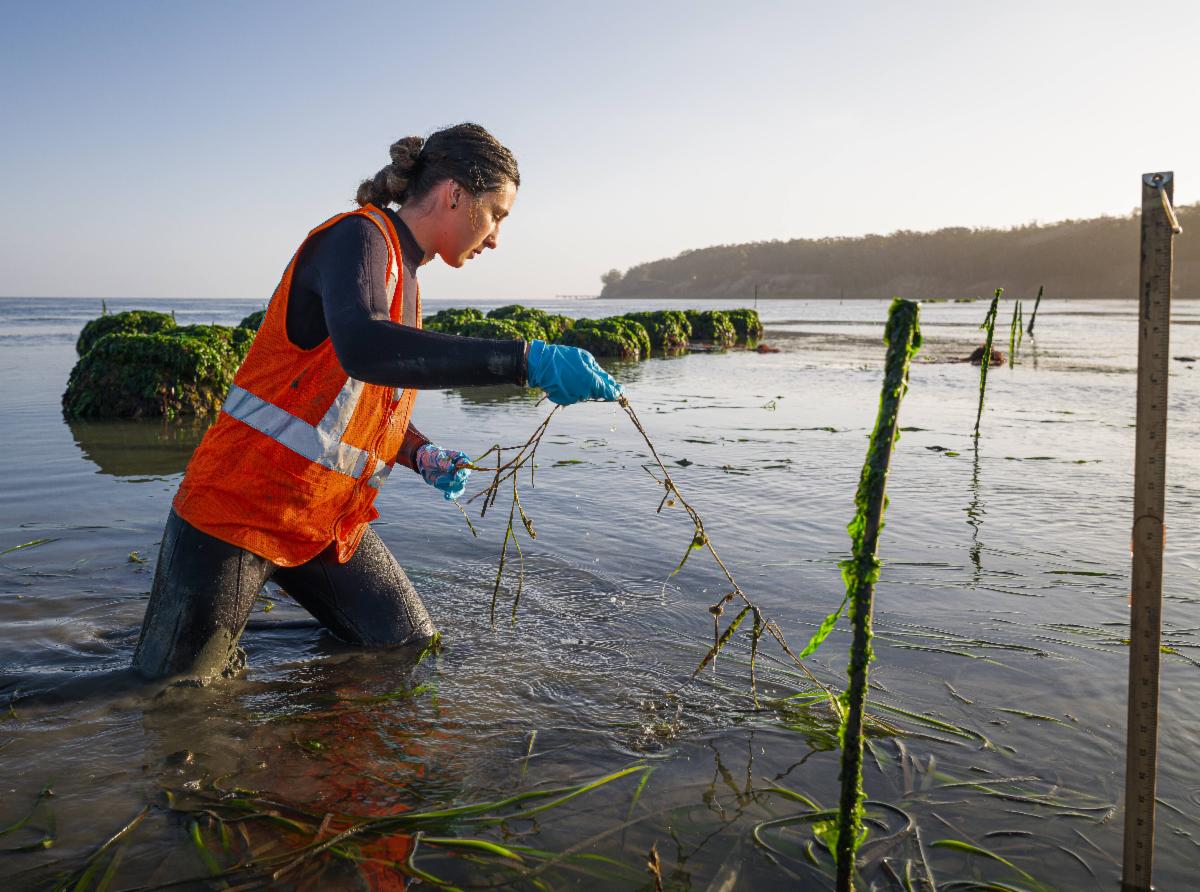
Goldilocks was a little girl who tried three different bowls of porridge before choosing the one that was just right. And that's what the team that designed, built, and monitored the 368-acre Giant Marsh Living Shoreline Project near Point Pinole did too. In 2019, the team laid out seven different "treatments," including new nearshore and offshore reefs designed to attract not only oysters, but also ducks, fish, crabs, and other Bay life. They also experimented with bolstering the eroding edge of the adjacent salt marsh, trying out different techniques for planting eelgrass, cordgrass and a rare but sturdy species called seablite. Their recently published five-year monitoring report offers 22 key findings with lots of nuances of interest to those planning or designing future living shorelines projects. "There are very few examples of fully designed, permitted, constructed projects with robust monitoring data in our region," says the Coastal Conservancy's Marilyn Latta. Photo: Jak Wonderly
KEEP READING
| |
Change Detection Made Easier with New Lidar Survey
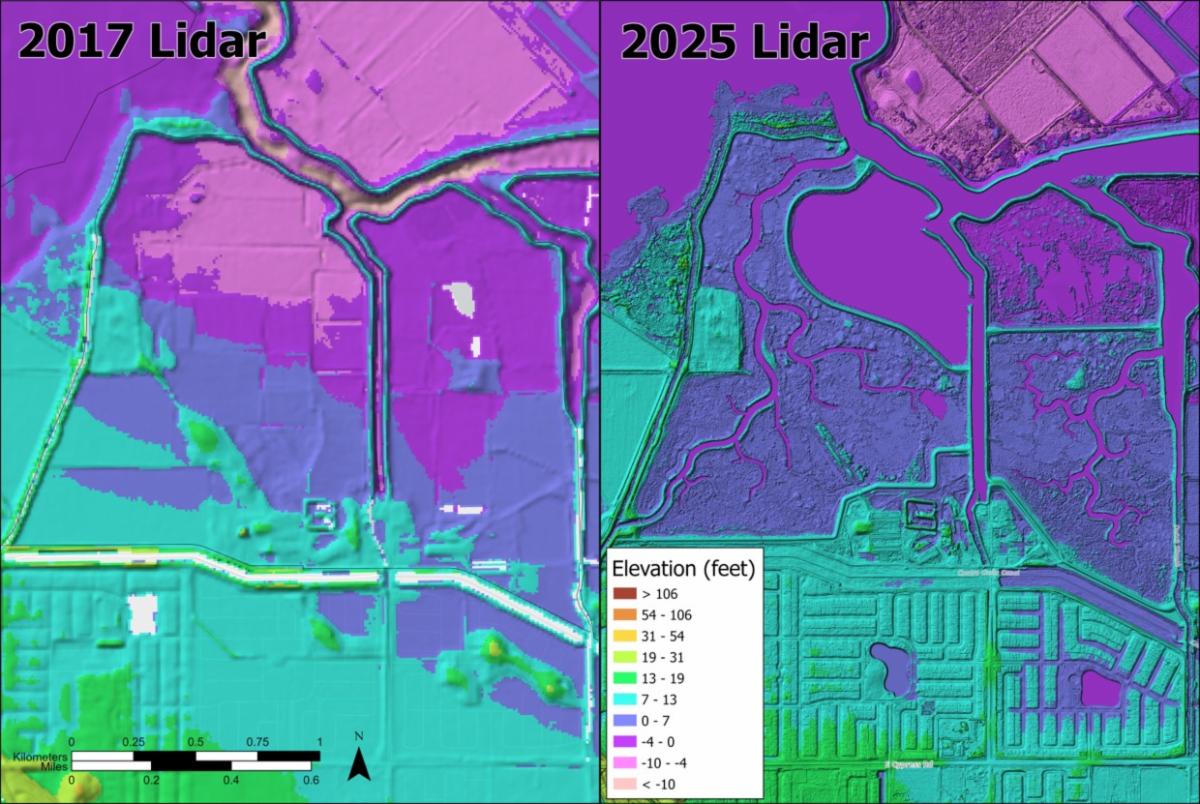
Small airplanes flew 368 trips back and forth around the edges of San Francisco Bay and the Delta last summer to capture what scientist Lisamarie Windham-Myers calls "the first seamless elevation map of the Estuary." On their flights, moving back and forth in linear swaths like a lawnmower, the planes sent laser beams down to the surface, which then bounced back to the plane. Each beam bounce off the surface yielded a measurement of surface elevation from a remote-sensing technology called lidar. The result, to be released this July, will be a high-resolution map of the entire estuary's 1.25 million acres of wetlands, shores, islands and levees. Image: Lidar of Dutch Slough levee breach and restoration results, courtesy DSC.
KEEP READING
| | |
Is Placing Sediment in the Shallows to Feed Marshes Working?
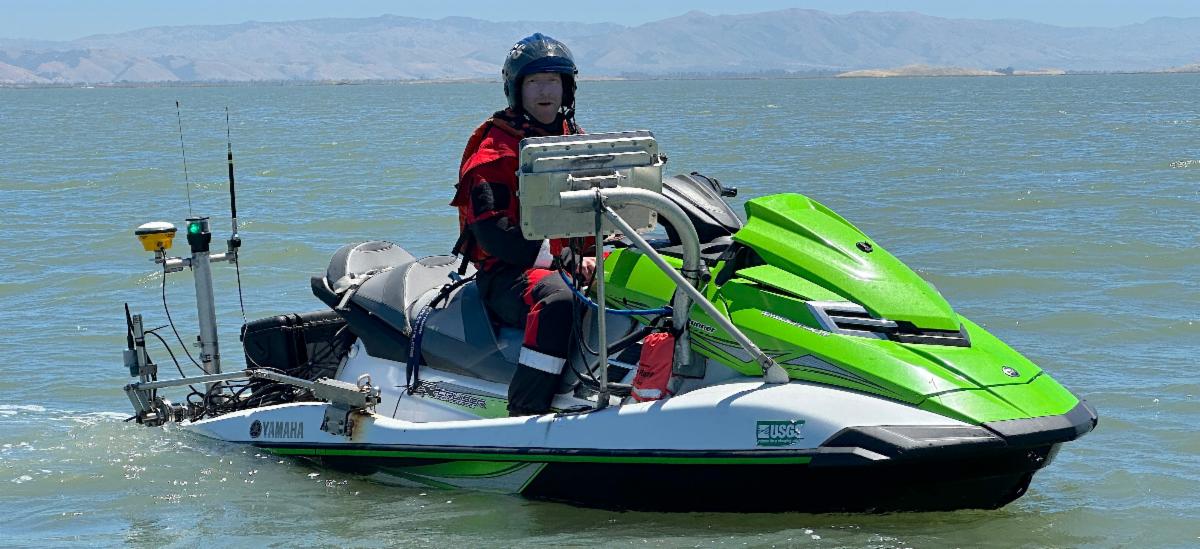
Scientists experimenting with placing mounds of dredged sediment in the shallows near marshes to see if it helps them build up elevation in the face of sea level rise have more results. As reported in KneeDeep in March 2025, the experiment involved dredging materials from the Redwood City harbor, barging them over to the East Bay shore near Eden Landing, depositing them back into the Bay, and then carefully monitoring the outcomes. Two years into the project, the monitoring results are promising. "We can see a pathway between the placement footprint and the Eden Landing marsh complex," says US Army Corps scientist Julie Beagle. Photo: Bathymetric surveys by jetski courtesy USGS
KEEP READING
| | I N F R A S T R U C T U R E | | |
The Race to Reinvent State Route 37
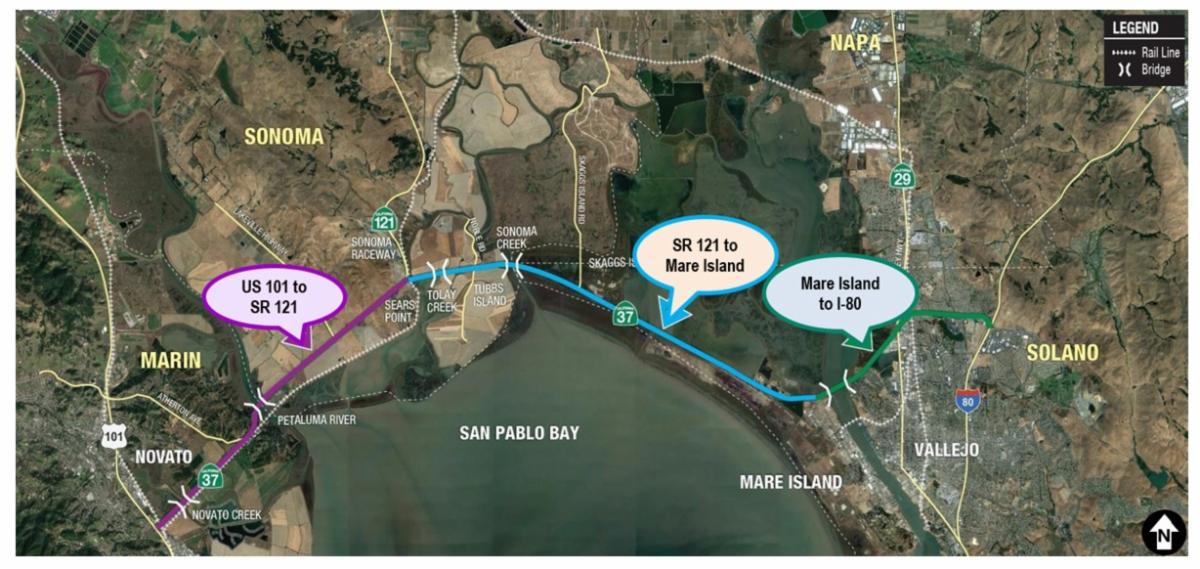
Many, many years and billions of dollars in the future, a 21-mile, four-lane causeway will skim above hundreds of acres of restored wetlands at the Bay’s northern edge, replacing traffic-clogged, often water-logged, State Route 37. This spring, despite last minute funding challenges that threatened to derail a key component, the first glimpses of that vision began coming into focus. In April, Caltrans will complete the first construction project related to the ultimate alignment of the new SR 37, a diverging diamond interchange at the eastern end of the highway in Vallejo. Map: Caltrans
KEEP READING
| | |
More Signatures Needed to Save Bay Area Transit
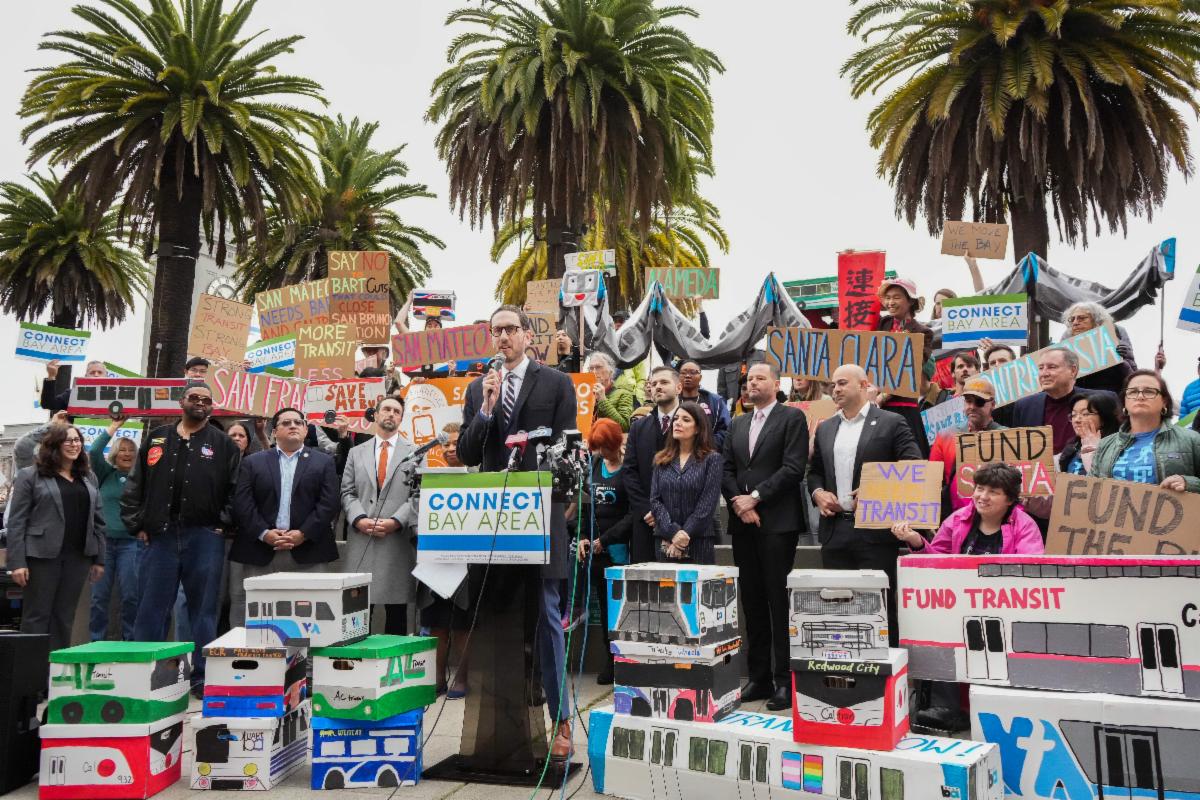
With just six weeks left for the Connect Bay Area campaign to collect the requisite 200,000 signatures to get a transit rescue measure on the ballot in November, a surprising mix of organizations are joining forces to keep BART and Muni trains running. Groups who are often at odds — labor organizers, climate activists, elected officials, and big corporations — are all involved in the final push to get this measure over the finish line. If they succeed, Alameda, Contra Costa, San Francisco, San Mateo, and Santa Clara counties will vote on a new sales tax to make up a combined budget shortfall of more than $800 million coming to BART, Muni, Caltrain, and AC Transit in 2027. Photo: Connect Bay Area
KEEP READING
| | |
Burlingame’s Iconic Trees Come Down
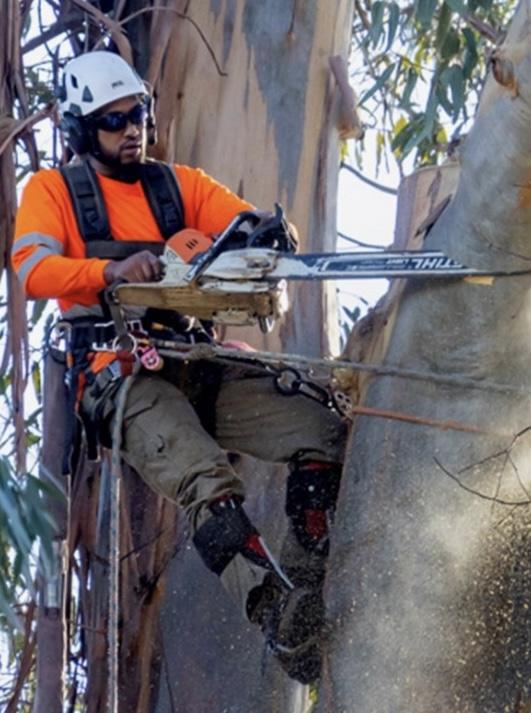
For more than a century, massive eucalyptus trees — some reaching 100 feet tall and five feet in diameter — have flanked El Camino Real in Burlingame. They beautify the roadway and provide a windbreak, but they also notoriously tear up the lanes and sidewalks with their shallow roots, limit visibility, and contribute to flooding. A $173 million, four-year project is addressing this problem, but what will happen to the local wildlife inhabiting the tree canopy? Photo: Courtesy Caltrans
KEEP READING
| | | |
Opinion: Stop Making Californians Pay for Corporate Pollution
Contributor Daphney Saviotti-Orozco writes: "Growing up, the Phillips 66 refinery in Rodeo was part of my landscape. Its smokestacks towered over my neighborhood, and carrying an inhaler was a normal part of my childhood. Only later did I understand that our health was being treated as an acceptable cost of corporate profit. Communities like mine exist across California — they are far more likely to be located near refineries and other sources of industrial pollution. When wildfires burn, smoke and fine particles pile on top of existing pollution."
KEEP READING
| | | |
SF CLIMATE WEEK APRIL 18-26
Don’t miss your chance to meet six KneeDeep reporters and hear them discuss their stories during the Exploratorium’s After Dark event from 6 to 10 p.m. Thursday, April 23. You can see our presentation at 7:30 p.m
| | Share our stories, and follow us on your favorite platforms. | | |
KneeDeep Times shares stories from the frontlines of climate change resilience and adaptation action.
All stories are available for republication free of charge. See our guidelines.
Views expressed are independent of all funders and collaborators.
Managing Editor: Ariel Rubissow Okamoto
Assistant Editor: Duncan Agnew
Neighbors Editor: Sonya Bennett Brandt
Research & Social Media Editor: Isabella Eclipse
Art Director: Afsoon Razavi
2026 High School Community Reporting Fellows:
Sachi Bansal, Padma Balajii, Aayushi Akhani
Top Photo: Corte Madera Marsh at high tide by Dana Behrens
Send us your story ideas and subscribe us to your newsletter lists.
news-team@kneedeeptimes.org
| | | | |