|
1. You’ve built a career around executive-level searches across some very different industries. What do you enjoy most about the variety?
What I enjoy most is the opportunity to continually learn. Every industry has its own culture, challenges, and definition of success, and every search introduces me to people with different experiences, perspectives, and ambitions. I enjoy understanding what makes a business tick, what it needs to move forward, and who can make a meaningful difference. Regardless of the industry or executive title, the most rewarding part is bringing the right people together in a way that benefits both the individual and the organization.
2. What drew you to recruiting as a career, and what’s kept you passionate about it for more than a decade?
My path into recruiting was an unexpected one, shaped by the pandemic. Before entering executive search, I worked in international student exchange, recruiting U.S. businesses to host international students for short-term internships through the J-1 visa program. When COVID brought international travel to a halt and U.S. embassies around the world closed, that industry came to an abrupt stop. It was time to transfer my extensive experience in relationship-building, evaluating talent, and connecting people with opportunities into a new field.
While the industry changed, the most rewarding part of the work did not. Throughout my career in recruiting, I've had the opportunity to get to know people, understand what drives them, and help create opportunities that can change the trajectory of a career or a business. Every search brings a new challenge and new relationships. That continues to make this work meaningful.
3. How would your clients and candidates describe your approach in three words?
Genuine. Curious. Committed.
I believe the best relationships begin with authenticity and a genuine interest in people. Curiosity drives me to ask questions, listen, and understand what matters most to each individual and organization. Commitment means staying engaged, working through challenges, and doing what it takes to bring the right people together. For me, success is about more than filling a position. It is about building relationships grounded in trust and creating outcomes that benefit everyone involved.
4. What’s a professional accomplishment you’re especially proud of?
One of the professional accomplishments I am most proud of is helping clients recognize potential beyond what is written on a résumé. One experience, in particular, reinforced why I believe so strongly in looking beyond the page.
A candidate had stepped away from his career for a year after learning his father was terminally ill. He relocated to be with his father and remained by his side until he passed away. During that time, he continued taking online courses to stay current with emerging trends in his field. Despite explaining the gap on his résumé, he was repeatedly overlooked. I encouraged a client to meet with him, believing his experience, initiative, and commitment were worth exploring. The client ultimately offered him the position and was delighted with the hire.
What I will always remember is the candidate's emotional phone call to thank me for giving him a chance when so many others had not. I was deeply touched. That moment reaffirmed something I have always believed: a résumé tells only part of someone's story. Sometimes, all a person needs is the opportunity to be heard. Knowing that I helped make that possible remains one of the most meaningful experiences of my career.
5. Outside of recruiting, what’s something you’re passionate about?
I believe everyone deserves to be treated with respect and given the opportunity to succeed, whatever success looks like for them. That belief extends well beyond my professional life. I serve on the Board of Directors for Literacy Chicago, an organization dedicated to adult literacy, and I also tutor middle and high school students who struggle with reading comprehension.
Literacy is about so much more than reading words on a page. It can open doors to education, employment, independence, and greater confidence. Being able to support people as they build those skills and discover their own potential is deeply meaningful to me. Everyone deserves the opportunity to find their voice and determine their own path forward.
6. You’re building out American Recruiters’ food and beverage segment. What does that space cover, from R&D to supply chain to sales?
The food and beverage space is incredibly broad, and that's part of what makes it so exciting. It extends from research and development, product innovation, and manufacturing to procurement, supply chain, distribution, and sales.
My focus also includes the commercial foodservice industry, encompassing equipment and smallwares manufacturers, manufacturer's representative agencies, dealers, consultants, and the professionals who design, build, and equip commercial kitchens. These businesses play an essential role in how food is produced, prepared, and served, yet many of the people and career opportunities behind that process are not always visible to those outside the industry.
Building this segment is an opportunity to connect exceptional talent with organizations that keep the industry moving forward. Across every part of the sector, the common denominator is people: the expertise, relationships, and leadership that turn great products and ideas into successful businesses.
7. What separates an executive search in food and beverage from other industries you’ve worked in, like financial or media?
At its core, executive search is about understanding people, businesses, and what it takes to bring the two together successfully. Those fundamentals remain consistent across industries. What changes is the industry knowledge required to understand each business and identify the right talent.
Food and beverage encompasses a remarkably diverse ecosystem, from manufacturing and distribution to commercial foodservice and the relationships that connect them. Learning that landscape is part of the opportunity and the challenge.
Ultimately, the principles remain the same: listen carefully, ask the right questions, look beyond the résumé, and understand what success looks like for both the client and the candidate. The industry may change, but the importance of getting the right people together does not.
8. What do you look for when evaluating candidates for R&D or quality-focused leadership roles in food manufacturing?
For R&D and quality-focused leadership roles, I look beyond technical credentials to understand how a candidate applies that expertise to real business challenges. Strong leaders need to balance innovation, product quality, food safety, regulatory requirements, and the realities of manufacturing and production.
I look for people who can solve problems, collaborate across departments, communicate effectively, and lead teams toward measurable improvements. Technical knowledge is essential, but so is the ability to translate that knowledge into results. Ultimately, the goal is to identify leaders who can protect product integrity while helping the business continue to grow and evolve.
9. What trends are you seeing right now in food and beverage hiring, especially around supply chain and production leadership?
As I continue building my knowledge of the food and beverage industry, several important themes stand out in supply chain and production leadership. Cost control and operational efficiency remain significant priorities, creating demand for leaders who can improve productivity, reduce waste, and make better use of resources.
Supply chain resilience is another important focus, as companies look for leaders who can anticipate disruptions, strengthen supplier relationships, and keep operations moving in an unpredictable environment. Technology and automation are also increasing the need for leaders who can embrace innovation while developing and engaging their teams.
Ultimately, companies need adaptable, forward-thinking leaders who can balance operational performance with the people skills required to build strong teams and deliver lasting results.
10. What advice would you give a company trying to attract top executive talent in a competitive food and beverage market?
My advice is to think beyond the job description and the compensation package. Exceptional candidates want to understand the opportunity in front of them: the organization's vision, its culture, the challenges they will be asked to solve, and the difference they can make.
Companies that communicate those things clearly and authentically are better positioned to attract the right people. I'd also encourage employers to remain open-minded about transferable skills and nontraditional career paths. The perfect candidate on paper isn't always the person who will deliver the greatest impact.
Above all, treat the hiring process as the beginning of a relationship, not simply a transaction. The strongest outcomes happen when both the organization and the individual can see a future in which they succeed together.
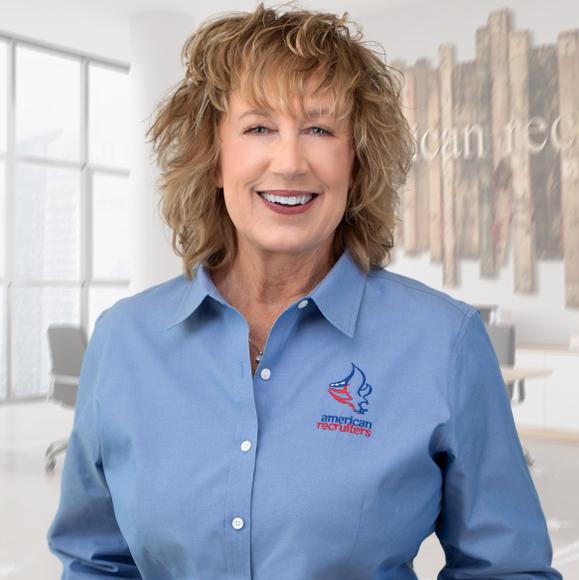
Building out your R&D, quality, supply chain, or production leadership team? Reach out to Deborah directly → 608.710.8007 dbest@ariteam.com
|