|
Greetings!
2025 delivered the lowest annual Metro Vancouver sales total in more than two decades and January 2026 market stats continue that trend.
The total home supply in Metro Vancouver in 2025 is up 9.9% over January 2025 and that is 38% above the 10 year seasonal average while sales were down 28.7% from January 2025 and that is down 30.9% below the 10 year seasonal average.
These Metro Vancouver stats get a lot of press and are distinct from the west side market stats but we are facing similar trends here on the west side.
Westside home sales, when compared to the 10-year averages, are down by 28% for detached homes, down 39% for apartments and up by 22% for townhomes.
Compared to the 10-year average, supply is up 8% for Westside detached homes, while apartment supply is up 22%, and townhomes are up 65%.
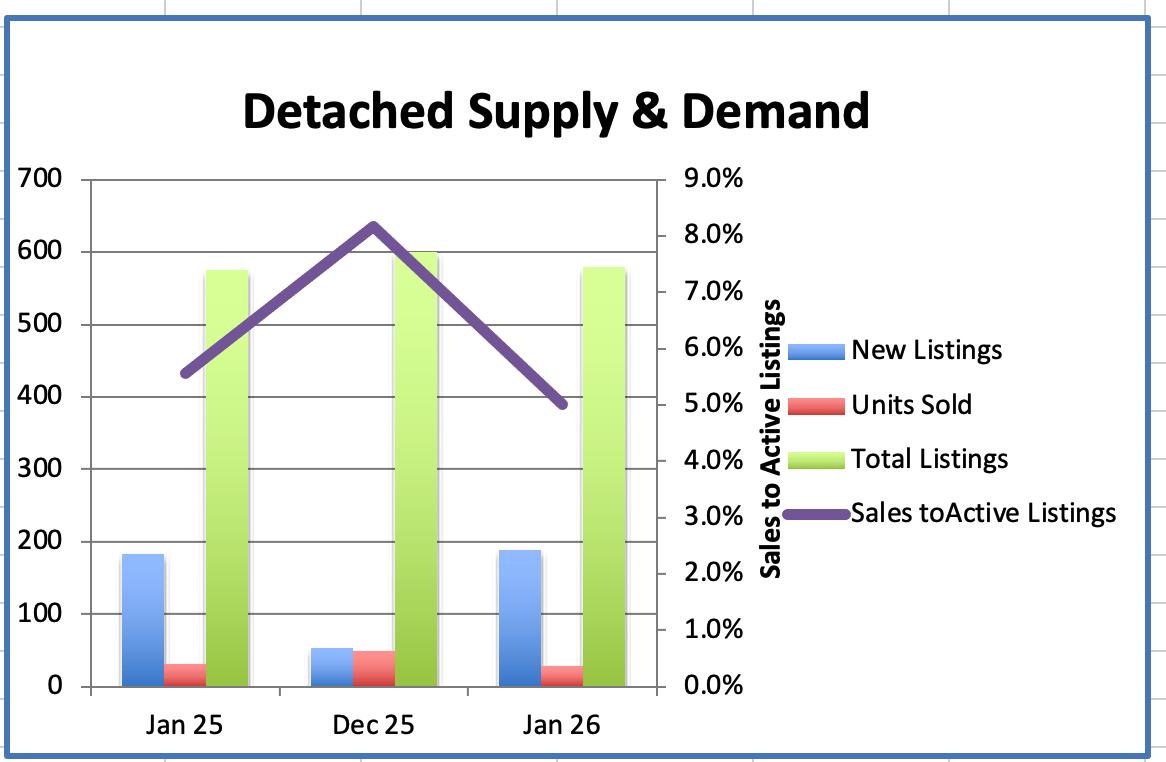
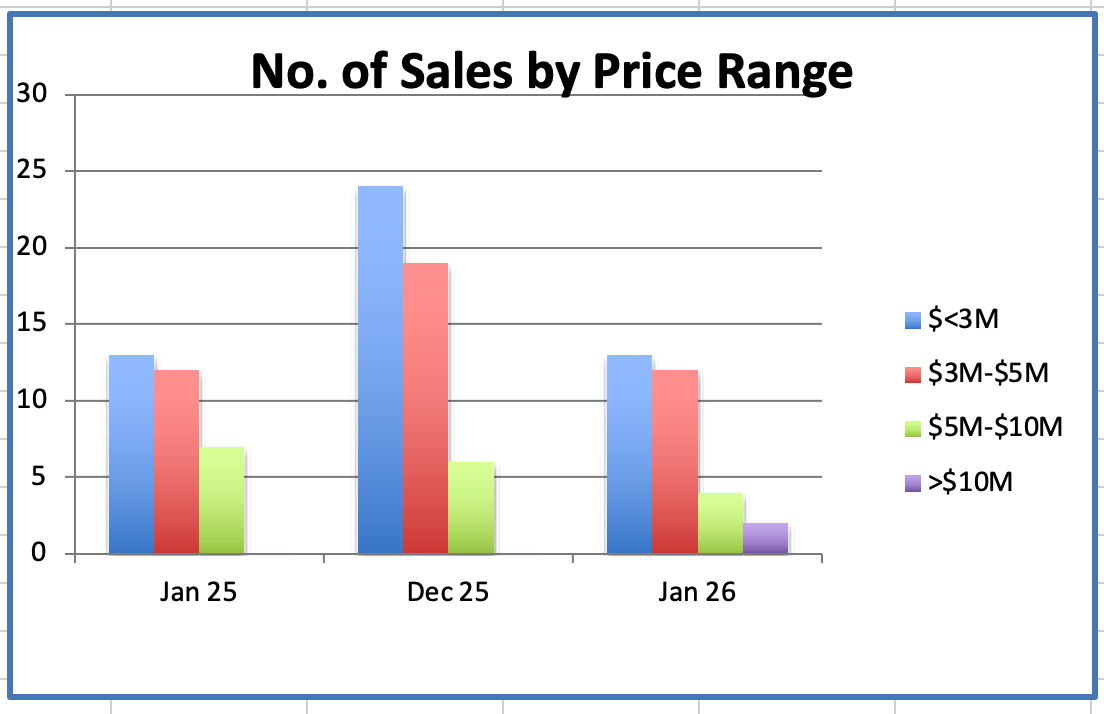
We had 29 Westside Detached home sales in January, down 39%, compared to 49 sales last month.
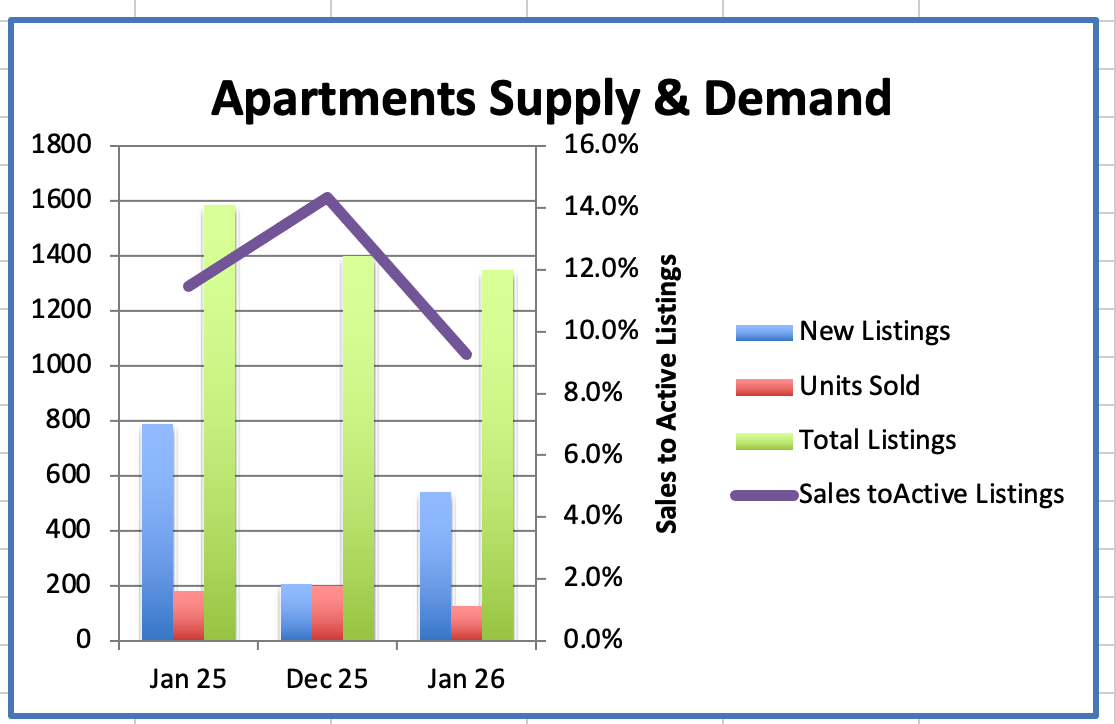
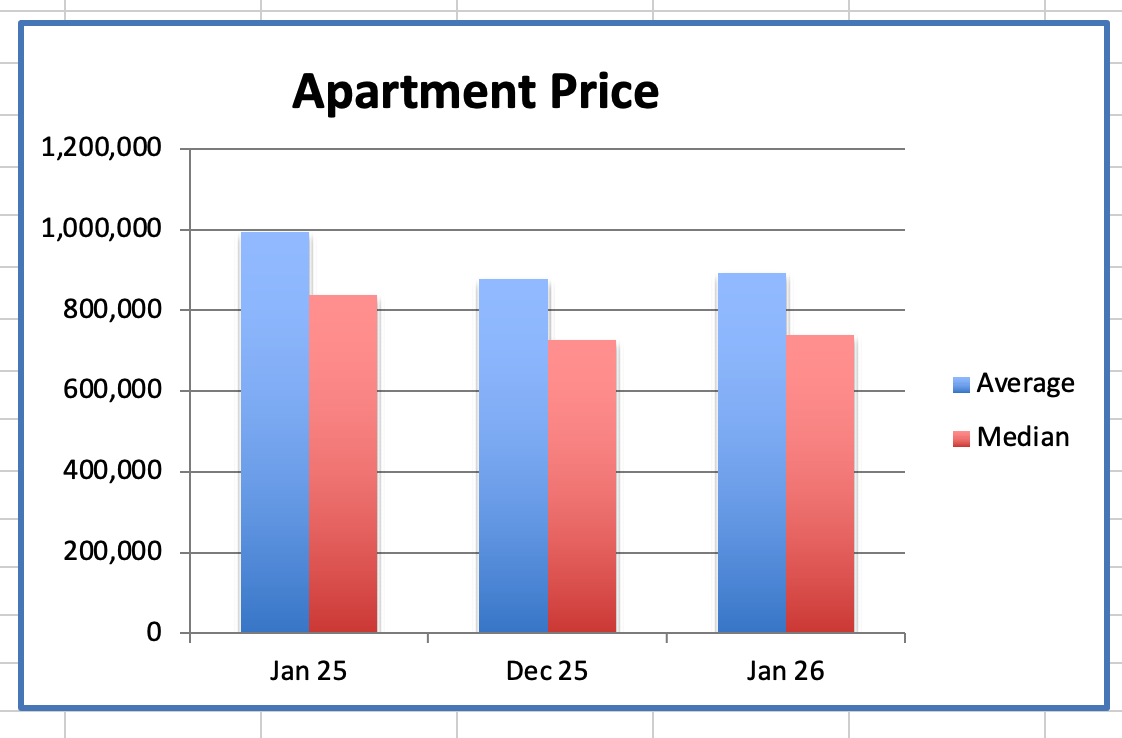
We had 125 Westside Apartment sales in January, down 38% compared to 201 sales last month.
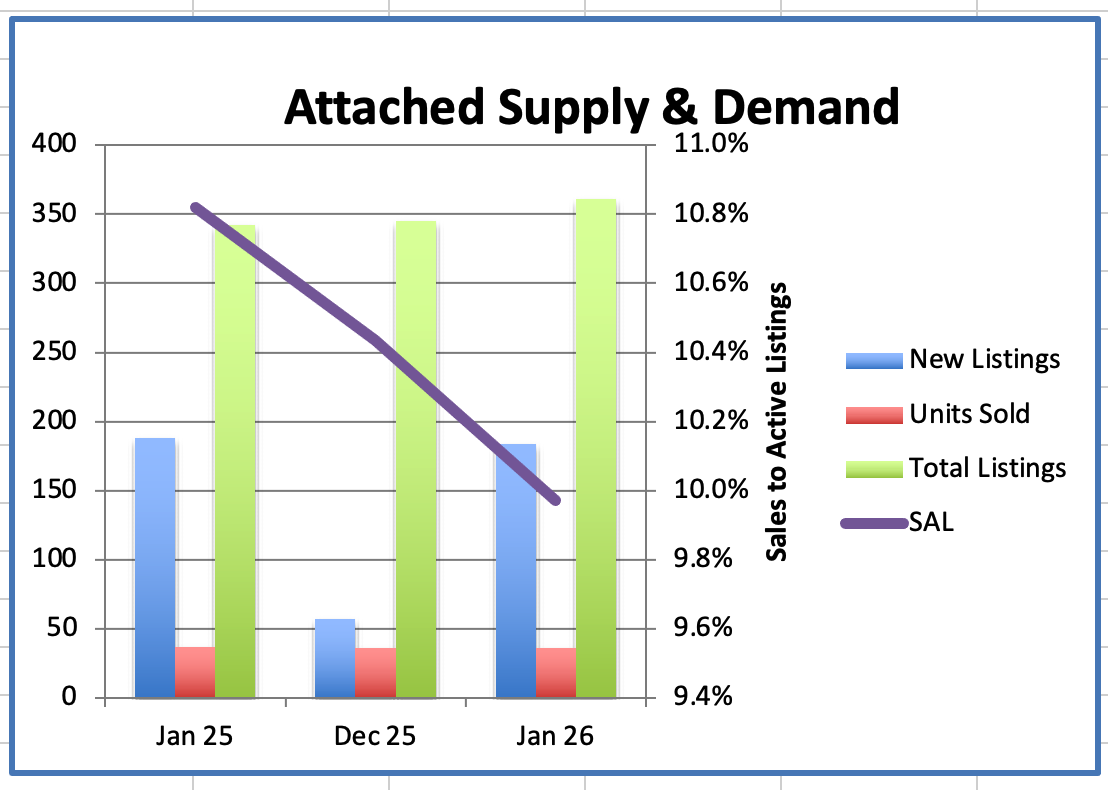
We had 36 Westside Attached home sales in January, unchanged from December.
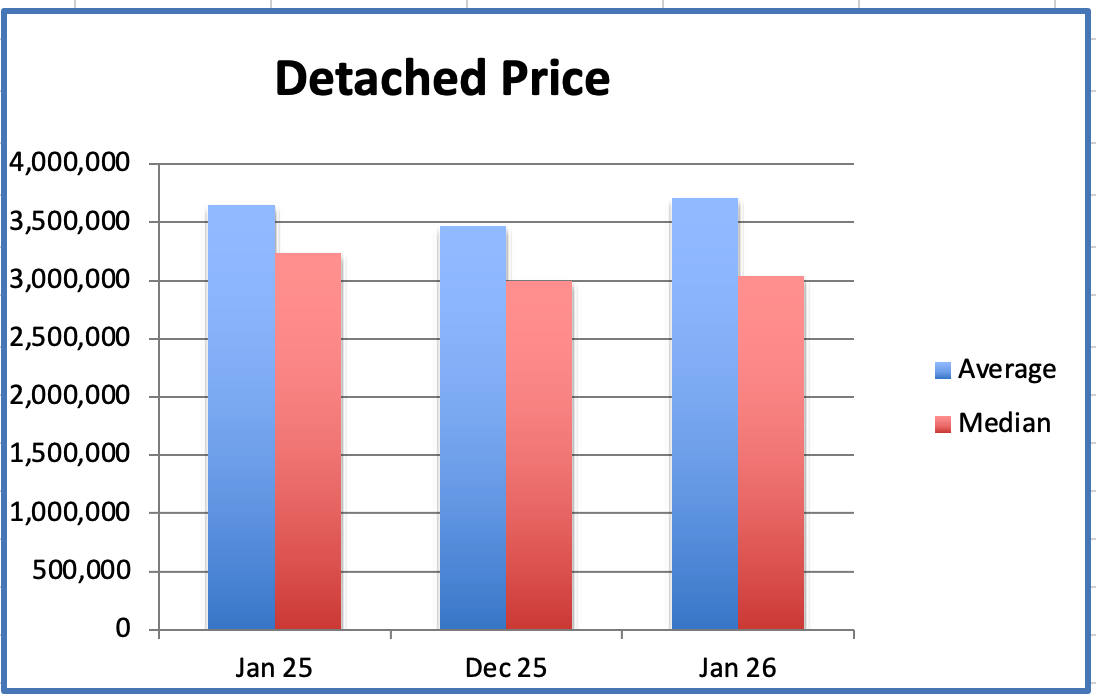
In January the Westside Detached Home average price was $3.709M, down 22% from $4.744M, the peak, in August 2023.
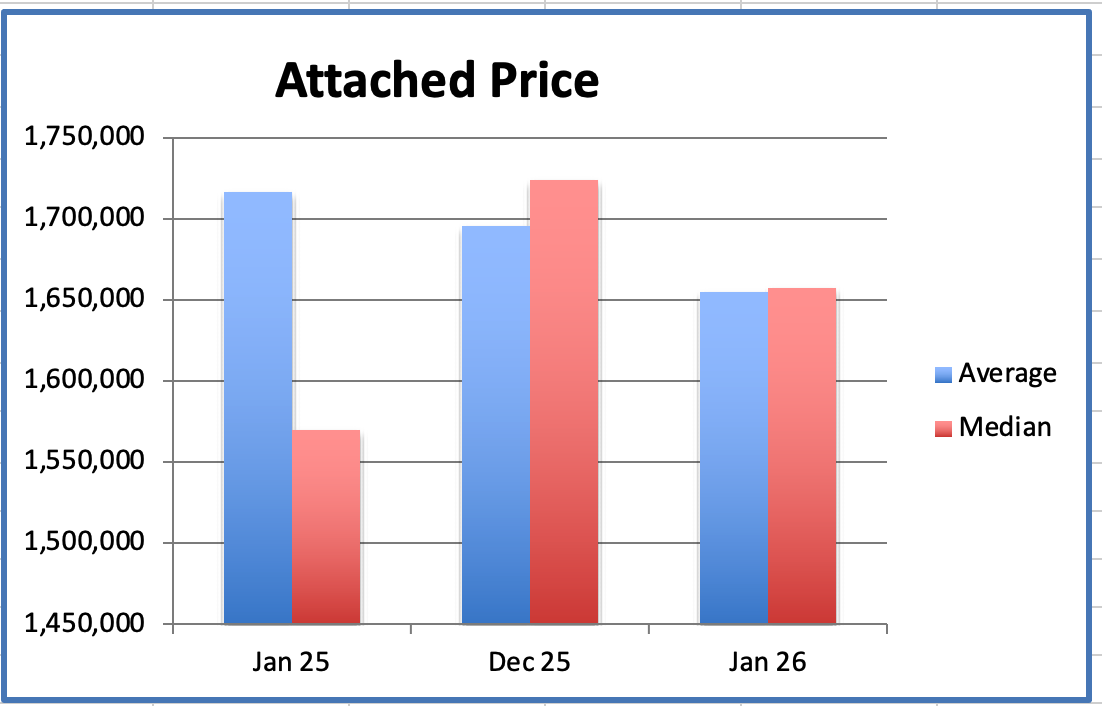
The Attached home average price was $1.655M, down 12% from $1.885M, the peak, in Dec 2024.
The Apartment average price was $891K, down 26% from $1.199M, the peak, in January 2018.
The Sales to Active Listings ratio (SALR) is a key indicator of market balance and it helps determine whether the market favours Buyers or Sellers. The range between 12% and 20% is considered a balanced market and prices are sustained.
Generally, downward pressure on home prices occurs when the ratio dips below 12% for a period of time. Upward pressure on home prices occurs when the ratio surpasses 20% over several months.
Market conditions are dynamic and can change rapidly due to various economic factors & the ratio can vary significantly depending on the property type.
Currently the SALR for Westside detached homes is 5%, attached is 9.3% and apartments is 14.3%.
Historically, the market has cycled up in the spring, slowed down in summer, revived a bit in the fall and become quiet in the winter. Currently the seasonal cycle has been disrupted by economic uncertainty, interest rate affordability, job security and global events that have combined to create an ambivalent attitude towards real estate.
Our current Buyers' market and expanding supply have not translated into a rush of activity but rather has reduced urgency as buyers are able to be more discriminating than before. This is making Sellers more aware that they cannot rely on the market to move up continually and they are adjusting their expectations and recognizing that price and value are what is making the sales happen.
Affordability is what buyers need and well priced homes are selling. Sellers getting tired of waiting for prices to rise are starting to grasp the idea that value is what is selling and they are adjusting the asking prices accordingly and even with that, buyers are hesitating. Buyer confidence is still lacking and relates to events beyond real estate into global headlines, consumer tariffs and other issues which affect market momentum.
This too may all be a cycle but it is not the seasonal cycle we are used to.
This is a buyers' market and a good opportunity to get into the market or to move up in the market. We expect the market to remain slow but we know that can change in an instant.
Sellers need to be the best value in their cohort to attract a buyer so strategic pricing is the key to achieving a sale.
Thinking of Selling? Let’s Talk!
📞 Call me today to discuss your options and make the most of the upcoming selling season.
The 2026 Olympic Winter Games start February 6th. Go TEAM 🇨🇦
Best regards
Stuart ⛳ 🎾
|