|
Daily Transportation News
March 5, 2026
| | | Goa Government Forms Three-Member Committee to Resolve Taxi Policy Deadlock | |
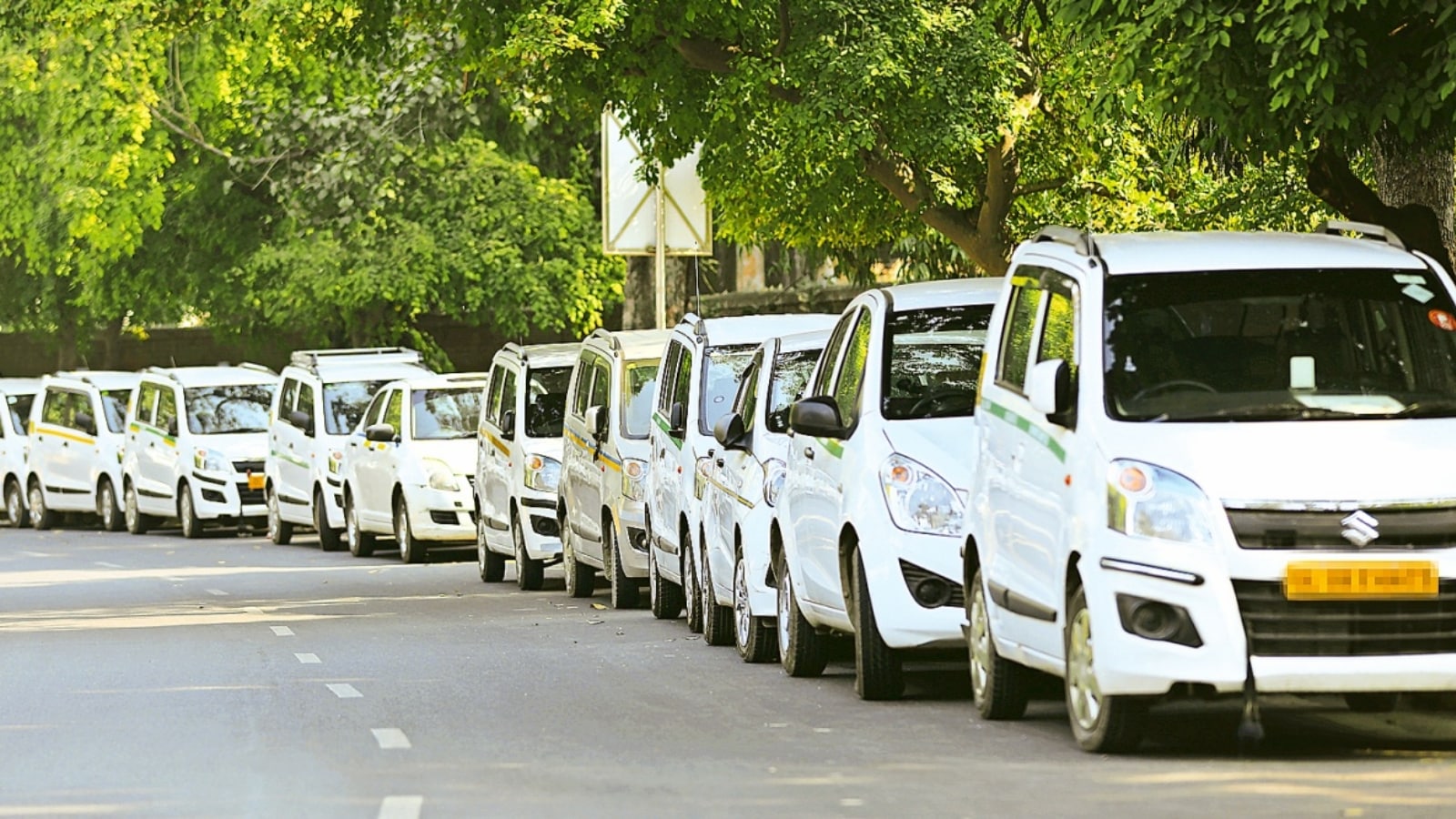
Image: The Indian Express | |
PANAJI INDIA: The Goa government has set up a three-member committee to end a ten-month deadlock with taxi operators over the Digital Taxi Policy. The panel, made up of senior Transport Department officials, will review concerns raised by the unions and submit recommendations within eight days.
Speaking to reporters after the meeting, Chief Minister Pramod Sawant, who spearheaded the dialogue, emphasized a collaborative transition toward modernization. “We have requested a step-by-step approach over the next eight days regarding the existing digital platforms, establishing proper uniform minimum rates along with safety, security, and transparency for tourists and taxi operators,” he said, confirming that the committee will address operators’ concerns about digital platforms, safety, and pricing.
Transport Minister Mauvin Godinho clarified that the current digital framework is still in draft stages and will not be forced on stakeholders. “The government is not going to force anything and does not mind if implementation is delayed,” he said.
Godinho added that the aim is to collect operational data and enforce uniform rates, which will benefit drivers and protect tourism. “Taxi operators are stakeholders and ambassadors of tourism, and any step taken should not harm the tourism industry. We do not want to kill the goose that lays the golden eggs.”
Tourism Minister Rohan Khaunte further reinforced the need for technological adoption. “Our effort is to bring tourism stakeholders and all taxis onto one platform with a uniform rate while providing them support,” he said.
Emerging from the discussion, President of the All Goa Taxi Association, Chetan Kamat, expressed a nuanced position, stating that the unions are willing to accept digitization, but they remain opposed to the “app-based” model.
Source: The Goan
Click Here to Read More
| | Bolt Becomes First Major Ride-Hailer to Register under New South Africa Regulations | |
|
In a landmark move for the Southern African mobility sector, Bolt has officially become the first major ride-hailing platform to register under South Africa’s newly implemented national transport regulations.
The National Public Transport Regulator (NPTR) issued Bolt South Africa its Certificate of Registration on 27 February 2026.
The move signals a shift toward a more formalized, “grown-up” e-hailing ecosystem in one of Africa’s most complex transport markets.
For years, the South African e-hailing industry has operated in a regulatory “grey area,” leading to friction with traditional taxi industries and concerns over passenger safety.
This registration:
- Solidifies legal standing: Formally recognizes e-hailing under a unified national framework.
- Sets a precedent: Puts pressure on competitors to follow suit or risk regulatory scrutiny.
- Enhances safety: Creates a more accountable environment through improved government oversight.
The new framework isn’t just about paperwork; it’s about modernization. The South African government aims to bridge the gap between digital innovation and public safety. By complying early, Bolt is positioning itself as the “safe bet” for both the state and the consumer.
“We have always welcomed the introduction of clear and progressive regulations… Receiving the Certificate of Registration is an important milestone not only for Bolt, but for the broader industry.” — Mrs. Fikile Nzuza-Chunga, Senior Public Policy Manager for Bolt South Africa.
Source: Tech Labari
Click Here to Read More
| | |
Supreme Court Rejects NJ Immunity Defense in NY, PA Suits
The U.S. Supreme Court ruled Wednesday that New Jersey cannot shield its public transit system from personal injury lawsuits by out-of-state plaintiffs under the doctrine of sovereign immunity. The decision resolves a dispute over whether New Jersey Transit Corp. qualifies as an "arm of the state" entitled to interstate sovereign immunity, a question that reached the justices after the Pennsylvania Supreme Court and New York's highest court, the Court of Appeals, issued conflicting rulings on the agency's status. In a unanimous opinion written by Justice Sonia Sotomayor, the court held that the state-created transit corporation operated as a legally separate entity from the state and therefore could not claim the constitutional immunity that shields states from private suits in other states' courts.
Click Here to Read More
Virgin Islands: Report Finds Multiple Problems at Taxicab Commission
An Inspector General’s report issued Wednesday found missing taxi medallions, misplaced money, and broad failure to follow established procedure at the Virgin Islands’ long-troubled Taxicab Commission. The report, compiled by Virgin Islands Inspector General Delia M. Thomas, covers operations at the commission from 2018 to 2022.
Click Here to Read More
Atlanta to Debut Autonomous Glydways Transit System Near Airport
Atlanta is about to become home to a new kind of autonomous transportation. By the end of this year, metro Atlanta is expected to debut the world's first Glydways system — an on-demand, electric transit network designed to move passengers along dedicated roadways near Hartsfield-Jackson Atlanta International Airport, one of the region's largest job centers.
Click Here to Read More
| |
New Flyer Unveils Winnipeg Facility for All-Canadian-Built Electric Transit Buses
For the first time in 15 years, a fully Canadian-built transit bus has rolled off an assembly line, marking a major milestone, officials said Tuesday at an unveiling ceremony in Winnipeg.
Click Here to Read More
STM and Maintenance Workers’ Union Agree on Conciliation to Avoid Another Transit Strike
The Syndicat du transport de Montréal–CSN, which had gone on strike multiple times last year, had threatened to do so again in February. The Société de transport de Montréal (STM) and its 2,400 maintenance workers have mutually agreed to attend conciliation, led by the Quebec Ministry of Labour.
Click Here to Read More
Timiskaming-Cochrane MPP Warns System Is Letting Under-Trained Truck Drivers onto Highways
Transport drivers aren't always to blame for highway crashes, but more can be done to regulate, monitor, and support them, including proper training. That's the view of Timiskaming-Cochrane MPP John Vanthof, responding to the ongoing concern about highway safety and the number of collisions this winter.
Click Here to Read More
| |
UK Holidaymakers Warned: Spain Cab Clause Could Cost You €600
Millions of Brits are gearing up for the arrival of Easter week – which comes about at the end of March and beginning of April – and there are few places they prefer travelling to more than Spain. However, along with the arrival of much-needed holidays and thrilling trips comes the risk of fines, especially for little-known rules and requirements … and the Foreign Office has warned Brits of a rule that could cost holidaymakers up to €600 if it is ignored.
Click Here to Read More
Fight against Cutthroat Competition: Dortmund Plans Uniform Fares for Taxis and Platforms
Following Essen, politicians in Dortmund now also want to restructure competition in the ride-hailing market. In the future, there should be no price difference for passengers whether they order a taxi or a car via platforms like Uber or Bolt – minimum fares are to be introduced.
Click Here to Read More
UK: App Drivers’ and Couriers’ Union Appoints New Leadership As Private Hire Pay and Safety Concerns Raised
The App Drivers’ and Couriers’ Union (ADCU) has elected Cristina-Georgiana Ioanitescu as its new General Secretary, with Farah Musa appointed President after both candidates were elected unopposed. Ioanitescu previously served as ADCU President and continues to work as a professional chauffeur. The union said the appointment reflects its long-standing approach that members of the ADCU National Executive Committee remain active drivers while holding office.
Click Here to Read More
| |
Conservative Nigerian City Sees Women Drive Rickshaw Taxis
Sporting a pink knee-length veil, Umma Hani Yusuf Khalid has recently found financial stability as a rickshaw taxi driver, a trade that was unthinkable for her in Nigeria's conservative Muslim city of Kano two years ago. As more women are having to fend for themselves amid economic hardship, they are increasingly venturing into trades previously dominated by men. Khalid's pink three-wheeled electric rickshaw stood out on the frenetic streets of the region's commercial hub, as she pulled over to pick up women passengers.
Click Here to Read More
Taxi Operators Absorb Costs at Their Pumps As Petrol Prices Rise Again amid Middle East War
SINGAPORE – Some taxi operators are now absorbing part of the increase in fuel costs at in-house pumps, while several petrol stations continued to raise their prices as the war in the Middle East rages on. ComfortDelGro (CDG), Singapore’s largest taxi operator, was offering petrol at $1.93 per litre as at the morning of March 5 at its six fuel stations in Singapore. This was a five-cent increase from March 4 when it was selling petrol at $1.88.
Click Here to Read More
Rio de Janeiro Makes Streets Safer for School Children
In 2023 alone, nearly 900 children in Brazil died from traffic crashes, according to Brazil’s ministry of health. Meanwhile, local data show that nearly half of Rio’s students walk to school. Many report fear of speeding vehicles, harassment and a lack of accessible paths. These challenges are even more prevalent in low-income neighborhoods.
Click Here to Read More
| | Findlay Council Committee Takes the Wheel on Taxi Rules | |
|
Councilwoman Nichole Coleman
Chair, Findlay’s Streets, Sidewalks and Parking Committee
| |
OHIO, U.S.: Findlay’s Streets, Sidewalks and Parking Committee is asking the administration to revise the city’s proposed overhaul of taxi cab regulations after council members raised concerns about governance, clarity and future enforcement.
First introduced Jan. 20, the ordinance moved through two readings before council delivered a unanimous rebuke on Feb. 18, voting 0-9 to reject it, with Councilwoman Carol Smith, R-3, absent.
The rewrite is intended to modernize Findlay’s taxicab regulations for the first time since 1979, replacing the city’s decades-old framework with clearer licensing standards, updated safety requirements and a defined oversight process. The new chapter is designed to establish consistent rules for taxi companies and drivers, align the code with current administrative practices and clarify how the city handles background checks, insurance verification, operating standards and fee structures.
Officials say the goal is to produce a streamlined, workable system that supports legitimate operators and gives the city an updated set of tools to oversee the industry moving forward. However, council members have criticized the rewrite for vague language, uneven standards and a structure that placed too much control in the service-safety director’s hands.
After a detailed discussion in a meeting held Feb. 25, committee members laid out several changes they want mad to the ordinance before it goes back to council, including reinstating the city’s Taxi Cab Board. The committee is chaired by Councilwoman Nichole Coleman, R-1, with council members Smith and Brad Wagner, R-5.
The Taxi Cab Board is a small, three-member panel that appears in Findlay’s original 1979 taxicab ordinance but hasn’t been active in years. Under the old code, the board was responsible for reviewing applications, handling complaints and helping the city decide whether a company or driver should be licensed. It was made up of the mayor, the service safety director and the police chief, giving the city a built-in oversight group with input from both administration and law enforcement.
Although the board hasn’t met in decades, it technically still exists in the code — and committee members said bringing it back would restore a needed checkpoint in the licensing process.
Source: The Courier
Click Here to Read More
| |
|
Message from IATR President Matthew W. Daus
At the International Association of Transportation Regulators (IATR), our regulators are at the forefront of addressing both the challenges and opportunities facing the mobility paradigm. Our IATR members, partner organizations, and regulated industries will continue on our shared quest to fulfill the mission of our non-profit educational organization - to bring about Multi-Modal Mobility Innovation for All! This mission can best be accomplished through information sharing, collaboration, identifying and promoting best practices, and educating our membership. These educational updates and electronic media clips are affectionately known as “IATR snips” and endeavor to cover all aspects of mobility around the globe - especially news and developments involving safety, technology innovation, multi-modal integration, automation, sustainability, electrification, accessibility, regulatory modernization, and equity.
If you would like more information about the IATR, you can visit our website at www.iatr.global. Current members can renew their memberships when you log in to your IATR portal on the top right-hand side of our website, or click here. If you forgot your membership password, please email our Membership Director, Eric Richardson, at erichardson@iatr.global.
| | | | | |
|
RENEW YOUR MEMBERSHIP FOR 2026:
Weekly news snippets
Access to the membership database
Videos and files from recent conferences
Discounted rates for future conferences, and more!
Renew your membership at http://www.iatr.global or email info@iatr.global for any questions!
| | | | |