In this issue:
- Featured seasonal happening
- 3rd Annual Pollinator Photo Contest
- Upcoming programs
- Recent happenings & opportunities
- Tales From the Trails
|
|
|
|
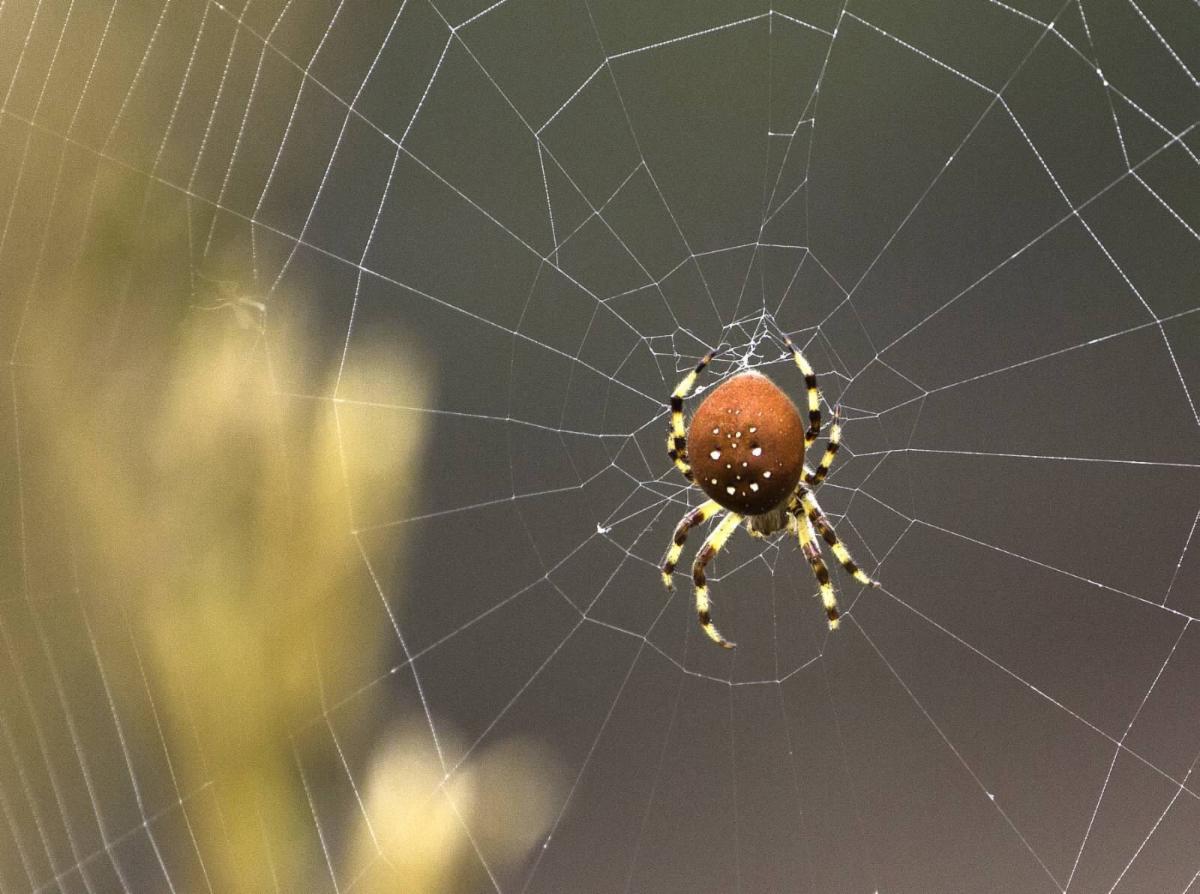
You may have been seeing some impressive looking spiders in some equally impressive orb webs lately. September is a great month to fall under the spell of spiders and their webs and orb web weavers at work are mesmerizing. My mother and I watched an orb-weaver for nearly an hour along the Cut River Bridge trail in the UP as she meticulously attached the catching threads to the “spokes” of her orb, as in this video.
|
|
I remember an evening decades ago when Rick Simek and I, along with another staff member, could not tear ourselves away from the “spider construction zone” all along the 45 degree angle of a Lake Huron cottage roof as we watched orbs spiders of all sizes craft their silken traps. Some spiders had to interrupt their weaving to attend insects caught before the web was completed. Incredible! |
|
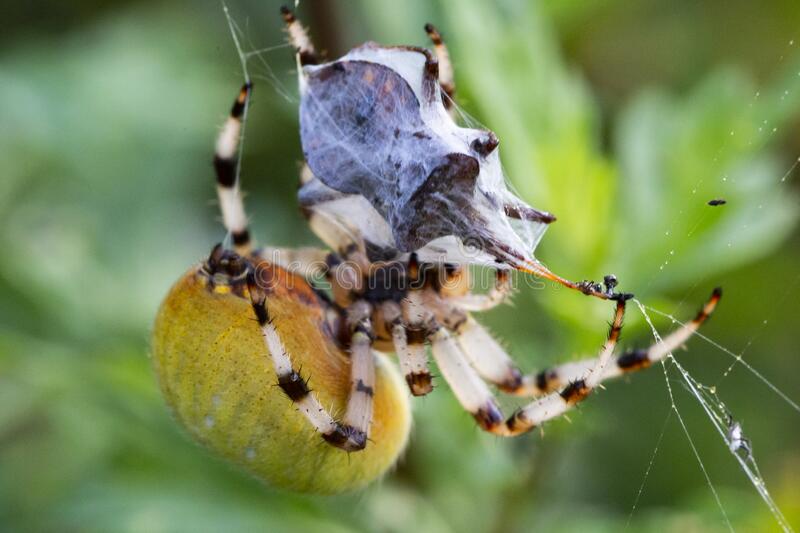
Orb-weavers use their silk to create a natural, sticky trap to catch mostly flying prey. Some are specialists and their web construction is adapted to optimize their hunting success. When prey is caught in the web, it struggles to free itself. That vibration signals to the spider that it has caught prey. The spider responds for a "quick bite" by injecting the prey with paralyzing venom, then wrapping the captive prey in a mummy-like cocoon of silk until the spider is ready for a meal.
Many orbweavers are nocturnal. Webs are built at dusk and used for snaring prey during the night. At dawn, the spider re-ingests the strands (along with moisture that has collected on it as dew) and recycles the nutrients when making the next web. Research shows that the “turn around time” of recycled silk is about 30 minutes. (Foelix 1996)
|
|
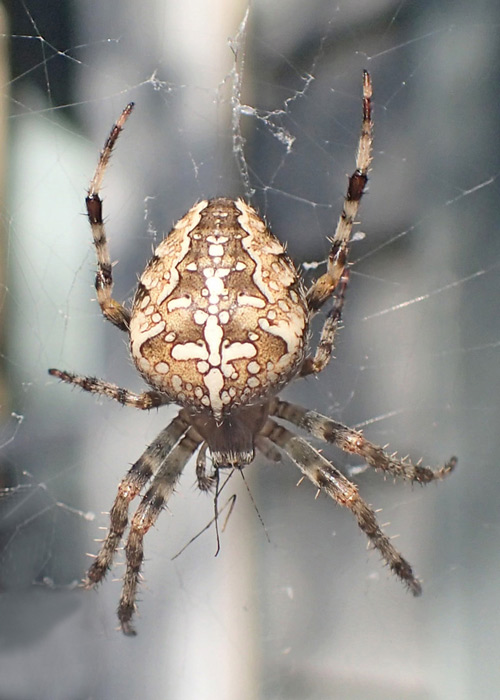
Of the confirmed 40,000 spider species on Earth, there are around 180 species of orb-weavers in North America. They vary in color, but all typically have large, bulging abdomens covered with unusual bold markings, often the result of guanine crystals deposited in patterned guanocytes (yes, patterned excrement deposits just beneath the abdomen’s transparent cuticle!). Guanine crystal deposits make the "cross" on this Cross Orbweaver Spider visible.
(Photo courtesy University of Wisconsin-Madison)
|
|
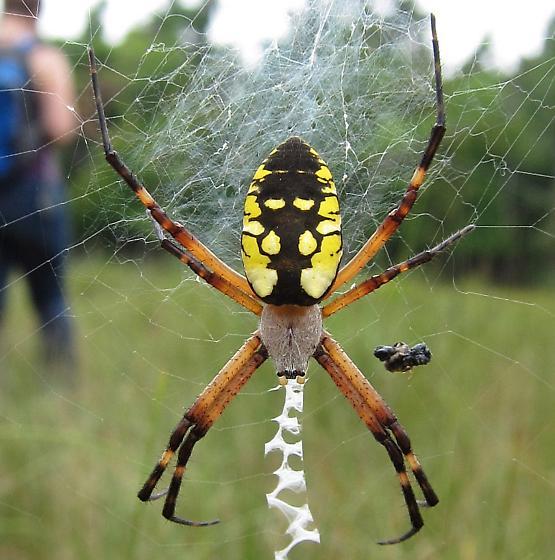
One of the most striking is the Black and Yellow Garden Spider (Argiope aurantia). They are only about an inch in body length for the female and a half inch for the male, and their contrasting yellow and black markings take on an art deco pattern. Similarly, their webs are equally unique and stunning, with a zigzag “stabilimentum” down the center.
(Photo by Seth Ausubel
The stabilimentum’s function is unclear and does not seem to actually stabilize the web’s strength, but research on this unique feature is ongoing. In some spider species, the stabilimenta can attract insects to the web!
|
|
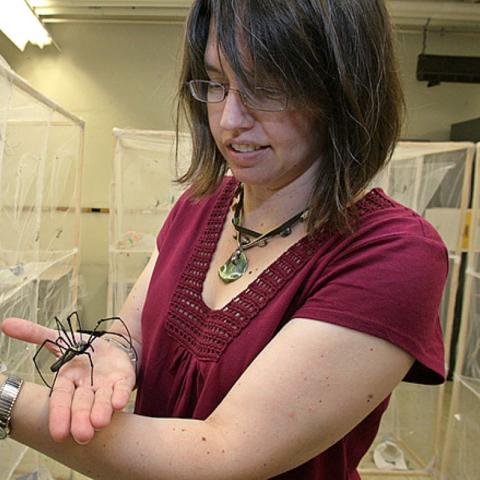
Speaking of spider research, UM-Dearborn is fortunate to have a faculty member who is a spider biologist! Dr. Anne Danielson-Francois is an Associate Professor of Biological Sciences in the Natural Sciences Department. “Dr. A,” as some of her students call her, is a terrific resource who often partners with the EIC on projects and programs.
If you’d like to learn more about local spiders, please join us for an evening walk through the Environmental Study Area to catch spiders in the act of constructing their silken traps. Maybe you’ll be as entranced as we have become, watching these artists weave their spell…
|
|
Evening Spider Stroll
Friday, September 23
8-10 PM
|
Join the EIC staff for an evening walk to shine a light on how and where local spiders are hard at work. We'll use flashlights to locate them as they construct their intricate silken traps, spun from the own bodies. It's the ultimate DIY project! |
|
|
Fall Migration Walks!
Don't forget about the return trip south for our spring migrants! Join Rick Simek at the EIC on Saturday mornings at 8:00 AM for a leisurely 2-hour bird walk to look for what Roger Tory Peterson dubbed "confusing fall warblers." For example the Chestnut Sided Warbler below: spring plumage left; fall plumage right. No worries--with Rick as your guide, you'll be up for the challenge!
Walks are planned for Sept. 10, 17, & 24, and Oct. 1.
(Photos by Bruce Wunderlich)
|
|
Young Naturalists Program |
After a 2-year wait, our staff is excited to be offering the 9-month Young Naturalist Program once again. Children ages 9-12 will join their peers in exploring the natural world in a series of hands-on program sessions, September through May. All but one session will take place from 9:30AM to 12PM on one Saturday per month.
|
|
|
Various session topics will include pond study, maple sugaring, wildflowers and trees, insects and spiders, birds and migration, creatures of the soil, and owl prowl. We will also be on hand to enjoy and note the changes in nature through the seasons. Experienced naturalists will lead all the sessions.
This program is tailored for children who have a strong interest and curiosity about the natural world and who wish to explore nature outdoors within a mutually supportive peer setting.
|
|
2022 Pollinator Photo Contest! |
|
Time is running out to submit your photos to the The EIC's 3rd annual Pollinator Photo Contest! Submissions will be accepted until September 30.
The University of Michigan-Dearborn has been certified as a Bee Campus USA affiliate by the Xerces Society since 2019 for its efforts to promote pollinator education and conservation.
Following the success of the first two contests, the EIC is once again sponsoring a photo contest featuring pollinators and their flowering plants, such as 2021 Award Winner Jonathon Maurice's "At Work." (above)
Visit the Pollinator Photo Contest website for more information and submission guidelines. You can also enjoy previous years' submissions set to music in videos compiled by Dr. David Susko. We look forward to viewing your submissions!
|
|
Recent Happenings and Opportunities |
|
PolliNation Project and Dearborn SHINES "Cross Pollinate!"
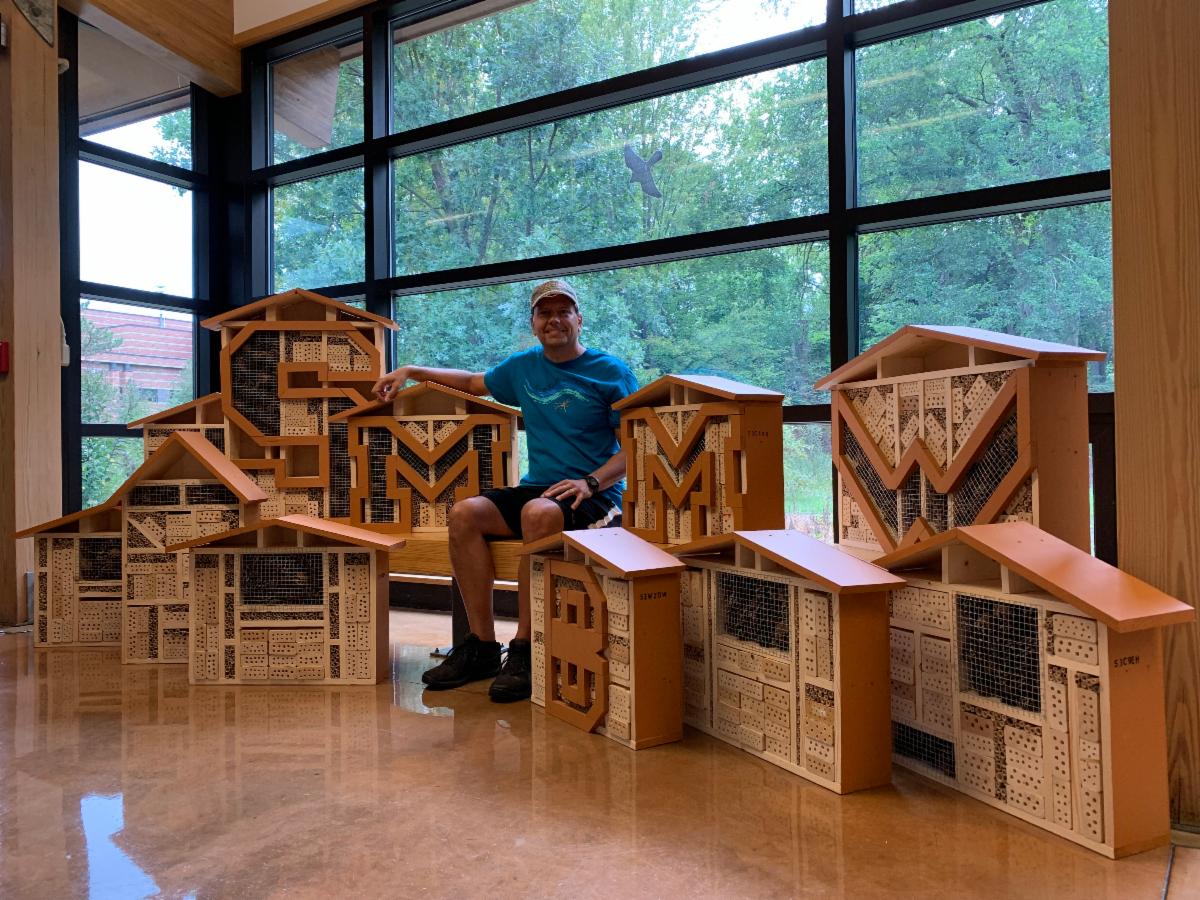
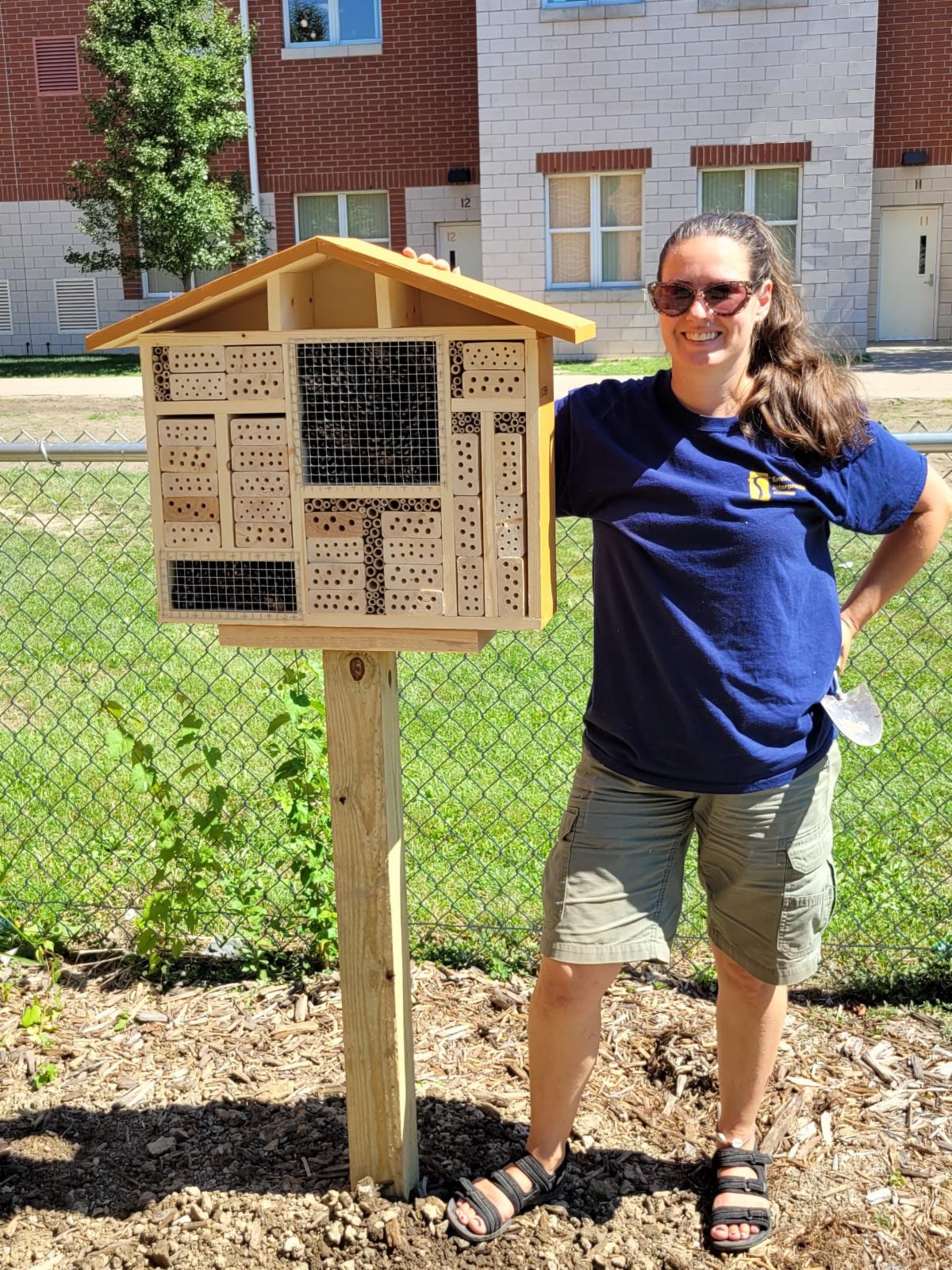
Over the summer months, former EIC director David Susko (right) has been busy as a bee--and busy FOR the bees! As part of the PolliNation Project, he has built 13 “insect hotels”, which will provide nesting spaces for important pollinators. Working with EIC staff member Dale Browne (below), they recently installed the hotels at Dearborn elementary and middle schools that have participated in the Dearborn SHINES school garden project.
By introducing nesting spaces to the gardens, more pollinators can mean more fruits and vegetables produced. The insect hotels also provide a great opportunity to include curriculum work for students to learn about pollination, insect life cycles, and native bees and wasps.
Students will also get a chance to become citizen scientists when they use PolliNation Project apps (developed by UM-Dearborn computer science students) to record and report the types of insects that use the hotel.
|
|
The best part about the insect hotels is that they are kid-friendly, making them a great way to observe fascinating bee and wasp pollinators. The types of bees the hotels attract are generally solitary and do not form colonies like honeybees or yellowjackets. They simply lay their eggs in specially sized bamboo tubes or drilled holes, provision them with pollen or paralyzed insects, and then seal everything off with mud, leaves, sticks or a combination of these.
Dale contributes, "Because they have no hive to protect, they are non-aggressive, and some species have no stinger at all. In fact, since adult bees do not live in the hotels, we might consider calling them “insect nurseries” instead!" Awwww...
|
|
For She's a Jolly Good Fellow
Sustainability Intern Valerie Osowski has been chosen as the Parkhurst Natural Areas Fellow! Here are Valerie's reflections on her experiences so far.
From May to August 2022, I worked at the Environmental Interpretive Center (EIC) as the Summer Sustainability Intern. I was given a wide variety of tasks throughout this time, and I have met a diverse group of people. I learned about the wildlife native to Michigan, the complexities of environmental management in an urban setting, and the effort it takes to keep our surroundings both beautiful and beneficial for the planet.
However, the highlights of my work at the EIC have been with the Rain Gardens and Organic Community Gardens. My project at the Rain Gardens has been a long, ongoing process. Since the beginning of summer, I have researched the ideal plants and placements for the areas where a few plant species had taken over. Finally, now that the summer is coming to a close, the areas where dominating plants had been removed are almost completely filled with new plantings. This project has been the most rewarding for me, as I have been able to witness my efforts transform from words and pictures on a screen to real, tangible life that will flourish for years to come.
In addition to my project at the Rain Gardens, I have worked at the Community Organic Garden. Here, I have completed a variety of tasks, but mainly assisted in cleaning the gazebo and helped volunteers reinstate the composting system. These projects have allowed me to interact with a group of people that have a common interest, but also varying backgrounds and experiences. It has taught me that there is so much more occurring in our community than I realized, and there is always a way to get involved in our environment.
|
|
Now that my time as the Summer Sustainability Intern has ended, I have been given the opportunity to continue working at the Environmental Interpretive Center as the Parkhurst Natural Areas Fellow. I am greatly looking forward to continuing these projects, as well as beginning new ones that will continue to teach me something new every day. My experience at the EIC has been wonderful, and it has led me to fall even more in love with our planet Earth. |
|
Check Out Our New Story Walk!
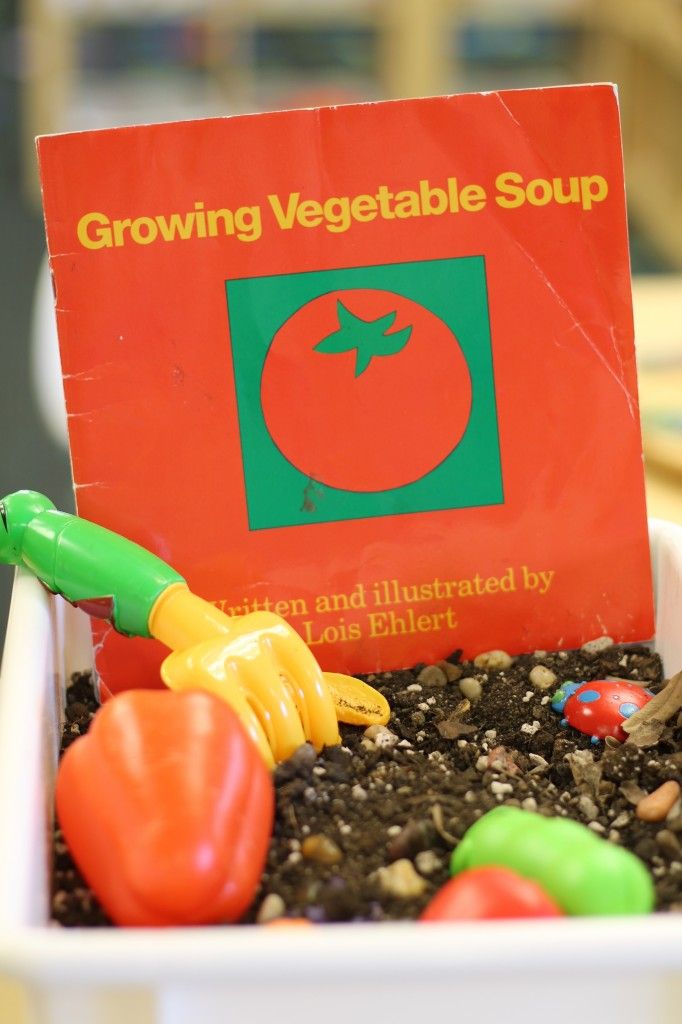
"Growing Vegetable Soup"
|
"Dad says we are going to grow vegetable soup." So begins Lois Ehlert's bright, bold picture book about vegetable gardening for the very young. The necessary tools are pictured and labeled, as are the seeds (green bean, pea, corn, zucchini squash, and carrot). Then the real gardening happens . . . planting, weeding, harvesting, washing, chopping, and cooking! In the end? "It was the best soup ever." You can find the Story Walk along Fair Lane Drive in front of the EIC. |
|
|
Lend a hand on Stewardship Saturdays from 1-4 pm on the third Saturday of the month. Pick one or more days to come out and help.
This year-round, ongoing effort helps address the many threats posed by various invasive plants to habitat health and quality. Each month brings opportunities for removal of various invasive plants following best management practices, etc.
Children must be at least 10 years of age to participate. For more information or to register for Stewardship Saturdays, please contact Rick Simek, the EIC Natural Areas Manager, at rsimek@umich.edu or call 313-583-6371.
|
|
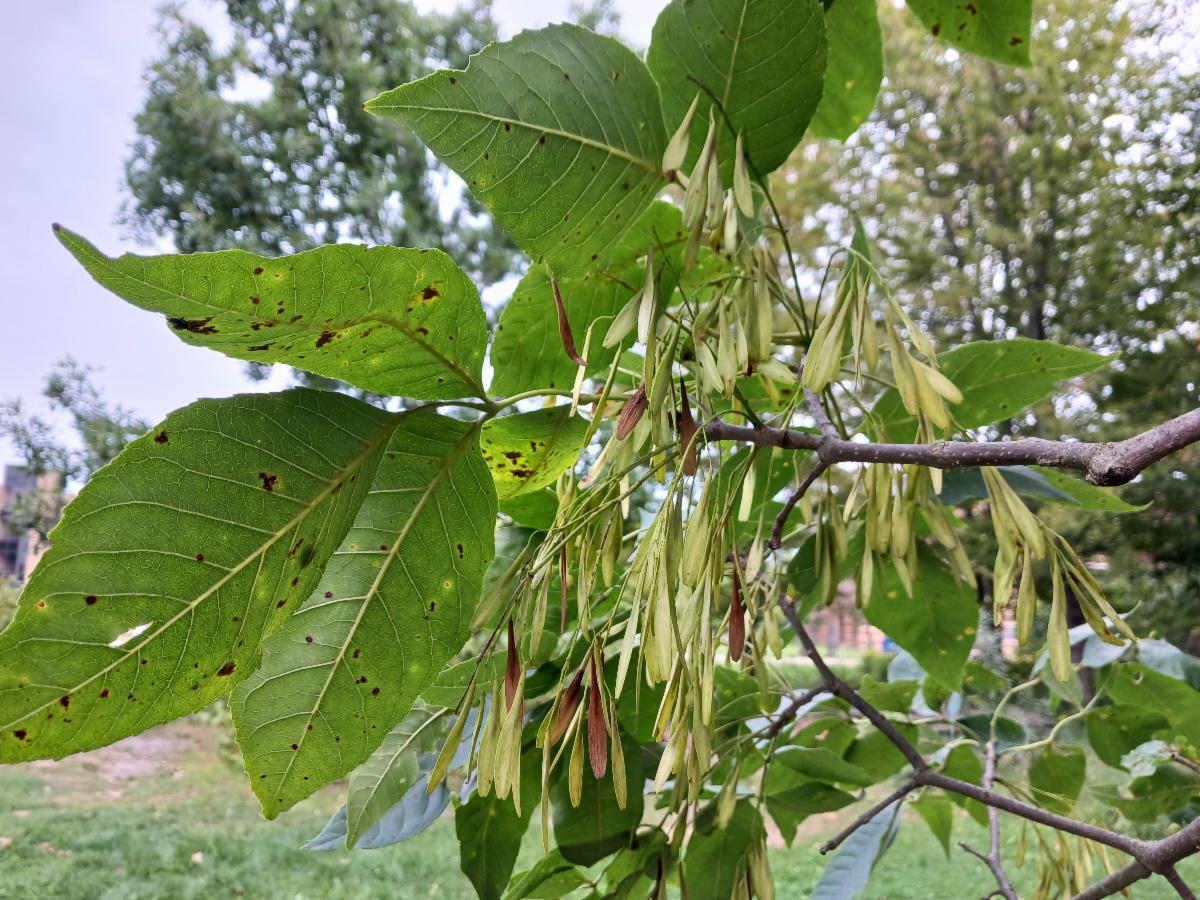
This past spring in the Environmental Study Area, it seemed that every Green (or Red) Ash Tree (Fraxinus pennsylvanica), about 20 feet or more tall was laden with dry, winged fruits called samaras. These samaras are now falling onto the ground. (Photo by D. McLeer)
|
|
|
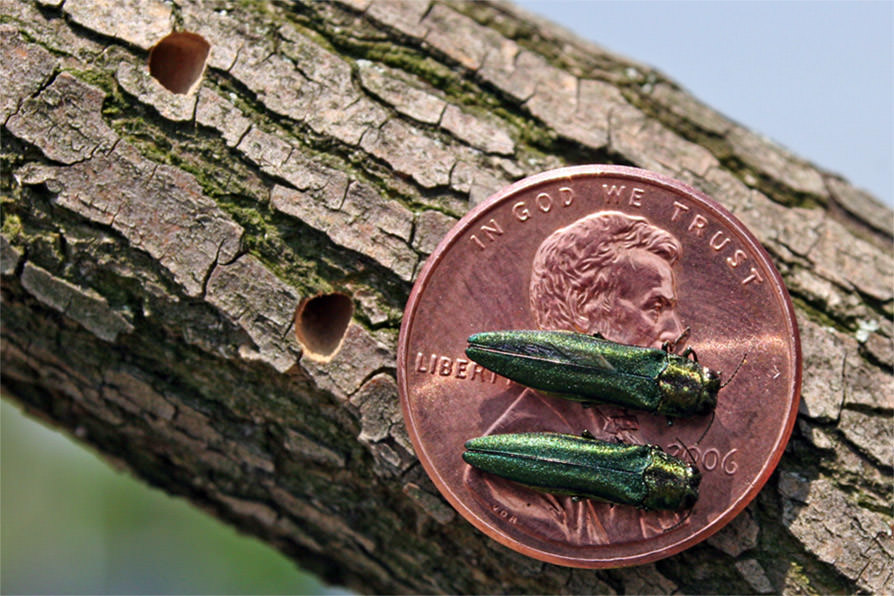
This is cause for optimism. As you may recall, the invasive emerald ash borer killed off all the large ash trees in the Environmental Study Area in the first decade of this century. First detected in southeast Michigan in 2002, the beetle, native to China, has now spread into 39 states as well as 5 Canadian provinces, killing millions of ash trees in its path. |
|
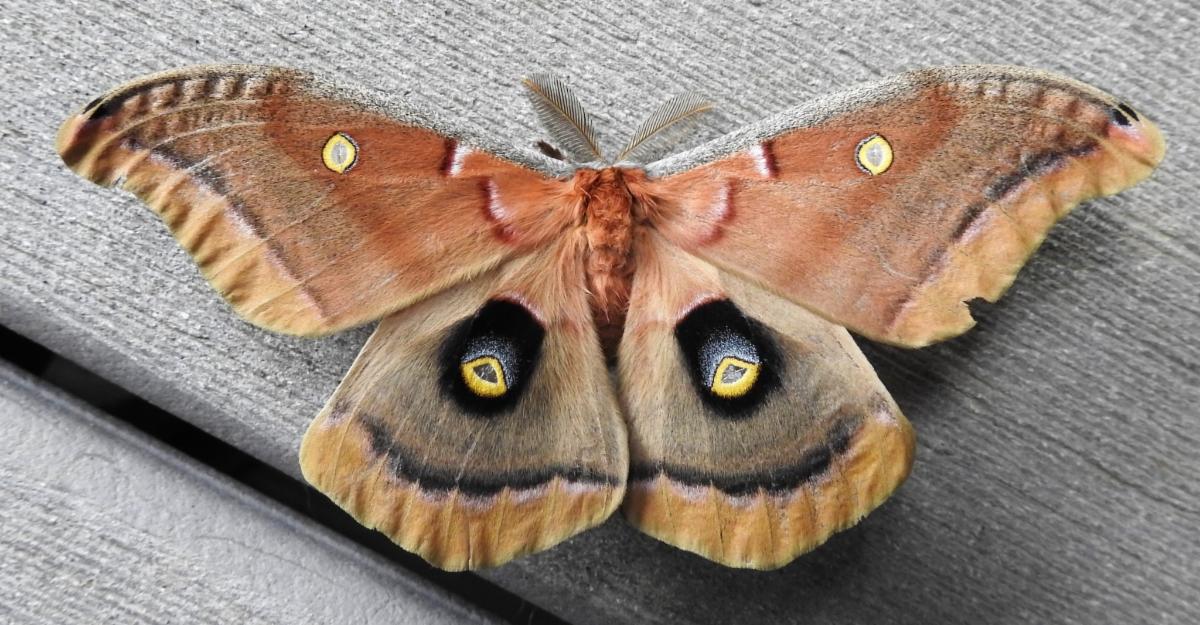
Native ash trees in the genus Fraxinus are important contributors to the health of forest ecosystems. As this table shows, the leaves of Green Ash provide food for the caterpillars of about 40 species of moths. In essence, the loss of this tree in the forest “unstitches” these and other important faunal associations. This includes nesting songbirds that feed upon the caterpillars and other insects on ashes. (Photo of Polyphemus moth courtesy iNaturalist)
|
|
Of all the hopeful signs of ash comeback, the presence of samaras is perhaps the most encouraging. It means that some ashes are living long enough to produce seed. New ash trees growing from these seeds hold the potential for genetic diversity and adaptation that could bring about resistance to the emerald ash borer. Plentiful samaras also mean a steady supply of seedling ashes spread out over the landscape. |
|
|
In light of this development, it appears as though the genus Fraxinus may, in the coming years, become like the American Elm (Ulmus americana) in that although most of the very large trees will be gone, it will still grow to the stage where it produces seeds. In this way, it could still remain “stitched” into the ESA and other forest ecosystems through its faunal associations. Let’s hope so!
-Rick Simek
|
|
Venturing outdoors and encountering nature is good for your health. Our trails are accessible daily from sunrise to sunset, so please visit our Environmental Study Area. Check out our Remote Learning Activities & Resources page for ideas to create a “Neighborhood Nature Journal” and “Family Nature Walk” activities!
|
|
|
|
|
|
|
|