Adult and Family Literacy Today
Updates on adult and family literacy research, policy, and practice
Volume 21: December, 2025
| | |
Best wishes for a joyful holiday season
and a Happy New Year!
| | Teaching for Change: Supporting Adult Learners Through Life Transitions | | |
“Progress is impossible without change, and those who cannot change their minds cannot change anything.” — George Bernard Shaw
Change is a constant process in life, and there is nothing permanent other than change itself. As professional adult educators, much of our work revolves around helping adults prepare for change. We experience change in our own lives, which can be hard on us such as migrating to a new country, having a baby, going through a divorce. Embedding activities in adult education programs to support learners’ ability to embrace change is critical to their success; understanding how change occurs is an essential part of effectively developing these activities.
Research Perspective
Studies show that change occurs when there is a major challenge (Dirkx, 1998; Freire, 1970; Mezirow, 1991, 2009). Mezirow's (1991) theory describes transformation as a process that education can support, beginning with a disorienting dilemma, a situation that calls into question the existing world view and assumptions. This is followed by self-examination and critical reflection, exploration of new roles or actions, and, over time, the integration of new perspectives into one’s life (Mezirow, 1991). The phases do not necessarily occur in a fixed order, and people do not always achieve authentic transformation, but, according to Mezirow, the process always begins with a disorienting dilemma.
The literature shows that collective support and discussion among adults are foundational processes that enhance learning and equip individuals and communities to navigate emerging changes (Fleming, 2018; Knowles, 1984). According to Transformative Learning Theory (Mezirow, 1991), as adults embrace collective support and dialogue, they tend to enhance their understanding through shared knowledge, build emotional and psychological support, and facilitate adaptation to new changes. In particular, research values critical reflection among migrant learners and emphasizes the need for educators’ attentiveness as they accompany students on the recursive journey of transformation. Such attentiveness entails acknowledging the emotional dimension of learning, as many adult learners, particularly refugees, experience fear, anger, or guilt alongside the challenges of adjusting to a new environment (Mezirow, 2000).
From Theory to Practice
Heuer and King (2008) proposed the Contextualized Model of Adult Learning (CMAL), which can support educators in integrating real-world challenges that learners might experience into their instruction so that learners are better prepared. Examples of what this might look like in the classroom include:
-
Providing opportunities for cooperative learning and group work, which increases learner engagement, deepens understanding of the content, and increases retention and knowledge transfer. For instance, learners can be assigned to read different parts of a poem and then serve as the “expert” who explains the part they read to other members of their small group.
-
Facilitating effective participation in critical discourse through activities that allow learners to brainstorm either alone or with their colleagues in the learning setting (Heuer & King, 2008). For instance, learners can be asked to discuss the solution to a problem as a team or to share their personal opinion about a particular scenario.
- Promoting equal contribution and participation in project-based activities to encourage teamwork and collaborative thinking. For instance, learners can work together on a long-term project, with each person assigned a specific role on the project that showcases their interests and strengths.
- Integrating learning objectives related to autonomous thinking to help learners build their capacity to think independently. For instance, learners can be asked to respond to open-ended questions.
- Establishing an environment that builds trust and care to facilitate the development of sensitive relationships among learners and with the instructor. For example, learners and instructors can co-create a list of classroom rules and expectations at the beginning of the program year that all agree to follow.
Because change is inevitable, helping adult learners practice adaptability in the safe and supportive environment of adult education classrooms makes them better prepared to engage in challenges (and changes) of modern society.
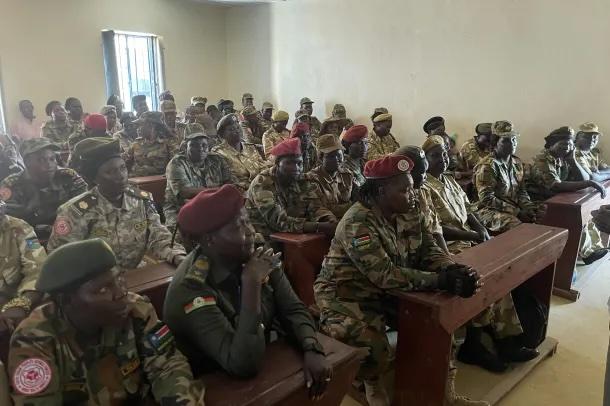
| | Literacy Around the World | | Advancing Women's Literacy for Leadership and Peacebuilding in South Sudan's Security Sector | "UNESCO is supporting over 800 women in South Sudan's security sector to build literacy, numeracy, and ICT skills. Funded by the UN Peacebuilding Fund, the project aims to prepare them for leadership and advance inclusive peacebuilding." | | What's New at the Institutes? | | |
Workforce Partners Convene for Regional Cross-Training and Service Alignment
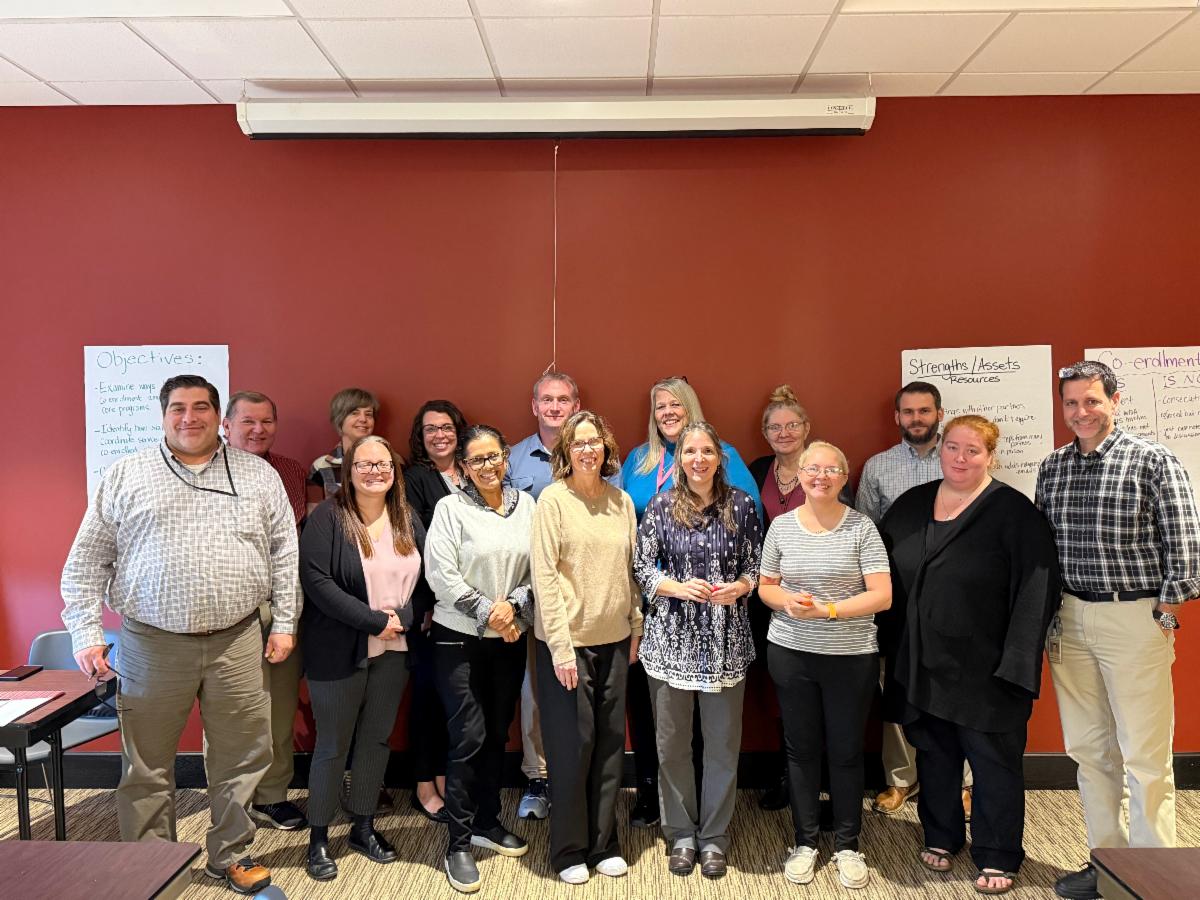
On November 6, 2025, staff from the Workforce Development System Liaison Project facilitated a face-to-face cross-training event in the Northwest Workforce Development Area. The event brought together workforce development system staff to examine current strengths and how to use those strengths to improve and better coordinate services provided to job seekers in their large geographical area. Participants left with action steps that involved exploring current referral and co-enrollment status and working collaboratively to close any gaps in referrals to improve shared outcomes.
| |
New Research Brief Available:
Parents’ Learning in Family Literacy: A Mixed-Methods Evaluation
The Goodling Institute for Research in Family Literacy has released Research Brief #11: Parents’ Learning in Family Literacy: A Mixed-Methods Evaluation. Based on a multi-year study of family literacy programs, the brief centers parents as learners and highlights educational, personal, social, and parenting outcomes. Read the full brief to explore implications for practice, evaluation, and policy.
| |
Friendsgiving with our Students
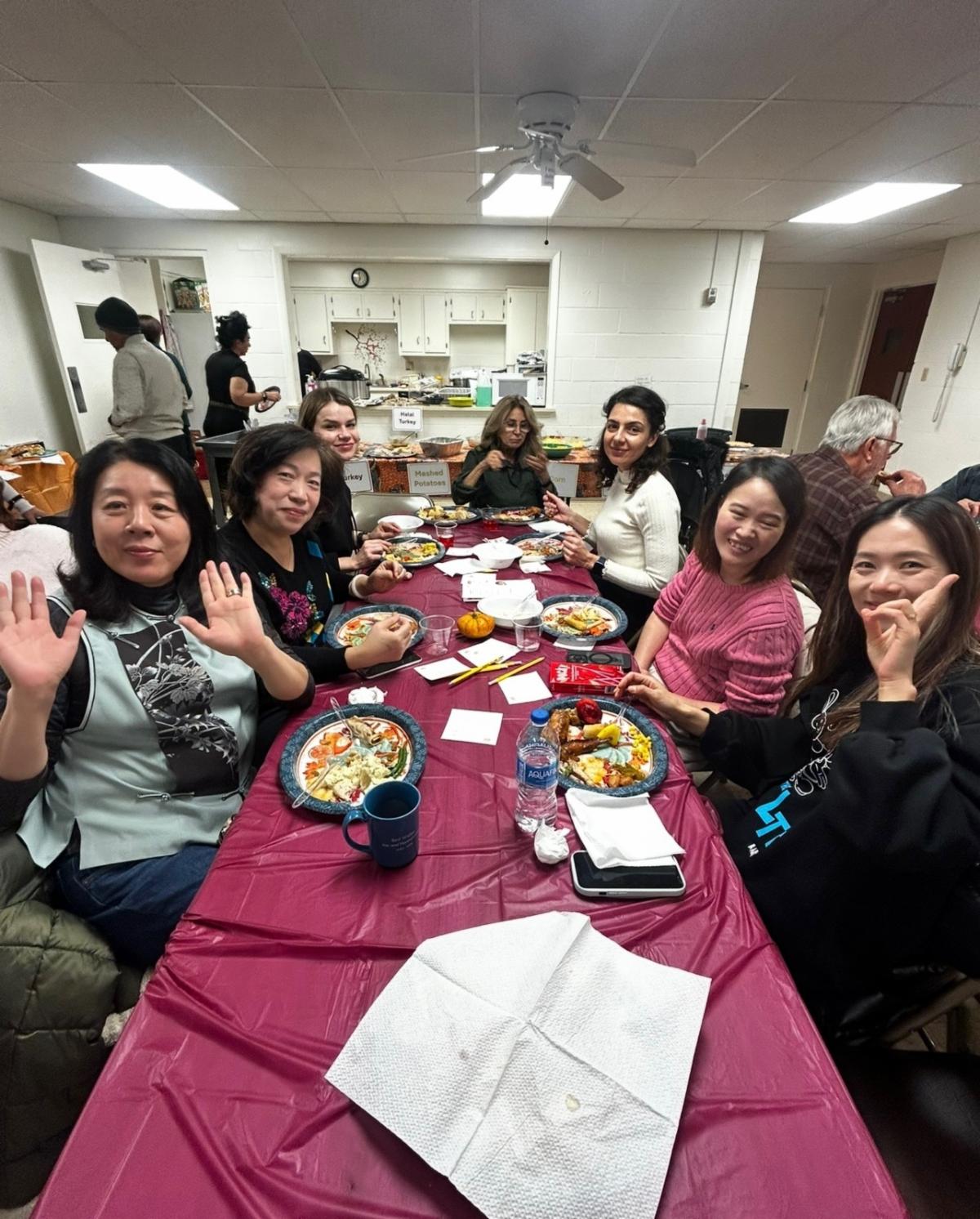
On Wednesday, November 19, ISAL ESL students and teachers held the annual Friendsgiving gathering. Teachers prepared a traditional meal, and students brought a variety of international dishes to share. One colleague from ISAL provided music for the evening, and staff donated several baskets that were given away during the event. It was a relaxed moment for everyone to spend time together and enjoy good food from many cultures.
| |
| |
Coping with Change
Change can be something we actively seek—or something that happens to us unexpectedly. In both cases, it often brings uncertainty, resistance, and emotional strain, especially for adult learners balancing complex life responsibilities.
| | | | Psychology reminds us that these reactions are normal and that change is a process, not a single moment. The resources below offer research-based, practical insights to help adult educators support learning through transitions. | | Upcoming Events and Conferences | | |
Unlocking the Power of Lifelong Learning: A Global Webinar Series
Join the UNESCO Institute for Lifelong Learning’s new webinar series featuring policymakers, experts, and practitioners discussing how lifelong learning transforms lives and communities worldwide. The series covers topics such as digital learning for older adults, family literacy, greening education, learning cities, teacher development, and prison education, and also highlights initiatives from the UNESCO Global Network of Learning Cities and the UNESCO Global Alliance for Literacy.
Sessions take place on the first and third Wednesdays of each month—an opportunity to gain fresh insights, exchange best practices, and support lifelong learning for all.
| | |
GSOLE's Annual Conference - Persistence in the Age of Disruption
February 4–6, 2026, Online
GSOLE’s (Global Society of Online Literacy Educators) annual conference brings together literacy educators to share innovative online teaching, tutoring, and program development practices. Held fully online for accessibility and engagement, the event features a mix of synchronous Zoom sessions and asynchronous presentations on the GSOLE website.
This year’s theme—“Persistence in the Age of Disruption: Celebrating a Decade of Collaborative Work in Online Literacy Education”—guides three days of conversation and exploration.
| |
Penn State is an equal opportunity, affirmative action employer, and is committed to providing employment opportunities to all qualified applicants without regard to race, color, religion, age, sex, sexual orientation, gender identity, national origin, disability or protected veteran status. | | | | |