Adult and Family Literacy Today
Volume 25: August, 2026
| | Update on adult and family literacy research, policy, and practice | | When Literacy Exists Before It Counts | | |
Entering an adult literacy program often begins with a test score. Standardized assessments like the Tests of Adult Basic Education (TABE) can provide useful information about particular reading, writing, or numeracy skills, but they cannot show the many other ways adults use literacy in their daily lives.
Adults who score below proficiency on these tests often do complicated things with literacy. They manage family schedules, compare medical information, communicate across languages, help children with schoolwork, navigate online systems, interpret workplace documents, coordinate caregiving, and make complex decisions about work, health, family, and finances. These activities require interpretation, communication, problem-solving, and an awareness of audience and context. In other words, literacy is already present, even when it does not look like the literacy measured by a standardized assessment.
In a recent article, Literacy Before It Counts: Legibility and Recognition of Adult Literacy Beyond Standardized Assessment, Graduate Assistant Tara Jewell and Goodling Institute Co-Director Esther Prins (2026) examine why adults’ existing literate capabilities are often invisible or undervalued. We argue that institutions like schools, workplaces, and government agencies frequently require learners to reshape, explain, or translate their literacy abilities into officially accepted forms. Otherwise, their literacy does not count. Rather than asking whether adults have literacy, this framework assumes that they do, and asks three questions: Can institutions see it? Will they recognize its value? And who bears the burden of making it count?
Research Snapshot
Drawing on research from adult literacy, family and community literacy, prisons, multilingual and transnational families, and multimodal learning, we argue that literacy is broader than any single test or institutional definition. Literacy includes multiple socially situated ways of making meaning through language, print, images, digital tools, gestures, relationships, and everyday activities (Perry, 2012).
The article introduces three connected ideas that can help practitioners understand why some literacies are recognized, or count, more readily than others.
- Legibility asks whether an institution can see or “read” something as literacy in the first place. A learner may use sophisticated literacy practices at home, at work, or in the community, but those practices can remain invisible if they do not resemble or conform to school-based expectations for reading and writing.
-
Recognition asks whether that literacy is valued once it becomes visible. Institutions may acknowledge that a learner is communicating effectively, while still treating academic essays, standardized English, or print-based texts as more rigorous than oral, multilingual, visual, digital, or community-based forms of meaning-making.
- Translation labor refers to the often-invisible work people do to make their knowledge and literacy acceptable to institutions. Learners must often change how they speak or write, translate between languages, explain their experiences in institutional terms, or reshape visual and everyday knowledge into conventional written forms. Some people’s literacy practices already align with institutional expectations and are recognized almost automatically. Others must repeatedly translate themselves simply to be viewed as capable or credible.
Together, these ideas shift the question from Does this person have literacy, to What forms of literacy are we prepared and willing to see, value, and support?
Illustrative Examples
Some examples from our article show how literacy can be present and complex, even when it is not recognized or valued by official authorities. Vieira’s (2019) research, for example, shows how adults in transnational families use letters, digital communication, remittance coordination, and multiple languages to maintain relationships and manage responsibilities across borders. These practices require flexibility, interpretation, and an awareness of different audiences and contexts, yet do not always resemble the literacy that is captured by standardized assessments. Sweeney (2010) found that incarcerated women used urban fiction, memoir, and self-help books to make sense of their experiences with race, violence, grief, trauma, and identity. Their reading involved deep interpretation and meaning-making, even though those genres and ways of reading are treated as less valuable. We also share the story of “Rae,” one of the author's former student who struggled with a traditional 15-page research paper. An accomplished visual artist, Rae instead created a graphic narrative that demonstrated research, argument, evidence, counterargument, and audience awareness. The literacy was there, but because it did not take the expected form, the project had to be translated into academic standards before it could fully count.
Implications for Practice
This perspective invites educators to begin with curiosity rather than deficiency. Instead of focusing only on what a learner cannot yet do, we can ask: How is this person already using literacy? What knowledge and strategies are they bringing with them? What translation work are they being asked to perform before those capabilities count?
Family literacy programs offer especially clear opportunities to recognize literacy in everyday life. For example, the Weekly Home Activity Log and pre-post survey used in the William Penn Foundation study ask families about a broad range of language and literacy activities, not just storybook reading. Other sample literacy practices included telling stories, singing, talking during meals and other daily activities, playing word and other games, doing arts and crafts, visiting the library, and doing things that involve math (e.g., following recipes) and science.
These measures reflect a broader understanding of family literacy. They recognize that families support language development and meaning-making through routines, relationships, play, storytelling, problem-solving, and shared daily experiences. A standardized assessment might miss such activities because they do not necessarily produce a formal written product or resemble school-like literacy practices.
This perspective can also shape teaching. Educators can invite learners to describe how they use literacy at home, work, or in their communities before introducing a new skill. For many learners, “literacy” means reading a novel or writing an essay, so cataloguing the informal ways they use literacy can be enlightening and validating. A lesson on formal email writing could begin with the ways learners already adjust text messages and oral language for different audiences. Instruction in evaluating online information could build on how adults compare health advice, prices, services, or news sources.
Assessment should become more expansive and inclusive as well. Standardized measures are often required and can offer useful information, but they can be supplemented with portfolios, observations, learner reflections, oral explanations, multimodal projects, and demonstrations of literacy in meaningful contexts. Community-based assessment can further broaden what counts by inviting peers, family members, coworkers, and others to share what they have observed learners doing, learning, or changing over time.
Recognizing everyday literacy does not mean lowering expectations or denying learners access to dominant or formal types of reading and writing. Adults deserve access to the literacies that shape education, employment, healthcare, and civic participation. The goal is to do both: support learners in gaining access to institutionally valued literacies while refusing to treat those literacies as the only evidence of intelligence, knowledge, or capability (Janks, 2010).
Looking Ahead
Adult learners often possess rich literate capabilities before they enter our classrooms. Our work is not only to teach new literacies and hone skills, but also to recognize and value existing ones and reduce or eliminate the translation labor learners must perform before their knowledge counts.
The goal, then, is not simply to ask how learners can become more legible to our programs. It is also to ask: How might our instruction, assessment, and institutions become better at recognizing, valuing, and using the literacies that are already there?
Assessment: Broadening What Counts
Learners can demonstrate what they know and can do in myriad ways. Consider using:
- Portfolios that collect examples of work and show growth over time.
- Using Portfolios in Program Assessment, University of Hawai’i at Mānoa
- Portfolios for Assessment, The University of Maine
- Multimodal projects that give opportunities to use writing, speaking, images, digital tools, or a combination of formats to demonstrate what they have learned.
- Choice Board Template, We Are Teachers
- Community-based and real-world literacy projects that connect learning and assessment to the ways learners use literacy in their families, workplaces, and communities.
- Service Learning Toolkit, National Geographic
- Service Learning Toolkit, Michigan State University
- Collaborative and discussion-based assessments that invite learners to show what they know through conversation, questioning, working with others, and explaining or building on ideas.
- The Big List of Class Discussion Strategies, Cult of Pedagogy
- Discussion Protocols, Teaching & Learning Lab at Harvard Graduate School of Education
- Community-based assessment that invites classmates, family members, coworkers, and other community members to share what they have observed learners doing, learning, or changing over time.
Thinking about Assessment More Broadly
| | Literacy Around the World | | After decades of teaching media literacy, Finland equips students with skills to spot AI deepfakes | As many countries grapple with the realities of media literacy, Finland has moved ahead by incorporating AI literacy into its longstanding media literacy curriculum, which begins with children as young as three years old. The coursework is part of a robust anti-misinformation program designed to make Finns more resistant to propaganda and false claims, including disinformation from neighboring Russia. As AI literacy becomes an increasingly vital skill, Finnish educators are teaching students how to recognize AI-generated content and critically evaluate what they encounter online. Can other countries take a similar approach? | | New study examines the sharp drop in reading for pleasure | Researchers from the University of Florida and University College London have found that daily reading for pleasure among people aged 15 and older in the United States fell by 40% over the past two decades. Researchers point to digital culture and broader structural factors as possible contributors to the decline. Adults, particularly those in young people's lives, can help nurture and maintain a culture of reading by modeling reading for pleasure. | | What's New at the Institutes? | | |
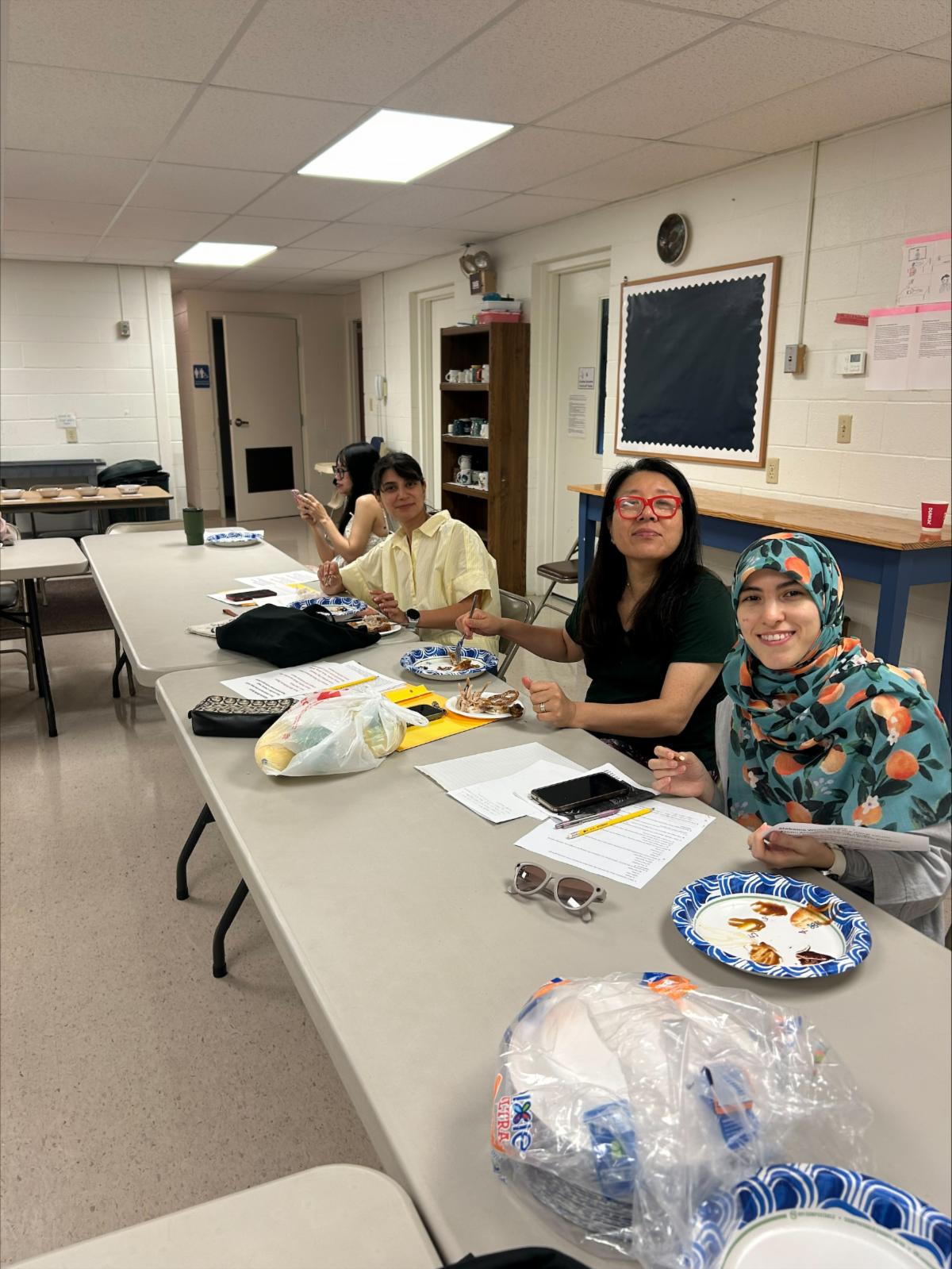
In late July, students in the Intermediate and Advanced ESL classes, both taught by ISAL colleagues, wrapped up their unit on American barbecue with a fun and interactive tasting challenge. Throughout the unit, students explored the history and cultural significance of American barbecue, learned about regional barbecue traditions across the United States, and built vocabulary related to food, cooking, and flavor.
As the culminating activity, students received summaries of six different regional barbecue sauces, including their unique ingredients and flavor profiles. They then participated in a mystery taste test, sampling each sauce without knowing its identity and using clues from the descriptions to determine which regional sauce they were tasting. The activity encouraged students to apply their new vocabulary, discuss flavors using descriptive language, and make predictions while learning about the rich diversity of American food culture. It was a delicious and engaging way to celebrate the end of the unit!
| | Goodling Institute researchers and collaborators have published two recent articles on the Talk with Me Toolkits project, funded by the Institute of Museum and Library Services: | | |
“Using the Smithsonian’s digital Talk with Me Toolkits to support family engagement in public libraries” was published in Public Library Quarterly.
This article elucidates how public libraries can incorporate high-quality digital resources to support family engagement, specifically, intergenerational caregiver-child interactions and language and literacy learning. Using design-based research, this project adapted the Smithsonian Institution’s Talk with Me Toolkits (TMTs) for use in public libraries. The TMTs are free, online collections of videos, photographs, and artworks organized around a theme. Data from pre-post caregiver surveys and interviews, and focus groups with caregivers and librarians at four libraries showed that librarians viewed the TMTs as a valuable family engagement tool. Moreover, caregivers’ self-reported language and literacy interactions with children increased significantly.
| |  | |
“Building museum-university-library partnerships for family learning and engagement: Lessons from the Talk with Me Toolkits” was published in the Journal of Museum Education. The Talk with Me Toolkits project illustrates how museum resources can be leveraged through intentional, interdisciplinary collaboration to support early childhood development and family engagement. Developed by the Smithsonian Office of Educational Technology in partnership with the Goodling Institute for Research in Family Literacy (Penn State University) and Family Place Libraries™, the Toolkits are free digital resources designed to promote language-rich interactions between caregivers and young children. Each Toolkit features thematic Smithsonian images and media paired with conversation prompts, hands-on activities, and children’s book recommendations. This article examines the benefits each partner brought to and gained from the collaboration. The Smithsonian strengthened family-learning offerings through early-literacy expertise and library-based field testing. The Goodling Institute shaped real-world digital tools while reaching families in new settings. Family Place Libraries enhanced early learning services by incorporating authentic museum materials and modeling new informal learning approaches. Together, these organizations demonstrate how cross-sector partnerships expand museum education’s reach and relevance, particularly for underserved families and early learning audiences.
| | |
Strengthening Strategic Workforce Partnerships in Ohio
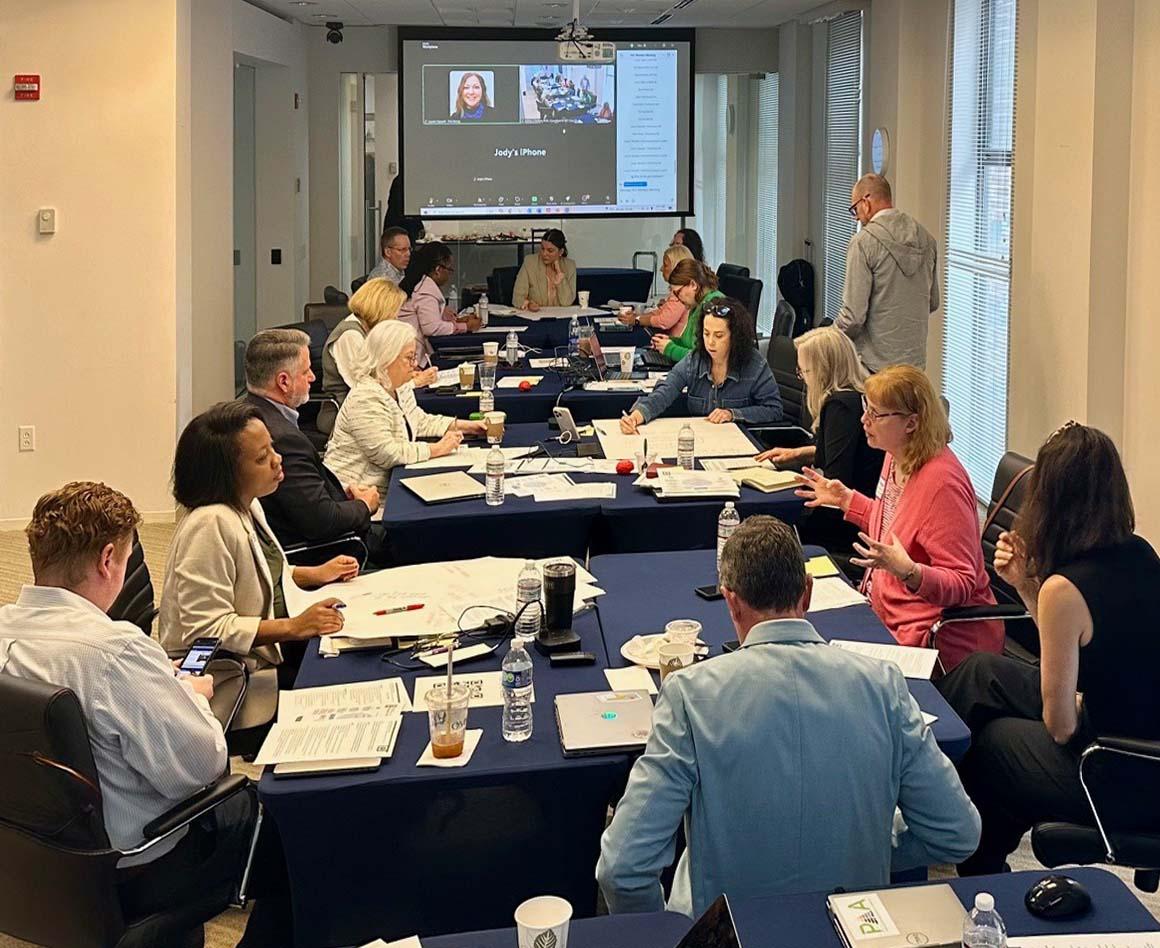
Marcela Movit and Chrissie Klinger recently worked with adult education program administrators in Ohio on developing and fostering strategic partnerships with employers and ensuring that adult education is actively represented in workforce planning and policy discussions. Over the course of six months, participants in this professional development opportunity assessed the strengths and gaps in their current workforce partnerships, explored strategies to strengthen and build successful partnerships and collaborations with key stakeholders, and began developing an action plan for enhancing their relationships with workforce partners. Participants left with tools, resources, and action steps to increase their engagement with workforce partners during the 2026-2027 program year.
| | Everyday literacy happens in conversations, routines, relationships, and communities long before it appears on an assessment or in a classroom. This month's resources highlight free tools and ideas that help educators and families recognize, nurture, and celebrate the many ways literacy is already part of daily life. | |
| |
Family Dinner Project
Literacy grows through everyday conversations and shared experiences. The Family Dinner Project offers free conversation starters, games, recipes, and activities that help families build language, storytelling, and communication skills around the dinner table.
| | | |
National Center for Families Learning
Families support learning in countless ways every day. The National Center for Families Learning offers free resources, activities, and professional learning opportunities that help educators and families strengthen literacy through meaningful engagement at home and in the community.
| | |
ReadWriteThink
Reading, writing, speaking, listening, and creating all contribute to literacy learning. ReadWriteThink offers hundreds of free lesson plans, interactive tools, and family literacy activities that help educators build on learners' existing knowledge while developing new skills.
| | | |
Language and literacy take many forms across homes, schools, and communities. Colorín Colorado is a free bilingual resource featuring classroom strategies, family engagement ideas, book recommendations, and practical tools for supporting multilingual learners and their families.
| | | Upcoming Events and Conferences | | |
Adult Education and Family Literacy Week
September 13-19, 2026
Join the National Coalition for Literacy in celebrating Adult Education and Family Literacy Week! The week aims to raise public awareness, secure resources, and promote access to education for adults in need of literacy, numeracy, and digital skills.
| |
National Adult Education and Family Literacy Week
September 14-18, 2026
Join educators, community partners, adult learners, and advocates across the country for the National Adult Education and Family Literacy Week. COABE has various events planned for the week, including Flood the Hill and webinar opportunities, along with ready-to-use resources, social media graphics, daily themes, and promotional materials.
|
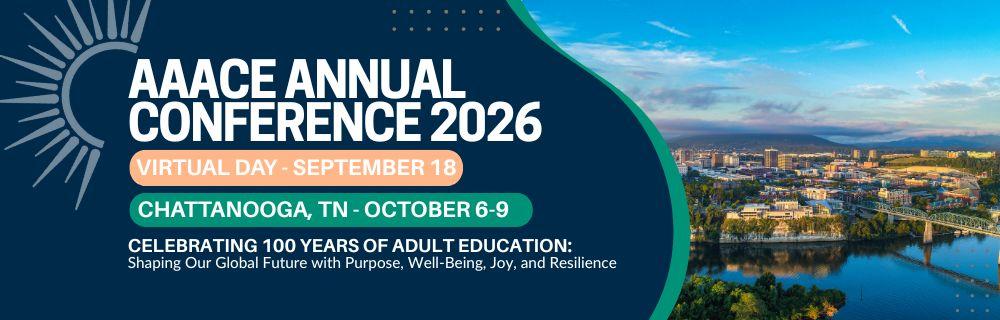
AAACE Annual Conference 2026:
Celebrating 100 Years of Adult Education
September 18, 2026 (virtual)
October 6-9, 2026 (in person), Chattanooga, Tennessee
The American Association of Adult and Continuing Education (AAACE) Annual Conference kicks off virtually before gathering in person in Chattanooga. This year's theme is “Celebrating 100 Years of Adult Education: Shaping Our Future with Purpose, Well-being, Joy and Resilience.” The conference will offer opportunities to network, learn, celebrate the past achievements of the field, and reflect on its future.
Goodling Institute Presenters at AAACE:
Return migration of older Korean Americans: Implications for adult learning and education
Hyeon Kang and Dr. Esther Prins
Thursday, October 8, 2026, 10:20 AM–10:45 AM
Literacies and Far-Right Extremism
Dr. Esther Prins
Thursday, October 8, 2026, 11:15 AM–12:05 PM
Reawakening “Omoluabi” philosophy in non-formal education for out-of-school young adults in Nigeria
Dare Amusa and Dr. Esther Prins
Thursday, October 8, 2026, 4:10 PM–5:00 PM
|
National Center for Families Learning Conference 2026
November 9-11, 2026, San Antonio, Texas
The National Center for Families Learning (NCFL) Conference brings together educators, literacy practitioners, policymakers, researchers, and others interested in supporting family learning. Attendees will have opportunities to learn new strategies, gain practical ideas and inspiration, and return to their work with renewed energy.
| |
Penn State is an equal opportunity, affirmative action employer, and is committed to providing employment opportunities to all qualified applicants without regard to race, color, religion, age, sex, sexual orientation, gender identity, national origin, disability or protected veteran status. | | | | |