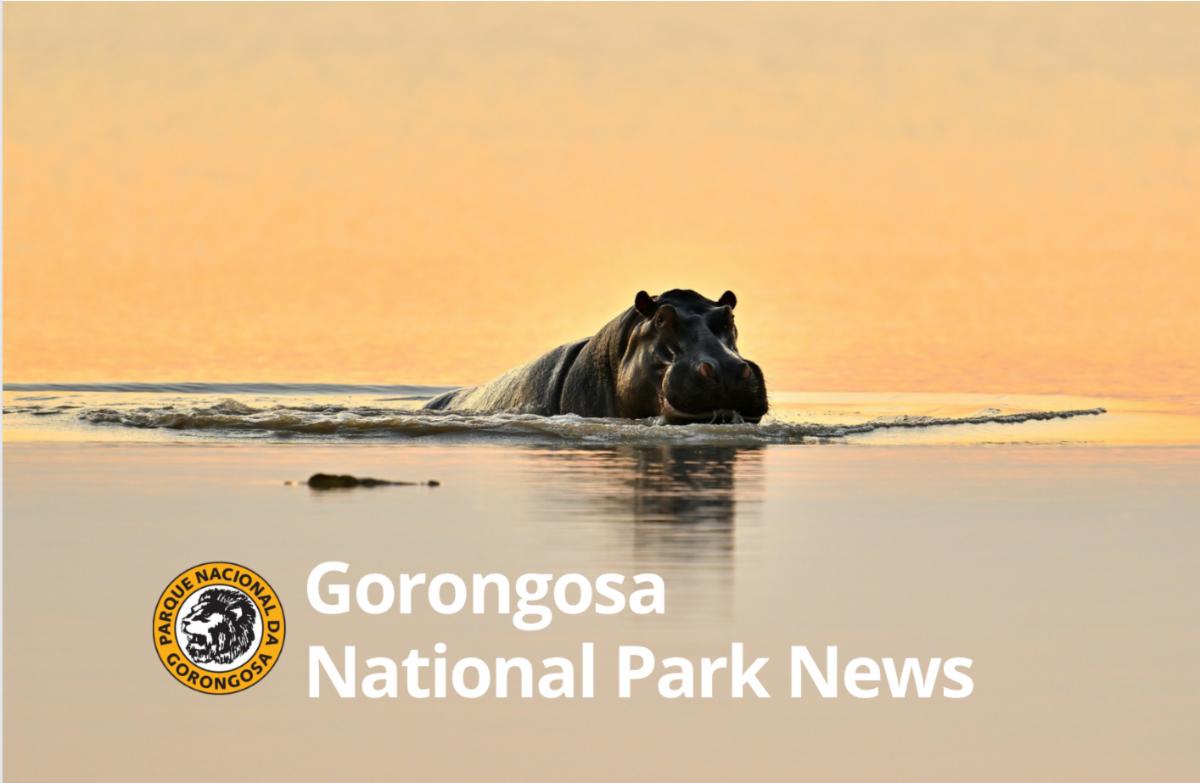
Photo - ©João Fernandes
April / May 2023
Gorongosa National Park opens April 15.
Wild Camp reservations are now available.
Time spent in Gorongosa National Park is a unique, life-changing experience for any traveler.

Now in its second year, Wild Camp is ideal for people who want an authentic African safari experience that moves in tune with the best wildlife viewing conditions possible. Safari drives through nearby floodplains, grasslands, and savannas often turn up a variety of animals including elephants, lions, painted wolves, 300+ species of colorful birdlife and much more. 

Wild Camp is an eco-friendly operation with solar lighting and outdoor showers, and USB ports for charging phones. Accommodations include canvas tents and beds (single or double occupancy). Meals are prepared by an experienced chef, with dinner served in an outdoor setting under the stars.

Profits from all tourism visits are used to create jobs, build schools and support local education, healthcare, and training programs.

Pre-booking accommodations and activities is advised. Email Carol at safari@gorongosa.net for rates and reservations.
Witness the amazing symmetry of two Yellow-billed Storks (Mycteria ibis) flying together to a waterbird colony nest during a Gorongosa boat safari. Photo - Miguel Lajas
Boating safaris, waterbird colonies are big this season.
Seasonal rains have been good to Lake Urema, which is ten times its normal size and full of an astonishing array of waterbirds.

Gorongosa boat safaris are seasonal, run from March to May depending on water levels, and are a wonderful way to access the heart of Gorongosa's vast water wilderness.

At least eight species of waterbirds were recently spotted on a narrow peninsula, including African darters and great white egrets, grey and black-headed heron, and yellow-billed storks.

The waterbird count for this colony in 2021 identified a total of nine species and 4,382 nests, an increase of more than 500 nests from 2019.

Visit our activities guide or email Carol at safari@gorongosa.net for rates and reservations.

-Boating photo courtesy of Bastiaan Boon.
“A Nossa Gorongosa Mel” wins Best in Category.
The bees and beekeepers of Gorongosa National Park won a Best in Category Award for Liquid Dark Honey during a regional competition held in South Africa. The certificate of excellence was accepted by Gorongosa chief honey processor, Juvencio Antonio.

Gorongosa honey can vary from dark to ruby-gold, or light, depending on the plants and the season.

"We work with beekeepers in five districts which means traveling long distances in remote areas", said Sofia Molina, general manager of Produtos da Gorongosa. "The jobs involved in harvesting and processing honey have a positive impact on our local communities and the environment."

The Gorongosa honey project supports over 450 beekeepers. More than 1,500 new hives were distributed to local beekeepers in 2022, with 41 women new to the program trained in beehive construction, hive population, native plants and honey processing.

Beekeeping is one of several agroforestry projects funded by the Gorongosa Restoration Project to help build a sustainable economy, create jobs, restore the rainforest, and protect the biodiversity of Gorongosa Park.
"A perfect Pluteus". Photo - Dr. Danny Haelewaters 
Macrofungi research team visits Gorongosa Park

Researchers and scientists from Belgium, Brazil, Colombia and the United States of America visited Gorongosa Park in March, one of many places chosen throughout the world to study and collect macrofungi samples.

Macrofungi (mushrooms) are the main decomposers of organic matter, and essential for the survival of plants through relationships called mycorrhizae. Their symbiotic role as biotrophs also help balance ecosystems and regulate population sizes.

The researchers collected macrofungi with a focus on Leotiomycetes, plant biotrophs and arthropods. Fungi make up a kingdom of Nature that's still largely unknown, despite their important role for life on Earth.

The study is funded by the National Science Foundation.
Cândida (center) is a mentor for the Girls Club in the community where she lives. She speaks regularly with local girls about avoiding early marriage and encourages them to stay in school. Photo - Janado Nazare Cher
Our Mission
The Gorongosa Restoration Project protects the Park’s biodiversity and ecosystem services, and unlocks its economic potential for the community inhabitants of the Gorongosa Sustainable Development Zone, Sofala Province, Mozambique and further afield.
Follow us

