American Minute with Bill Federer
Gospel to Hawaii & The Marquesas Islands, and the end of Pele volcano worship, human sacrifice, cannibalism & leprosy
|
|
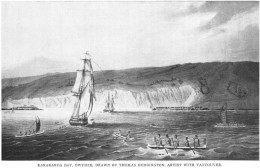
British Captain James Cook
discovered
Hawaii
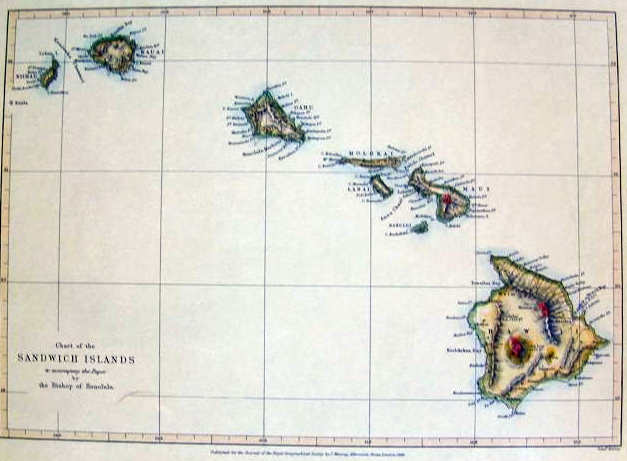
in 1778, naming them
"The Sandwich Islands"
in honor of John Montagu, the 4th Earl of Sandwich -- the acting First Lord of the Admiralty
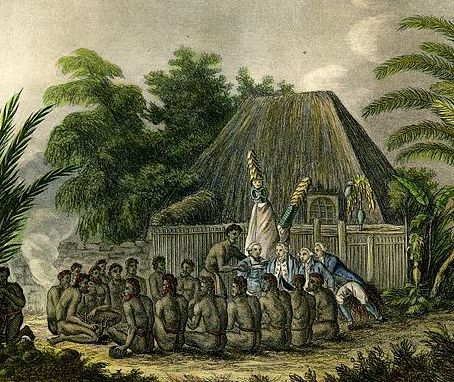
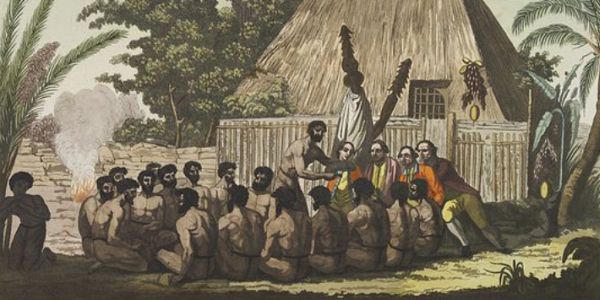
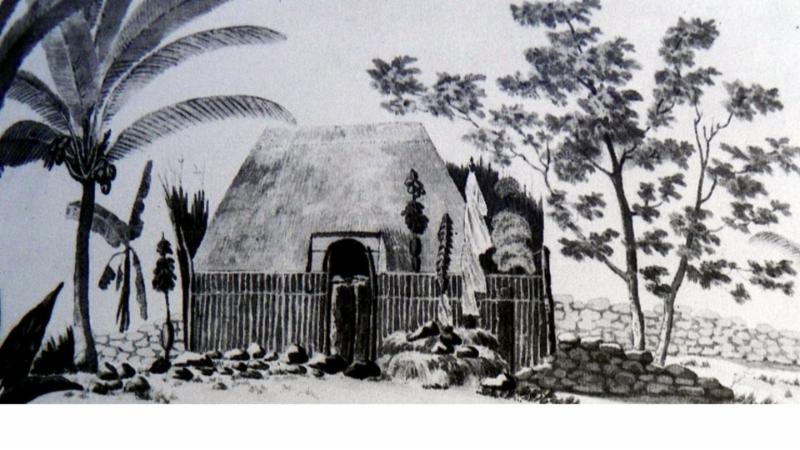
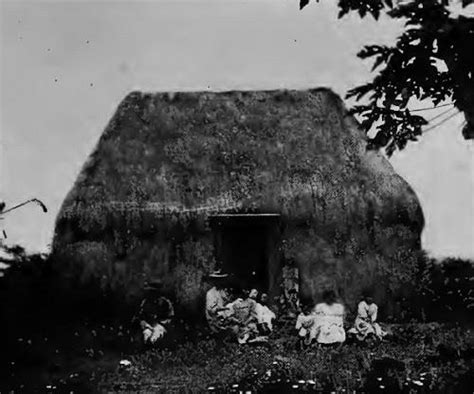
A kahuna showed him a 50 foot tower with nearby skulls and graves of sacrificed war captives and those that broke a kapu (taboos).
|
|
In 1779, on his third visit there,
Captain Cook was killed.
|
|
News of Captain Cook's voyages inspired William Carey to take the Gospel to
India in 1793.
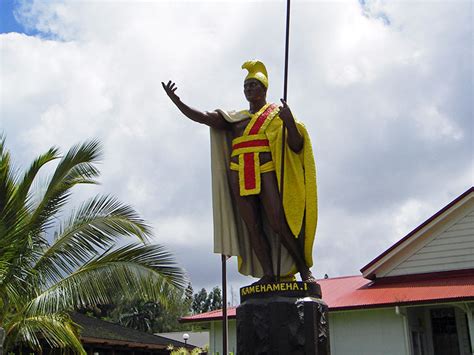
King Kamehameha I united the
Hawaiian Islands in 1810.
|
|
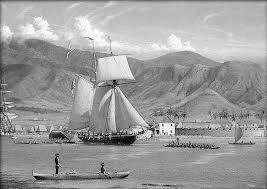
In the early 1800s, whaling ships began visiting the Hawaiian Islands.
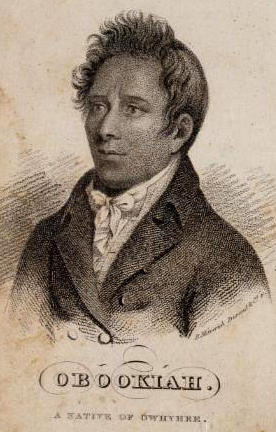
An orphan,
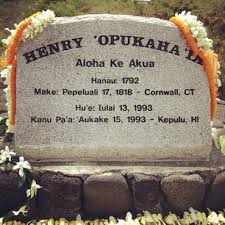
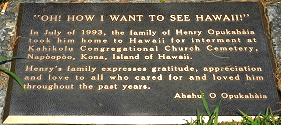
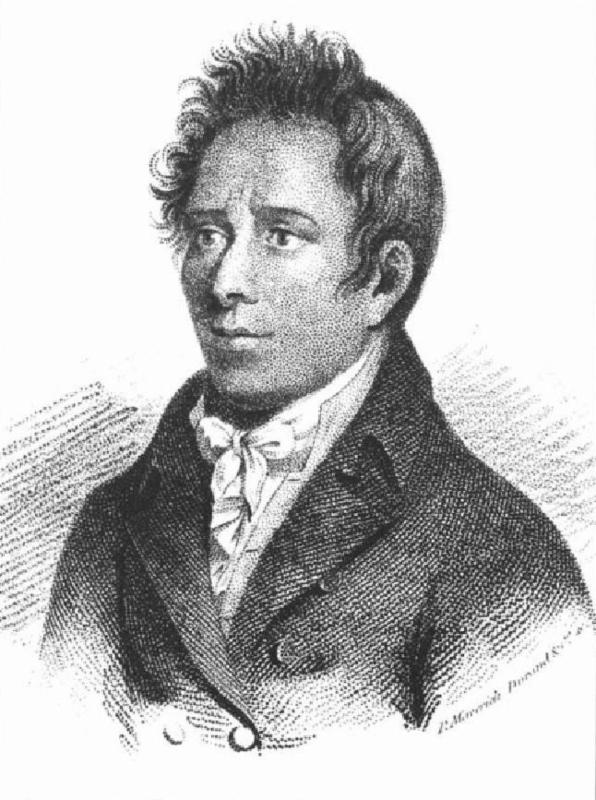
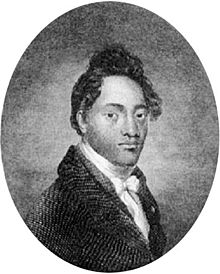
Henry Opukahai'a,
was being raised by his uncle to be a pagan priest, but became disillusioned with rituals and chants.
Together with his friend,
Thomas Hopu,
Henry Opukahai'a
fled Hawaii on the American whaling ship Triumph in 1807, which sailed for
New England.
|
|
They were befriended by
Christian students
at
Yale
in
New Haven, Connecticut,
who instructed and prayed with them to become
the first Hawaiian Christians
in 1815, during the time of the
Second Great Awakening.
|
|
Henry Opukahai'a
studied Greek and Hebrew and attempted to
translate into his native tongue
the Book of Genesis and other parts of the Bible, though none this survived.
|
|
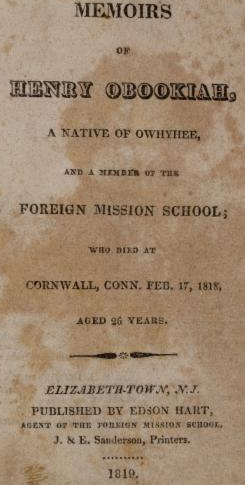
In his
Memoirs,
which sold 500,000 copies after his death in 1818,
Henry Opukahai'a
wrote:
"O what a wonderful thing is that the hand of the Divine Providence has brought me from the heathenish darkness here the light of Divine truth never had been.
And here I have found the name of the Lord Jesus in the Holy Scriptures, and have read that His blood was shed for many ..."
|
|
Henry Opukahai'a
continued:
"My poor countrymen, without knowledge of the true God, and ignorant of the future world, have no Bible to read, no Sabbath."
|
|
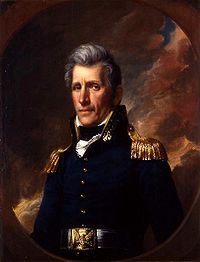
Thomas Hopu
met
General Andrew Jackson,
whom he accompanied to New Orleans.
Hopu
fought the British during the
War of 1812,
resulting in him being perhaps
one of the first Hawaiians to serve in the United States armed forces.
|
|
An excellent swimmer,
Hopu
saved several crewman after a shipwreck.
Five times he taken prisoner by the British in the West Indies.
Once starving in prison,
African slaves gave him food and water,
affecting
Hopu
to forever detest the enslavement of
Africans.
|
|
Two years after
Henry Opukahai'a's
death from typhus,
Thomas Hopu
went as a missionary with
Hiram Bingham
and
Asa Thurston
back to the
Hawaiian Sandwich Islands,
serving as their translator.
|
|
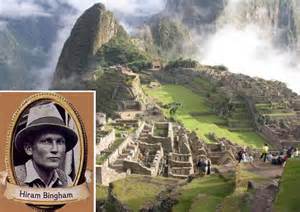
Hiram Bingham's
grandson,
Hiram Bingham III,
discovered the Inca city of
Machu Pichu
in 1908 and was elected
Governor of Connecticut
and a
U.S. Senator.
|
|
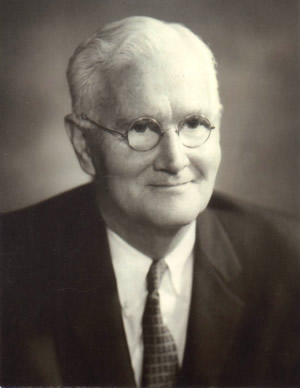
Hiram Bingham IV
was
U.S. Vice Consul in France during World War II,
where
he helped 2,500 Jews escape
internment camps of Hitler's National Socialist Workers Party.
|
|
Hiram Bingham
and
Asa Thurston
were sent to
Hawaii
by the
American Board of Missions
on the ship,
Thaddeus,
arriving at
Kailua
on MARCH 31, 1820.
The missionaries not only spread
Christianity,
but confronted drunkenness and vice which had been introduced into the islands by
sailors, whalers, and convicts from Botany Bay.
|
|
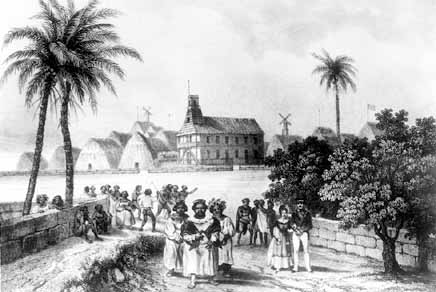
The missionaries created a
12-letter Hawaiian alphabet
and reduced the
Hawaiian language
to
writing.
They translated the Bible, began a newspaper, set up schools and churches, and convinced the
Hawaiian women to wear dresses.
|
|
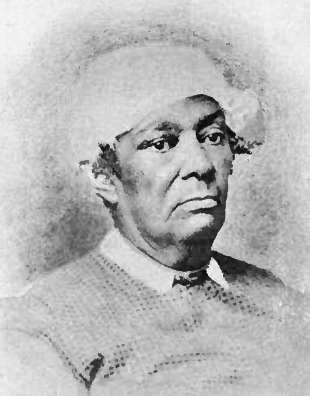
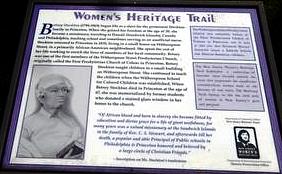
In 1823,
Betsey Stockton
(1798-1865), a young
African American woman,
sailed with the second group of missionaries from New Haven, Connecticut, to
Hawaii.
She had been been born a slave but was given her freedom.
|
|
A strong Christian,
Betsey
had attended classes at
Princeton Theological Seminary
before sailing to
Hawaii.
She set up
schools
and taught islanders English, Latin, history and algebra. In two years, over
8,000 students
attended
200 schools.
|
|
Idolatry
and
human sacrifice
had previously been ended by
King Kamehameha II
and his
Queen mother Ka'ahumanu.
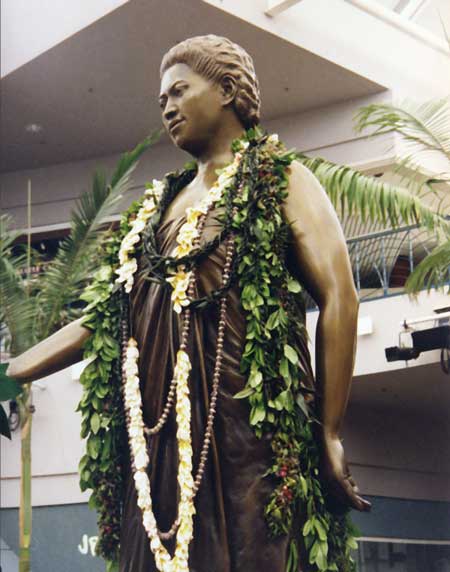
Queen Kaʻahumanu
and six high chiefs requested to be baptized in 1823.
|
|
She then banned prostitution and drunkenness, resulting in sailors resenting the missionaries' influence.
|
|
Queen Ka'ahumanu
helped spread the Gospel in the islands, beginning a
"Great Awakening."
|
|
She was presented with the newly completed
version of the New Testament
in the
Hawaiian language
just prior to her death.
Her last words were:
"I am going where the mansions are ready."
|
|
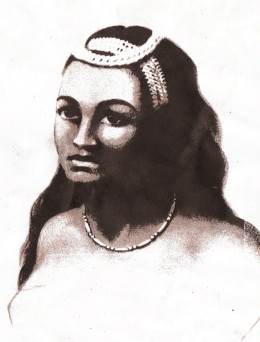
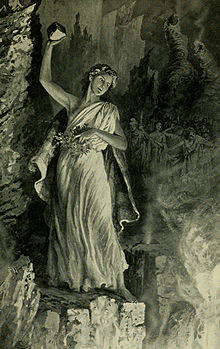
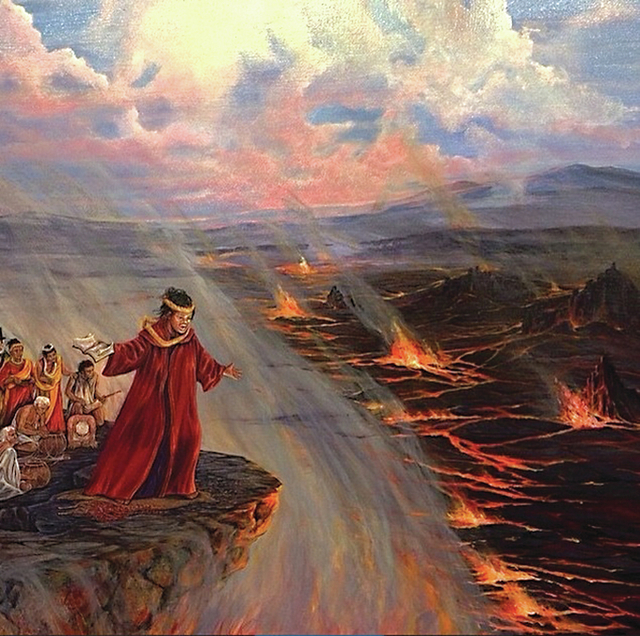
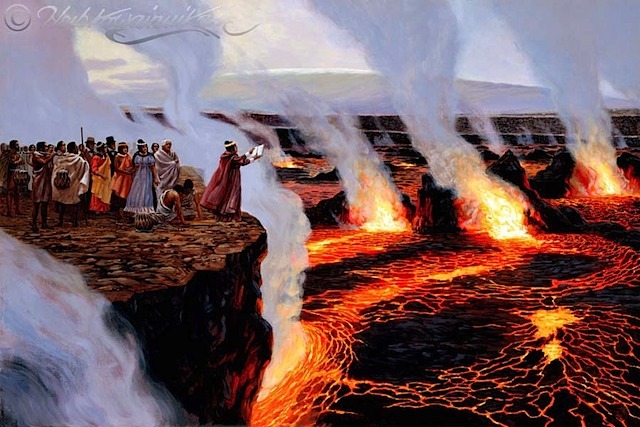
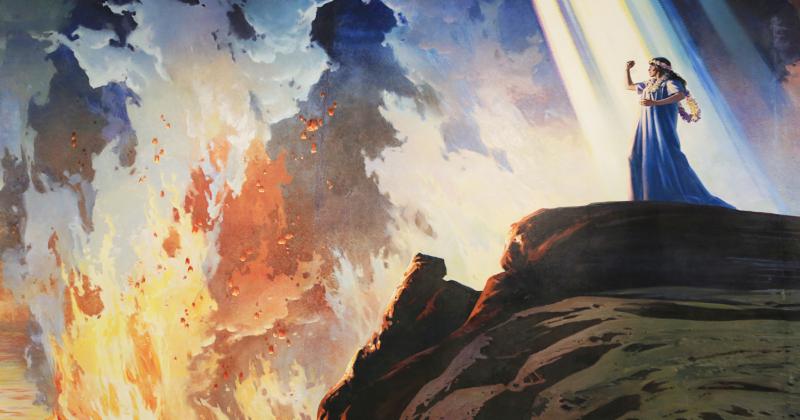
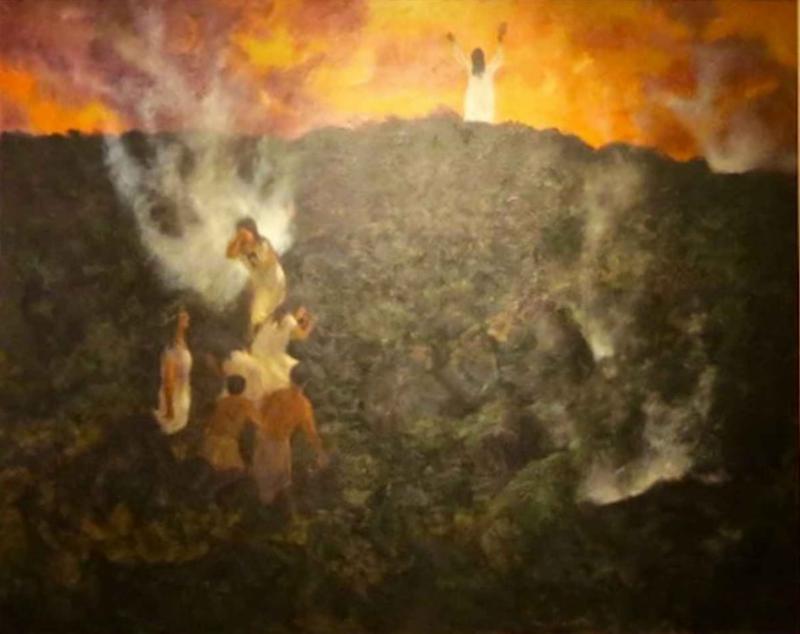
The cousin of Kamehameha I,
Chiefess Kapiolani,
in 1824.
defied
the
volcano goddess Pele
by saying a Christian prayer, climbing down into the lava crater and returning unharmed, then eating the forbidden Ōhelo berries.
|
|
Chiefess Kapiolani
then praised 'the one true God', proclaiming:
"Jehovah is my God. He kindled these fires. I fear not Pele. All the gods of Hawaii are vain."
|
|
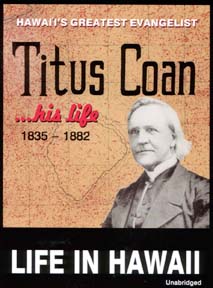
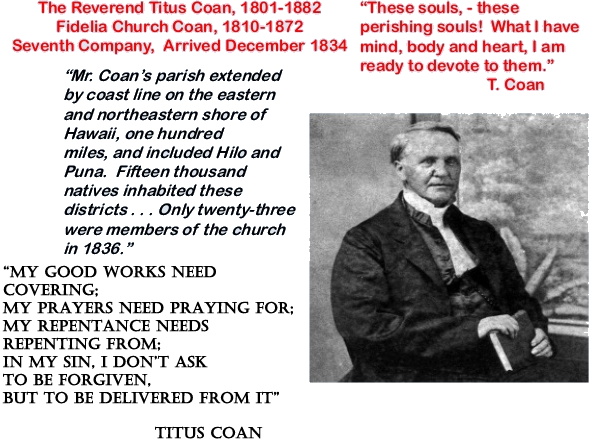
The
son-in-law of Hiram Bingham
was missionary
Titus Coans.
Coan's
account of evangelism is recorded in
Life in Hawaii: An Autobiographical Sketch of Mission Life and Labors, 1835-1881
(NY: Anson D. F. Randolph, 1882, 49-52; Michael McClymond,
Encyclopedia of Religious Revivals in America,
2006):
|
|
"Among these converts was the
High Priest of the volcano.
He was more than six feet high and of a lofty bearing. He had been an idolater, a drunkard, an adulterer, a robber, and a murderer.
For their kapas, for a pig or a fowl he had killed men on the road, whenever they hesitated to yield to his demands.
But he became penitent, and appeared honest and
earnest in seeking the Lord.
|
|
... His sister was more haughty and stubborn. She was
High Priestess of the volcano.
She, too, was tall and majestic in her bearing.
For a long time she refused to bow to the claims of the Gospel; but at length
she yielded, confessed herself a sinner and under the authority of a higher Power, and with her brother became a docile member of the church."
|
|
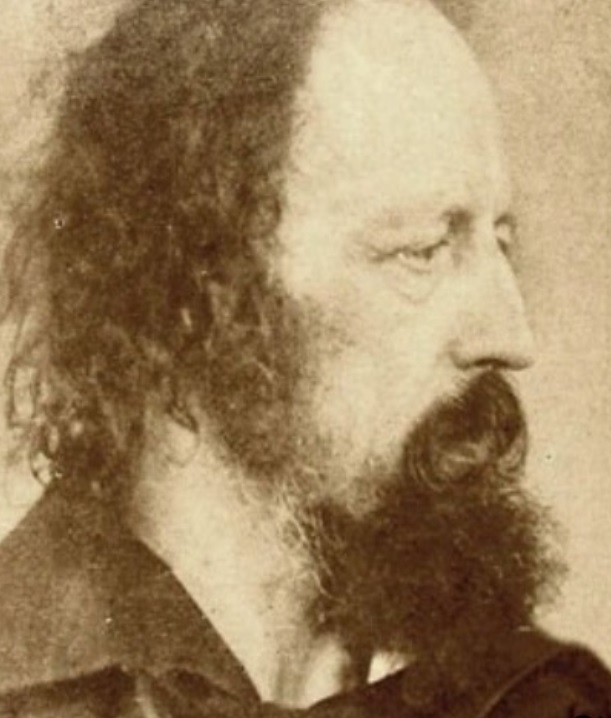
Alfred Lord Tennyson
wrote
(The Life and World of Alfred Lord Tennyson,
Vol. 12, 1892):
"Kapiolani
was a great chieftainess who lived in the Sandwich Islands at the beginning of this century. She won the cause of Christianity by openly defying the priests of the terrible goddess Peele'.
... In spite of their threats of vengeance she descended the volcano Mauna-Loa, then clambered down over a bank of cinders 400 feet high to the great lake of fire (nine miles round) - Kilauea - the haunt of the goddess, and flung into the boiling lava the consecrated berries which it was a sacriledge for a woman to handle."
|
|
Tennyson
wrote in his poem
"Kapiolani":
"Noble the Saxon who hurl’d at his Idol a valorous weapon in olden England!
Great and greater, and greatest of women, island heroine,
Kapiolani
Clomb the mountain, and flung the berries, and dared the Goddess, and freed the people
Of Hawa-i-ee!
A people believing that Peelè the Goddess would wallow in fiery riot and revel
On Kilaue-ä,
Dance in a fountain of flame with her devils, or shake with tier thunders and shatter her island,
Rolling her anger
Thro’ blasted valley and flaring forest in blood-red cataracts down to the sea!
|
|
Long as the lava-light
Glares from the lava-lake
Dazing the starlight,
Long as the silvery vapour in daylight
Over the mountain
Floats, will the glory of Kapiolani be mingled with either on Hawa-i-ee.
What said her Priesthood?
‘Woe to this island if ever a woman should handle or gather the berries of Peelè!
Accurséd were she!
And woe to this island if ever a woman should climb to the dwelling of Peelè the Goddess!
Accurséd were she!’
One from the Sunrise
Dawn’d on His people, and slowly before him
Vanish’d shadow-like
Gods and Goddesses,
None but the terrible Peelè remaining as Kapiolani ascended her mountain,
Baffled her priesthood,
Broke the Taboo,
Dipt to the crater,
Call’d on the Power adored by the Christian, and crying ‘I dare her, let Peelè avenge herself ’!
Into the flame-billow dash’d the berries, and drove the demon from Hawa-i-ee."
|
|
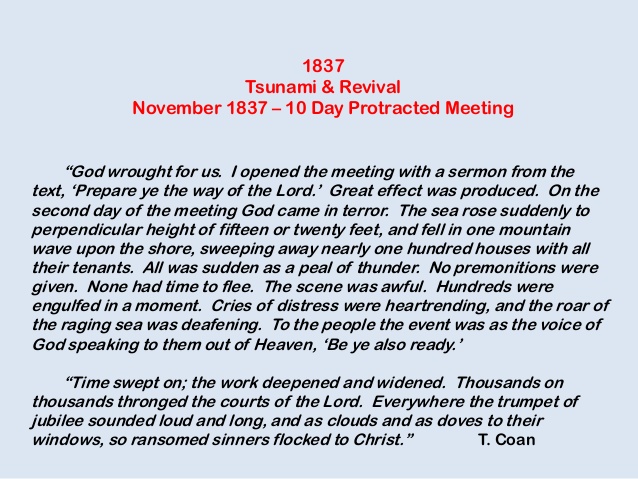
Titus Coans
, considered
Hawaii's greatest evangelist,
continued his missionary account:
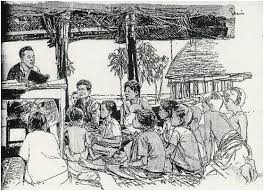
"I set off Nov. 29, 1836, on a tour around the island ...
On reaching the western boundaries of Puna, my labors became more abundant ... They rallied in masses, and were eager to hear the Word.
Many listened with tears, and after the preaching, when I supposed they would return to their homes and give me rest, they remained and crowded around me so earnestly, that I had no time to eat, and in places where I spent my nights they filled the house to its entire capacity, leaving scores outside who could not enter.
All wanted to hear more of the 'Word of Life.'
|
|
... At ten or eleven o'clock I would advise them to go home and to sleep. Some would return, but more remain until midnight.
At cock-crowing the house would be again crowded, with as many more outside.
|
|
... At one place before I reached the point where I was to spend a Sabbath, there was a line of four villages not more than half a mile apart.
Every village begged for a sermon and for personal conversation.
Commencing at daylight I preached in three of them before breakfast, at 10 a.m.
When the meeting closed at one village, most of the people ran on to the next, and thus my congregation increased rapidly from hour to hour.
|
|
...
Many were 'pricked in their hearts' and were inquiring what they should do to be saved.
Sunday came and I was now in the most populous part of Puna.
|
|
... Multitudes came out to hear the Gospel. The blind were led; the maimed, the aged and decrepit, and many invalids were brought on the backs of their friends.
There was great joy and much weeping in the assembly.
Two days were spent in this place, and ten sermons preached, while almost all the intervals between the public services were spent in personal conversation with the crowds which pressed around me.
Many of the people who then wept and prayed proved true converts to Christ; most of them have died in the faith, and a few still live as steadfast witnesses to the power of the Gospel ..."
|
|
This courage of
High Chiefess Kapiolani
inspired many
Hawaiians
to be missionaries to other islands, such as
Samuel Kauwealoha,
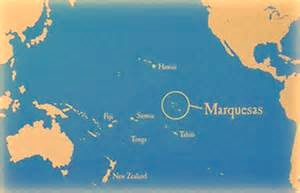
who sailed in 1853 to the
Marquesas Islands.
|
|
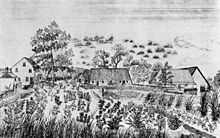
Rev. Samuel Kauwealoha
planted churches and schools in the
Marquesas Islands,
and
helped end cannibalism.
|
|
He was mentioned in
Titus Coan's
1882 missionary account
Life in Hawaii,
Chapter 13, "The Marquesas Islands ... The Hawaiians Send a Mission to Them":
"The missionary at this station was the
Rev. Samuel Kauwealoha,
a native of Hilo, and a member of the Hilo church ...
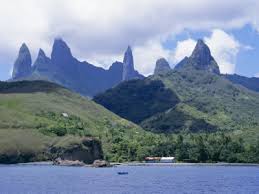
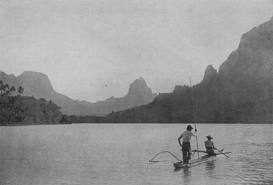
We landed on a beautiful beach of white sand, and walked half a mile through a charming grove of tropical trees, along the margin of a crystal brook ...
|
|
... We found
Mr. Samuel Kauwealoha
living in a stone house ... all built by himself ...
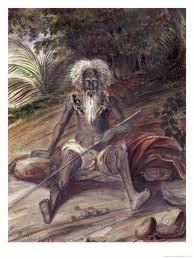
Here, amidst the shade of lofty trees, he was living with his devoted wife, teaching the children to read and write, and preaching 'Christ our Life' to 149 savages; and here, under the shadow of a towering tree, I spent one of the happiest Sabbaths of my life.
|
|
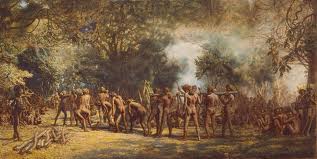
... The almost naked and tattooed savages came out and sat quietly in semicircles under the tree, with the bright-eyed little children in front, all seeming to love their teacher, and to welcome the stranger, to whom they listened,
Samuel Kauwealoha
interpreting ..."
|
|
Missionary Titus Coan
continued:
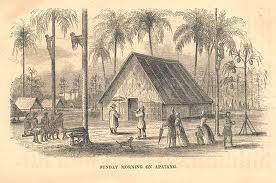
"We had also a Sunday-school, where the pupils recited the Lord's prayer and the Ten Commandments, with some other lessons, in tones and inflections of voice which were soft and melodious ...
At 11 A.M.
Captain Brown
and his mate,
Captain Golett,
a good Christian man, who had commanded many a ship, came on shore with the crew of the Morning Star, and we had service in English."
|
|
Another missionary from
Hawaii
to the
Marquesas Islands
was
James Kekela.
The Marquesas Islands
were first visited by
American Maritime Fur Trader Joseph Ingraham
on the brig
Hope
in 1791, who named them
Washington Islands.
|
|
In 1813,
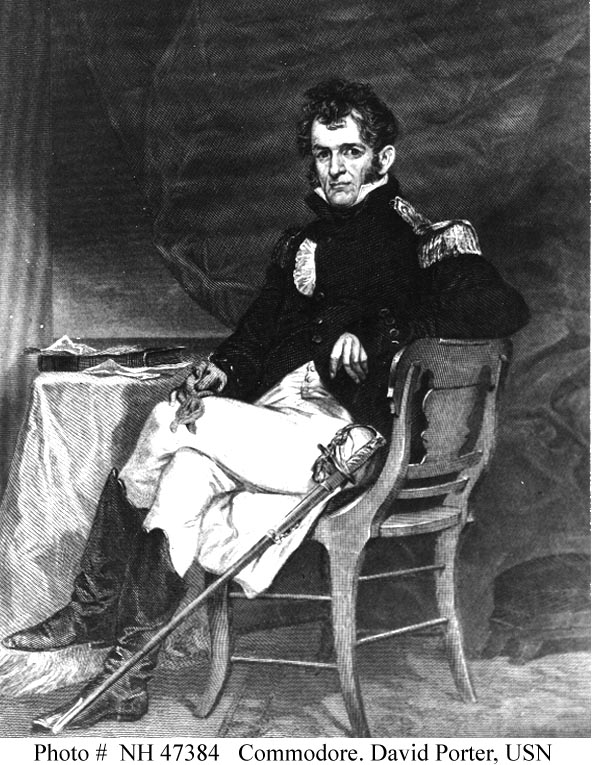
Commodore David Porter
claimed the islands for the
United States,
but the
U.S. Senate never got around to ratifying it.
This delay gave time for
France,
beginning in 1842, to incorporate the Islands into
French Polynesia.
|
|
In
French Polynesia,
missionary
James Kekela
wrote that
Hawaii
was fortunate to have become a possession of the
United States
rather than a possession of
France:
"The French government
is celebrating the 14th of July in
Papeete,
as America does on the 4th of July.
What Americans do to celebrate is to give speeches, worship God, do things to strengthen the body, and so on.
The French are pleasure lovers, acting as in the old days ... the dances of Tahiti, Tuamotu, Rurutu, Tubuai, and Atiu ...
What is done is like what the (filthy arioi?) did.
It is a very painful thing for our eyes to behold, because all kinds of liquor are allowed on the tables on this day-beer, soda, wine, whiskey."
|
|
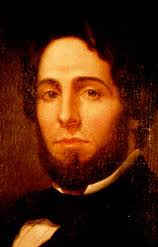
In 1842, a 23-year-old American sailor named
Herman Melville
was on a ship that visited the
Marquesas Islands.
|
|
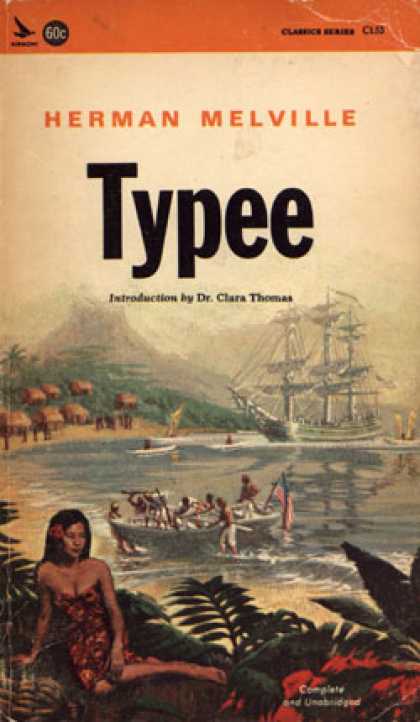
Soon after,
Melville
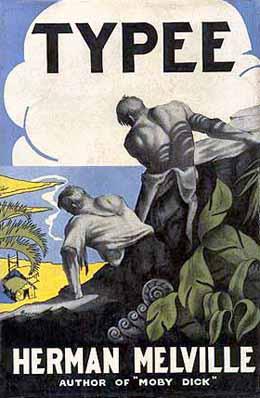
wrote first book, a semi-biographical novel titled
Typee: A Peep at Polynesian Life
(London; New York: 1846).
|
|
Melville
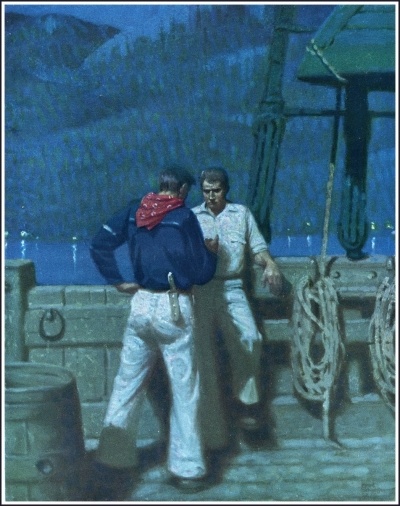
described how he and a companion deserted the ship
Acushnet.
|
|
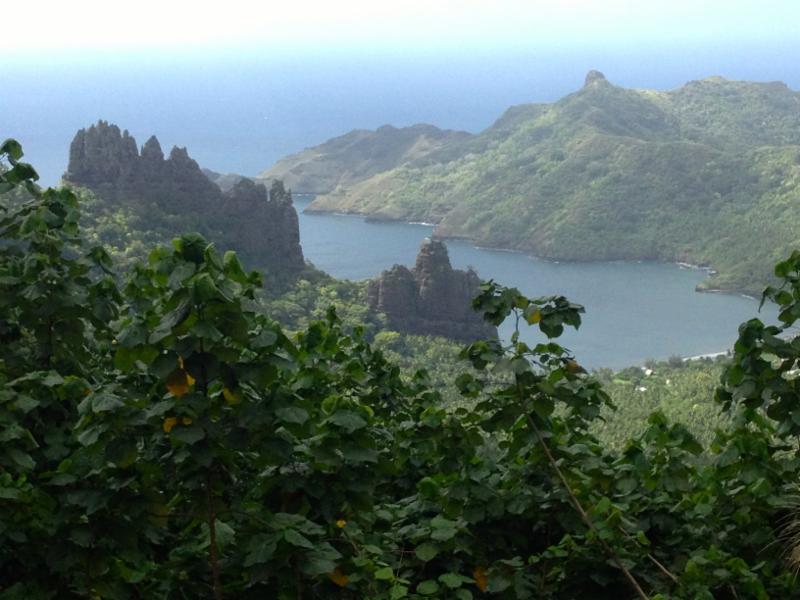
They stole up into the mysterious island mountains, waiting for their ship to depart without them.
|
|
His companion fell and was injured as they descended a steep ravine into the
Typee
valley.
|
|
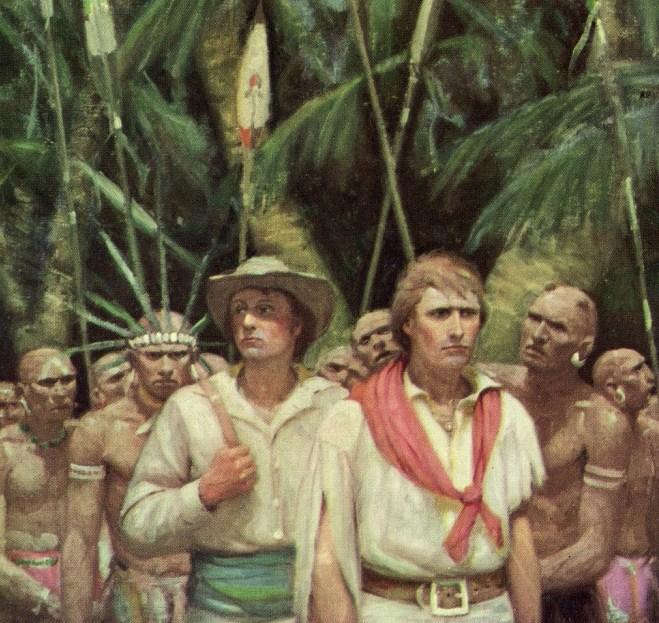
They were captivated by the sensual beauty of this island paradise until shortly after, his companion disappeared.
|
|
When
Melville
asked the natives what happened to his friend, they were strangely silent, leading him to conclude that he had been eaten.
The natives forbade
Melville
from going anywhere near the coast.
|
|
Nevertheless, three weeks later,
Melville
barely escaped with his life.
Melville
wrote at the end of book
Typee: A Peep at Polynesian Life:
"These disclosures will ... lead to ... ultimate benefit to the cause of Christianity in the Sandwich Islands."
|
|
In 1864,
James Kekela
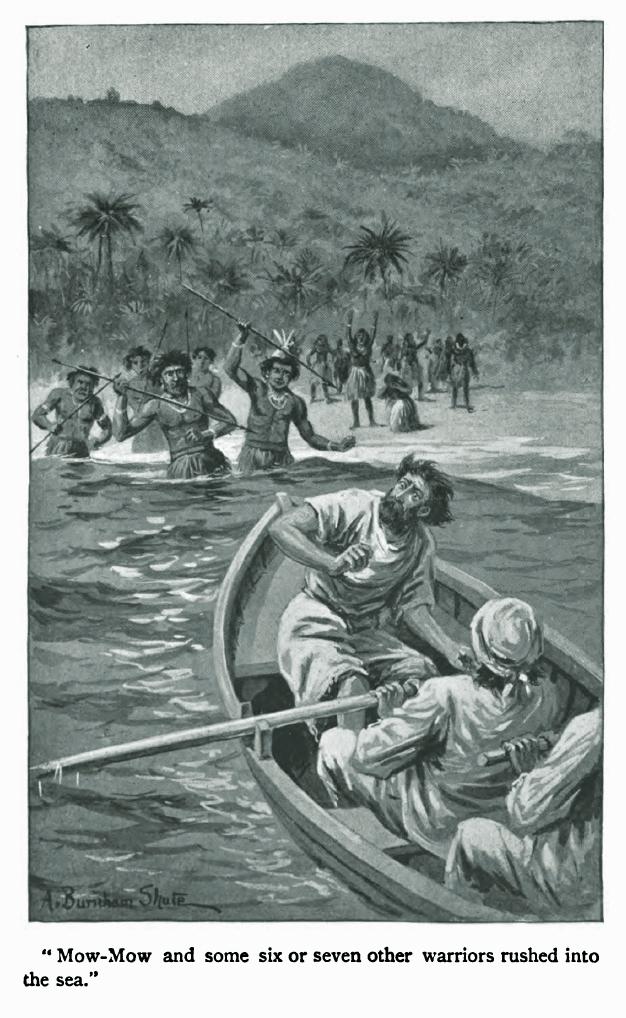
rescued an American seaman from death at the hands of angry cannibals in the
Marquesas Islands.
|
|
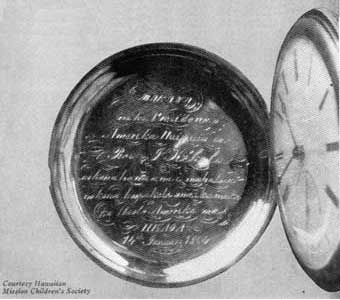
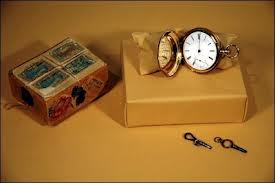
In gratitude,
President Abraham Lincoln
sent
James Kekela
an inscribed
gold watch.
|
|
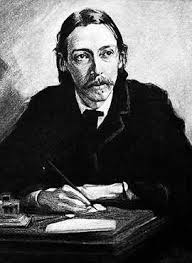
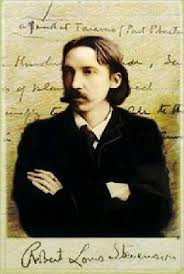
Robert Louis Stevenson
related the story in his book, In
The South Seas
when he visited the
Marquesas Islands
in 1888-89:
"During my stay at Tai-o-hae ... a whole fleet of whale-boats came from Ua-pu ... On board of these was
Samuel Kauwealoha,
one of the pastors, a fine, rugged old gentleman, of that leonine type so common in
Hawaii.
He paid me a visit ... and there entertained me with a tale of one of his colleagues,
James Kekela,
a missionary in the great cannibal isle of Hiva-oa.
|
|
... It appears that shortly after a kidnapping visit from a Peruvian slaver, the boats of an American whaler put into a bay upon that island, were attacked, and made their escape with difficulty, leaving their mate, a
Mr. Whalon,
in the hands of the natives.
The captive, with his arms bound behind his back, was cast into a house; and the chief announced the capture to
James Kekela ..."
|
|
Robert Louis Stevenson
continued, relating the story of
Mr. Whalon's rescue from the cannibals:
"In return for his act of gallant charity,
James Kekela
was presented by the American Government with a sum of money, and by
President Lincoln
personally with a
gold watch.
|
|
From his letter of thanks, written in his own tongue, I give the following extract. I do not envy the man who can read it without emotion.
|
|
...
'When I saw one of your countrymen, a citizen of your great nation, ill-treated, and about to be baked and eaten, as a pig is eaten, I ran to save him, full of pity and grief at the evil deed of these benighted people.
I gave my boat for the stranger's life ... It became the ransom of this countryman of yours, that he might not be eaten by the savages who knew not Jehovah. This was
Mr. Whalon,
and the date, Jan. 14, 1864.
(The seed of the Gospel) was planted in
Hawaii,
and I brought it to plant in this land and in these dark regions, that they might receive the root of all that is good and true, which is love.
1. Love to Jehovah.
2. Love to self.
3. Love to our neighbor.
|
|
... If a man have a sufficiency of these three, he is good and holy, like his God, Jehovah, in his triune character (Father, Son, and Holy Ghost), one-three, three-one ...
If he cherishes all three, then is he holy, indeed, after the manner of the Bible.
This is a great thing for your great nation to boast of, before all the nations of the earth ..."
|
|
Stevenson
continued quoting
James Kekela:
"From your great land a most precious seed was brought to the land of darkness.
It was planted here, not by means of guns and men-of-war and threatening.
It was planted by means of the ignorant, the neglected, the despised. Such was the introduction of the word of the Almighty God into this group of Nuuhiwa."
|
|
Robert Louis Stevenson
concluded quoting
James Kekela:
"Great is my debt to Americans, who have taught me all things pertaining to this life and to that which is to come.
How shall I repay your great kindness to me?
Thus David asked of Jehovah, and thus I ask of you, the President of the United States.
This is my only payment-that which I have received of the Lord, love-(aloha).'"
|
|
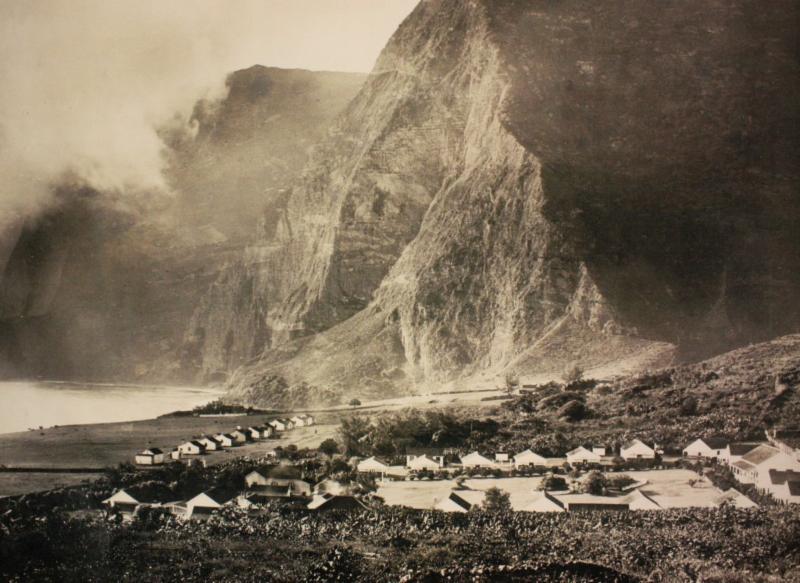
In 1889,
Robert Louis Stevenson
, who was suffering from tuberculosis, visited the
Hawaiian Island of Molokai,
where those who contracted leprosy were quarantined.
He spent 8 days helping Sister Marianne Cope
care for lepers.
|
|
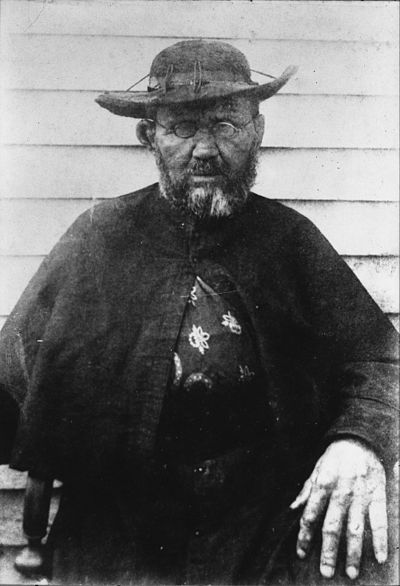
His visit was shortly after the death Father Damien, a Belgium priest who ministered who spent 11 years, 1873-1889, caring for lepers, eventually contracting the disease and dying of it himself.
Father Damien's selfless ministry was supported by Catholics and Protestants.
|
|
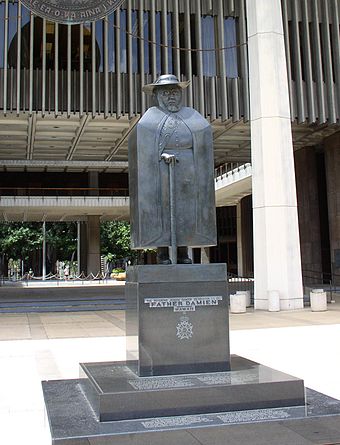
After seeing the work and inquiring of inhabitants, Robert Louis Stevenson wrote a 6,000-word polemic praising Fr. Damien.
A statue of Fr. Damien in on the capitol grounds in Hawaii and the U.S. Capitol.
|
|
Robert Louis Stevenson,
after having "visited the scene of
Damien's
life and death," wrote of Hawaii:
"The first missionaries came; they found the land already self-purged of its old and bloody faith; they were embraced, almost on their arrival, with enthusiasm ... and to these last they stood (in a rough figure) in the shoes of God."
|
|
American Minute is a registered trademark of William J. Federer. Permission is granted to forward, reprint, or duplicate, with acknowledgment.
|
|
Schedule Bill Federer for informative interviews & captivating PowerPoint presentations: 314-502-8924
wjfederer@gmail.com
|
|
|
|
|
|
|