PRESENTED BY:

July 22, 2026

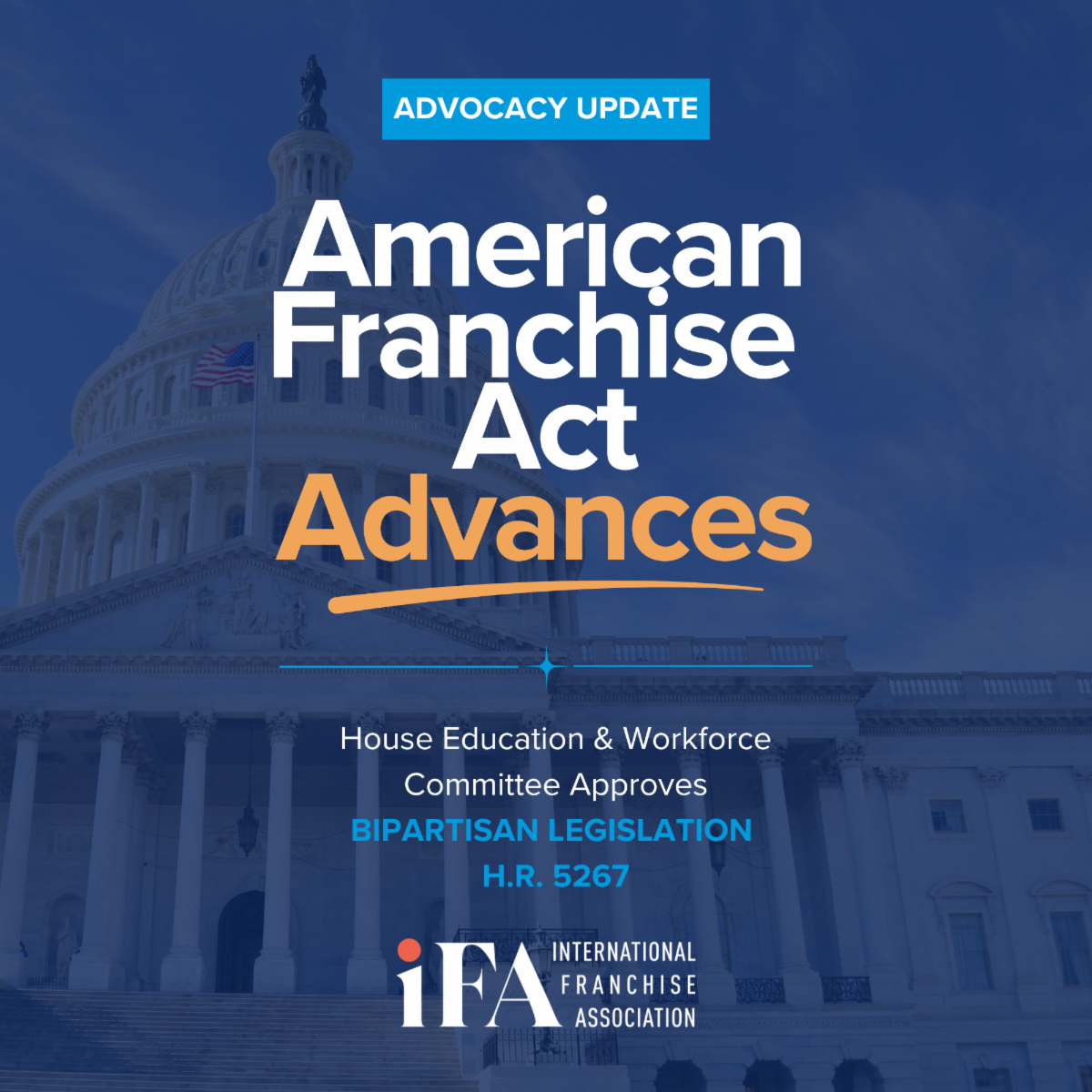
House Committee Approves American Franchise Act


In landmark news for franchising, the U.S. House Education and Workforce Committee voted 18-15 on July 21 to pass the American Franchise Act (H.R. 5267), sending the bipartisan bill to preserve the franchise business model on its first step forward in the legislative process.

Why It Matters: The legislation is IFA’s top legislative priority, as it would preserve the franchise business model by amending the Fair Labor Standards Act of 1938 and National Labor Relations Act of 1935 to establish that a franchisor and franchisee may only be found as joint employers of franchise employees if the franchisor has substantial, direct and immediate control over employment conditions.

Go Deeper: The AFA is needed because opponents of franchising are trying to damage the long-term viability of the franchise model by pushing more expansive joint employer regulations. IFA is actively countering these attacks, including this video.


Media Highlights: Coverage of the AFA’s progress is ongoing, with articles including FranchiseWire, Franchising.com and Bloomberg. Also see social media posts from IFA @Franchising411, IFA CEO Matt Haller, Coalition to Save Local Businesses @SaveLocalBiz, American Hotel & Lodging Association @AHLA and more. If you’d like a quote or social post included in IFA’s coverage roundup, please email press@franchise.org.

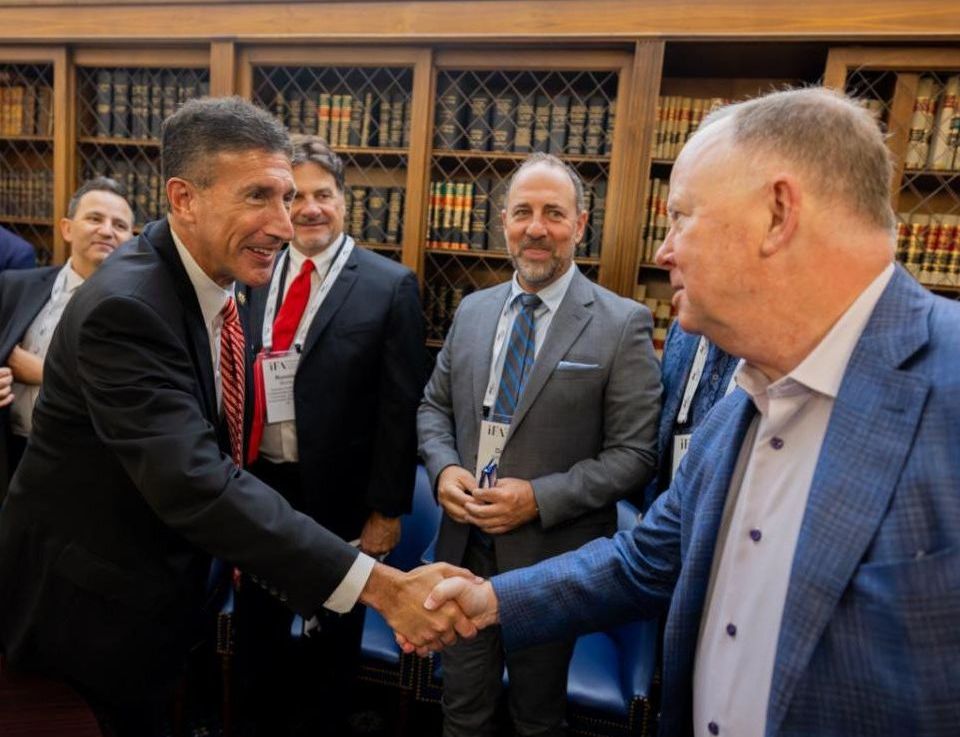
What’s Next: The AFA now heads to a full House vote this fall, and it means the bill has great momentum heading into the IFA26 Advocacy Summit this September! Make a plan to join franchise business peers in Washington for this pivotal event.

House Committee Passes Heat Regulation Bill


This week, the U.S. House Education and Workforce Committee also approved the IFA-supported Heat Workforce Standards Act of 2025 (H.R. 6213), legislation that would prohibit the Department of Labor from finalizing a challenging proposed heat injury and illness prevention standard from the Occupational Safety and Health Administration.


Why It Matters: The bill would prevent implementation of a “one-size-fits-all” federal heat standard that could impose significant compliance burdens on restaurant and service-based franchise businesses, while preserving employer flexibility to protect workers based on industry-specific needs.


What's Next: IFA will continue advocating for the bill as it advances through Congress and will monitor the committee's action and any subsequent legislative developments.

ADVERTISEMENT | Advertise with IFA

Senate Committee Considers Sonderling Nomination


Last week, the U.S. Senate HELP Committee held a confirmation hearing for Labor Secretary nominee Keith Sonderling, where Chairman Bill Cassidy (R-LA), Sen. Roger Marshall (R-KS) and Sen. Josh Hawley (R-MO) each touted the value of franchise businesses as they considered Mr. Sonderling’s nomination.


Why It Matters: Among other topics, senators discussed the need for a clear joint employer standard and reinforced the need for the Department of Labor to distinguish locally owned franchise businesses from large corporations.


What's Next: The Committee will vote on Sonderling’s nomination on Thursday, July 23, and IFA continues to support his confirmation and monitoring DOL’s pending joint employer rulemaking.

Oregon’s Packaging EPR Law Goes to Trial


What Happened: The nation’s first courtroom challenge to a packaging Extended Producer Responsibility (EPR) law concluded in Portland, where the National Association of Wholesaler-Distributors is challenging Oregon’s Plastic Pollution and Recycling Modernization Act as an unconstitutional burden on interstate commerce and improper delegation of authority, following a five-day bench trial after a preliminary injunction paused enforcement in February 2026.


IFA’s Role: The IFA Law Center and Restaurant Law Center filed an amicus brief supporting a permanent injunction, arguing that Oregon’s EPR framework does not account for franchise systems where packaging decisions and costs are shared among franchisors, franchisees, suppliers, distributors, and manufacturers, and that the law improperly uses franchise affiliation as a proxy for size when determining producer status.


Why It Matters: As six additional states have enacted packaging EPR laws, the court’s decision could have significant implications for franchise systems nationwide by determining whether EPR requirements designed for vertically integrated manufacturers appropriately apply to franchise networks. The court is expected to issue a ruling by the end of August 2026, with an appeal likely regardless of the outcome.

Upcoming Events:


July 23 | Women's Franchise Network Madison Milwaukee Chapter Meet-Up


July 28 | Same Brand. Same System. Different Results. Why?


July 30 | Building Trust Faster: The Foundation of Every Franchise Sale


August 12 | No Lead Left Behind: How Molly Maid Put AI on the Front Line


August 13 | Turn Your Membership into Impact: IFA Government Relations & Advocacy Summit


August 13 | Franchisor Fourm: Unit-Level Economics in Practice, Part 2: From Strategy to Execution; Real-World Models for Profit-Driven Growth


August 20 | Gain Visibility and Spend Control Across Your Franchise Network


September 14-16 | IFA26 Advocacy Summit | REGISTER


September 25-26 | The IFA World Franchise Show | BOOK YOUR BOOTH


November 16-18 | IFA26 Emerging | REGISTER

Facebook  Twitter  Instagram  Linkedin