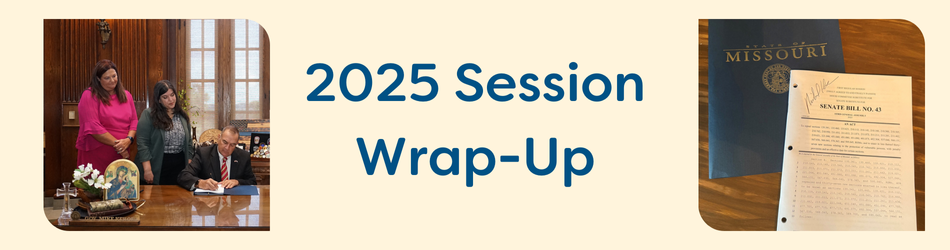
The 2025 Session of the Missouri General Assembly adjourned in May, with Governor Kehoe signing bills, including the state’s operating budget, in June and July. Most laws passed by the General Assembly go into effect August 28, 2025. While thousands of bills are introduced each year, 51 non-budget bills made it over the finish line to the Governor’s desk this year, including the top legislative priorities for Missouri Network Against Child Abuse (MO-NACA).


MO-NACA advocates at the state and federal levels for policies and funding for programs that protect children from abuse and prioritize their safety and well-being. Each year, we testify in public hearings and engage in meetings with lawmakers and advocacy partners. We are proud to advocate on behalf of Missouri children to improve the way our systems work to prevent and respond to child abuse and neglect.


We are excited to share some legislative highlights for child protection and safety in Missouri, both in our state’s budget and in law. We want to thank our legislative champions and our child advocacy centers who came to the Capitol in Jefferson City to advocate this year. With their leadership, our efforts saw success.


Jessica Seitz, Executive Director

jessicaseitz@mo-naca.org

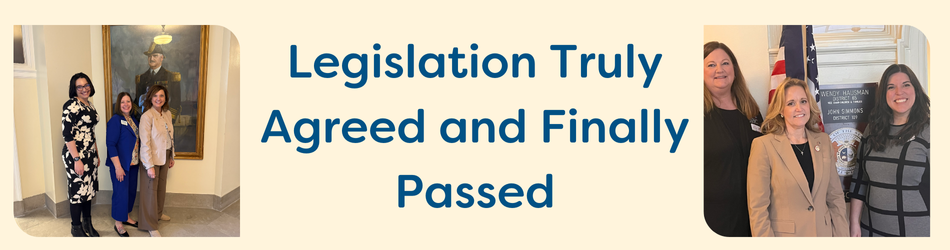
Extending and expanding the Champion for Children Tax Credit: The Champion for Children Tax Credit incentivizes charitable giving to child advocacy centers (CACs), court appointed special advocates (CASAs) and crisis nurseries. Senate Bill 43 (Sen. Travis Fitzwater/Rep. Wendy Hausman) extended the tax credit’s sunset to 2031, expanded the credit from 50% to 70% and increased the cap from $1.5 to $2.5 million. 


Raising the age for evidence admissibility protections from 14 to 18: Senate Bill 43 also raised the age of forensic interview recording admissibility under Sections 491.075 and 492.304, RSMo. This protection reduces the required number of court appearances for victims of child abuse, reducing the trauma victims experience through repeat appearances. The current protection applied to cases where the child was under 14. By raising the age to under 18, this law recognizes that teenagers, like children, find it difficult to talk in open court about the details of their sexual abuse. It also expands Section 492.304 RSMo to offenses related to child sexual abuse material and protects vulnerable persons. This provision of SB 43 has a delayed effective date of August 28, 2026.


Voiding NDAs in cases of child sexual abuse: Included in Senate Bill 43 and House Bill 737 (Rep. Melissa Schmidt), Missouri became only the second state to ban the use of nondisclosure agreements (NDAs) in cases of child sexual abuse. Perpetrators and liable institutions use NDAs to prohibit survivors from speaking about their sexual abuse. Under the new law, survivors will no longer be silenced and can move forward with their healing. This initiative was spearheaded by Representative Brian Seitz and Senator Brad Hudson.


Banning child marriage: Both SB 43 and HB 737 raised the age of marriage to 18 without exceptions. Missouri is now one of sixteen states to have banned child marriage. This effort was led by Senator Tracy McCreery.

The Fiscal Year 2026 budget protected funding for agencies and programs that serve children who have been victims of abuse and neglect and that work to prevent child abuse. Funding for child advocacy centers (CACs), including a CAC program specifically for child victims of commercial sexual exploitation, and the SAFE-CARE network were maintained at current levels. Additionally, a top priority for MO-NACA was to secure additional funding for the Victims of Crime Act (VOCA) using state General Revenue Funds. VOCA is the largest source of federal funding for Missouri CACs as well as other agencies serving victims of domestic, sexual and child abuse. VOCA funding, which comes from federal crime fines, has faced reductions due to decreased income from the federal government. In Washington, DC federal lawmakers have introduced the Crime Victims Fund Stabilization Act (H.R. 909/S. 1892) in an attempt to curb these devastating cuts at the national level. This year, Missouri lawmakers put in an additional $25 million in General Revenue to stabilize this important source of funding through the next year. MO-NACA is grateful to the Missouri legislature for their ongoing support of this program.

MO-NACA priorities that did not pass

  • Extending the civil statute of limitations for child sexual abuse. This passed the House on SB 68, a tort reform bill on statute of limitations, which was not taken up in the Senate.
  • HB 1464, sponsored by Representative Ed Lewis (R-Moberly), was the primary package for anti-child sex trafficking efforts. It would update “child pornography” definitions in the Missouri criminal code to “child sexual abuse material” and reauthorize the state anti-trafficking task force. This was added to SB 60, which ultimately did not pass. 
  • SB 83, sponsored by Senator Jamie Burger, which would have allowed Advanced Practice Registered Nurses (APRNs) who are SAFE-CARE providers under Section 334.950 RSMo to provide services at child advocacy centers without a collaborative practice agreement if they are in good standing with their SAFE-CARE mentor, a board-certified child abuse pediatrician. This legislation would have helped rural CACs continue to provide on-site medical examinations for child victims of abuse.


MO-NACA looks forward to working with lawmakers on these issues next session.


X Share This Email
LinkedIn Share This Email
Facebook  Instagram  LinkedIn