MoIP Vision: Missouri is committed to reducing the impact of invasive plants through early detection and control.
MoIP Mission: To benefit Missouri, MoIP advances efforts to reduce the impact of invasive plants.
| | Summer 2025 • State of Invasives | | |
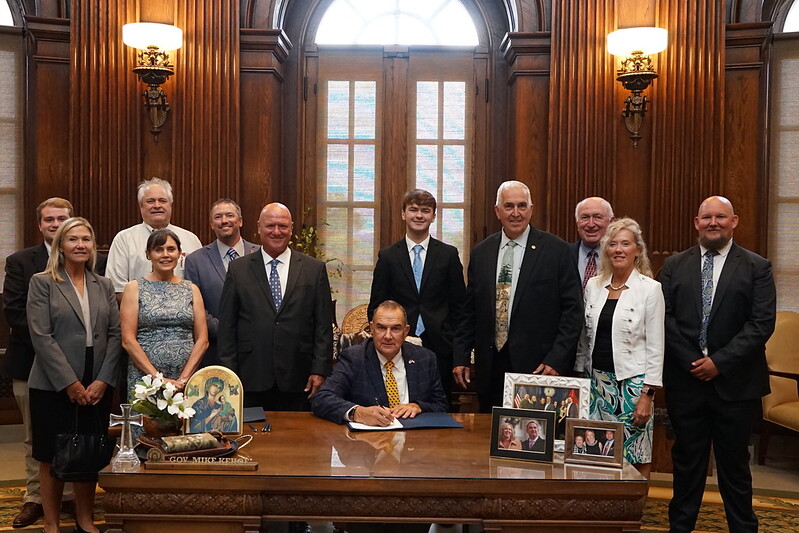
On July 14, 2025, Missouri Governor Kehoe signed Senate Bill 105 into law, halting the sale in Missouri of six invasive plants: sericea lespedeza, burning bush (cultivar 'Compactus'), Callery pear, Japanese honeysuckle, perilla mint (also known as beefsteak plant), and wintercreeper (variety Coloratus).
The legislation allows sericea lespedeza, Japanese honeysuckle, perilla mint, and wintercreeper (variety Coloratus) to be sold through January 1, 2027, and Callery pear and burning bush (cultivar 'Compactus') to be sold through January 1, 2029, to mitigate revenue loss for plant sellers who may have a current inventory of any of these species. Read all details in the final bill language here.
Several years ago, the Missouri Invasive Plant Council (MoIP), administered by the Missouri Prairie Foundation, proposed the idea of legislation to cease the sale of select invasive plants to reduce their negative impacts on Missouri’s landscape. MoIP invited feedback from nearly 100 stakeholder groups and tabulated feedback that was received to assess opinions in support or against inclusion of specific invasive plants on eventual state legislation.
In 2023, at his request, MoIP sent a list of invasive plants with broad stakeholder support to Missouri Representative Bruce Sassmann for inclusion in a bill he was sponsoring to halt the sale of select invasive plants. While his bill and a companion bill sponsored by Missouri Senator Mike Bernskoetter were not scheduled for floor votes during the 2024 legislative session, both legislators filed similar bills for the 2025 session, for which MoIP and other groups advocated.
MoIP thanks Governor Kehoe, Senator Bernskoetter, and Representative Sassmann for their leadership; the many citizens who contacted their Missouri representatives and senators in support of the bills; the numerous groups, including the Missouri Cattlemen’s Association, Missouri Municipal League, Missouri Stream Teams United, the Conservation Federation of Missouri (CFM), and The Nature Conservancy, who advocated for the legislation alongside MoIP and the Missouri Prairie Foundation; Missouri legislators who supported the bill; and Kyna Iman, CFM lobbyist, who worked tirelessly behind the scenes to build support for the bills in the Missouri Capitol.
Below is a summary of other invasive plant news as well as resources from MoIP and other groups:
–2025 MoIP Callery Pear Buyback Recap
–August 8: Invasive Species Day at the Missouri State Fair
–2025 MoIP Invasive Plant Action Awardees
–Update: MoIP Invasive Plant Assessment
–Invasive Plant Success Story: Callery Pear Trees Removed from Mineral Area College
–Missourians Making a Difference: Interview with Jack McDonnell
–Invasive to Watch: Butterfly Bush
–Invasives to Treat in Summer: autumn olive, sweet autumn virginsbower, mimosa, and round-leaved bittersweet
And three additional quick links:
–Invasive Species Compendium: This open-access collection features 79 curated articles from the Natural Areas Journal, highlighting a decade of science-based insights and evidence-based practice to guide your management decisions. Support to the Natural Areas Association from the National Park Service, Bureau of Land Management, and USDA Forest Service has made this compendium freely available to all. Explore six major themes and use this resource to inform your work.
–Tracking invasive pear trees with the help of AI: Mizzou researchers explore low-cost ways to monitor invasive plants in urban areas.
–New resource from the Missouri Prairie Foundation's Grow Native! program that may be helpful to you: Photos of invasive plants as seedlings
Thank you for taking action to identify and control invasive plants!
Carol Davit, MoIP Chair
Pictured above are members of the Missouri Invasive Plant Council (Bill Ruppert [back] and Carol Davit [front]), both second from left, with other supporters of SB 105 at the bill signing. Photo courtesy of the Governor’s Office.
| | 2025 Callery Pear Buyback Recap | | |
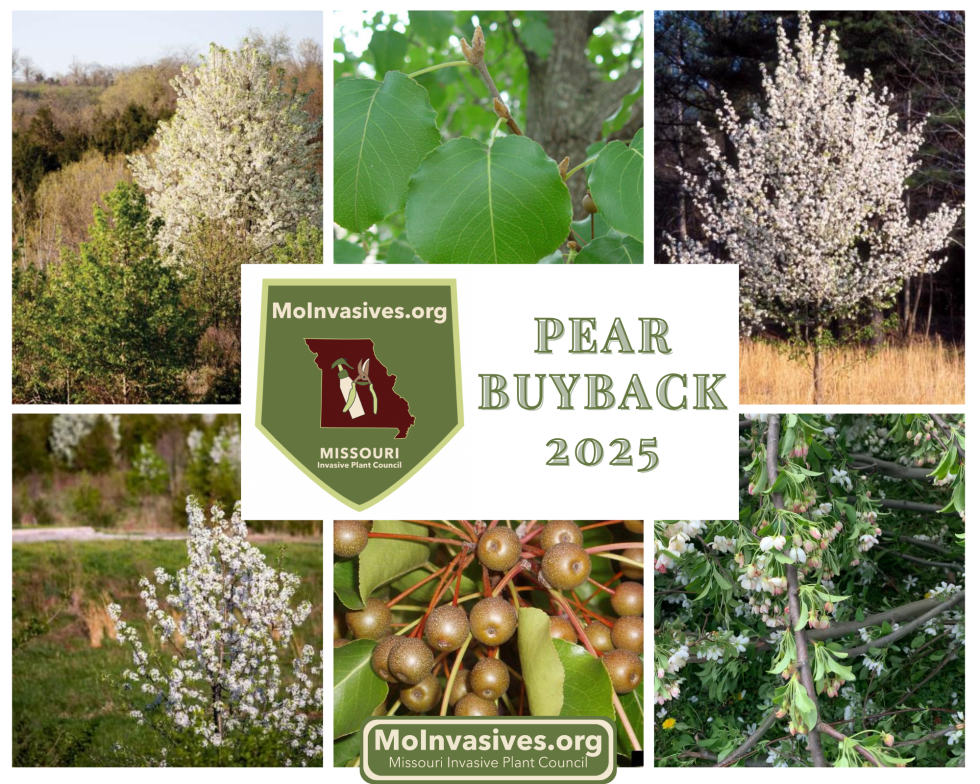
On April 22, 2025, in partnership with Forest ReLeaf of Missouri, Forrest Keeling Nursery, and the Missouri Department of Conservation (MDC), MoIP organized Callery (Bradford) pear “buyback” events in 17 locations around the state, offering 800 free, native replacement trees to individuals who had cut done one or more invasive Callery pear trees.
As participants picked up their free native tree, they also received information about the problem with invasive plants, the benefits of native trees, and the importance of properly planting and caring for their new tree.
An “I removed my invasive Callery pear and planted a native tree instead” yard sign was offered to participants at the event to display in their yards, informing their neighbors of the importance of their landscaping changes.
MoIP is grateful to the Richard King Mellon Foundation and the Missouri Community Forestry Council for their financial support of the 2025 Callery Pear Buyback Program, as well as to Forrest Keeling Nursery and Forest ReLeaf of Missouri for tree donations. Financial and administrative support also comes from the Missouri Prairie Foundation and the Missouri Department of Conservation.
Watch future issues of State of Invasives for the date of the 2026 Callery Pear Buyback event.
| | August 8: Invasive Species Day at MO State Fair | | |
On August 8 from 10:00 a.m. to 2:00 p.m. at the Missouri State Fairgrounds in Sedalia, stop by the MoDOT Highway Gardens area for Invasives Species Day at the fair, organized by the Missouri Department of Conservation (MDC).
State and federal agencies, MoIP, and other groups working to control invasive plants and animals will provide information and demonstrations to fair attendees, reaching Missourians from across the state. Many thanks to MDC for coordinating this outreach opportunity.
Pictured above is Lilly Germeroth and Clifford Barratt with the Missouri Prairie Foundation, providing information about MoIP, invasive plants, and native plants at the State Fair in 2024.
| | 2025 MoIP Invasive Plant Action Awardees | |
2025 MoIP Award Winner, Individual Citizen
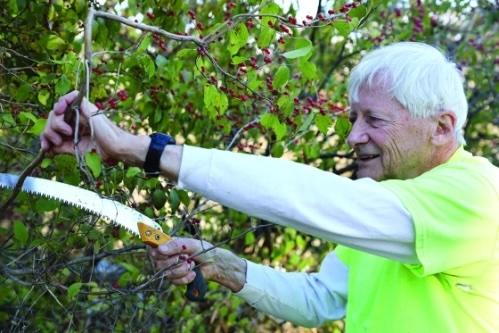
Alan Hopefl is the winner in the Individual Citizen category, awarded to an individual for outstanding contributions to the long-term management of invasive plant species and working to fight the spread of invasive plants. Alan began volunteering in Kirkwood, Missouri, in 2011, and since March 2015, he has recorded 2,852 volunteer hours, averaging over 300 hours each year, focused on controlling invasive bush honeysuckle and restoring habitat in Emmenegger Nature Park and across the grounds of Kirkwood parks. More than 2,266 of his volunteer hours have been devoted single-handedly to honeysuckle removal in Emmenegger. In 2024, he amassed 313 hours for the calendar year. This labor has allowed native seedlings to repopulate, regenerating native diversity. By removing dense honeysuckle thickets, Alan has helped fulfill the park’s mission to be a refuge where visitors find peace, solace, and education in a thriving wooded setting.
| |
2025 MoIP Award Winner, Individual Organization
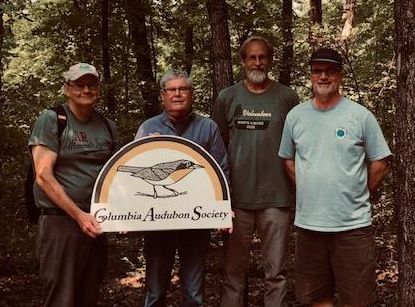
The Columbia Audubon Society is the winner in the Individual Organization category, awarded to an organization for outstanding contributions to the long-term management of invasive plant species and working to fight the spread of invasive plants. Columbia Audubon Society (CAS) owns three properties: Columbia Audubon Nature Sanctuary (28 acres), Wild Haven Nature Area (102 acres), and Albert Children’s Wildlife Area (78 acres). CAS manages these areas for habitat improvement and for the ongoing removal of invasive species. Each year’s work, habitat improvement at these properties becomes ever more noticeable. Columbia Audubon Nature Sanctuary has benefitted from the removal of over 90% of the bush honeysuckle, demonstrating what is possible with sustained effort.
Learn more about MoIP's Invasive Plant Action Award program and the 2025 awardees here. Congratulations, Alan and the Columbia Audubon Society!
Photo above of Alan Hopefl by Don Corrigan. Photo above of Columbia Audubon Society Grounds Committee members, from left, Eric Seaman, Bill Mees, Davis Nealey, and John Besser, by Lottie Bushmann.
| | Update: MoIP's Missouri Invasive Plant Assessment | | |
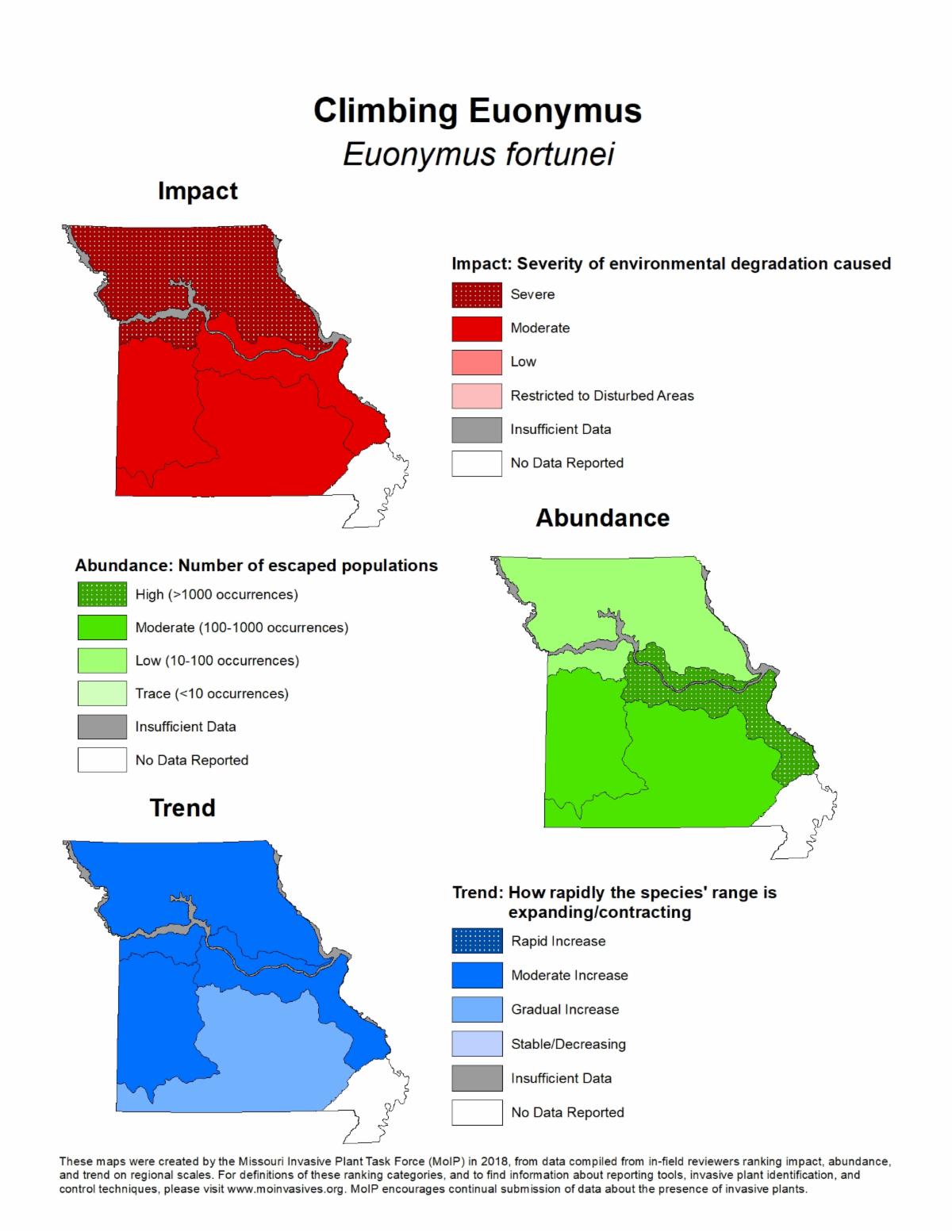
In 2017, MoIP invited 26 colleagues experienced in field botany to determine the impact, current abundance, and trend of distribution and abundance of 142 plants known to be invasive in Missouri. Why? Because no current, comprehensive list of invasive plants existed for the state. Establishing such a list was a top priority of MoIP when it formed in 2015.
The Missouri Invasive Plant Assessment was a massive undertaking by many. Much more than a list, maps denoting the regional impact, current abundance, and trend of distribution and abundance of each of the 142 species help land managers prioritize invasive plant control. The assessment was unveiled at the 2019 Missouri Natural Resources Conservation workshop, an annual gathering of conservation professionals.
Since 2019, the list has been static. It has always been MoIP's intention to make the list updatable, so that as new data are compiled, maps for each species can be updated in real time.
This summer, MoIP is inviting previous and additional reviewers to contribute to this project. MoIP's goal is to analyze and incorporate their data into the assessment to provide updated maps by the end of 2025.
Peruse the current Missouri Invasive Plant Assessment here.
Assessment maps for all 142 species, like the one above for climbing euonymous (Euonymus fortunei), provide information on impact, current abundance, and trend in distribution and abundance.
| | Invasive Plant Success Story: Callery Pear Trees Removed from Mineral Area College | | |
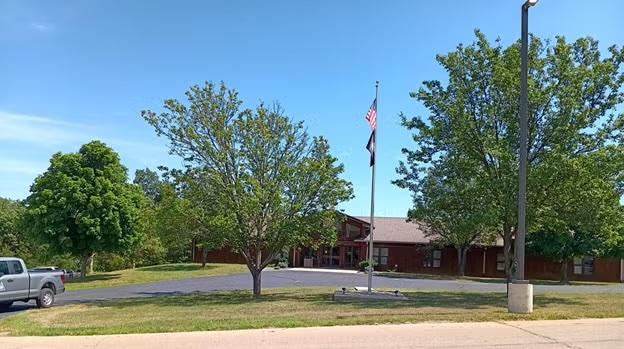
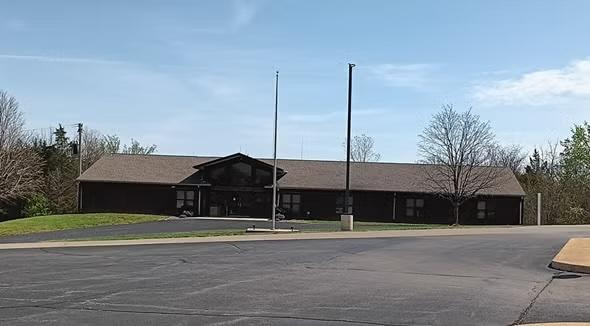
The Missouri Department of Conservation (MDC) has partnered with Mineral Area College in Park Hills for the recent removal of invasive Callery pear trees on campus, through MDC’s Community Conservation Cost-Share program.
Tim Kavan, MDC Community and Private Land Conservation Supervisor, said efforts are also underway to remove Callery pear trees near the campus, along with assisting campus staff with selecting native trees as replacements.
“MDC’s Community Conservation Cost-Share program promotes sustainable development practices and the establishment of natural resource conservation practices in municipal and developing areas,” said Kavan. “Eligibility is determined by the project planner and regional supervisor based on regional priorities.”
| | |
“Phase 1 of the project includes removal of roughly 40 Callery pear trees on campus, as well as grinding the stumps of those trees,” said Julie Norris, MDC Priority Habitat Coordinator. “The next phase will involve removing and grinding stumps of another 40 Callery pear trees from campus. The last phase will involve planting approximately 20 to 40 noninvasive trees and shrubs on campus.”
Cost-share funds are available beginning in July. Due to limited funding, applications are funded on a first-come, first-served basis. For more information about the Community Conservation Cost-Share opportunities, please contact a nearby MDC office.
Before and after the Callery pear tree removal at Park Hills College. The final phase of the project will involve the planting of 20 to 40 non-invasive trees and shrubs on campus. MDC photos.
| | Missourians Making a Difference: Jack McDonnell | | |
Throughout Missouri, many individuals are making significant progress in the early detection and control of invasive plants. MoIP is pleased to highlight their efforts.
Beyond Housing's Jack McDonnell took time while on paternity leave to describe his work. Enjoy!
Please describe Beyond Housing–its mission and main activities. How does invasive plant control figure into its mission?
Beyond Housing is a nationally recognized, place-based community development organization that serves the 24:1 Community in North St. Louis County—the 22 municipalities within the Normandy Schools Collaborative footprint that share a single high school. Beyond Housing is dedicated to strengthening families and transforming our under-resourced communities to create a stronger, more equitable, and prosperous St. Louis, once and for all. This is accomplished through housing, education, health, economic development, and ecological programs.
Invasive plant control is a key part of that mission because healthy, resilient natural spaces contribute directly to community well-being. Removing invasive species like bush honeysuckle (Lonicera maackii and other non-native Lonicera species) and kudzu (Pueraria montana var. lobata) restores biodiversity, improves stormwater management, increases access to safe and enjoyable green spaces, and strengthens ecological assets that benefit residents over the long term.
What is your professional title? How long have you been with Beyond Housing, and what are your primary responsibilities?
I am the Program Manager for the Forestry and Community Conservation Department. I have been with Beyond Housing since 2023. In this role, I oversee municipal and organizational ecological projects, manage our full-time workforce development team, and coordinate vacant lot remediation and urban forest initiatives across the 24:1 Community. My responsibilities include project management, technical expertise, securing funding, ensuring long-term stewardship, and building partnerships that expand ecological and natural resource management capacity.
What is your professional background?
I began my career as a member and then crew leader with the Southwest Conservation Corps, an AmeriCorps program in Colorado, where I managed high alpine trail construction and timber stand improvement projects. I later worked with private tree companies and the St. Louis County Parks Forestry Department before joining Beyond Housing. Over the years, I have earned ISA Certified Arborist and Tree Risk Assessment Qualification credentials, a Missouri Public Operators pesticide license, and I am a Missouri Master Naturalist. My skill set has been built through a combination of field experience, formal training, and collaborative work with experts in urban forestry, ecological restoration, and community conservation. I attribute much of my professional success to the AmeriCorps model and to the people with whom I have had the privilege of working.
What are some of the invasive plant control projects you have been involved with at Beyond Housing? Why are they important? What has been the impact?
One of our most significant current efforts is our Kudzu Coalition, a network of communities and organizations working to stay informed about infestations of this growing threat. We partnered with the City of Bellerive Acres, Great Rivers Greenway, the University of Missouri–St. Louis, and the Missouri Department of Conservation to begin the eradication of kudzu bordering GRG trails and the Bellerive Bird Sanctuary. This is a unique and challenging project because kudzu, like most invasives, is admirably tenacious, and the work has just begun. To build momentum, we followed this project with a workshop for regional parks, municipalities, and other stakeholders to highlight the importance of kudzu monitoring and to provide training on how to identify and manage kudzu in their own communities. Continue reading here.
| | Invasive to Watch: Butterfly Bush | | |
Climate change may play a significant role in future invasions of specific plants from beyond their native and current invasion range and current invasions.
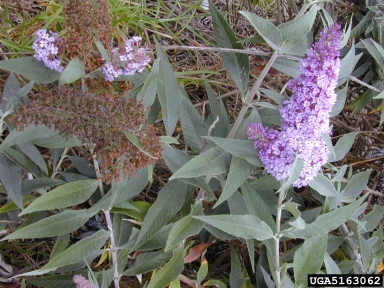
A recent article in Weed Research discusses how the present and future climate suitability for the popular ornamental butterfly bush (Buddleja davidii and cultivars thereof) was assessed using a process-oriented climate suitability model.
There appears to be a considerable scope for further invasion, with the most suitable areas occurring adjacent to existing naturalized populations in the north-eastern United States. Native to China, B. davidii has been widely distributed by horticulturalists and has subsequently invaded much of Europe and New Zealand.
Read the full article here. And, for information on why butterfly bush invasions contribute to ecological degradation, and about native plants you can plant in its place, read this article from the Northern Virginia Bird Alliance.
Also, check out this article from The New York Times from July 2, 2025: Fighting Invasive Plants: The Ones We’ve Got and Those We Think Are Coming.
| | Invasives to Treat in Summer | | |
Not all invasive plants are most effectively treated at the same time of year, and treatment methods can differ according to the seasons. Here, we highlight several species to treat in summer. You can find treatment guidelines for many invasive plants other than those highlighted below at moinvasives.org.
Note: Treatment methods may differ considerably if invasives are found in otherwise intact, highly biologically diverse areas, in disturbed areas/altered landscapes, or if invasives are found in or near water. When using chemicals to treat invasives, always read label instructions.
| | |
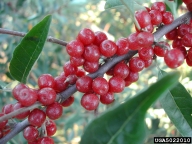
Autumn olive (Elaeagnus umbellata) is a deciduous shrub from 3 to 20 feet with thorny branches. It is easily recognized by the silvery, dotted underside of the leaves.
Small, yellowish tubular flowers are abundant and occur in clusters of 5 to 10 near the stems from February to June.
Fruits (about the size of peas) are round, red, juicy, and finely dotted with silvery to silvery-brown scales. Fruits ripen from August to November.
Autumn olive invades old fields, woodland edges, and other disturbed areas. It can form a dense shrub layer that displaces native plants and closes open areas. Native to China and Japan, this invasive shrub was introduced into North America in 1830. It is distributed widely in Missouri. See its range in Missouri here.
To control in summer, foliar spray a 1.5% solution of 2,4-D and tryclopyr (Crossbow® is a brand name) with surfactant. Avoid overspray to prevent impacting desirable plants.
Photo of autumn olive by Pennsylvania Department of Conservation & Natural Resources-Forestry, Bugwood.org.
| | |
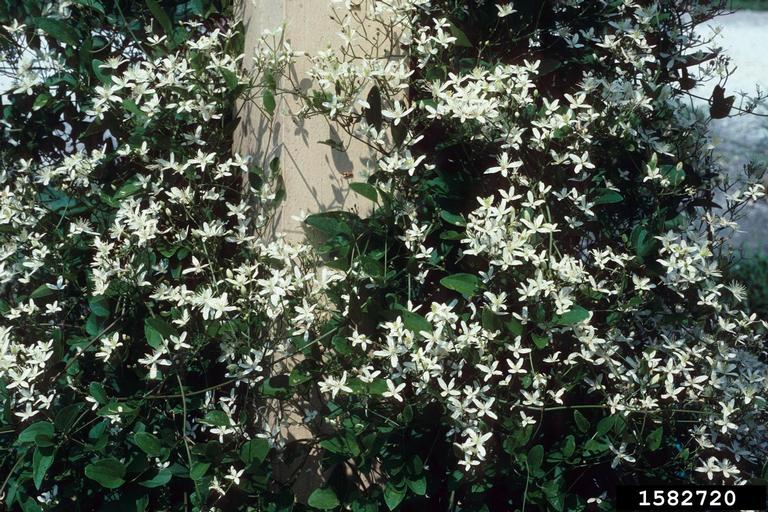
Sweet autumn virginsbower (Clematis terniflora) is a climbing, semi-evergreen, ornamental vine with opposite, compound leaves (3 to 5 leaflets) with entire (smooth) leaf edges. White, fragrant, four-petaled flowers appear in late summer through fall. Seedheads are showy with long, silvery-gray, feather-like hairs attached. Seed production is prolific.
The native species (Clematis virginiana) is very similar (margins of leaves of the native tend to be toothed), but not as prone to self-seeding and spreading.
The non-native, invasive Clematis terniflora prefers sun to partial shade and is found invading forest edges, rights of way, and urban green spaces, especially near creeks. It can create sprawling mats that choke out native vegetation. Clematis terniflora is native to Japan and China and was introduced into the United States as an ornamental plant. See its range in Missouri here.
Treatment in spring, before vine sprawling is ideal, but it may be harder to see. In late summer, its abundant flowers make it highly visible. Treat with a foliar spray of 3% triclopry with surfactant. Avoid overspray to prevent impacting desirable plants.
Photo above by John Ruter, bugwood.org.
| | |
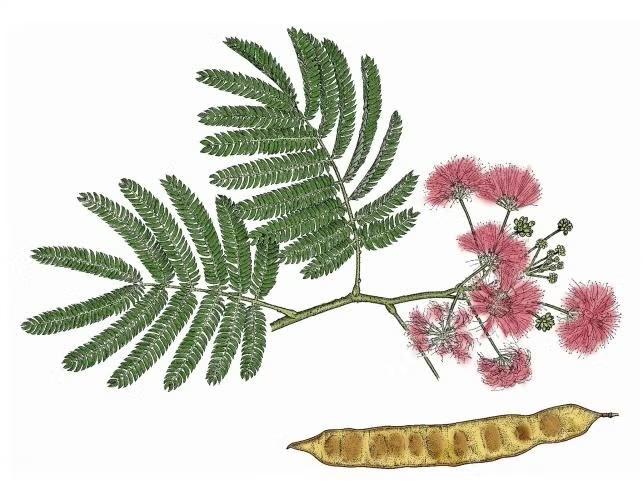
Mimosa or silk trees (Albizia julibrissin), in the legume family, can reach 40 feet and have widely spreading branches, short trunks, and broad, flat-topped crowns.
This invasive tree's fern-like leaves are alternate and twice-pinnately compound. Pink, "power-puff," tassel-like, fragrant flowers bloom from May through August. Fruits, which appear in August and September, are large clusters of flat, linear, yellowish brown pods that are 5 to 8 inches long.
Native to Asia, mimosa was introduced to the United States as an ornamental tree in 1745. It escapes from landscape plantings and becomes weedy and invasive everywhere that winter cold doesn't kill it. It struggles to survive in far northern states. It reseeds itself and becomes weedy as far north as central Missouri. See its distribution in Missouri here.
Summer is ideal for treating mimosa tree sprouts and seedlings. Foliar spray with a 0.5% solution of aminopyralid (brand name is Milestone®) with surfactant.
Tree-sized individuals are best treated in winter. They can be cut and stump treated with a 10% solution of Milestone®; no surfactant is needed. A 5% solution of Milestone®, mixed with diesel or bark oil, can be applied around the base of uncut trees.
Illustration above by Paul Nelson, courtesy of the Missouri Department of Conservation.
| | |
Round-leaved (Oriental) bittersweet (Celastrus orbiculatus) is a perennial deciduous, climbing, woody vine that can grow to lengths of 60 feet and up to 4 inches in diameter. The striated bark is brown to dark brown. The smooth twigs can range from light gray to dark brown.
The alternate, elliptical to rounded leaves are light green and 2-5 inches long. Small, inconspicuous, axillary, greenish white flowers bloom from May to early June. Small, round fruits are green when young; ripen to yellow; then split to reveal showy, scarlet berries that persist into winter.
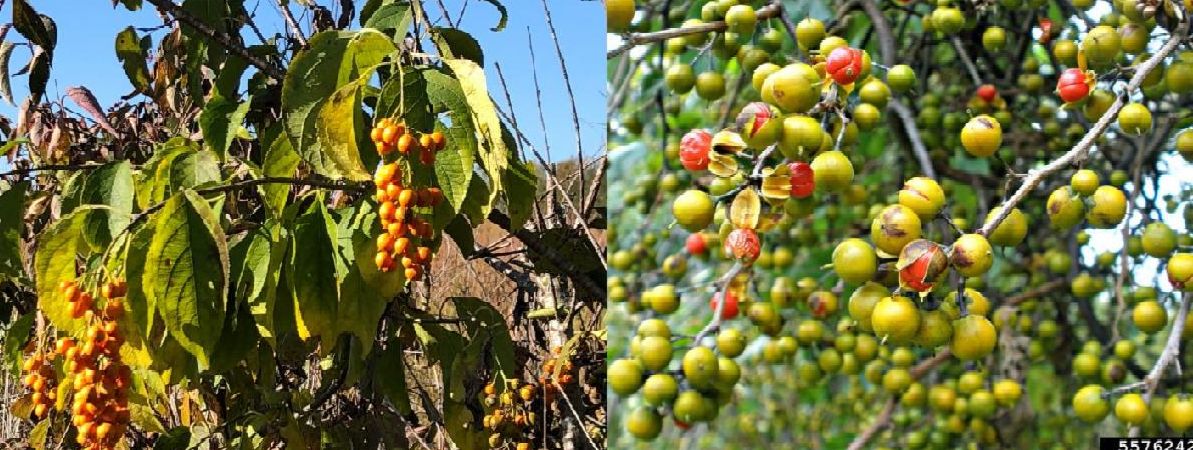
Round-leaved bittersweet was introduced from China around 1860 as an ornamental. It closely resembles native American bittersweet (Celastrus scandens). The main difference: Native Celastrus scandens has flowers and fruits at the ends of branches (photo at left, above); Celastrus orbiculatus has flowers in the axils of the leaves (photo at right, above).
Celastrus orbiculatus is often found in old home sites, fields, and road edges. The fast-growing vines can cover, shade, and outcompete other vegetation, and even girdle and kill large trees. See its distribution in Missouri here.
To treat in summer, foliar spray with a solution of 2% triclopyr with surfactant.
Photo above left: fruits of native bittersweet (Celastrus scandens) at the end of branches, by Carol Davit. Photo above right: fruits of non-native, round-leaved bittersweet (Celastrus orbiculatus), in leaf axils, by Ansel Oommen, Bugwood.org.
| | |
State of Invasives aims to:
• Provide useful information to you/the leaders of your organization, agency, or business to help you recognize and control invasive plants and reduce their negative impacts, introduce you to our work, explain the challenges of invasive plants, and make the case for bold action and how this will benefit Missouri and Missourians.
• Share talking points that you can use when communicating about invasive plant detection and control within your agency, business, or organization, and to your customers or stakeholders.
• Empower you and your audiences to recognize invasive plants and take action—around your office building, behind your parking lot, on your back 40, right of way, back yard, around your crop field, or on any other land you or your group owns or manages. Our MoIP Video: A Landowner Tour is one of MoIP's many useful resources at moinvasives.org.
We hope the information in this enewsletter is helpful, and we’d like to hear from you. What questions or ideas do you have? Would you like to share with us the invasive plant action you or your organization or business are taking? If so, contact us at info@moinvasives.org.
| | |
In 2015, Grow Native!, the native plant education and marketing program of the Missouri Prairie Foundation, spearheaded the formation of MoIP—a multi-agency, multi-industry networking and advocacy group to bolster statewide efforts to identify and control the invasive plant species that severely impact several sectors of the Missouri economy and native biodiversity. The purpose of MoIP—working as a united, supportive front—is to review, discuss, and recommend educational and regulatory action related to managing known and potential non-native invasive plants. Representatives from the fields of conservation, agriculture, botanical science, ecological restoration, transportation, horticulture, landscape services and design, and forestry make up the council membership, volunteering their time at quarterly meetings and small work groups. MoIP associates help disseminate MoIP information to various groups. Emily Render works on contract to coordinate MoIP activities.
In 2022, MoIP completed a framework for our work for the next five years—the MoIP Strategic Plan for 2022-2026 guides MoIP's current work.
Learn more about MoIP and find many invasive plant ID and control resources at moinvasives.org.
| | | |
Newsletter content ownership: Missouri Prairie Foundation.
You are receiving this message because you a subscriber to this enewsletter, which provides news and information about invasives in Missouri and the actions the Missouri Invasive Plant Council and our partners around the state are taking to control and reduce the impact of invasive plants. You can play an important role in statewide efforts to control invasive plants by reading, learning, and sharing the information within this enewsletter with others who deal with vegetation management.
E-mail us at info@moinvasives.org, call us at 1-888-843-6739, or visit us at www.moinvasives.org. If you do not wish to receive these periodic messages, please unsubscribe below.
Carol Davit
MoIP Chair & Missouri Prairie Foundation Executive Director
| | | |
Missouri Prairie Foundation
PO Box 200
Columbia, MO 65205
(888) 843-6739
| |
| | | |