|
In this edition:
- A message from the Director of Education
- Senior Leaders' Briefing
- Inspection Updates
- Enhanced Service Plan 25/26
- National Curriculum and Assessment Review - Interim Report
- Chair of Governors' Network
- Effective Use of Teaching Assistants - Guidance
- Headteachers Call for Complaints Review
- Admissions
- Governor Briefing: Collective Worship, National Expectations
- Governor Briefing: Spirituality
- Falling Pupil Numbers
- Financial Pressures on Schools
- Governing Boards: Evaluation
-
Creative education receives £35 million boost
-
New research on improving school attendance
- School Leaders' Conference 25
- Additional Updates
| | |
A message from Simone Bennett,
Diocesan Director of Education
Dear Governor Colleagues,
Welcome back to the summer term—I hope that the Easter break gave you the time and space to rest, reflect, and reconnect. The Easter message of hope, transformation and renewal is one that remains with us throughout this season of Eastertide and, indeed, beyond. It reminds us that even amidst challenge, we are people of hope—always looking for the new life that can grow from faithful service and courageous leadership.
As governors, your commitment to your schools continues to be a powerful witness to this hope. Thank you for all the ways you give your time and energy—often quietly and behind the scenes—to ensure our children and young people are nurtured, challenged and deeply valued. Your wisdom and presence on governing bodies really do help shape the direction and ethos of your school communities.
This issue of the Governor Update includes key information for the term ahead, alongside opportunities to deepen your understanding and connect with others in similar roles. We’re especially looking forward to our Senior Leaders’ Conference in November—it promises to be both inspiring and practical, grounded in the realities our schools are facing.
If your school hasn’t yet signed up to the Enhanced Service Plan for 25/26, please can I encourage you to do so?The plan is designed to provide timely, tailored support for your school’s specific needs and it has been developed in close response to feedback from school leaders and governors like you. In a time of tight budgets and rising pressures, we’re proud to offer a service that is personal, responsive, and rooted in our shared Christian vision for education.
As always, thank you for all you do. In this season where nature itself reminds us of growth and renewal, may you too find moments of light, encouragement, and purpose in the term ahead.
Let’s continue to travel hopefully together this Eastertide and I look forward to seeing you at this term’s Senior Leaders’ Briefing, on April 24th 5 – 6 pm.
God bless.
Simone
| |
| |
Senior Leaders' Briefing
Thursday 24th April 5 pm - 6 pm
FREE to schools in the ESP
A termly meeting for senior leaders, including governors, to update them on national, local and diocesan matters. An excellent opportunity to keep up to date and network with colleagues from across the diocese.
Please note, that you will need to enrol even if you booked last time.
| | | | |
Inspection Updates
SIAMS
The spring term saw a number of Church schools across our Diocese receive SIAMS inspections—eleven in total. The findings offer insight into how schools are living out their Christian distinctiveness and provide a helpful mirror for governors to reflect on their own school’s ongoing journey.
Identified Church School Strengths
-
Across the board, schools are demonstrating evident strength in embedding their Christian vision in meaningful, tangible ways. These visions are not abstract or aspirational—they are deeply rooted in scripture and lived out daily in relationships, leadership, and curriculum decisions. Pupils and staff are flourishing in environments where they are known, valued, and supported to grow.
-
Collective worship is a rich and valued part of school life. It is planned with intention, offering inclusive, reflective spaces for spiritual growth. Partnerships with local churches and clergy are proving impactful, deepening the sense of community and enhancing the theological literacy of pupils and adults alike.
-
Pastoral care, wellbeing, and inclusion were celebrated features in many inspections. There is a shared culture of dignity and belonging, with staff committed to the flourishing of every pupil, especially those with additional needs or vulnerabilities. Relationships in these schools are consistently described as nurturing, compassionate and empowering.
-
Religious Education was recognised for being well-led and thoughtfully structured. Schools are prioritising both theological depth and respectful engagement with a range of beliefs. As a result, pupils are developing strong religious literacy and confidence in exploring big questions.
Emerging Areas for Development
Several themes have emerged as areas for development, offering timely reflection for all schools regardless of their inspection timetable.
-
A number of schools are at different stages in developing a shared language of spirituality. While there are strong moments of reflection and awe, many leaders are looking to define spirituality more clearly so that both pupils and staff can better recognise and articulate their experiences of spiritual growth. Governors may wish to attend the Governor Briefing on spirituality on 19th June (see below) for further support with this.
-
Some schools are working to strengthen the breadth of their RE curriculum, ensuring that it includes deeper engagement with diversity within religions and worldviews. This is often coupled with the aspiration to increase first-hand experiences and interfaith encounters.
-
Pupil action on issues of justice and compassion is evident in many schools, often through charity work or eco-projects. However, inspectors have noted a need to further develop pupils’ understanding of why they act—the theological and ethical basis for justice—and to encourage responses that are both informed and reflective. Our team are working on a professional development offer for this vital area to be delivered in 25/26.
-
Finally, while the impact of vision and worship is widely acknowledged, schools are being encouraged to develop clearer systems for evaluating impact. This includes gathering feedback from pupils, reviewing how the vision shapes decision-making, and deepening collective ownership of the school’s Christian foundation.
What Governors can take from this
To support reflection and planning, governors may find it helpful to consider the following questions in their ongoing work with leaders:
- How well can our pupils and staff talk about what spirituality means to them, and are we confident that our curriculum consistently nurtures spiritual growth across subjects?
- Does our RE curriculum give pupils meaningful opportunities to explore and understand diversity within worldviews and faiths beyond Christianity—and how do we know it’s making an impact?
- How are we helping pupils make the link between our Christian vision and real-world injustice—and are they empowered to take action in ways that are meaningful and informed?
- What evidence do we have that collective worship and our Christian vision are genuinely shaping the life of the school—and how do we listen to the voices of pupils and staff in that process?
By engaging with these questions, governors can support leaders not only in preparing for inspection but, more importantly, in being the best Church school they can be each and every day.
Inspections 25/26
The list of schools likely to be inspected in 2025/26 has been published. All schools on the list have been emailed personally but you can access the list below. Do take care to look under the Diocesan area of Leeds and not by local authority area.
Published list of schools that are likely to be inspected in 25/26.
If your governing board would like help to prepare for your SIAMS inspection, please don't hesitate to contact your named adviser. Remember many of our team are serving SIAMS inspectors. You might also want to attend the course below:
| |
| |
New to the SIAMS Framework
Wednesday 25th June 1 - 3.30 pm
Online via Zoom
£90 for schools in the ESP
Join us for this half-day exploration of what this means to schools. This session is for all those new to the SIAMS framework and is suitable for all school leaders and governors.
Please note that much of the content is a repeat of the course earlier this year.
| | | | |
OFSTED
Spring Term Inspections
Summary of Strengths
Across the Diocese, Ofsted inspections during the Spring Term 2025 highlighted a number of consistent strengths within our schools.
-
Most notably, schools were praised for their strong Christian ethos, which underpinned inclusive and nurturing cultures where pupils feel safe, respected, and known. Ofsted inspection reports are now increasingly referencing the Christian ethos, vision and values of our schools. This supports our view that separating being a church school and Ofsted is unnecessary and counterproductive. Being a great church school everyday will enhance Ofsted outcomes.
-
Positive relationships between staff and pupils were a hallmark across inspections, with behaviour in classrooms typically calm, purposeful, and respectful. Personal development was frequently judged as a significant strength, with some schools receiving outstanding recognition in this area. Pupils were offered rich opportunities to take on leadership roles — such as worship teams, eco-councils and reading ambassadors — and often engaged in service to their communities, reflecting a lived commitment to the schools’ vision.
-
Provision for pupils with special educational needs and/or disabilities (SEND) was also a strength across most schools, with early identification and thoughtful, inclusive support enabling these pupils to access the curriculum effectively.
-
Early reading and phonics provision was consistently well embedded, enabling younger children to make a strong start in literacy.
Identified next steps
While the overall picture was positive, a number of areas for improvement were noted.
-
Curriculum intent was often strong, but delivery and implementation were not always consistent across subjects. In particular, some schools showed variability in teacher subject knowledge and in the clarity with which new concepts were explained, especially in foundation subjects.
-
Progression in reading and writing at Key Stage 2 was a notable area of concern in several settings. Although phonics provision was secure, older pupils did not always build fluently on early foundations, and there were gaps in writing stamina and accuracy.
-
A further common area for development related to challenge: opportunities for pupils to work at greater depth were not always well planned, limiting progress for higher-attaining pupils. In some schools, assessment practice lacked precision, meaning gaps in pupils’ learning were not always identified or addressed effectively.
-
Additionally, behaviour at unstructured times — such as break and lunchtime — was less consistent than in lessons in a small number of schools, with isolated incidents of poor conduct not always addressed promptly.
Implications for Schools
In response to these findings, governors are encouraged to ensure that subject leadership is well developed and that teachers are equipped to deliver content with clarity and precision across all areas of learning. A renewed focus on reading and writing beyond Key Stage 1 is essential, particularly in securing progression in comprehension and extended writing for older pupils. Governors should seek assurance that assessment is used effectively to inform planning and close learning gaps. There is also a need to ensure consistency in expectations — both in academic standards and behaviour — across all aspects of the school day. At the same time, schools are encouraged to continue building on the strong foundations in pupil leadership and personal development. These areas not only contribute to high-quality provision but also reflect the Church of England’s distinctive vision for education, rooted in wisdom, community, dignity, and hope.
Inspection Consultations: Have your say by 28 April
Two significant education consultations are currently open and closing soon — both with direct implications for how schools are held to account:
- The DfE consultation on school accountability reform, which proposes changes to school improvement and intervention, including the introduction of school profiles and the removal of floor and coasting standards.
- Ofsted’s consultation on inspection reform, which looks at ways to improve inspection practices, including proposals around report cards, timing, consistency and the use of evidence.
Governors are strongly encouraged to read and respond to these consultations before they close on 28 April. These reforms could shape the accountability landscape for years to come, and it is vital that the perspective of school leaders and governors is heard.
Find out more and respond here:
| | |
Enhanced Service Plan 25/26
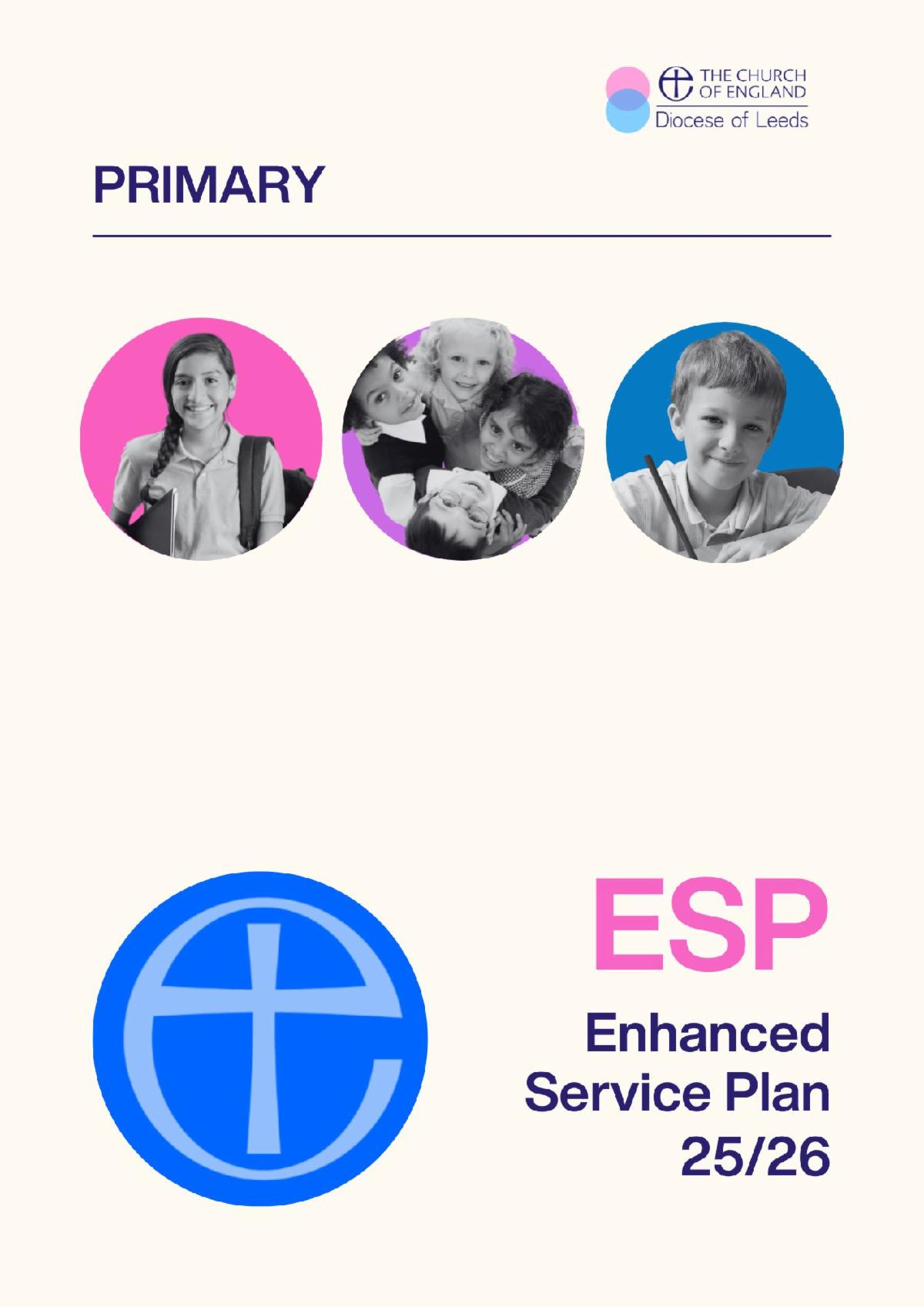
Just before the Easter break, we were pleased to launch the Enhanced Service Plan (ESP) for the 2025–26 academic year. If you haven’t yet explored it, simply click on the image to view the full details—including options such as headteacher performance management, career pathways, and governor training, all offered at reduced rates for schools subscribing to the ESP.
The ESP represents far more than a set of services—it reflects a shared commitment to one another as a family of Church schools. Thanks to the strong take-up from schools each year, we’re able to provide additional, cost-free support during times of greatest need—from headteacher recruitment and emergency pastoral support, to guidance when inspection outcomes don’t go as hoped. We were delighted that 99% of our schools subscribed last year, and we hope to see that same strength of partnership continue.
We also recognise the financial pressures schools are under, which is why we’ve worked hard to keep the SLA cost for 2025–26 as low as possible. We've also held the pricing for additional support, our career pathway programmes, and our well-regarded annual conference.
At a time when every budget decision is difficult, the role of governing boards is more important than ever in helping to ensure that this partnership with the Diocese is sustained and prioritised. Continuing to invest in the ESP is a tangible way of safeguarding the distinctive ethos, leadership and support that underpin our Church schools.
We are grateful for your continued support. Sign up for the ESP 25/26 here.
| | |
National Curriculum and Assessment Review: Interim findings published
The government’s independent Curriculum and Assessment Review, chaired by Professor Becky Francis, has published its interim report, signalling a cautious but significant step towards curriculum reform. The review, commissioned in 2023, aims to ensure the national curriculum and assessment system remains fit for purpose in a rapidly changing world — socially, technologically and economically.
Key messages from the interim findings include:
-
High standards for all: While the system has driven improvement for many, the review highlights persistent inequalities in outcomes, especially for disadvantaged pupils and those with SEND. The panel’s ambition is to ensure that "high standards for some" becomes "high standards for all".
-
Curriculum content and depth: Feedback suggests that in some subjects — particularly at primary level — the volume and balance of content may hinder pupils' ability to achieve real mastery. The review is exploring how to refine subject content to better support deep learning, teacher flexibility and time for broader learning.
-
Exams and assessment: While the broad structure of assessments is likely to remain, the review acknowledges concerns about the volume of exams at Key Stage 4 and the effectiveness of certain measures, such as the KS2 writing assessment. Further analysis is ongoing, including how best to ensure assessments are inclusive of pupils with SEND.
-
Post-16 pathways: The panel recognises the strengths of A levels and the promise of T Levels, but also points to gaps for learners who don’t fit these routes. Attention will be given to improving progression pathways — particularly at Level 2 — and supporting students who need to continue working towards English and maths beyond age 16.
-
Adapting to a changing world: The review stresses the need for young people to be prepared for life and work in an AI-enabled, digitally driven world, without losing sight of the importance of foundational knowledge, culture and critical thinking.
-
Cautious, phased reform: The panel is committed to an "evolution not revolution" approach. Any future changes will be phased to avoid disruption, and will be mindful of the current capacity pressures in schools.
We will keep governors updated on this review as it develops. While no immediate changes are being proposed, the direction of travel suggests that curriculum and assessment reform may follow in the coming months/years. In this context, it is more important than ever for governing boards to remain focused on the school’s Christian vision — as this provides the consistent lens through which any future changes can be considered, and ensures that decisions remain rooted in what best serves pupils in their local context.
Read the full interim report here: Curriculum and Assessment Review: Interim Findings
| |
| | |
Chair of Governors' Network
Thursday 15th May 6 pm - 7 pm
FREE to schools in the ESP
A termly opportunity for those in the role of Chair of Governors to share ideas and resources and discuss matters relating to the leadership of the board. You may wish to invite your vice-chair of governors as part of your succession planning process.
| | | | |
Updated guidance on effective use of teaching assistants
The Education Endowment Foundation (EEF) has published updated guidance on the deployment and development of teaching assistants (TAs), providing evidence-based strategies to help schools make the most of this vital role. When used effectively, TAs can make a significant contribution to pupil progress — especially for those who need the most support.
The guidance recommends:
- Deploying TAs to complement, not replace, high-quality classroom teaching.
- Using TAs to deliver structured interventions, particularly in literacy and numeracy.
- Ensuring TAs are trained and supported so they are confident and effective in their role.
- Avoiding the use of TAs for low-impact tasks such as general supervision or behaviour management.
However, the guidance does not directly address the significant recruitment and retention challenges currently facing schools. Many leaders are struggling to recruit TAs due to low pay, limited career progression, and competition from other sectors. While the EEF report is a valuable tool for improving practice, it comes at a time when schools are also calling for greater national support to recognise and invest in the TA workforce.
Governors may wish to use the guidance to review current deployment of support staff, while also being mindful of the broader pressures affecting recruitment, workload and staff wellbeing. Ensuring that TAs feel valued, supported and part of the wider school team is a key part of both effectiveness and retention.
You can read the full report here: EEF Guidance – Making Best Use of Teaching Assistants
| | |
Headteachers call for complaints review amid rising abuse from parents
School leaders are sounding the alarm over an increasingly toxic complaints culture, with 80%, in a report by the National Association of Headteachers, reporting they have experienced abuse from parents or carers in the past year. Many headteachers describe a growing number of complaints as personal, aggressive, and relentless — often focused on individual staff rather than policy or performance. The emotional toll is significant, with some heads speaking of feeling "battered" and demoralised, and others warning that current complaints processes offer little protection or resolution.
There are now mounting calls for a national review of the school complaints system, as leaders warn that the current approach is unsustainable and damaging to staff wellbeing. Many report spending excessive amounts of time dealing with hostile correspondence, often without the support or safeguards seen in other public services.
Responding to the issue, Ofsted Chief Inspector Sir Martyn Oliver has urged parents to “join the PTA, not the pile-on,” encouraging more constructive and solution-focused dialogue between families and schools. While acknowledging parental frustration, he stressed the need for respect and partnership, particularly given the intense pressures schools are already facing.
We continue to raise this issue in our regular meetings with the DfE, Ofsted and other system leaders, to ensure they remain aware of the toxicity and vexatious nature of some parental actions. If you want to provide feedback or require support, contact your named adviser.
Governors are reminded of their important role in ensuring complaints are handled fairly but also in supporting staff wellbeing and promoting a culture of respectful engagement. We would advise reviewing local complaints procedures. Ensuring staff are not left isolated in the face of persistent or abusive complaints may now be more vital than ever.
Governors are reminded that pastoral support for headteachers and senior leaders is available through the Enhanced Service Plan and time can be used proactively to support leadership resilience in these challenging circumstances.
| | |
Admissions
For those schools that are responsible for their admissions
Please ensure that you have officially agreed and minuted at a full governing board meeting your admissions arrangements for the academic year 2026/27, the deadline for this was 28/2/25. These should then have been published on your school website by 15/3/25. These are statutory deadlines set out in the Admissions Code.
Governors should consider the review of their admissions arrangments this term to allow sufficient time should a change and consultation be required in the autumn.
| |
| |
Governor Briefing: Collective Worship, National Expectations
Tuesday 13th May 6 - 7 pm
FREE to schools in the ESP
Governors have a statutory role to preserve and enhance the Christian foundation of their schools. Collective worship is a key part of this. To monitor and evaluate collective worship effectively, governors must understand the expectations.
| | | |
| |
Governor Briefing: Spirituality
Thursday 19th June 6 - 7 pm
FREE to schools in the ESP
This briefing is for school governors and will explore the place of spirituality in schools, expectations in a church school context and how governors can support and challenge. Clergy on the board may also wish to attend.
| | | | |
Rising number of unfilled school places as pupil numbers fall
Latest data from the Department for Education shows a 6% rise in unfilled primary school places across England, as declining birth rates begin to impact pupil numbers. In 2023, over 600,000 primary places were unfilled, with 13% of capacity now surplus. Secondary schools are also beginning to see early signs of this trend, which is expected to increase over the coming years. The shift is creating significant financial pressures for schools, as funding is closely tied to pupil numbers.
In regular meetings with system leaders we continue to encourage strategic, collaborative conversations across all parties. Schools considering a reduction in their published admission numbers are reminded that diocesan approval is required.
Full data is available here: DfE School Capacity: Academic Year 2023/24
| | Mounting financial pressures don't appear to be going away | |
As schools begin to set budgets for the next academic year, significant financial challenges are becoming increasingly acute. A growing number of schools are warning that rising costs and flat funding are putting them in a precarious position, with governors facing difficult decisions around staffing, provision and pupil support.
We see this in our regular work with schools across the Diocese. Nationally, Schools Week has highlighted the “funding storm” heading towards schools — with rising staff costs, increased demand for additional needs provision and the continued impact of inflation, all contributing to mounting in-year deficits. Even schools that have historically managed budgets well are now being forced to make tough choices.
Meanwhile, the Local Government Association (LGA) reports that half of all councils in England may face effective bankruptcy within five years due to spiralling SEND costs. These pressures inevitably filter down to schools, as local services struggle to keep pace with demand.
New research from the Sutton Trust warns that rising costs have significantly eroded the value of school funding and the pupil premium, leaving many schools struggling to support disadvantaged pupils. Nearly half of school leaders report cutting teaching assistants, with others reducing pastoral support and extracurricular activities. The Trust is calling for urgent action to restore funding in real terms.
We know governors are working hard to support school leaders in making difficult decisions. While we don’t have a magic money tree, we do collate information from schools and feed this back to the Department for Education, both locally and nationally. Please keep your named adviser informed.
Read more:
| | Governing Boards: The Importance of Self-Evaluation | |
Governing boards are required to routinely reflect on their effectiveness — not as a box-ticking exercise, but as a meaningful opportunity to strengthen leadership, improve decision-making and ensure that the board remains focused on the right priorities.
Government guidance makes clear that regular self-evaluation helps governors and trustees assess how well they are fulfilling their core functions and whether their processes support good governance. It’s also an important part of demonstrating accountability to stakeholders, including SIAMS and Ofsted, and ensuring that governance contributes positively to school improvement.
However, we also recognise that time is limited and that boards are balancing many competing priorities. That’s why we encourage a pragmatic approach to self-evaluation — doing less, but doing it better. A focused, realistic approach taken over time can be far more powerful than attempting to review everything at once and far more effective than ticking an NGA Skills Audit every September. Your named adviser can support your board in planning this work, providing you with documentation and identifying where to begin.
Looking ahead to next year, the Diocese offers external reviews of governance for schools that would benefit from an independent perspective. These reviews are a valuable way to affirm strengths, address development areas and ensure the board is fully aligned to its strategic and Christian vision. Speak to your named adviser for details.
Chairs and headteachers may also be interested in attending our joint training session:
Heads and Chairs: Working Together for Strong Governance (see below).
You can read the national guidance on governance evaluation here:
DfE Guidance on Governance in Maintained Schools – Evaluation
| | |
Feedback from heads and chairs:
'The impact of this course was better than expected, it was good to have a safe space to work 1 to 1 with the headteacher'
'Excellent ideas and strategies to further improve our work '
'...lots of practical ideas to take back and implement...useful and valuable!'
| | Creative education receives £35 million boost | |
The government has announced a £35 million investment to enhance creative education opportunities for young people across England. The funding will support programmes in music, film, dance, and theatre, aiming to broaden access to high-quality arts education regardless of background. This includes expanding the Music Hubs programme, supporting the National Youth Dance Company, and launching a new Saturday Art and Design Club. The initiative underlines the government’s commitment to nurturing creative talent and ensuring the arts remain a vital part of the school experience.
You can read the full announcement here: Young people to benefit from creative education boost
| | New research links enrichment activities to improved school attendance | |
A new report from the Centre for Young Lives has found a positive link between school enrichment opportunities — such as music, sport and drama — and improved pupil attendance. The research, based on analysis of over 8 million pupil records, suggests that access to enrichment is particularly impactful for disadvantaged pupils and those with previously low attendance.
The study supports the idea that when children feel a strong sense of belonging and connection to school life beyond the classroom, they are more likely to attend regularly. It highlights the importance of a broad and engaging curriculum, as well as extra-curricular provision, in helping to address persistent absence. This evidence may be of particular interest to schools in our Diocese, where many communities are still working hard to tackle attendance challenges in the wake of the pandemic. The findings reinforce the value of investment in the arts, sport and wider opportunities — not just as “extras”, but as integral to pupil wellbeing and engagement.
Governors are encouraged to consider how their school’s offer supports pupil connection, and how this aligns with strategies to improve attendance and inclusion.
You can read the full report here: Enrichment and School Attendance – Centre for Young Lives
| | Other items of news which may be of interest... |
-
New international research by NFER finds that 15-year-olds in England have lower socio-emotional skills than their peers in most other countries surveyed. The findings raise questions about how schools support wellbeing, resilience and relationships. Read the full report here.
-
Could AI assess writing fairly and accurately? A new trial involving over 40,000 scripts is exploring the potential of AI to assess student writing. Early results suggest AI could help scale assessment reliably, but experts warn that it cannot yet fully match human judgement — especially on creativity, nuance and fairness. Read more here.
-
New research from UCL’s CEPEO finds that high teacher turnover has a negative impact on pupil achievement, particularly in schools in areas of high disadvantage. The study highlights the need for policies focused on teacher retention and stability. Read the research here.
-
A new study from the University of Oxford finds that young people who have been in care are significantly less likely to progress to university, even when achieving similar qualifications. The research calls for more targeted support to close the gap. Read the study here.
| | |
© Anglican Diocese of Leeds, 2025
Diocesan Education team
Church House, 17-19 York Place, Leeds, LS1 2EX
0113 200 0540
info.ed@leeds.anglican.org
www.leeds.anglican.org/education/home
Why am I receiving this email?
This email from the Diocesan Education Team is sent to those who have asked to receive it by 'subscribing' or who receive it because they have a relationship with the diocese, holding an office or position in a church in the diocese, a church school or access our services through the Enhanced Service Plan. However, if you do not wish to continue to receive these emails, simply use the 'Unsubscribe' button below.
Under no circumstances are email addresses shared with third parties.
| | | | |