Intercondenser Condensate Piping Arrangement
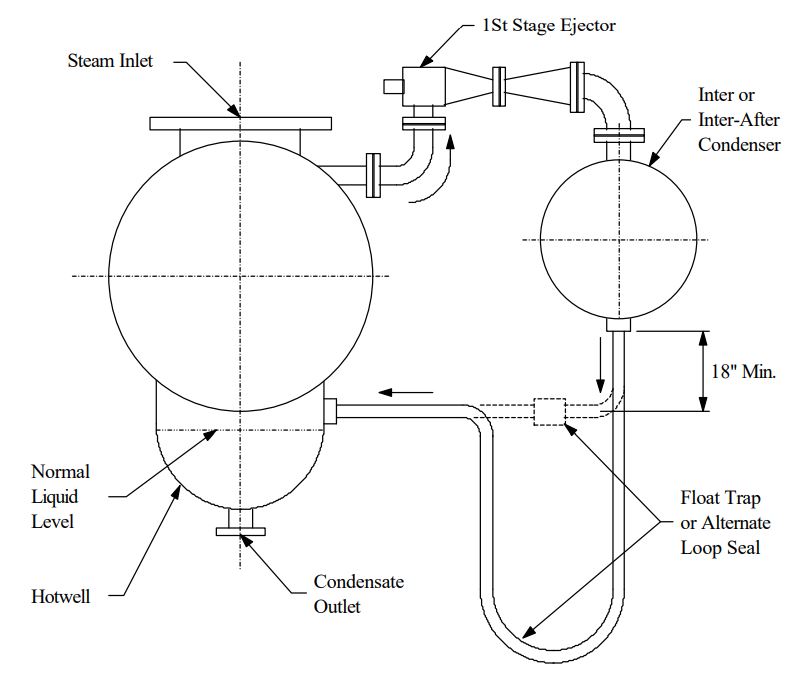
Loop Seal – A loop seal can be used for the intercondenser given the minimal pressure differential between the main condenser and inter condenser. Normally a loop of 10-15 ft is adequate, although the require loop height should be calculated. As long as the loop seal is primed and the system operated within its design, loop seals are very reliable. After many years of use, debris can gather at the bottom of the loop and may require the loop be cleaned out.
Trap – A float trap can be used for this service. The trap will allow only condensate to drain back to the main condenser. While this does introduce a mechanical element that is more prone to failure than a loop seal, it does allows for less piping or installation where a 10-15 ft loop seal is prohibitive.
Aftercondenser Condensate Piping Arrangement
Trap – A float trap can be used here in the same manner it would be used in the intercondenser. Given the larger pressure differential between the aftercondenser and main condenser, a 35 ft loop seal is usually prohibitive and returning condensate requires a trap.
Drain – Because the aftercondenser runs at a near atmospheric pressure, the condensate from the aftercondenser can be directed to a drain. While this is very reliable in preventing flooding and eliminates the possibility of recycle air, the condensate is not recycled when it is put to a drain.