| ||
Preserving Stories Over TimeI arrived at Fort Bowie after the first monsoon rain and hiked to the overlook above the visitor center. Throughout the short walk, animals were acting like they'd just emerged from a long sleep: Say's Phoebes flitted about, Scott's oriole's ethereal song reverberated through the small valley, and ants took flight—a great uplifting of winged bodies—while hundreds of velvet ants (parasitic wasps) crawled about, hunting. A cool east breeze carried the smell of wet earth and plants waking from the long drought. It was a desert coming alive. At the overlook, I sat on a bench facing an interpretive sign and a 1894 photograph of Fort Bowie—a snapshot from 132 years ago. The image showed the heyday of this place: bustling activity and infrastructure. But what struck me most was what lay before me now. The remnants of walls and buildings, fragile and eroding, were being tended that very day by a small group of NPS staff working to stabilize the Barracks, one of the largest remaining structures. These were people choosing to protect this place. As I shifted my foot, I heard glass scraping on rock. A piece of old bottle caught my eye—its metallic sheen suggesting it had been there since the fort's heyday. Who broke this bottle here? What stories could they tell? Embedded in the rock beneath it was the distinct marking of a mollusk that lived here over 300 million years ago. In one spot, three measures of time: the ancient, the historical, the present. These parks hold what we've inherited—the resilience of the desert, the complex history of this place, the evidence of worlds 300 million years old. They survive only because we choose to protect them. The NPS staff stabilizing Fort Bowie's walls, interpreting its history, and protecting fragments of deep time—they need partners and a supportive community that understands what's at stake. In 132 years, what will remain depends on us and whether we value these places enough to fund them, to visit them, and to tell their stories. ADNPP exists because we care today. — Brian Powell, Executive Director, ADNPP
| ||
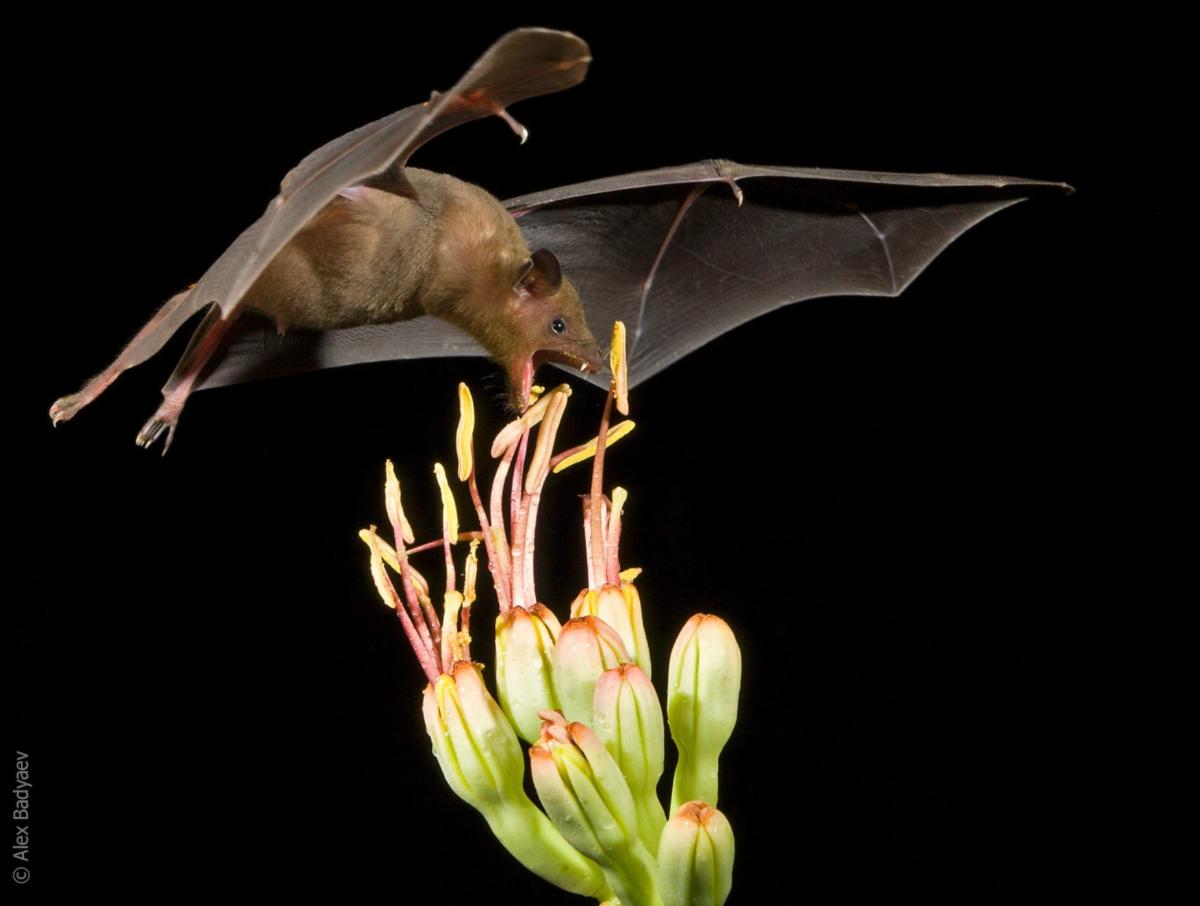
The Lesser Long-Nosed Bat: Migration Across a Desert Corridor
Every spring, female lesser long-nosed bats migrate north from south-central Mexico to the Sonoran Desert. As a species that relies on nectar, they time their journey to coincide with a cascading sequence of host plant flowering. In late spring, saguaro and senita cacti bloom at Organ Pipe Cactus National Monument. As these flowers fade, bats continue eastward, relying on agaves at Fort Bowie National Historical Site, Chiricahua National Monument, and Coronado National Memorial. This staggered phenology across ADNPP parks creates a continuous nectar corridor that sustains populations throughout the region. After young are weaned in late summer, both adults and juveniles migrate south, following an inland agave corridor back to Mexico, where they play a critical role in ecosystems there, including the pollination of agaves used in the production of tequila and mezcal! But this timing is shifting. This spring, the USA National Phenology Network documented spring arriving 2–5 weeks early across the Southwest. While it's too early to know how agave blooms will respond this summer, researchers monitoring bat populations are watching closely. The question is urgent: when bats time their migration to food resources that are no longer predictable, what happens to bat populations? We don't yet know. Ongoing research at ADNPP parks may help answer this. Theresa Laverty at New Mexico State University, in coordination with park natural resources staff, is tracking bat movements across the migratory range to understand how populations respond to changing conditions. At Coronado National Memorial, researchers have tagged lesser long-nosed bats and are monitoring their presence and activity at a late-summer transition roost—where bats gather after rearing pups and before migrating south. Recent work there, including the installation of a new bat gate and emergence counts conducted by NPS researchers Jessica Garcia and Nicole Gonzalez, provides critical data on roost use and population trends. Understanding whether lesser long-nosed bats can adapt to phenological shifts requires sustained, long-term research on how bat movements and agave flowering align across the migratory corridor. Here at ADNPP, we're looking for ways to support vital science and conservation work that tells the stories of our time. To learn more about how you can support research that protects these species and the parks they depend on, please email us: brian@azdesertparks.org. | ||
|
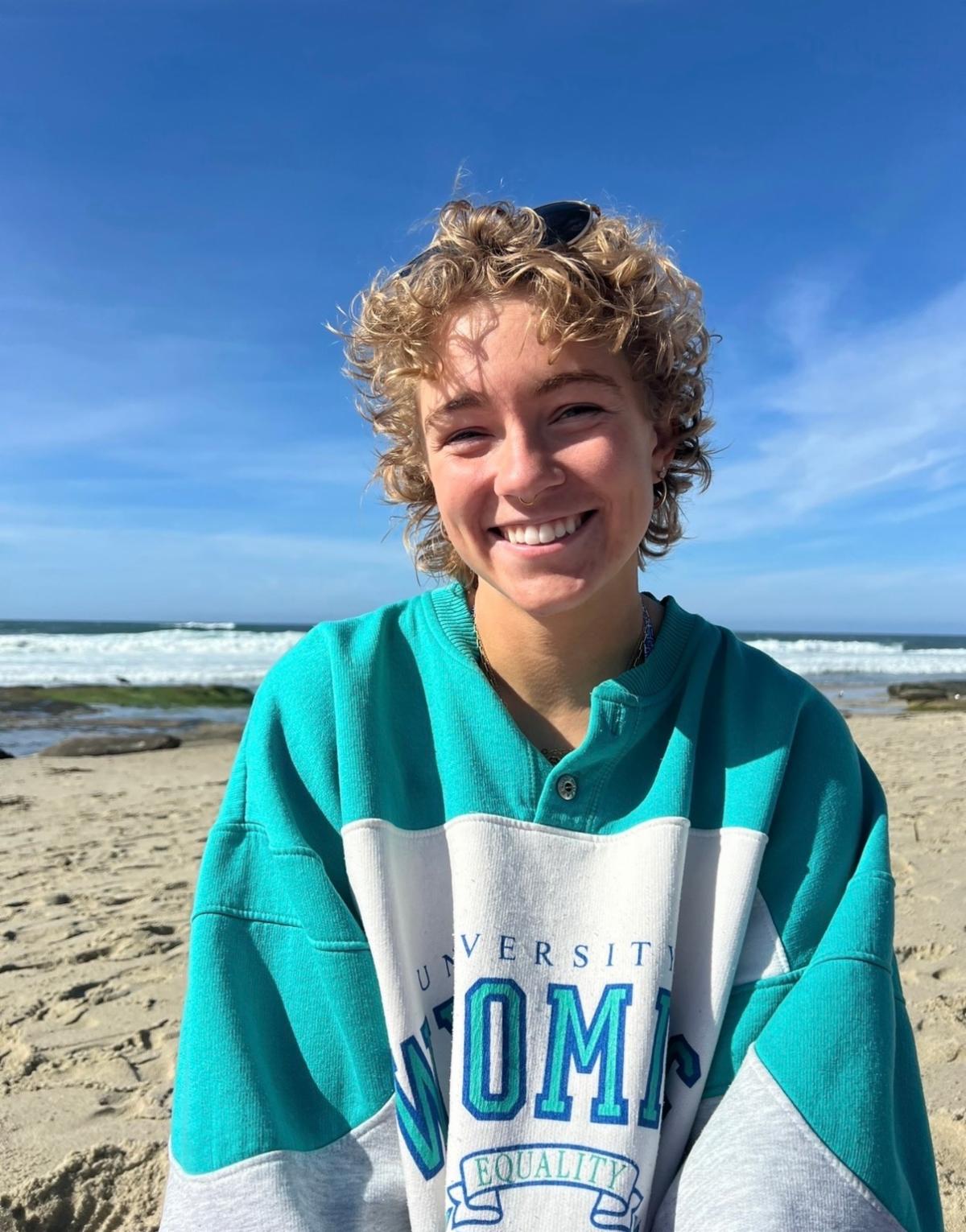
New Team Member ADNPP Welcomes Earth Grant Intern Annelise Hoffmann
| ||
|
Board Member Spotlight Kevin Dahl Joins ADNPP
| ||
|
Park Update Border Wall Construction: What's Happening at ADNPP Parks
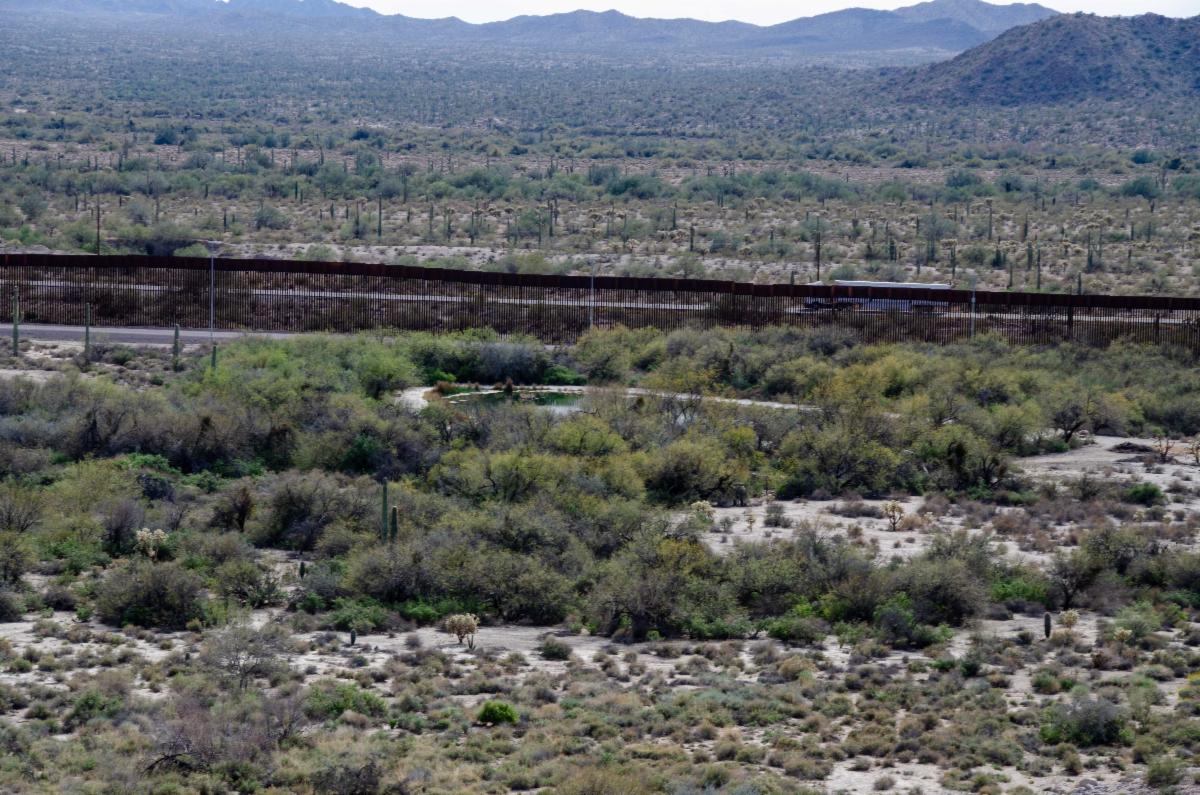
The second phase of border wall construction is coming to two ADNPP parks. ADNPP continues to be concerned about wall and construction impacts on natural and cultural resources and the manner in which the Department of Homeland Security is moving forward with the project. Because all environmental and cultural resource laws have been waived for this project, information is hard to obtain. Here's a short recap of what we know now: CORONADO NATIONAL MEMORIAL. Construction start is highly uncertain, but might begin soon. The project is advancing from the west and nearing the park boundary. A second, parallel wall is being planned, but its alignment remains unclear, as is the long-term impact on the Arizona Trail, which has its southernmost terminus at the US/Mexico border. ORGAN PIPE CACTUS NATIONAL MONUMENT. The second border wall is in the planning stages, with some new ground disturbances already taking place within the park. At Quitobaquito—a culturally and ecologically significant spring site—there are preliminary indications that the wall will be set back 60 feet from the existing barrier, rather than the 150–200 feet proposed elsewhere. Many critical questions about the wall remain including how the wall will address wildlife movement and accommodate floodwaters. ADNPP will continue to monitor border wall activities and the impacts to resources, park operations, and visitor safety. | ||
|
Funding News We've Received Operating SupportWe're thrilled to announce a $75,000 operating grant from a private foundation! This generous support builds on the National Park Foundation's investment and enables us to expand our work: securing additional grants, deepening community outreach, and delivering programs that directly benefit all nine parks. The board's involvement and strong community support convinced funders that ADNPP is positioned to make lasting change across central and southern Arizona's parks. But we can't do this alone. We're actively seeking individual donors, corporate partners, and grant support. If you haven't yet, please join us—make a donation today and help us protect these irreplaceable places. | ||
Did You Know?When you purchase an annual America the Beautiful Pass, at least 80% of the revenue stays at the park where you buy it. This means purchasing your pass at a smaller park—like one of ADNPP's nine sites—keeps those dollars working directly there. The pass works at over 2,000 federal sites nationwide: all National Parks, National Forests, National Monuments, Bureau of Land Management areas, and Fish and Wildlife refuges. Many sites offer discounts on camping, rentals, and educational programs for pass holders. The America the Beautiful Pass is available at any ADNPP park. A resident pass costs $80; non-resident passes are $250. | ||
|
Arizona's national parks belong to all of us. Support these parks with a donation, a volunteer commitment, or by sharing this newsletter. Donate | ||
Arizona Deserts National Parks Partnership 281 N. Stone Ave • Tucson, AZ 85701 • brian@azdesertparks.org
You are receiving this because you are a friend of the Arizona Deserts National Parks Partnership. |