The Caucus Current

October 2024

News from the GLLC Annual Meeting

Members approve policy recommendations and elect leadership

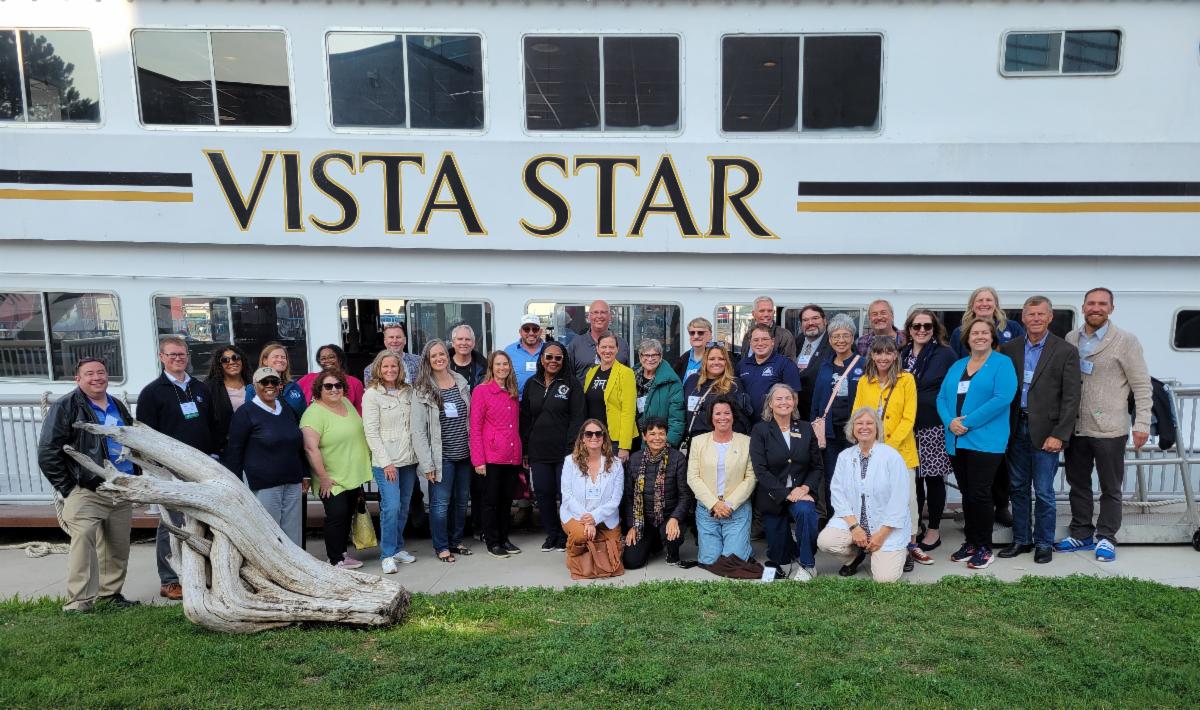
At this year’s Great Lakes-St. Lawrence Legislative Caucus (GLLC) Annual Meeting in Duluth, Minn., participating legislators adopted policy recommendations on climate resiliency, passed a resolution to study large water withdrawals from within the Great Lakes-St. Lawrence River Basin, and elected new officers and an Executive Committee to serve in 2025-2026.


The two newly elected officers of the caucus are Illinois Sen. Laura Fine and Indiana Rep. David Abbott. Along with these two officers, the caucus has an Executive Committee of legislators to oversee and guide its work.


During the meeting, participants heard presentations on flood resilience, the Fond du Lac Band of Lake Superior Chippewa’s water program, green infrastructure, the Great Lakes compact, the management of plastic waste, international science collaboration on the Great Lakes, and Minnesota’s implementation of recently passed PFAS regulations. In addition, the group toured the Duluth Seaway Port Authority terminal and went out on Lake Superior with researchers from the University of Minnesota’s Large Lakes Observatory.


Read more

Thank you to our meeting supporters

Water Use in the Basin

GLLC Seeking Legislators to Serve on the Water Use Committee

With the passage of Resolution 24-4, "Monitoring Withdrawals within the Great Lakes-St. Lawrence River Basin," GLLC members created a standing Water Use Committee "...to study and make recommendations related to large water withdrawals from surface water and groundwater, such as hyperscale data centers."


As pointed out by the Joyce Foundation in a recent article, the number of data centers in the Great Lakes-St. Lawrence River region is increasing and "...a mid-sized data center uses about 300,000 gallons of water per day for cooling, roughly equivalent to the water use of 1,000 homes."


The GLLC Water Use Committee will be looking to better understand the long-term impact of the large data centers and water withdrawals on water availability and ecosystems. The work of this committee will help inform legislators as they make decisions about economic incentive programs and environmental regulations.


Members can click the link below to join the Water Use Committee, as well as other active GLLC committees, including the Indigenous Engagement Committee, the Birkholz Institute Steering Committee, and the Rules Committee.


There will also be an upcoming CSG Midwest web meeting on data centers and their environmental impact. It will be held on Dec. 10. Details will be shared in the coming weeks.

Join a GLLC Committee

Web Meeting: Indigenous Treaty Law in the U.S. and Canada

The CSG Midwestern Legislative Conference Midwest-Canada Relations Committee and Great Lakes-St. Lawrence Legislative Caucus invite state and provincial legislators, as well as staff and partner organizations, to join them to learn more about Indigenous treaty law on Dec. 17. The web meeting will begin at 11:00 a.m. ET/10:00 a.m. CT. Legal experts will present an overview of what legislators should know about existing treaty obligations and the implications for state/provincial partnerships with Indigenous Nations, particularly on issues related to water and the Great Lakes-St. Lawrence River Basin.

Register Now

Recent News Around the Basin

Lead in Drinking Water: The U.S. Environmental Protection Agency (EPA) finalized updates to the Lead and Copper Rule and announced additional federal funding to local drinking systems to meet the required 10-year deadline to identify and remove all lead service lines.


Read more


The GLLC Policy Agenda calls for the replacement of lead service lines and enhanced testing and filtration in schools and childcare facilities.


Ballast Water: The EPA also finalized a new rule regarding ballast water in U.S. waters. This rule requires large vessels on the Great Lakes to have ballast water management systems. However, it only applies to vessels constructed in the future. The rule does not apply to existing vessels, setting up a discrepancy in regulations between U.S. and Canadian vessels on the Great Lakes. Canada's 2021 Ballast Water Regulations require lakers on the Great Lakes to have ballast water management systems installed by 2030.


The GLLC Policy Agenda calls for harmonized ballast water requirements to control and prevent further introduction of aquatic invasive species.


Great Lakes Commission: At its annual meeting in Rochester, New York, the Great Lakes Commission passed two resolutions: "Strengthening Protections Against the Importation and Trade of Invasive Species" and "Support for U.S. Congressional Reauthorization of the Great Lakes Restoration Initiative." The Great Lakes Commission is an interstate compact agency created by the Great Lakes Basin Compact led by government delegates from eight states and two provinces.

Great Lakes State and Provincial Legislative Tracker

Great Lakes Legislative Tracker

Take a look at the searchable, sortable GLLC State and Provincial Legislative Tracker for the latest legislative activity.

Upcoming Events

THE FISH THIEF screening at the Windsor International Film Festival

October 26

9:00 a.m. ET

Windsor, ON

ALL TOO CLEAR: BENEATH THE SURFACE OF THE GREAT LAKES screening at the Windsor International Film Festival

November 1

4:00 p.m. ET

Windsor, ON

Partner Webinar: Land Applied Biosolids and PFAS Exposure

November 1

2:00 p.m. ET

Zoom: Register

GLLC Web Meeting: Indigenous Treaty Law in the U.S. and Canada

December 17

10:00 a.m. CT

Zoom: Register

2025 Birkholz Institute on Emerging Contaminants: PFAS and Plastics

TBD

2025

About the GLLC

The Great Lakes-St. Lawrence Legislative Caucus (GLLC) is a binational, nonpartisan organization that exists solely for the purpose of engaging state and provincial legislators in the policymaking process related to the Great Lakes and St. Lawrence River. Secretariat services are provided by The Council of State Governments' Midwestern Office. Financial support is provided in part by The Joyce Foundation, the Charles Stewart Mott Foundation and the Wege Family Foundation.


For more information about the caucus, visit the GLLC website or email gllc@csg.org.

X