|
Please share this edition of Wildlife Highlights with other outdoor enthusiasts
and help our subscription list grow!
| |
$4M Great Meadows Marsh Restoration Project Launches | |
|
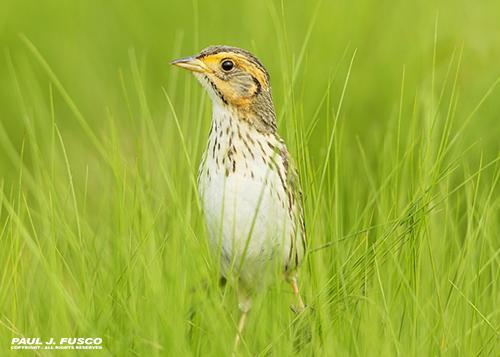
The Connecticut DEEP is excited to partner with Audubon Connecticut, the U.S. Fish and Wildlife Service, and the National Oceanic and Atmospheric Administration (NOAA) on a $4 million restoration of the Great Meadows Marsh in Stratford, part of the Stewart B. McKinney National Wildlife Refuge and a Globally Important Bird Area. The project will not only create and improve habitat for the saltmarsh sparrow, a species of special concern, as well as other wildlife, but it will also reduce mosquito breeding grounds, improve community access to the marsh, and help with coastal resilience in the face of climate change. Construction began on November 1 to restore up to 33 acres of salt marsh and other important coastal habitat.
More on the Great Meadows Marsh Project . . .
| |
Black Bears Are Busy Fattening Up this Fall | |
|
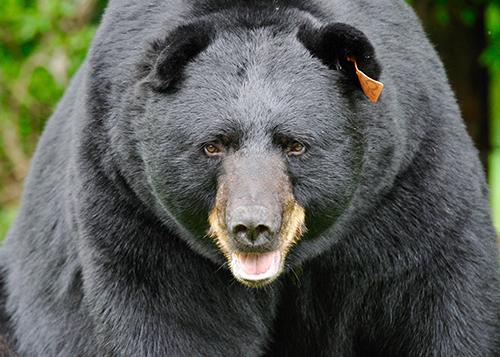
Much of Connecticut is suitable habitat for black bears, providing enough natural food, water, shelter, and space for the bear population to continue growing and expanding. This time of year, our forests are providing a bounty of hard mast, fruits, and seeds for bears, turkeys, deer, squirrels, and many other species in preparation for winter. For bears, acorns are especially important for packing on the pounds, providing about 2,000 calories per pound of acorns.
While there is plenty of natural foods like acorns around, bears will not hesitate to detour into your backyard for some fast food, like a feeder full of bird seed (10,000 calories), a suet cake (1,600 calories), a hummingbird feeder (3,200 calories), or your leftovers sitting in the trash bin. Making just one or two visits to backyards with bird feeders each day can provide as many calories as spending all day foraging for natural foods, even when these natural foods are abundant.
Unfortunately, these stops for quick and easy food from humans can lead to a progression of more and more dangerous behavior, including entering homes. For this reason, bear biologists across the country advise the same thing to reduce conflicts with bears: remove all human-related food attractants like trash and bird seed when bears are active.
More on living with black bears . . .
| |
Connecticut to Benefit from Competitive State Wildlife Grant | |
|
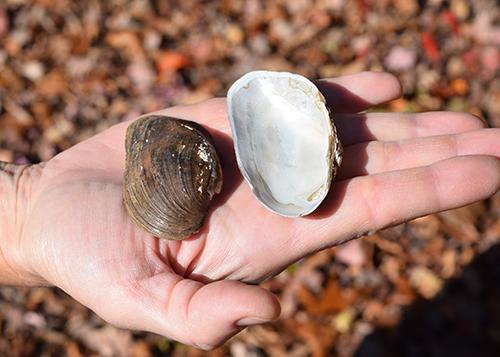
Did you know that North America harbors the highest diversity of freshwater mussels in the world, yet 30 species have become extinct and more than 65% are considered imperiled? The state-endangered brook floater, a freshwater mussel that is also a regional species of greatest conservation need, received a much needed boost in conservation with the recent award of a Competitive State Wildlife Grant for nearly $1M to help partnering states advance conservation planning, propagation, and restoration, and population and habitat assessments in more states and watersheds. Northeastern states identified the brook floater mussel as one of the most critically imperiled in the Northeast Region. Connecticut is pleased to join GA, MA, ME, MD, NH, NJ, NY, NC, SC, VT, VA, and WV in this important effort to protect freshwater mussels.
More on how this grant will help protect imperiled species . . .
| |
UPDATE: Barn Island Wildlife Management Area | |
|
A wetland habitat enhancement and road improvement project will be conducted at Barn Island Wildlife Management Area (WMA) during the period of November 1 through December 31, 2021. Culvert replacement and road maintenance will begin the week of November 8, 2021 and should be completed by mid-December. During that time, the dike road off Palmer Neck Road will be closed to pedestrian traffic.
More on the project . . .
| |
Fall Is a Great Time for Biologists to Study Bats! | |
|
This time of year, cave-dwelling bats, including little brown, big brown, tri-colored, and northern long-eared, are taking shelter for the winter after congregating outside their hibernaculum to breed earlier in the fall.
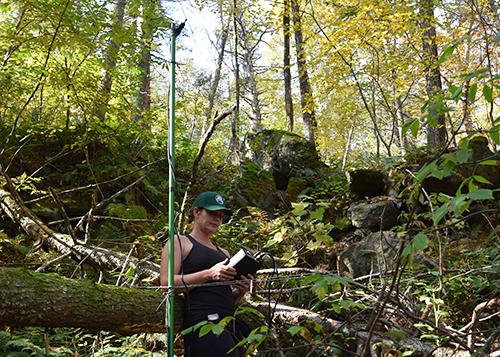
By placing acoustic monitors near bat hibernacula, biologists are able to record bat calls and gain a better understanding of which species are using a particular hibernaculum. It is not uncommon for different species to share the same cavernous space. Acoustic monitors are placed where there is an opening in the canopy above, as these are often the areas bats circle on the wing before entering the hibernaculum. Pictured is DEEP Wildlife Division biologist Devaugh Fraser, who is setting up an acoustic monitor just outside a bat hibernaculum in northwestern Connecticut.
More on Connecticut's bats . . .
| |
Field Trips Resume at Belding Wildlife Management Area | |
|
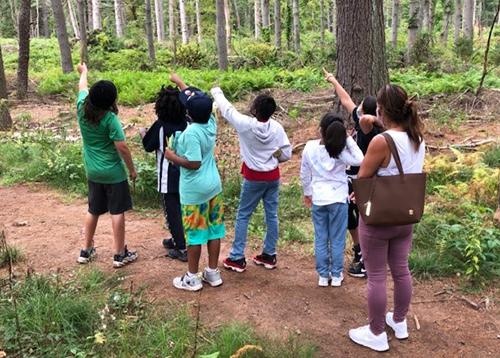
Elementary school field trips to the Belding Wildlife Management Area, located in Vernon, resumed in September after COVID-19 restrictions had put these trips on hold for a year and a half. Fourth-graders from all five elementary schools in Vernon came out for full days of learning. Master Wildlife Conservationists Bernie Noonan, Daryl Gottier, and Jean Laughman, and Master Naturalist Lynn Kochiss taught the students about the wildlife and habitats of Belding WMA.
Educating young people about wildlife and conservation was one of the main goals set forth by Max Belding when he donated the property to the DEEP. This cooperative program with the Vernon school system is a big step in fulfilling his vision.
More on the Belding field trips . . .
| |
How Did Connecticut's Fall Foliage Measure Up this Year? | |
|
The answer is...it’s complicated! And there is no consensus. It may also depend on where you live.
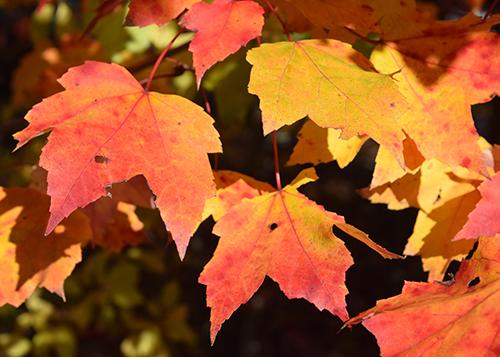
Connecticut’s trees are still dealing with severe drought stress from 2020. At the same time, frequent rainfall in mid to late summer 2021 resulted in development of fungal diseases on foliage that caused premature browning and dulled colors in pockets of the state. Some of the northwest hills also saw severe gypsy moth defoliation in early summer, which meant no leaves to turn colors.
Sunny and bright fall days with chilly (but above-freezing) nights tend to be best for bringing out the brightest colors, which come from trapped sugars in the leaves, and that type of weather may have helped rescue some color.
Unlike most of northern New England, Connecticut really has two foliage peaks—the brightest color (with maples) is usually in the week following Columbus Day, while total change includes the later dropping oaks toward the end of the month. Some of our citizens have been pleasantly surprised at delayed color (from the normally earlier-dropping species) that is coinciding with the usual oak changing. The results? A beautiful first of November, proving that even in a “bad” foliage year, our autumns do not disappoint! They may just give us a surprise or two. . .
| |
Watch Out for Deer and Other Wildlife in Roadways | |
|
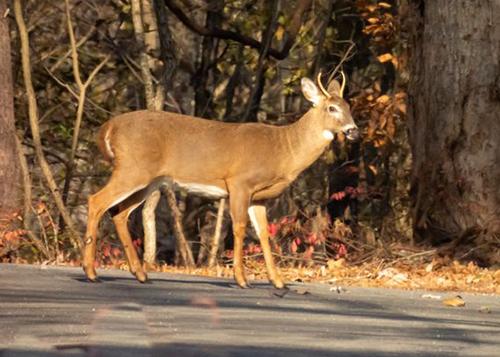
Fall is a time when many animals are busier than usual, trying to prepare for winter, seeking food across larger areas, and crossing busy roadways more often. These crossings can put animals and motorists at increased risk of collisions. In 2020, it was estimated that 2,200 deer were killed in vehicle collisions in Connecticut. These collisions can lead to serious injury to drivers, in addition to thousands of dollars in vehicle damage.
The number of deer killed in vehicle collisions in southwestern Connecticut has been steadily declining since additional deer management tools have been in place, including replacement harvest tags and longer hunting seasons.
More on deer hunting in Connecticut . . .
| |
Not Quite Time to Put Out that Bird Feeder | |
|
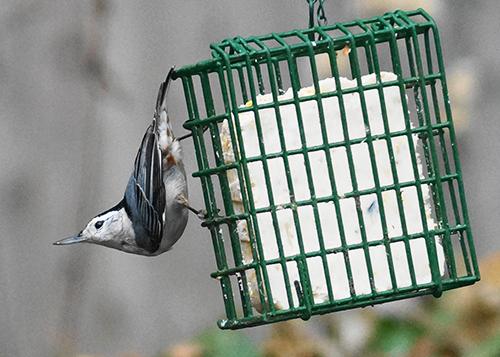
Temperatures may be dropping, but that doesn’t mean it is time to put out the bird feeders for our winter visitors just yet. The Wildlife Division advises against having bird feeders out until December 1st to reduce conflicts with bears and other wildlife stemming from bird feeding activity. Calorie dense bird seed and suet is extremely attractive to bears and other wildlife this time of year as they prepare for hibernation. Many native berries and seeds are still extremely abundant and provide an adequate, healthy, natural food source for birds for the next few weeks. Stay tuned for next month’s issue of Wildlife Highlights where we will highlight our new guide to winter bird feeding.
| |
Species of the Month: Eastern Chipmunk | |
|
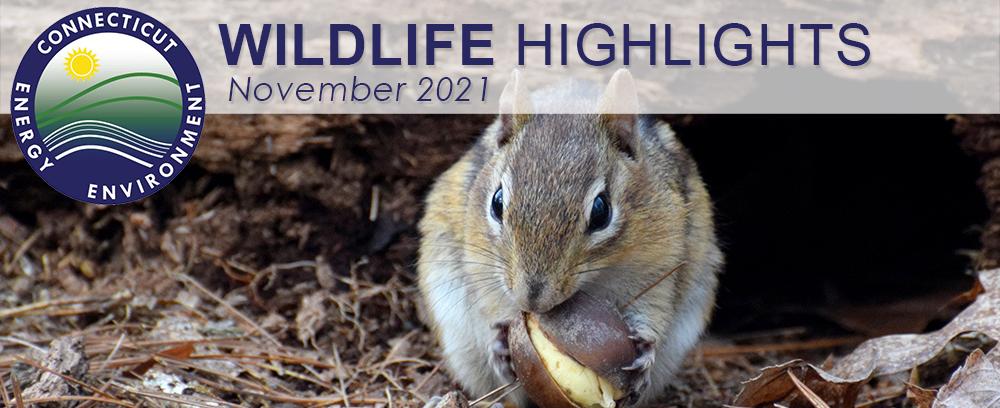
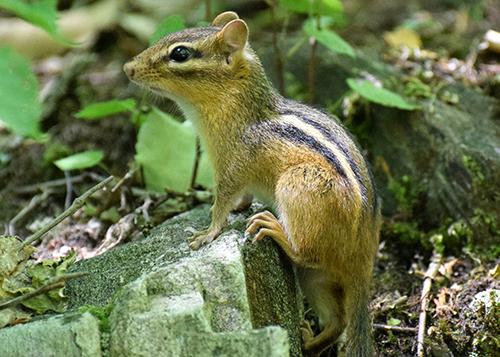
Now with fall in full swing, you may have noticed eastern chipmunks hastily preparing for the coming winter, their cheek pouches packed with large nuts and other food. Their underground burrows may reach 30 feet long and up to 3 feet deep! These burrow systems include nesting chambers and storage rooms for nuts and seeds that provide chipmunks with food throughout the winter. Beginning in late October, chipmunks sleep for long periods throughout the winter but are not true hibernators, as they occasionally wake to snack on stored nuts and seeds and may even come outside for brief periods of time on warm winter days.
More on the eastern chipmunk . . .
| |
|
Stay Connected!
Follow us on Social Media
| |
|
-- Quick Links --
Your Feedback Is Important to Us!
Send your comments or suggestions to deep.ctwildlife@ct.gov
|  | The Connecticut Department of Energy and Environmental Protection is an Affirmative Action/Equal Opportunity Employer that is committed to complying with the requirements of the Americans with Disabilities Act. Please contact Barbara Viadella or Cenit Mirabal, DEEP Office of Diversity and Equity at 860-418-5910 or by email at deep.accommodations@ct.gov if you are requesting a communication aid or service, have limited proficiency in English, need some other type of accommodation, or if you wish to file an ADA or Title VI discrimination complaint. In order to facilitate efforts to provide an accommodation, please request all accommodations as soon as possible following notice of any agency hearing, meeting, program or event. | | | | |