April 21, 2020
Greetings!
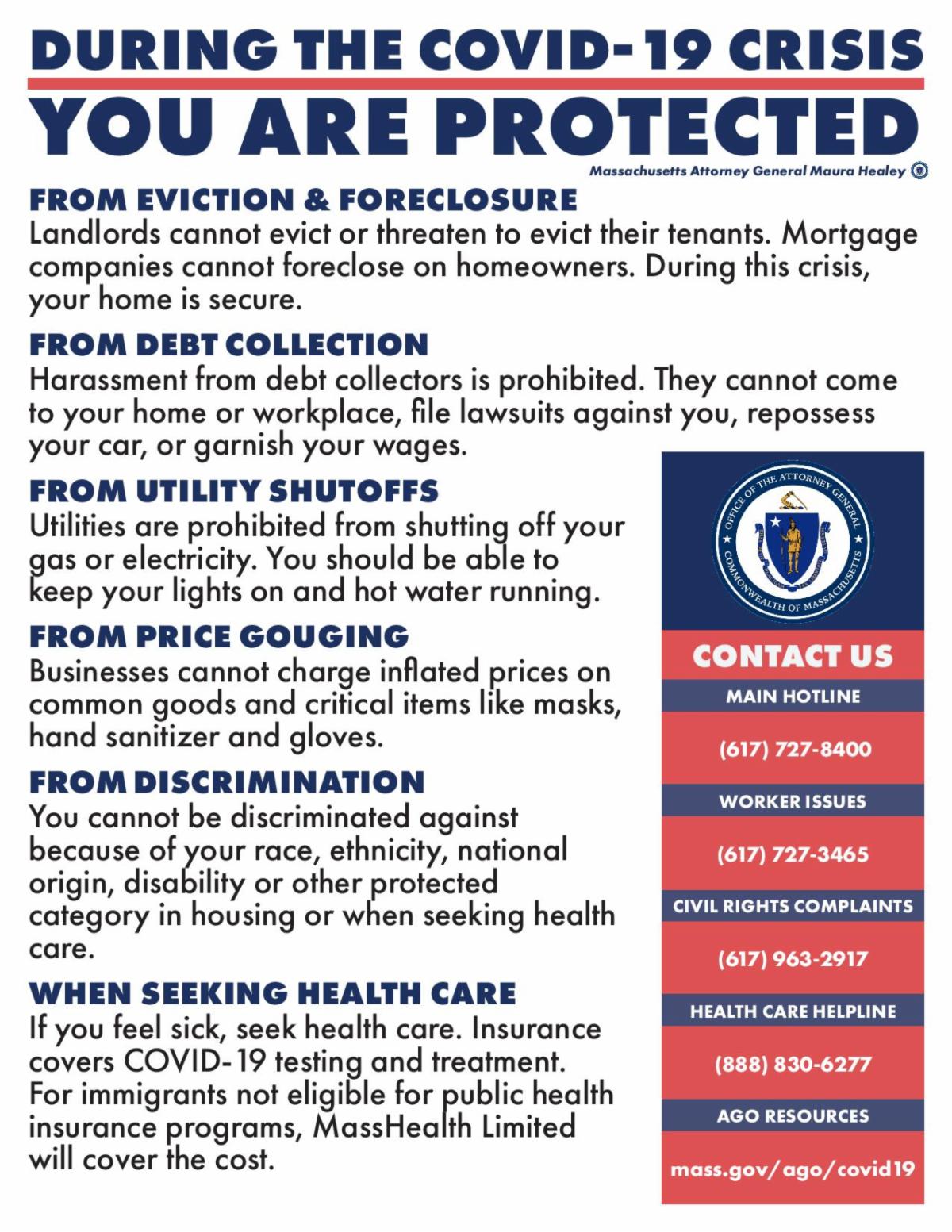
- The moratorium applies to all stages of eviction.
- The moratorium only contains very narrow exceptions that allow certain evictions to move forward in the event of a dire emergency.
- The moratorium will remain in place for 120 days or 45 days after the Governor’s emergency declaration is rescinded, with the possibility of an extension.
Please Take a Few Minutes to Thank Massachusetts Lawmakers for Passing the Strongest Eviction and Foreclosure Moratorium in the Country
Please also
see our website
and
social media channels (links in header above)
for
regular updates on COVID-19 resources and advocacy opportunities
related to other coronavirus-specific bills already filed and on efforts to ensure supplemental funds for cash assistance programs, emergency shelter, and targeted services and safe places for unaccompanied youth.
Thank you for your collaboration! We hope that you stay healthy, safe, and committed to the common good.
With gratitude,
Kelly
Kelly Turley
Associate Director
|
|
|
|
|
Overview of the New Eviction and Foreclosure Moratorium Law
For tenants, the new law temporarily halts all stages of eviction, specifically:
- Stops landlords from sending notices of eviction and filing new eviction cases
- Stops courts from scheduling non-emergency hearings, entering judgments (including agreements for judgment), and issuing executions
- Stops sheriffs from levying on executions to remove tenants
- Applies to most evictions with limited exceptions for true emergencies involving conditions or conduct endangering the health and safety of others
It also prevents late fees and negative credit reporting for tenants impacted by COVID-19.
For homeowners living in owner-occupied properties with 1-4 units, it temporarily:
- Stops residential foreclosures from going forward
- Requires lenders to offer a mortgage forbearance for homeowners affected by COVID-19, with payments added to the end of the loan
- Prevents negative credit reporting for homeowners in forbearance
- Gives landlords access to tenants' last month's rent to cover expenses
The moratorium also pauses evictions on small businesses, and makes it easier to access reverse mortgages.
The moratorium will remain in effect for either 120 days from yesterday (August 18th) or 45 days following the end of the state of emergency, whichever is sooner. This can be extended by the Governor to ensure it does not end before the state of emergency is lifted plus a reasonable time period.
|
|
|
|
|
State Advocacy: Ask the Legislature to Expand Access and Funding for the Residential Assistance for Families in Transition Program
The Residential Assistance for Families in Transition (RAFT) program is a key tool to help families with children, unaccompanied youth, elders, people with disabilities, and other households avoid or exit homelessness. RAFT provides funds for needs such as back rent payments, back utility payments, first month's rent, last month's rent, security deposits, and transportation costs.
During the COVID-19 pandemic, tens of thousands of Massachusetts households are falling further behind on rent, utilities, and other needs after facing job losses, work hour reductions, and unexpected costs.
Read more on how to access RAFT during the pandemic here:
English
and
Spanish
Recently, MassHousing transferred $5 million to create a COVID-19 fund within RAFT.*
The Coalition is working with allied organizations to ask the Legislature to appropriate $50 million in additional funding for RAFT to address COVID-19 needs. We also are working to make positive changes to improve access and eligibility for RAFT
:
- Allow households to access any new COVID-19 RAFT funds "upstream", before having to begin the eviction or utility shut-off process
- Protect access to funds for the lowest income households (with incomes at or below 30% area median income), while allowing a portion of any COVID-19 funds to go to households normally just above the income eligibility limits (between 50-80% area median income) if they have been impacted by COVID-19
- Decrease the documentation burden on households applying for funds, and allow households to apply electronically for benefits
- Allow households to apply for RAFT funds, even if they received RAFT payments in the past 12 months
- Clarify that households accessing the Upstream RAFT pilot program are eligible for up to four months of back rent or back mortgage payments, even if that exceeds the Traditional RAFT cap of $4,000
- Raise the cap for Traditional RAFT beyond $4,000/year to more effectively and realistically meet needs
Advocacy Opportunity:
Will you join us?
Please contact your State Representative and Senator today to ask them to support $50 million in emergency supplemental funding and program improvements for the Residential Assistance for Families in Transition program
(line item 7004-9316).
|
|
|
|
Federal Advocacy: Ask Congress to Prioritize Housing in the Next Coronavirus Response Package
Now more than ever, it’s clear that housing is health care. People experiencing homelessness are at extreme risk during the pandemic. Many are elders, have disabilities and/or underlying medical conditions, live in crowded shelters or unsanitary conditions, and lack the ability to quarantine, isolate, and recover. The lowest-income, severely housing cost-burdened renters are at high risk of coronavirus complications as well as the threat of eviction and homelessness due to loss of income. The spread of COVID-19 among these populations threatens their health and safety - and that of us all.
The resources and provisions in the recently passed federal
CARES Act
were an important first step in addressing some of the urgent needs of people experiencing homelessness and those on the brink of experiencing homelessness.
But much more is needed
, including emergency rental assistance for the lowest-income renter households who are one missed rent payment from eviction and homelessness.
Advocacy Opportunity:
We all benefit when we prioritize the needs of the lowest-income and most marginalized people in Massachusetts and all across our country. Doing so protects the health and lives of tens of millions of people, the front-line providers serving them, and our healthcare systems.
|
|
|
|
Thank you for your collaboration and work to ensure that everyone has a safe place to stay at home during the stay at home advisory and beyond!
|
|
|
|
|
|
|
|
|