Having Trouble Viewing This Email? Click Here

October 2026 Newsletter

Enhancing Organizational Resiliency through Talent Management Strategies Since 1996


Executive Onboarding
Protects Leadership Investments

A collaborative framework for executive onboarding success


Organizations invest considerable time and attention in finding the right executive, yet a successful hire still requires a thoughtful transition. Michael Watkins, author of The First 90 Days, identifies the move into a significant new role as a critical period. When a leader steps into the C-suite, combining an internal transition team with an external Executive Onboarding Coach significantly increases the likelihood of long-term, sustainable success.


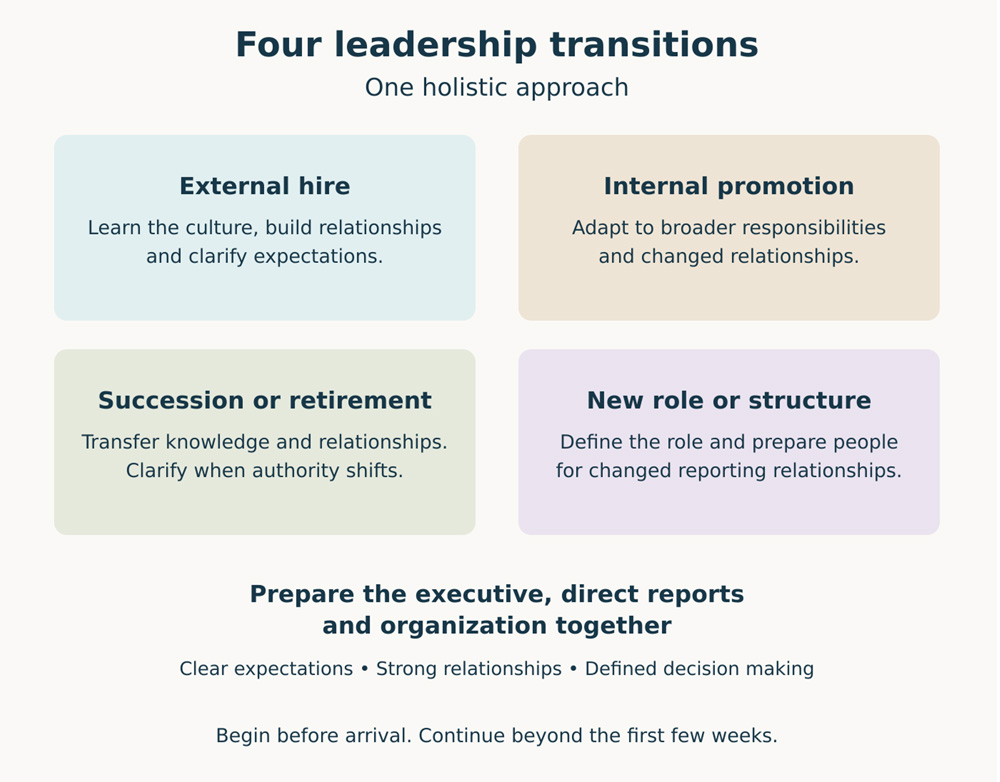
For more than three decades, organizations have partnered with the Greene & Associates, Inc. team to prepare executives and those around them for these critical milestones. By designing highly successful executive onboarding programs, they provide the targeted coaching strategies necessary to turn a high-stakes hire into a seamless transition. To address this critical window from every angle, they leverage The Eblin Group’s holistic methodology to guide leaders through four distinct transition scenarios:

Onboarding extends beyond the new leader

Executive onboarding takes different forms, but each requires attention to the leader and the people around them. External hires must learn the culture, build relationships, and clarify expectations. Conversely, internal promotions adapt to broader responsibilities and navigate changed relationships. The Eblin Group’s Next Level Self Assessment emphasizes this vital shift, helping leaders move from individual self-reliance to team reliance while building stronger connections across the entire organization.


Prepare for succession and structural change

When a longtime leader retires, onboarding and succession planning must work hand-in-hand. Organizations need to transfer critical knowledge, preserve key relationships, and explicitly clarify when decision-making authority shifts to the successor. This gives the incoming leader room to establish credibility and a unique leadership approach, while helping employees understand what will continue and what may change.


Similarly, navigating a new role or organizational structure requires absolute clarity about its purpose, authority, and reporting paths. By preparing the executive, direct reports, and the wider organization together, everyone understands evolving expectations and exactly how their daily work connects.


A foundation for long-term success

True onboarding starts well before the new leader arrives and continues far beyond the first few weeks. Shared preparation creates the ideal conditions for leaders, teams, and organizations to flourish through change.


Barbara Greene Shares Leadership Skills 

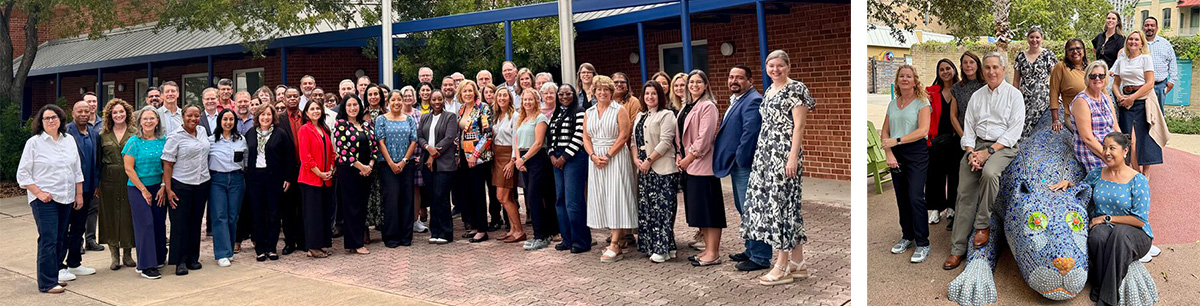
Barbara A. F. Greene, founder and CEO of Greene and Associates, Inc., shared leadership and board governance skills with the 23rd cohort of the Masters Leadership Program (MLP), which prepares leaders to serve on boards.

She highlighted respect, trust, open-minded listening, accountability and constructive conflict resolution, alongside strategic planning, financial oversight and ethical conduct. Being a good board member requires functional skills and high EQ.

Audience members participated in interactive exercises and her message emphasized how strong relationships, sound judgment and shared purpose help leaders and organizations FLR-ISH.


–––––––

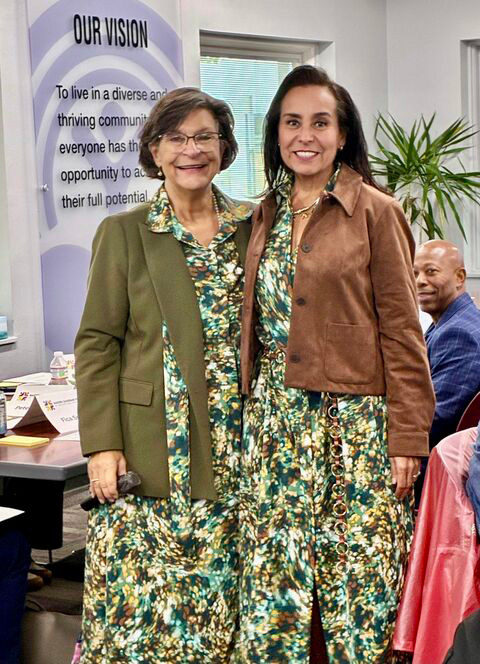
Barbara and Fica Soriano, CEO of the Children's Rehabilitation Institute TeletonUSA (CRIT). Barbara is a graduate of MPL Class XI. Fica is a current member of MLP Class XXIII.


Learning across generations is a two-way street. Everyone brings experience to share and something new to discover.

Learning across generations is a two-way street. Everyone brings experience to share and something new to discover.


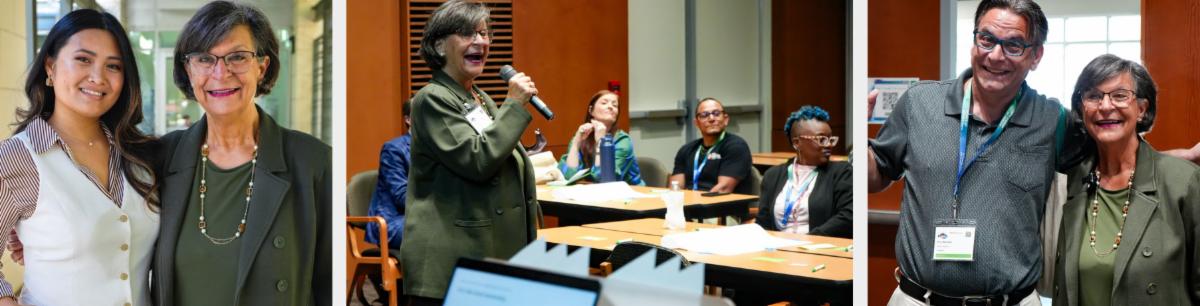
In “Co-Mentoring Across Generations: Two-Way Learning for the Next Era of Leadership,” Creators and facilitators Lyka Ferry, CPTD®, and Barbara A. F. Greene, ICF MCC and Marshall Goldsmith SCC, explored how people can learn with and from one another. They have the lived experience of serving as co -mentors and know the benefits. The power of multiplicity comes from bringing different perspectives and experiences into that exchange.


In practice, this means taking turns sharing insights and being open to what another generation can teach us. It also means using feedforward to offer suggestions for what organizations and their leaders can do to create a co-mentoring culture, creating opportunities to build trust, support growth and deepen connections across generations. In essence, organizations ELEVATE their workforce’s contributions. 


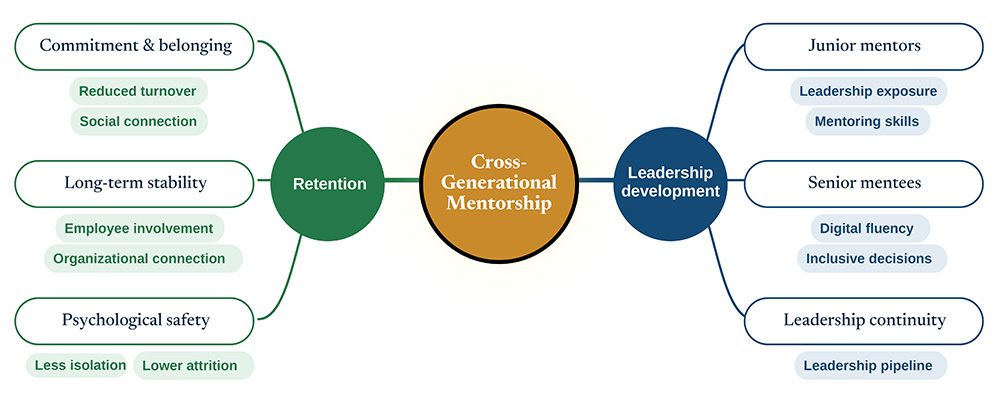
The illustration below demonstrates research learnings
related to enhanced outcomes:

This content was a presentation given as part of the ATDSA LEAPS Conference for Corporate Learning and Development professionals.


September's Survey Results

During organizational change, what most shapes whether you trust leadership?
What leaders SAY - 5% | What leaders DO - 43%
Whether their WORDS and ACTIONS ALIGN - 20%
How openly they communicate when they DON'T HAVE THE ANSWERS - 40%

Thank you again for being part of this month's conversation.
We look forward to continuing to build stronger leaders –
and stronger organizations – together.


For more than 30 years, Greene and Associates, Inc. has partnered with organizations of all sizes and industry to provide expert support and guidance for their human capital initiatives. Let us help you take care of your entire workforce.


Flourish/FLR-ISH Consulting | Executive Coaching | Career Transition & Management | Leadership Development |Succession Planning | Retirement Readiness & Planning | Corporate Mentoring | Retreat Consultation | Workshop Design & Facilitation

Facebook  Web  Email  LinkedIn