Marin/Sonoma CCL Newsletter | | | |
Communicating Climate Change:
Keep it personal, local and human
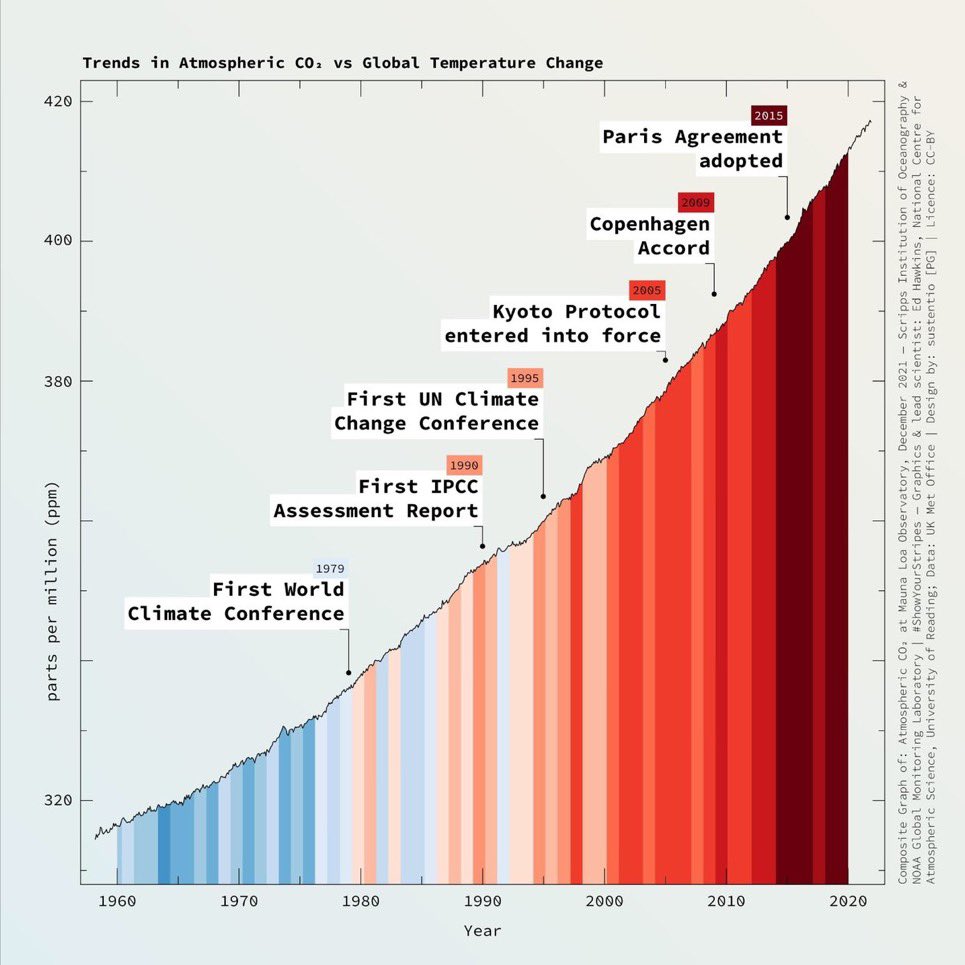
Even with multiple, simultaneous, accelerating, climate disasters happening all over the world, the signal to noise ratio remains too low to galvanize political action. War, economics, crazy politics, scandals and everyday life compete for center stage while our planet cooks. Political leaders aren't feeling the heat because the public isn't pushing hard enough. That must change if we are to get anywhere close to what's needed to stem the tide of global heating.
We've been trying for a long time, but it's not working fast enough. So let's try another way: shift the marketing strategy.
The new Climate and Democracy Discussion Group (CDDG) hosted its second guest lecture on March 18 with Potential Energy, "the nonprofit marketing engine for planet Earth, shifting the narrative about climate change and driving public demand for solutions before it’s too late." They also presented at a national call in April, 2024 which you can watch here (at 8'50.)
If you are one of the many who are frustrated by the lack of action, their plan for changing the way we communicate might be just the right medicine. While old habits are hard to change, we should all give it a try by spending some time on their impressive educational website.
Here's a summary of the talking points, and here's a sample of their work. Subscribe for free here.
Upcoming event
Yale Program on Climate Change Communication
Communicating Climate Solutions,
Thursday, April 9, 2026, 9 AM PT.
Register here
How can we most effectively communicate about climate solutions? Many people who are alarmed about climate change aren’t taking climate action — they are willing to engage in climate action but rarely do. Join us for a conversation about the barriers to effective climate action and how psychological interventions can be used to foster more impactful behavior.
From Skeptical Science:
John Cook, who has spent nearly two decades studying science communication and the psychology of misinformation, shares his journey from creating the education website Skeptical Science in 2007 to his shocking discovery that his well-intentioned debunking efforts might have been counterproductive. He also discusses the “FLICC” framework – a set of five techniques (Fake experts, Logical fallacies, Impossible expectations, Cherry picking, and Conspiracy theories) that cut across all forms of misinformation, from the denial of global heating to vaccine hesitancy and more. Additionally, John’s research reveals a counterintuitive truth: our tribal identities matter more than our political beliefs in determining what science we accept – yet our aversion to being tricked is bipartisan. [And at CCL we love bipartisan.]
| | |
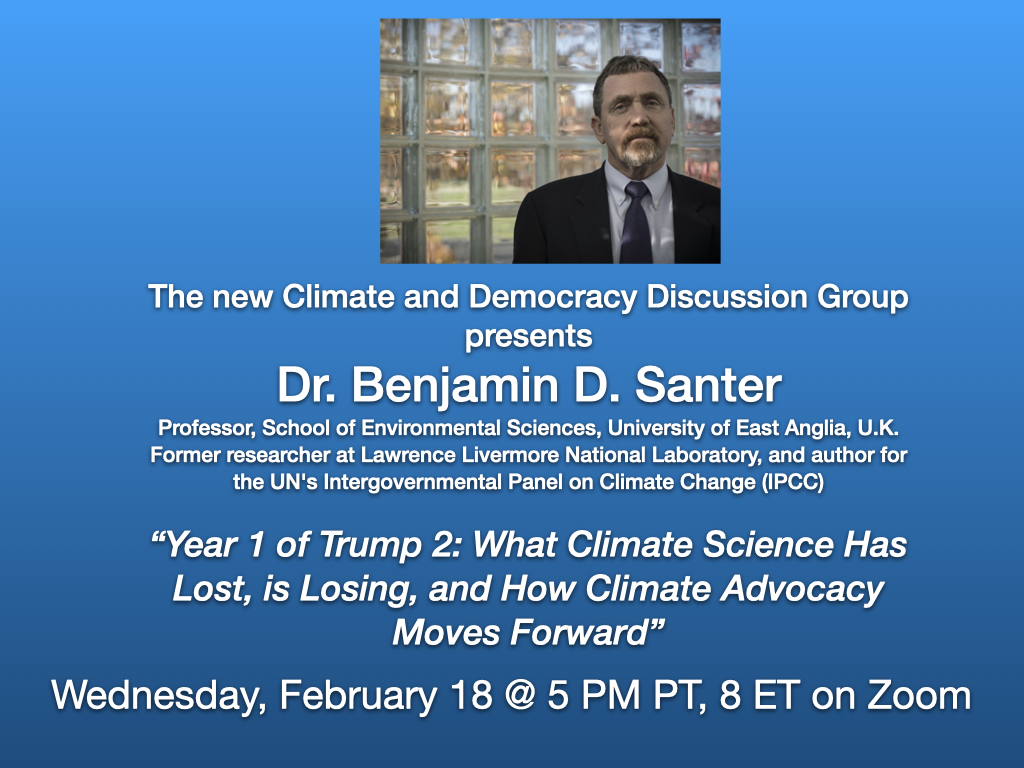
The Climate and Democracy Discussion Group (CDDG)
hosted its first guest lecture on February 18 with
Dr. Benjamin D. Santer, Ph.D.
Former atmospheric scientist, Lawrence Livermore National Laboratory, IPCC author, now Professor at East Anglia University in the U.K.
"Year One of Trump Two: What Climate Science has Lost, is Losing and How Climate Advocacy Moves Forward"
Dr. Santer delivered a powerful and personal overview of the damages already incurred and will accrue on the current course.
Watch it here.
| | |
The Marin and Sonoma CCL Chapters invite you to their monthly meeting,
Saturday, April 11 at 9 AM PT here.
We'll discuss the merger of the Marin and Sonoma chapters and the opportunities that creates. We'll also discuss our upcoming Earth Day messaging around carbon pricing, how California CCL members are working to extend and improve it in California, and the new Carbon Pricing Action Team (see below.) There will be time for sharing personal observations about the alarming state of the world and our role as citizens.
Then, at 10 AM PT, join National's monthly meeting here.
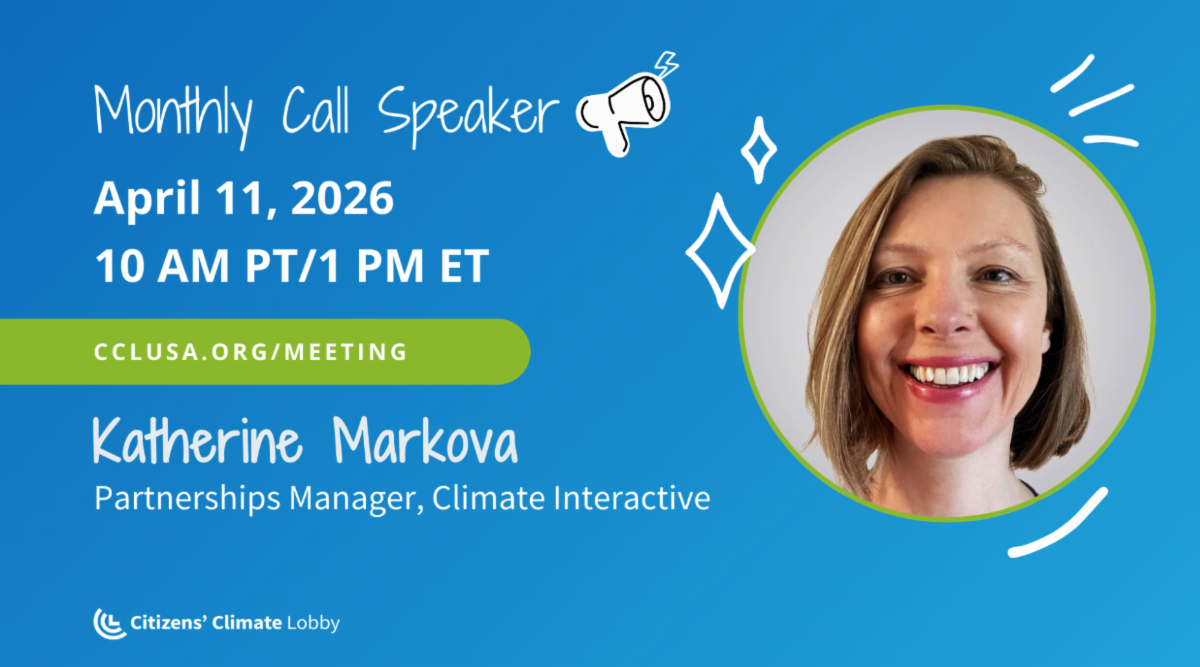
| | As Climate Interactive's Partnerships Manager, Katherine is responsible for managing relationships with Climate Interactive's strategic partners and their community of trained En‑ROADS Climate Ambassadors operating worldwide. En-ROADS is the climate modeling tool developed at MIT showing which combination of methods work best to lower GHG emissions and ultimately earth's temperature. Find out more about it here and have fun with it. (Hint: carbon pricing is the most effective single lever available.) | | |
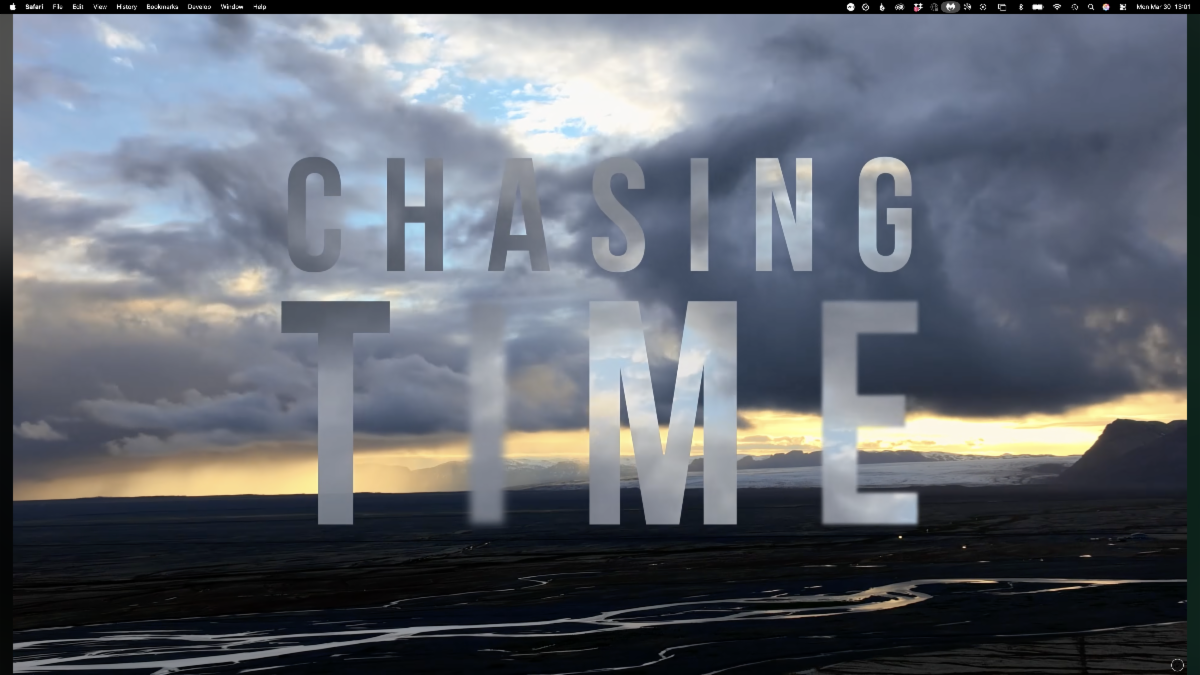
Remember Chasing Ice?
This was the movie that was supposed to kick climate action into high gear 14 years ago by documenting the rapid melting of the cryosphere. Surely, we would act...but it hasn't exactly worked out that way. (See below -- The Power of Big Oil to understand why.)
James Balog, CCL advisory panel member, is back with an update, a gorgeously filmed walk forward in time, showing the stunning progression of global warming on the places he last filmed. It was nominated for best documentary short film at the recent Academy Awards.
Here's the 40 minute director's cut.
| | |
Carbon Fee, Dividend and Border Adjustment still lives.
This is where CCL started, and it's still the best policy, especially now that the E.U. has imposed a carbon border adjustment, which should prompt the U.S. to enact its own carbon price. Since global heating is partially the result of a huge market failure, ("externalizing" the true social costs of the product -- their enormous environmental damages -- thus distorting normal market functioning), we should listen to the experts in the field, the economists, the professionals who understand markets. See how many of the 3,649 signers you recognize here.
| | |
WSJ, January 17, 2019
Global climate change is a serious problem calling for immediate national action. Guided by sound economic principles, we are united in the following policy recommendations.
I. A carbon tax offers the most cost-effective lever to reduce carbon emissions at the scale and speed that is necessary. By correcting a well-known market failure, a carbon tax will send a powerful price signal that harnesses the invisible hand of the marketplace to steer economic actors towards a low-carbon future.
II. A carbon tax should increase every year until emissions reductions goals are met and be revenue neutral to avoid debates over the size of government. A consistently rising carbon price will encourage technological innovation and large-scale infrastructure development. It will also accelerate the diffusion of carbon-efficient goods and services.
III. A sufficiently robust and gradually rising carbon tax will replace the need for various carbon regulations that are less efficient. Substituting a price signal for cumbersome regulations will promote economic growth and provide the regulatory certainty companies need for long- term investment in clean-energy alternatives.
IV. To prevent carbon leakage and to protect U.S. competitiveness, a border carbon adjustment system should be established. This system would enhance the competitiveness of American firms that are more energy-efficient than their global competitors. It would also create an incentive for other nations to adopt similar carbon pricing.
V. To maximize the fairness and political viability of a rising carbon tax, all the revenue should be returned directly to U.S. citizens through equal lump-sum rebates. The majority of American families, including the most vulnerable, will benefit financially by receiving more in “carbon dividends” than they pay in increased energy prices. [Emphasis added]
| | |
Now that you've read what the experts recommend, here again is Marin CCL's Jonathan Marshall's summary of why a carbon fee and dividend can get the job done. Download it here.
Those wishing to get more involved can join the new Carbon Pricing Action Team on Community. Next meeting, April 22 at 10 AM PT here.
| |
Political Will for a Livable World
by John Gage, CCL New Hampshire state coordinator
Green Energy Times, April 2026
Worldwide, carbon pricing has been spreading and prices have been rising for decades. The U.S. is now the only developed country without a national carbon price. Political will to price carbon in the U.S. has been lacking, so Congress hasn’t done it.
Nearly 70% of Americans support charging fossil fuel producers a carbon fee, according to polling from Yale Climate Communications. Support rises by another 10% if the money collected is returned to all households in equal shares. This cash-back dividend option supports a strong carbon price, and it is popular because most people get more cash back than they pay in trickle-down higher prices. Those with the smallest carbon footprints benefit the most.
Continue reading about how to create the necessary political will for carbon pricing here.
| And for you wonks out there, or those who think there's noting going on, here's a detailed summary of current carbon pricing bills in Congress. | | |
Our National Academies of science, Engineering and Medicine (NASEM) have come through!
In a direct rebuttal of the scandalous report issued by the DOE last summer, which was ostensibly to be used as the excuse for EPA to repeal the "endangerment finding," the legal basis for federal efforts to curb GHG emissions, the NAS created their own consensus report. It found that the science showing harm to Americans from GHG's was even stronger than it was in 2009. Here's the bottem line.
Effects of Human-Caused Greenhouse Gas Emissions on U.S. Climate, Health, and Welfare
Overarching Conclusion: EPA’s 2009 finding that the human-caused emissions of greenhouse gases threaten human health and welfare was accurate, has stood the test of time, and is now reinforced by even stronger evidence. Today, many of EPA’s conclusions are further supported by longer observational records and multiple new lines of evidence. Moreover, research has uncovered additional risks that were not apparent in 2009.
In summary, the committee concludes that the evidence for current and future harm to human health and welfare created by human-caused GHGs is beyond scientific dispute. Much of the understanding of climate change that was uncertain or tentative in 2009 is now resolved, and new threats have been identified. These new threats and the areas of remaining uncertainty are under intensive investigation by the scientific community. The United States faces a future in which climate-induced harm continues to worsen and today’s extremes become tomorrow’s norms.
Read the report here.
| | |
Do Not Miss This Series!
If you're wondering why so little progress has been made weaning civilization off of fossil fuels despite the evidence of their dangers, watch this series. If you've already done so, watch it again, keeping in mind what it might look like if these energy sources weren't so profitable because their emissions paid a price commensurate with their true costs to society. Then scroll back up and read the Economists' Statement again to see what a reasonable solution might look like.
| | |
You're invited, but...
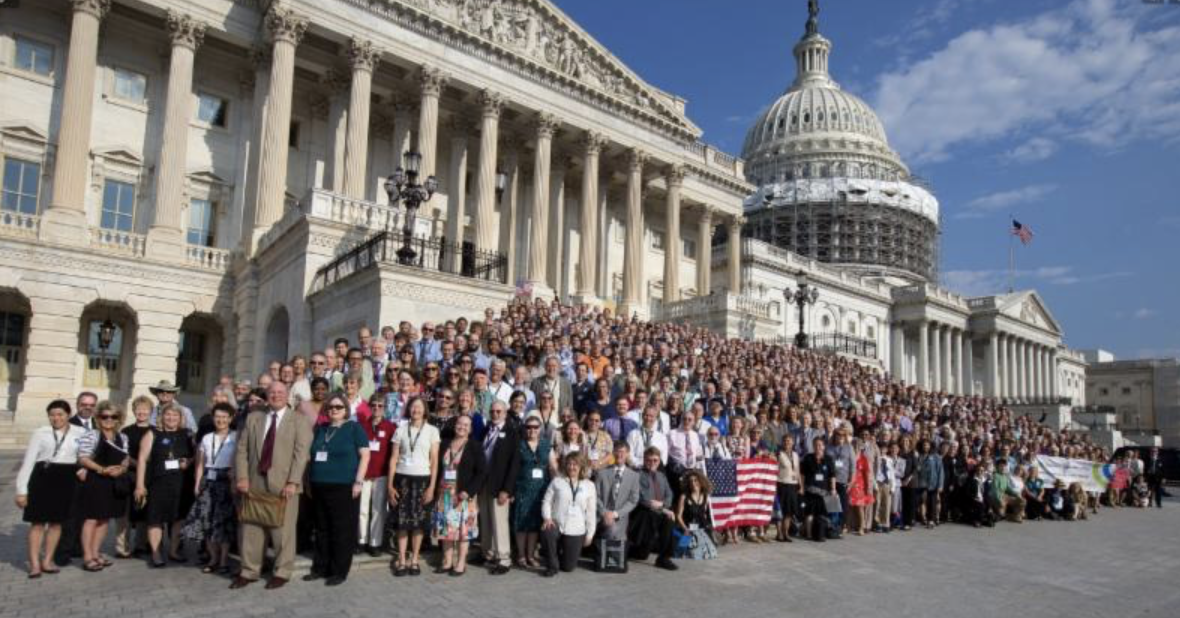
This is how one behaves inside The Capitol:
Make an appointment. Business attire recommended. Bring nothing that even looks like a weapon.
Long live democracy.
| | |
Earth
Prepared by Peter G. Joseph, M.D.
Peter.Joseph@cclvolunteer.org
Apologies for cross postings.
If you know someone who would like to be added to this distribution list, please suggest they join Marin or Sonoma CCL, or if not in this area, contact me.
| | | | |