California North Coast CCL Newsletter | | | |
SAVED! By popular demand.
See below.
| | |
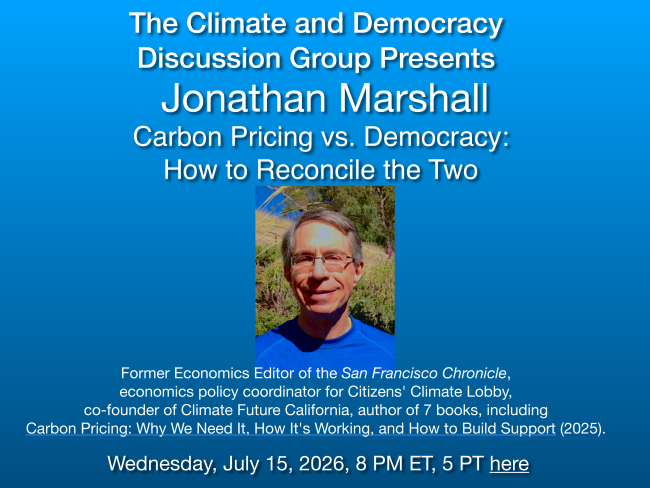
Join us on July 15 at 5 PM PT for another timely presentation from The Climate and Democracy Discussion Group (CDDG).
Zoom in here.
The next speaker will be Jonathan Marshall, journalist, author of books on international affairs, economics, and climate change. He regularly contributes to CCL through research, writing, public education on energy and environmental issues such as the economic impacts of carbon pricing and the policy pathways for bipartisan climate action. Jonathan is also a member of our CDDG team.
He will discuss the concerns of legitimate carbon pricing skeptics who question the political viability of carbon pricing in a democracy, and how those concerns can be overcome, based on behavioral science.
On June 17, CCL Advisory Board member Prof. Michael Gerrard of Columbia Law School and gave an outstanding, wide-ranging presentation on legal challenges to Trump’s attacks on Climate and Democracy. Here's the recording.
You can find all the recordings of past CDDG presentations here.
| | |
The Marin and Sonoma CCL Chapters,
now California North Coast CCL,
invite you to their monthly meeting,
Saturday, July 11 at 9 AM PT here.
We'll discuss how we're working to more deeply understand our MoC's (member of Congress) positions on the issues facing our district; what's up with the new Carbon Pricing Action Team (see below), Climate Future California, action about permitting reform and an update on what's going on with Marin Clean Energy.
Then, at 10 AM PT, join National's monthly meeting here.
The speaker will be Ricky Bradley, CCL's executive director, discussing the upcoming national conference and lobby day in D.C.
| | |
CCL's National conference in DC is July 26-28. Find out about it here.
| | An Attempted Murder with a Happy Ending (for now...) | |
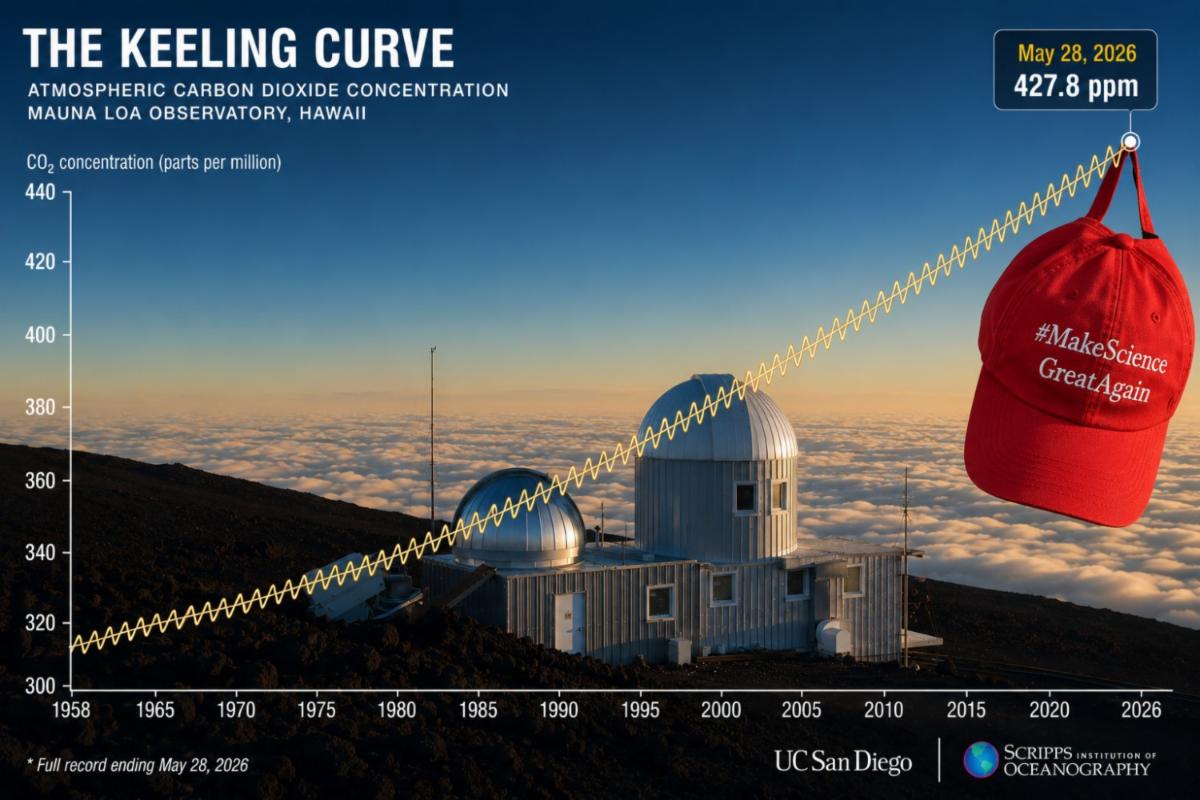
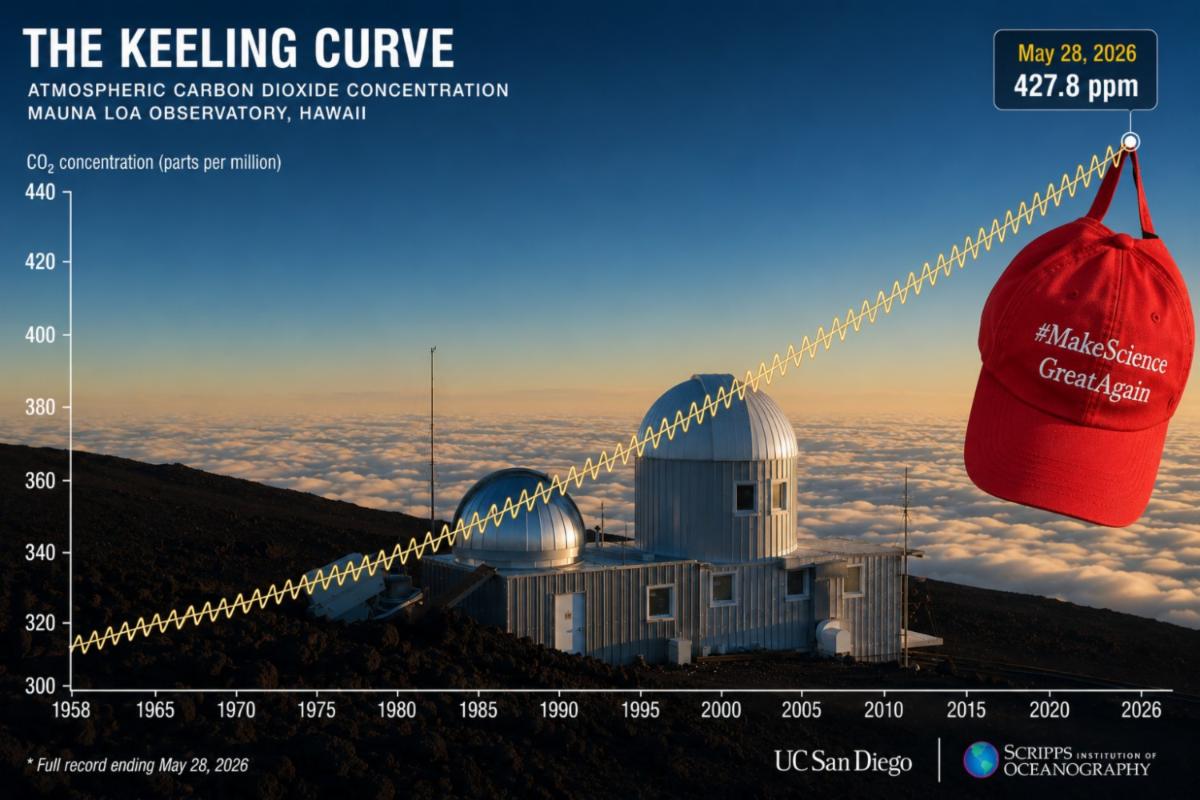
After a volcanic eruption and a federal cost-cutting push threatened its operations, NOAA confirms the world’s premier CO₂ record is funded, accessible again, and entering a major rebuild. But how it was saved is also a warning about how easily it could have been lost.
"The Keeling Curve does not care about politics. The institutions protecting it do. This time, scientists spoke, journalists reported, lawmakers acted and citizens paid attention. The deeper lesson of Mauna Loa is that the curve survived not because important infrastructure protects itself, but because, this time, people were watching."
Forbes
May 30, 2026
And another assault is in progress:
WAS STOPPED by public and Congressional outcry!
| |
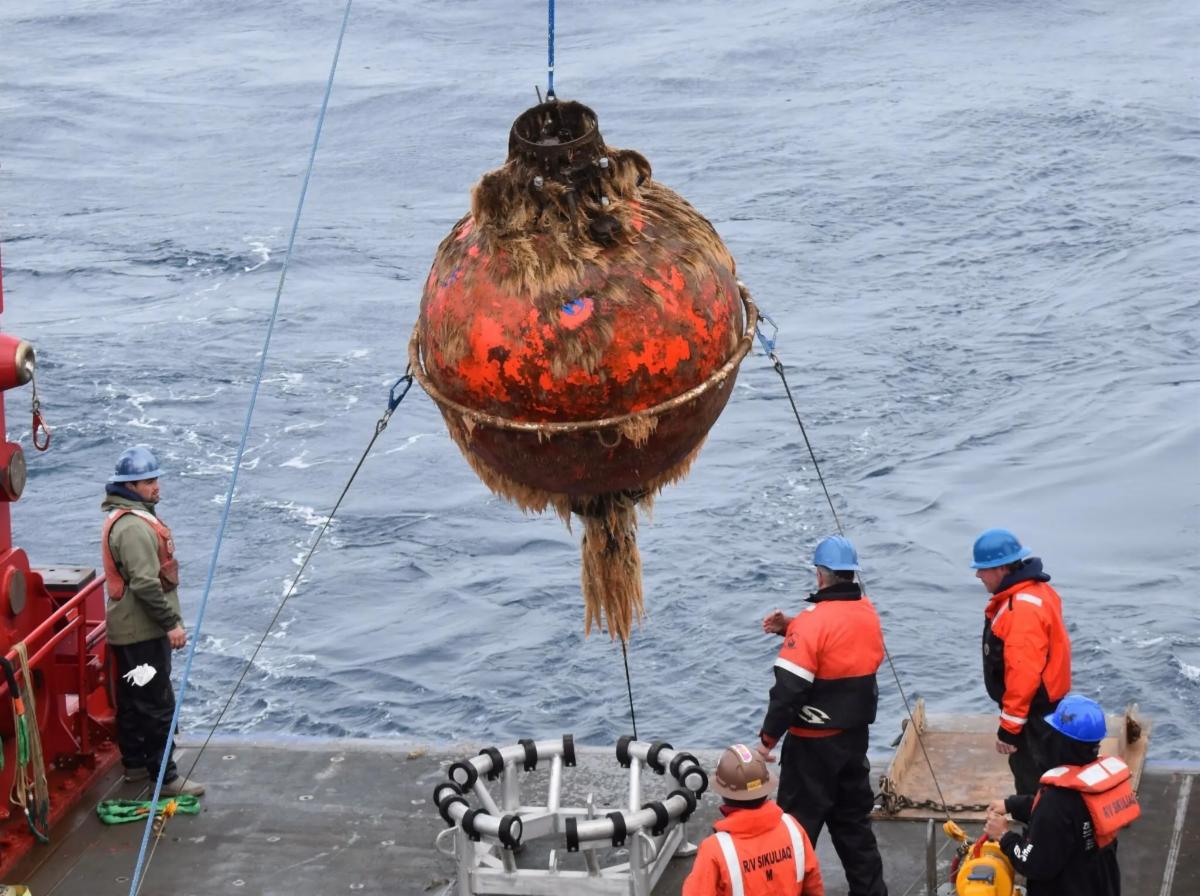
Trump Administration (TRIED) to Dismantle Ocean Monitoring System
NYT, June 1, 2026
The $368 million network of instruments collecting data in both the Atlantic and Pacific has been critical to climate and ocean research.
Scientists have used data from the system to understand how the ocean is absorbing greenhouse gases from the atmosphere, how changes in ocean temperature such as marine heat waves might affect fisheries or signal bigger shifts in the climate, and coastal flooding along the East Coast.
This senselessly destructive action triggered a fierce outcry from citizens!
AND THEY BACKED DOWN:
Trump Administration Backs Off Plan to End Ocean Monitoring
NYT, June 18
The reversal comes after the Senate passed a bipartisan bill on Wednesday to block the removal of deep-sea monitoring instruments.
Thank you, Congressman Huffman, ranking member of the House Natural Resources Committee for taking a stand along with your Senate colleagues.
| | |
Book Passage presents a special event with Congressman Jared Huffman and
famed narrator Peter Coyote
August 23 at Dominican University
Details here.
| | |
CarbonBrief
June 10, 2026
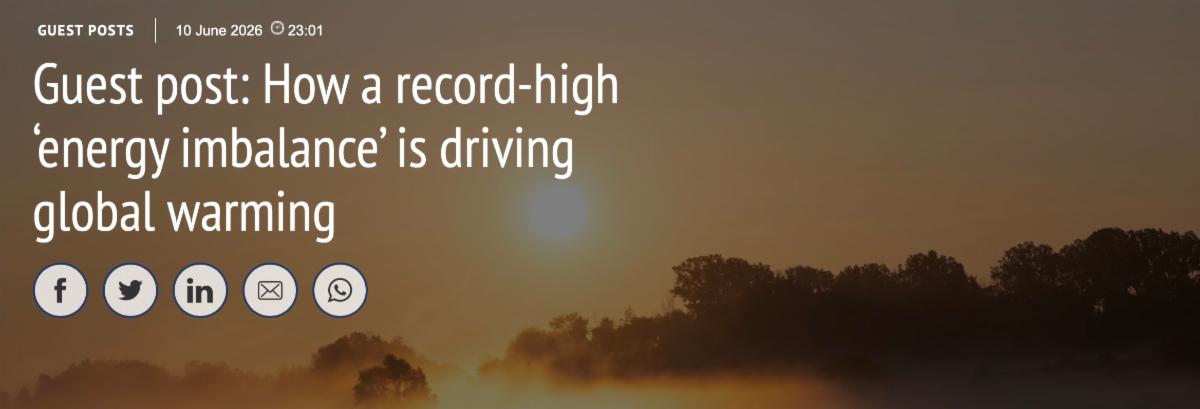
If you really want to understand why global heating is happening, understand Earth's Energy Imbalance. It's pretty simple. It's why you don't leave your kids or dog in a parked car in summertime.
For decades, greenhouse gas emissions caused by human activity have been building up in the atmosphere and trapping ever-higher levels of heat.
The resulting asymmetry between incoming solar energy and energy radiated back out into space – known as “Earth’s energy imbalance” – provides a direct measure of the extent to which humans are disrupting the Earth’s climate system.
This imbalance is growing, and in 2025 its 10-year average reached a record high, indicating that global temperatures could increase at even higher rates in the future.
This is among the headline findings of the latest “indicators of global climate change” (IGCC) report, published in the journal Earth System Science Data, which tracks annual changes in the climate system.
Its findings are designed to fill the gap between Intergovernmental Panel on Climate Change (IPCC) science reports, which are published every 5-7 years.
This article explores how human activity is driving a growing energy imbalance and why monitoring systems to track global climate are so crucial.
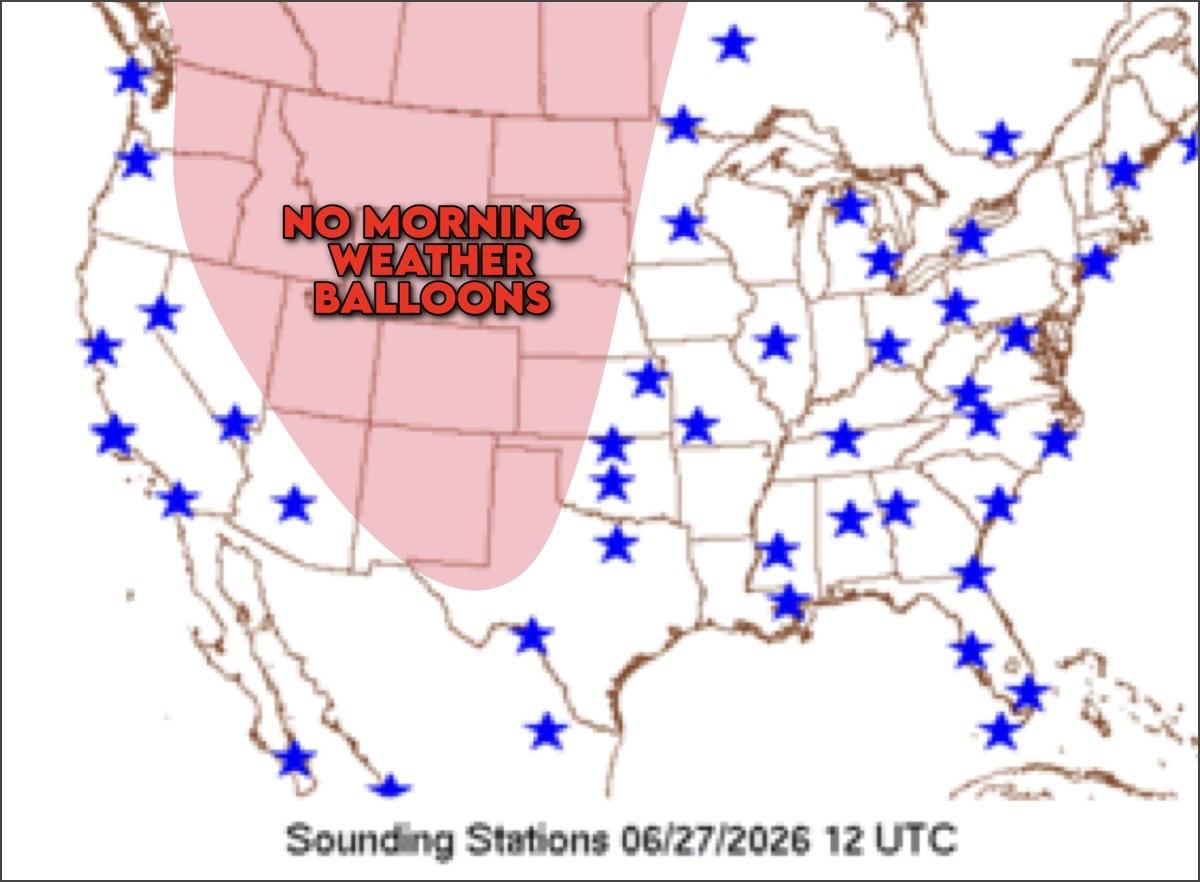
[Strange that the Trump administration seems intent on dismantling climate monitoring systems just as a monster El Niño approaches, the East Coast gets poached and Europe broils. One must wonder how, exactly, that will make America great?]
| |
Project 2025 Cuts Cripple Weather Forecasts as Extremes Become Critical
This is Not Cool
| | Here's what the experts have to say about shifting the global economy away from fossil fuel dependence: | | |
WSJ, January 17, 2019
Global climate change is a serious problem calling for immediate national action. Guided by sound economic principles, we are united in the following policy recommendations.
I. A carbon tax offers the most cost-effective lever to reduce carbon emissions at the scale and speed that is necessary. By correcting a well-known market failure, a carbon tax will send a powerful price signal that harnesses the invisible hand of the marketplace to steer economic actors towards a low-carbon future.
II. A carbon tax should increase every year until emissions reductions goals are met and be revenue neutral to avoid debates over the size of government. A consistently rising carbon price will encourage technological innovation and large-scale infrastructure development. It will also accelerate the diffusion of carbon-efficient goods and services.
III. A sufficiently robust and gradually rising carbon tax will replace the need for various carbon regulations that are less efficient. Substituting a price signal for cumbersome regulations will promote economic growth and provide the regulatory certainty companies need for long- term investment in clean-energy alternatives.
IV. To prevent carbon leakage and to protect U.S. competitiveness, a border carbon adjustment system should be established. This system would enhance the competitiveness of American firms that are more energy-efficient than their global competitors. It would also create an incentive for other nations to adopt similar carbon pricing.
V. To maximize the fairness and political viability of a rising carbon tax, all the revenue should be returned directly to U.S. citizens through equal lump-sum rebates. The majority of American families, including the most vulnerable, will benefit financially by receiving more in “carbon dividends” than they pay in increased energy prices. [Emphasis added]
| | And for you wonks out there, or those who think there's nothing going on in DC, here's a detailed summary of current carbon pricing bills in Congress that you never hear about beneath the noise. | | CCL will soon begin an educational series on the current status of carbon pricing around the world. Sign up for more info here. | | |
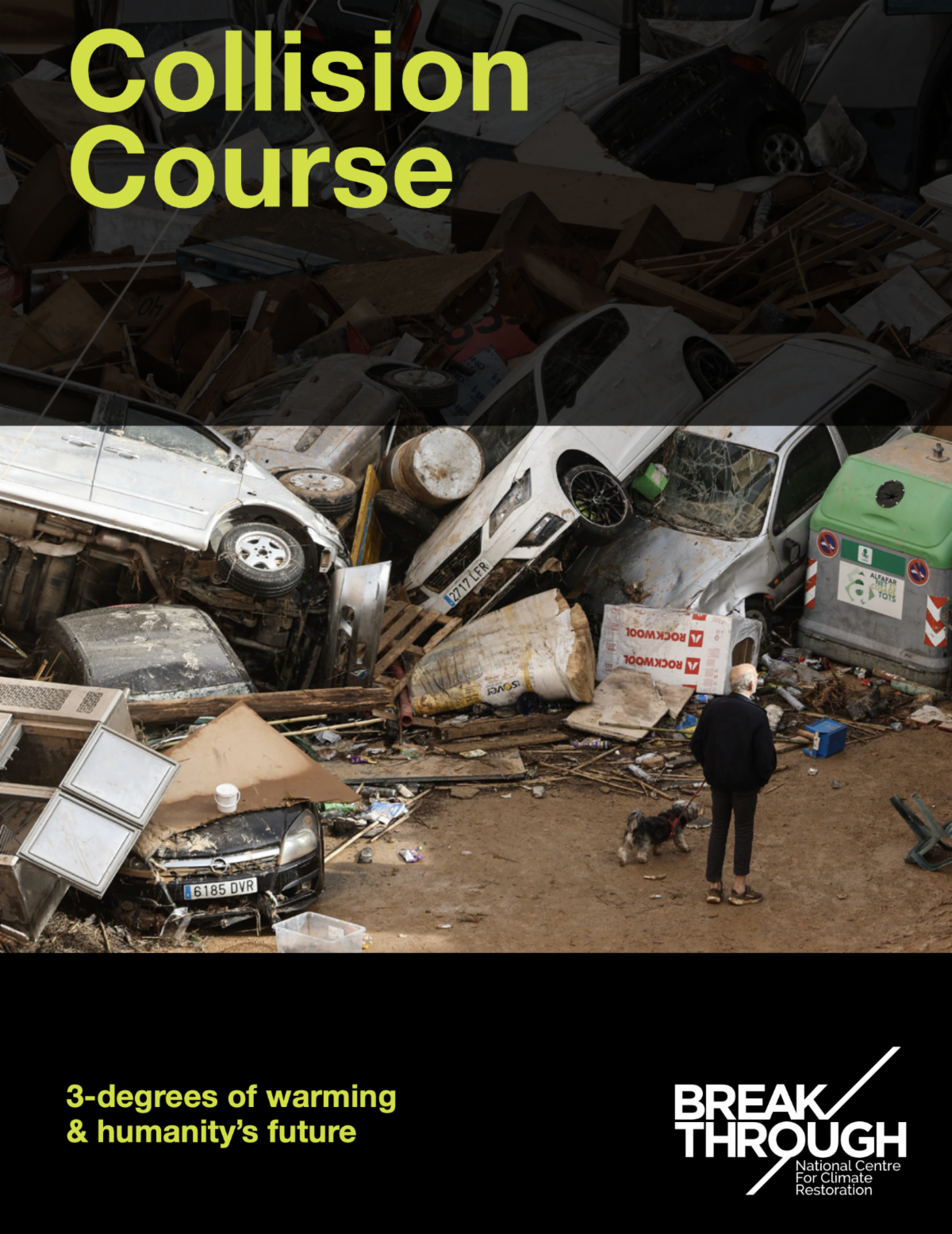
Even if the most extreme scenarios are --thankfully-- less plausible, we are not moving fast enough to avert calamity
Take some deep breaths and read this sobering report from Australia
"There is a chasm in outlook between the global climate policy-making elite with their focus on distant goals and slow, non-disruptive change, and activists and key researchers who see the world hurtling towards climate breakdown and social collapse."
Effective carbon pricing is fundamental to veering off the collision course we are presently on. Money talks. We need the global economy on our side, which presently it is not.
Read it here
| |
|
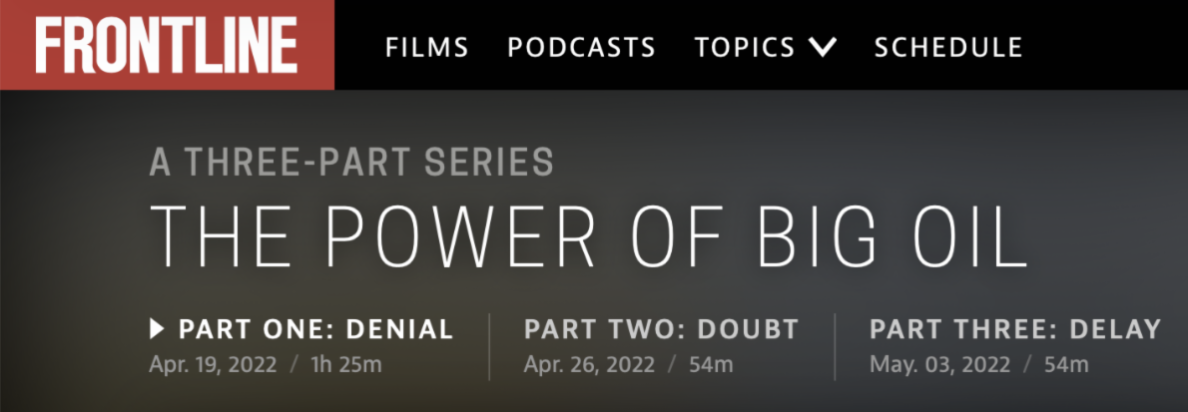
Do Not Miss This Series!
We post this every month. If you're wondering why so little progress has been made weaning civilization off of fossil fuels despite the evidence of their dangers, watch this series. If you've already done so, watch it again, imagining what it might look like if these energy sources paid a pollution fee and thus weren't so profitable because their emissions paid a price commensurate with their true costs to society. Then scroll back up and read the Economists' Statement again to see what a reasonable solution looks like.
| |
Take some advice. Ancient wisdom speaks. | | |
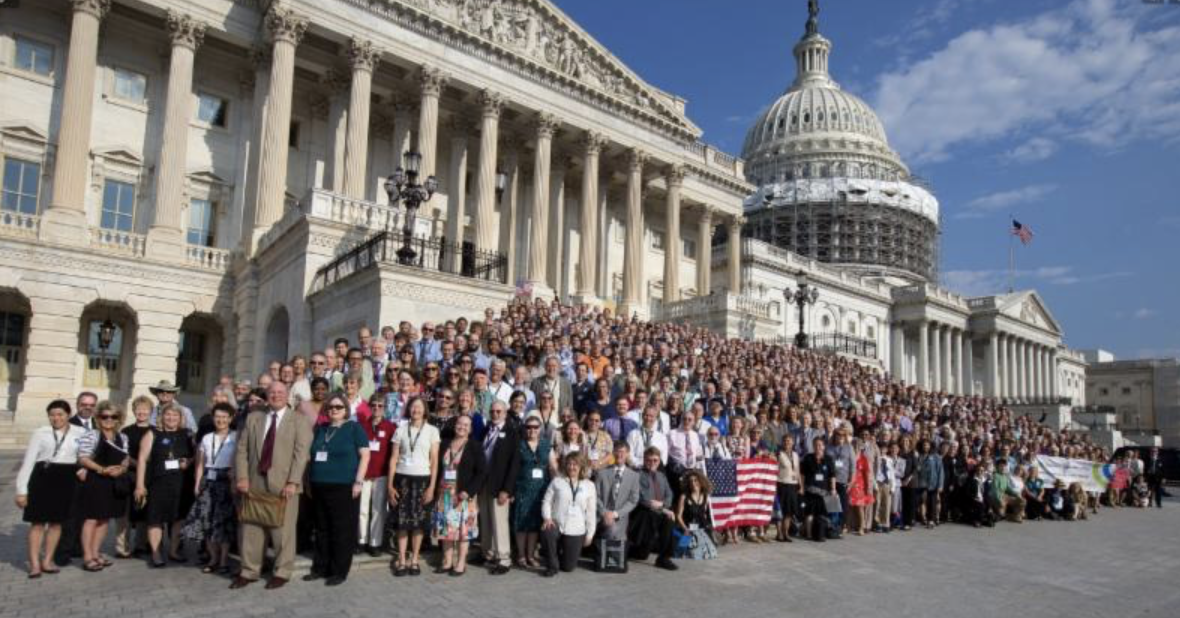
You're invited, but...
This is how one behaves inside The Capitol:
Make an appointment. Business attire recommended. Bring nothing that even looks like a weapon.
Long live democracy.
| | |
Earth
Prepared by Peter G. Joseph, M.D.
Peter.Joseph@cclvolunteer.org
Apologies for cross postings.
If you know someone who would like to be added to this distribution list, please suggest they join Marin or Sonoma CCL, or if not in this area, contact me.
| | | | |