 | |
Han mitakuyepi!
Chante waste napechiyuzapi.
Hello my relatives. I greet you today with a warm heart and a handshake. Happy New Year everyone!
I was going to share a year-end reflection, but this has turned into a forward-looking new year letter.
Since I joined the Biden Administration in March of 2023, I’ve set a course to advance ANA’s mission of promoting social and economic development among our community partners ~ American Indians, Alaska Natives, and Indigenous peoples of the Pacific Island communities. I’ve been so impressed with how ANA’s grants demonstrably expand community capacity to preserve languages and protect the environment and enhance cultural connections and self-governance.
What’s also remarkable is ANA’s role in a vast network of funding and programs distinctively focused on Native children and families provided by the Administration for Children and Families, the Department of Health and Human Services, and many other federal agencies. So, my plan for 2024 includes a deeper engagement with ANA’s community partners and stakeholders and enhancing our interagency work, while advancing ANA’s policy priorities and strategic plan.
| |
|
We also are looking forward to celebrating ANA’s 50th Anniversary in 2024! ANA was established by the Native American Programs Act of 1974 during an era of new federal Indian policy called Tribal Self-Determination. This was a movement where Native Americans sought to restore tribal governance over community affairs, cultural renewal, reservation development, control over educational services, and equivalent input into federal government decisions concerning policies and programs.
| |
I am excited to start the new year poised to enter the new Next Era of Self Determination with forward momentum. And please stay tuned for the exciting 50th anniversary programming and events being planned throughout the year.
Pilamayaye, Patrice
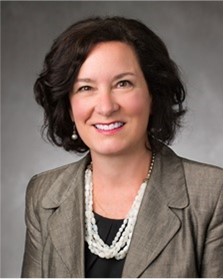
Patrice H. Kunesh
Descendant of the Hunkpapa Band of Lakota and Standing Rock Sioux Tribe
Commissioner, Administration for Native Americans
Deputy Assistant Secretary for Native Americans
| |
|
Native Early Childhood Development
SACRED LITTLE ONES
Keres Language is Power: Teaching the Youngest Learners
Cochiti Pueblo, also known as Pueblo de Cochiti, is committed to instilling the Cochiti Keres language and traditional-cultural practices passed on from its ancestors in all its educational programs. Pueblo de Cochiti is comprised of 56,000 acres of reservation land located in Sandoval and Santa Fe Counties, New Mexico and about 1,200 Pueblo members.
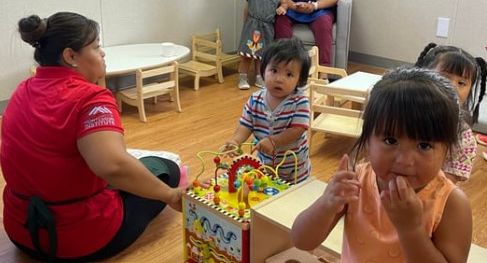
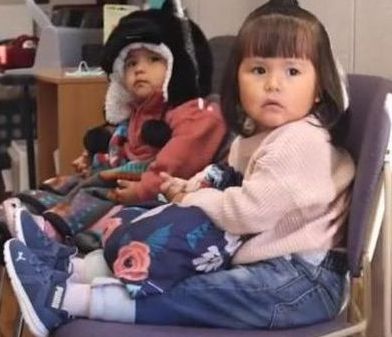
The Keres Children’s Learning Center (KCLC) is a Keres-language immersion school providing an intergenerational cultural curriculum with Montessori pedagogy for children (ages 0-18). By learning through their Keres language and values, both Cochiti children and their families become a culturally strong and academically minded community.
In 2021, ANA awarded KCLC a Native American Language Preservation and Maintenance - Esther Martinez Immersion grant to develop and implement an Infant-Toddler (I-T) classroom setting.
| |
Language and Culture Teacher Dee Mody is excited about the addition of the I-T Setting. She feels it is a critical offering for families and the community because KCLC is starting language immersion at a critical time in children’s lives. “This is the time that their minds are the most absorbent, and they can learn language easily and comfortably.” | |
“KCLC is important to me because our work is to carry on our Keres language and culture; we must protect it and keep it safe. Personally, I have one grandson who attends KCLC. He is my promise for our future generations to carry on and keep our language strong.” Keres Language and Culture Teacher Dee Mody. “I feel it every time I hear our children speaking Keres to staff and to one another. When I hear them speaking, I see it as a sign of respect for themselves, for one another, for who they are, where they come from and where they belong.”
| Click on the image above to watch a video about KCLC and its impact in the community. | |
Sacred Little Ones is a blog about ANA community partners immersed in Native early childhood education and development, an ANA policy priority area. Through our grant funding and engagement, ANA seeks to enhance nurturing early childhood experiences and healthy development during their critical early years. | |
|
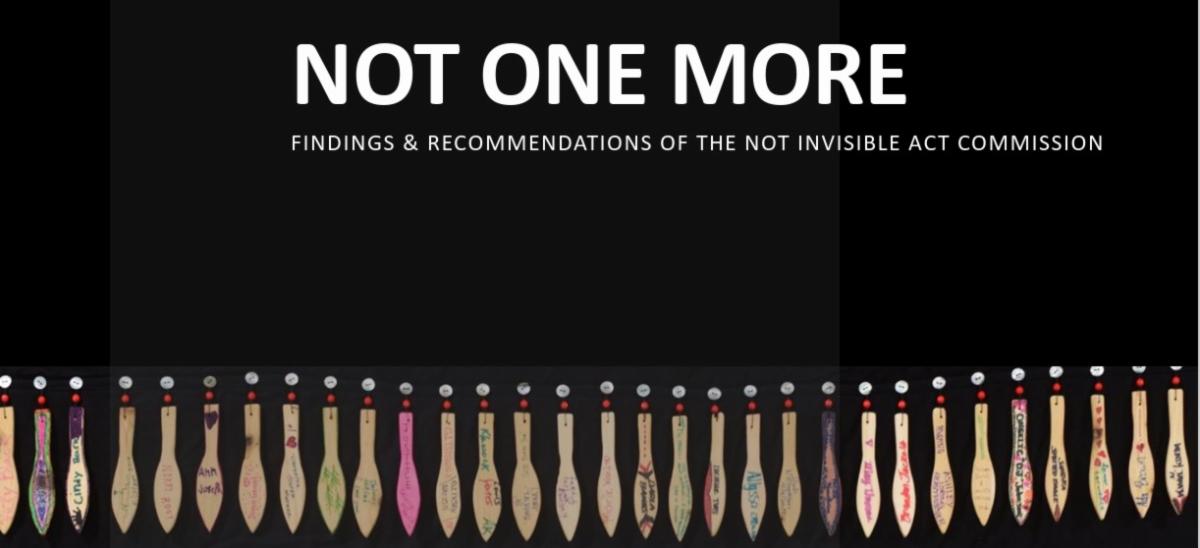
Not Invisible Act Commission, Recommendations, and Final Report
The whole government approach to addressing the Missing and Murdered Indigenous People (MMIP) crisis is in full motion and ACF and ANA are committed to promoting culturally specific prevention, intervention, healing, and response methods.
The ACF Tribal Advisory Council recently approved the ACF MMIP Action Plan that responds to recent White House directives and sets out a multipronged approach to prevent violence to Native people and promote healing from historical trauma. Importantly, it adopts responsive administrative processes such as equity, self-governance, and Indigenous knowledge, as well as identifying ways to leverage ACF’s grant funding, community engagement, and rulemaking authority.
Commissioner Kunesh served as a Commissioner for the Not Invisible Act Commission and is supporting recommendations from the final report, entitled Not One More: Not Invisible Act Commission Final Report.
| |
|
Durbin Feeling Native Languages Act Implementation Survey Design
The Durbin Feeling Native American Languages Act of 2022 charges ANA with the responsibility of creating a national survey on the status of the vitality of Native American languages and preparing a report to the President and Congress with policy recommendations.
ANA is working with the ACF Office of Policy Research and Evaluation (OPRE) and Mathematica, a federal contractor, on the design of the survey. To ensure the survey serves all Native communities in the best way, ANA has established a Native Languages Community Advisory Board that will assist in reviewing the survey design.
The draft survey will be released for public comment early 2024. In addition, we intend to share the Design plan in May and complete the draft survey by June.
The primary purpose of the Durbin Feeling Native Languages Act is to “improve interagency coordination of supporting the revitalization, maintenance, and use of Native American languages.”
We will have the Design plan finished in May of 2024 and the revised draft survey completed by June 2024.
| |
|
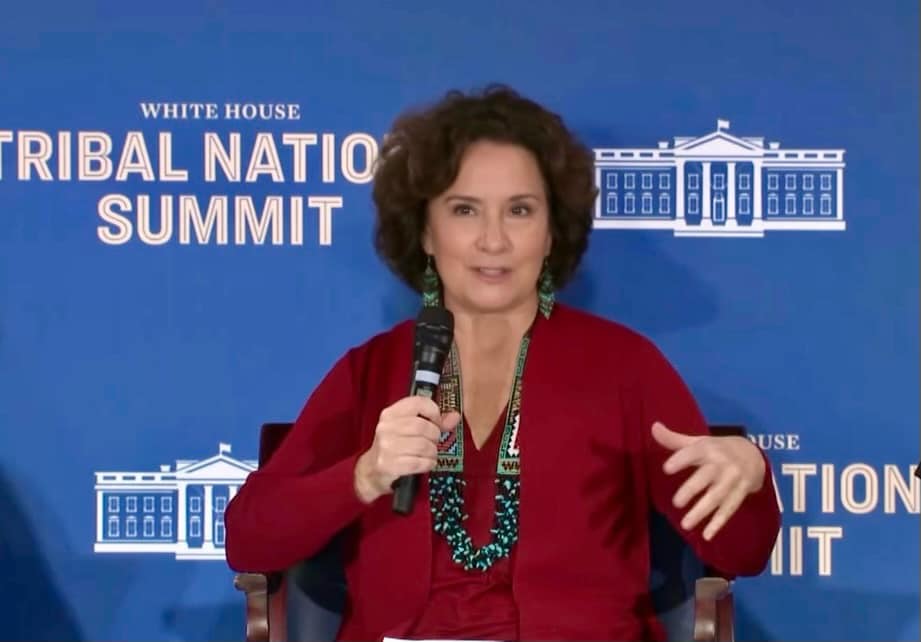
2023 White House Tribal Nations Summit
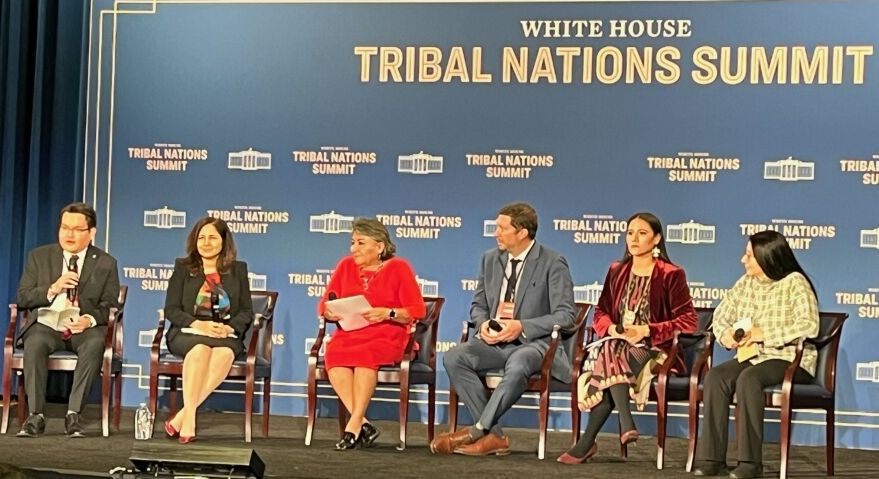
The 2023 White House Tribal Nations Summit brought tribal leaders from across the country together on December 6th and 7th in Washington DC, for two days of convening and conversation directly with senior Administration officials on implementation of key priorities, new policies, and other critical issues facing Tribal Nations.
Tribal leaders challenged the Administration to build on the progress already been made and create new opportunities to produce lasting changes and impact for generations to come.
As mentioned earlier, President Biden announced the Executive Order ushering in the next era of Tribal Self-Determination and grounding our collective work in even greater respect for Tribal sovereignty and the autonomy of Tribal Nations. The Executive Order affirms that Tribal self-governance is about the fundamental right of a people to determine their own destiny and to prosper and flourish on their own terms.
| |
During the Summit, ACF Acting Assistant Secretary Hild participated on a panel on Protecting and Supporting Native Families and Children and shared HHS efforts to amplify and prioritize the safety of Native families and children through funding, resources, and partnerships. | |
|
Native CDFI Annual Summit
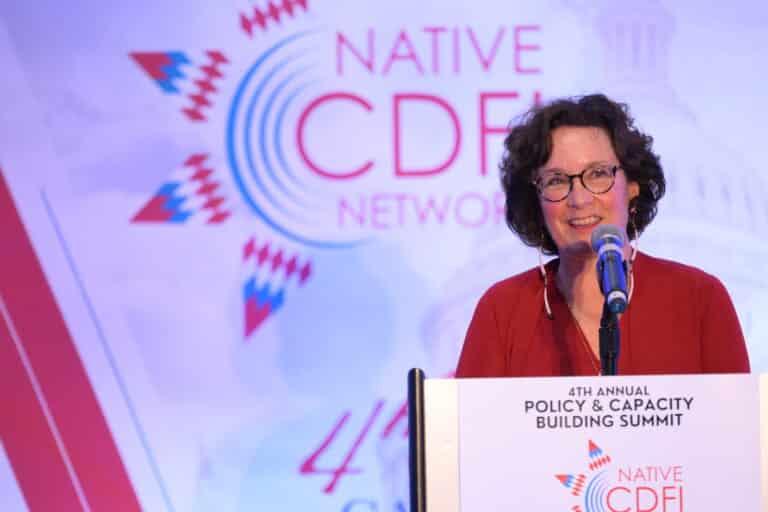
Commissioner Kunesh also presented at the Native CDFI 4th Annual Policy and Capacity Building Summit in Washington, D.C. Native community development financial institutions (CDFIs) are the key to providing solutions that will bring our native and Indigenous communities together and provide ways to overcome barriers that stand between each of them and financial stability.
The Commissioner presented on ANA’s support of CDFI’s and community-driven projects to address community-determined needs.
"I am proud to say that for nearly 50 years, ANA has invested hundreds of millions of dollars directly into Native communities – all focused on community-driven projects to address community-determined needs. ANA provides the funding, but the real work is done every day in the community through Native CDFDIs," said Kunesh.
| |
|
Human Trafficking Prevention Month
January is Human Trafficking Prevention Month. At the Department of Health and Human Services (HHS), the theme for Human Trafficking Prevention Month 2024 is Activate Connections to Prevent Human Trafficking.
This theme highlights the importance of collaborating across multiple sectors to build effective human trafficking prevention initiatives. This toolkit aims to educate and equip individuals and organizations to share information and resources to increase awareness, foster connections, and ultimately strengthen individuals, families, and communities across the United States.
| |
Celebrating “Seeds of our heritage” throughout Native American Heritage Month | |
|
ANA celebrated Native American Heritage Month with a series of webinars highlighting the theme of “seeds,” such as seed of our heritage, seed keeping, and seeds of creativity and Indigenous knowledge. Our program featured four distinguished Native “seed keepers,” from award-winning authors and seed keepers to language and cultural mentors and an NIH scientist.
Our Guests:
-
Dr. Karina Walters, Director of the Tribal Health Research Office, U.S. National Institutes of Health, Tribal Health Research Office (THRO) at the U.S. National Institutes of Health
-
Diane Wilson, author of The Seed Keeper, Dakota writer and educator
-
Dr. Melissa Lewis, Executive Director of Cherokee Little Seeds
-
Rowen White, Indigenous Seed Keeper and author
Videos of each of these webinars is available here: ANA CELEBRATES NATIVE AMERICAN HERITAGE MONTH
| |
Visit the ANA Newsletter Archive | |
|
www.acf.hhs.gov/ana
Administration for Native Americans
An Office of the Administration for Children & Families
U.S. Department of Health & Human Services
330 C Street, S.W.
Washington, D.C. 20201
| | | | |