|
Featured Article: "About Mediation" from RSCCM's very own Ron Haywood!
PDF (Created by us)
Mediation creates space for people in conflict to be heard, understood, and actively involved in shaping their own resolution. This piece explores how mediation differs from judge- or arbitrator-led decisions, why communication is central to the process, and how its principles can be applied far beyond the courtroom.
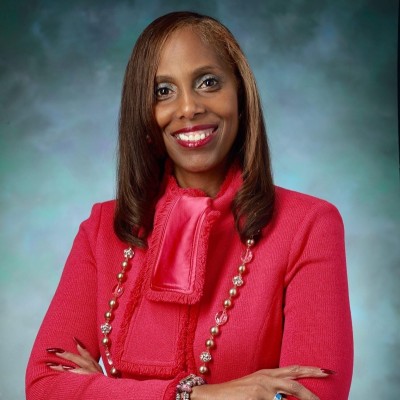
| | Meet Robin Smith: Our New RJ Program Assistant Manager! | | | | |
As the new school year begins, our RJ team is growing! Along with welcoming new RJ facilitators, we are excited to introduce our new RJ Program Assistant Manager, Robin Smith!
In keeping with this quarter's theme of cultivating the knowledge and experiences we gather throughout the year, we sat down with Robin for a short interview. The purpose was not only to get to know her, but to learn from the experiences and perspectives she brings to our team and the schools.
New faces bring new knowledge, experiences, and even friendship. As we grow alongside one another, we have the opportunity to share what we have learned and strengthen the communities around us.
Please join is in giving a warm welcome to Robin, as well as all the new RJ facilitators as we begin another school year!
| | Can Mediation Fail? Understanding Success in Mediation | | | | |
We often think of mediation in simple terms: agreement means success, and no agreement means failure.
But is it really that simple?
This article explores what we may overlook when we measure mediation only by its outcome, and considers the value that can exist in the process even when the parties do not reach an agreement.
| | Meet Debra Hart: Our New Outreach and Grant Coordinator! | | |
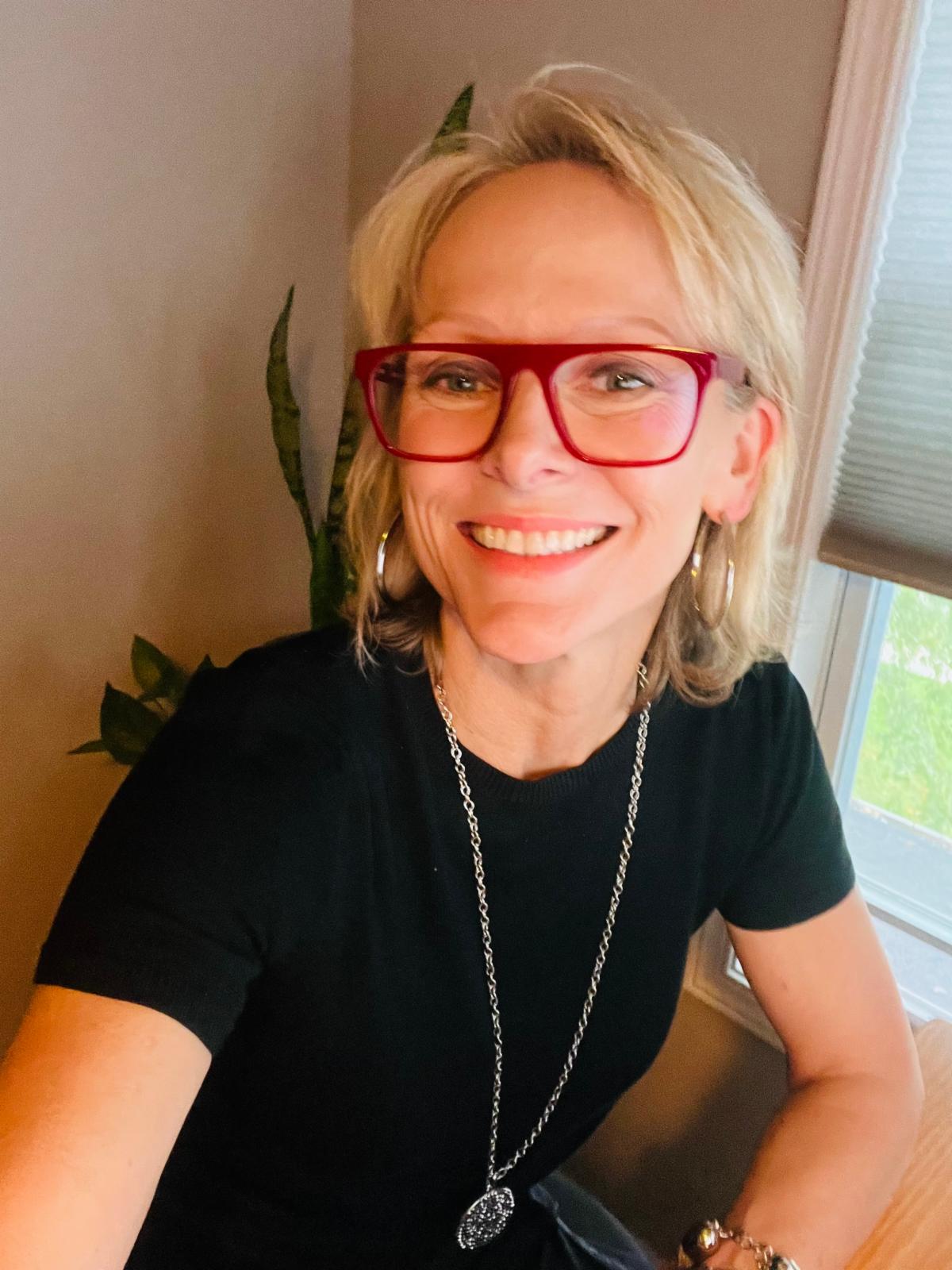
We recently welcomed a new member to our team, Debra Hart! She has been a wonderful addition to the administration team, working to improve and expand our outreach efforts and solidify grant connections.
A proud and valued contributor to the Lansing community, she has written something special for our newsletter audience to help you get to know her and her plans at RSSCM.
Please give Debra Hart a warm Fall welcome!
(Do you like Debra's writing and want to read more? Be on the lookout for the Holiday newsletter on December 15 to get more Debra Hart!)
| | | | |
Hello, I’m the new Director of Outreach and Community Relations here at Resolution Services Center. I’m excited about this opportunity to connect my passion for optimizing life outcomes with the powerful work of Restorative Justice programming in our schools.
Childhood trauma is often a major catalyst for how young people behave in school and can feed negative actions, which can lead to disciplinary action.
Recent research is showing that when a youth is expelled from school, they’re less likely to graduate high school and more likely to be arrested/incarcerated, more likely to experience substance use disorders and chronic disease. Coming back from expulsion is exceptionally difficult for people. Giving our youth the skills to navigate conflict before negative actions escalate costs us less as a society, in a myriad of ways.
I taught Trauma Sensitive Yoga at the Ingham County Jail in Mason, MI, for seven years. There were a couple of times when a class participant mentioned that they had a parent, or a child, also incarcerated at the same place, at the same time. This speaks to me that the current predominant approach to justice isn’t working. When the same families are generationally faced with the same challenges, we’re getting the same outcomes. We can do better by offering better tools to break the cycle.
This role is an opportunity for me to weave together the wide range of community connections made through being a radio and TV personality in greater Lansing for decades and partner them to gain awareness and support for Resolution Services Center, not only for our Restorative Justice work, but also for facilitation of conflict resolution and mediation.
Outside of work, I paint, write, spend time with family and friends, enjoy live theater and read fiction. I’m also on the board for the Williamston Theatre - professional, live theater in a charming, intimate space and you’re all invited to join for the laughs, the music, the drama and all the feels!
| | |
Autumn ADR Trends: What's Making ADR's "Leaves" Rustle? | | |
News Articles Worth Reading:
- Mediate.com — “The Power of Specialization: Carving Out a Substantive Niche in Modern Mediation” (May 2026)
- American Bar Association — “Starting an ADR Practice: What Solo and Small Firm Lawyers Need to Know” (March–April 2026)
- American Arbitration Association — “Beyond the Law Degree: Why Industry Experts Belong at the Mediation Table”
- CPRADR — “Who Can Help Me Mediate?”
| |  | Cultivating knowledge is not just an individual endeavor. As of right now, ADR and Mediation are incorporating this idea into typical practice. In this industry, which could be seen as traditionally general, ADR is starting to embrace specialization. | | |
| What makes someone an expert in your field? (You can only choose one!) | | | | |
Last Newsletter's Responses:
How far should mediators adapt their practices to accommodate trauma-informed approaches?
| | | Trauma-informed adaptation should be central to ADR practice | 13 | | Mediators should adapt when trauma is disclosed or apparent | 10 | | Adaptations should remain limited to preserve neutrality | 4 | | ADR practitioners should refer trauma-related cases elsewhere | 1 | | | |
This newsletter has focused on cultivating knowledge and understanding through multiple different means: curiosity, investigation, experience, and empathy. To show how lifelong learning builds understanding, we reached out to Amanda Garza, Peckham's Director of Youth Services and Reentry in the Learning and Development Department, and asked her to speak on this.
Peckham's Amanda Garza runs programs that support adjudicated youth and help reintegrate citizens into broader society. Their mission is to "empower each participant to rebuild their lives and thrive, break the cycle, and prevent future involvement with the correctional system." They run educational programs focused on "employment preparation, skill development, and goal setting."
Please read her insightful and thought-provoking statement below.
| |
|
|
Cultivating understanding begins with a simple but radical act. We first need to see people as more than the worst thing that has happened to them, or the barrier that stands between them and an opportunity.
At Peckham, I have the role of Director of Compliance, Learning, and Development in our Youth Services and Reentry department. In this position, I sit at the intersection of two forces that often work against each other. This includes the systems built to manage risk, and the human beings those systems are meant to serve. My job includes ensuring both can coexist, and that we meet the obligations of our funders, regulators, and partners, while never losing sight of the fact that every referral, every file, every “barrier to employment” represents someone who is trying to build a different life than the one they
were dealt.
Education and vocational growth are among the most powerful tools we have for
cultivating that understanding both in the people we serve, in the employers, and in communities who will ultimately welcome them back in. When someone who has spent years believing their past defines them learns a new skill, whether it’s operating equipment, managing a budget, or navigating a hard conversation with a supervisor, something shifts. These individuals begin to see themselves not as a record, but as a capable worker with something real to offer. That shift in self-perception is often the hardest part of the journey, but it is also the most transformative. People who believe in themselves and see themselves as contributors are far more willing to take responsibility, to repair relationships, and to engage honestly with the people they have affected.
Restorative practice teaches that accountability and compassion are not opposite. A person can fully own the harm they caused and still deserve a path forward. That path only exists if the people on the other side are willing to walk it with them. Employers, coworkers, and communities must be willing to judge someone by their effort and growth rather than their history, whether that history involves incarceration or the assumptions that too often follow a disability. Every time an employer takes that chance, and the person succeeds, an assumption that was never fair begins to erode. Every success becomes evidence for the next employer, the next skeptical coworker, and the next person who almost didn’t get an interview.
This is the quiet, cumulative work of cultivating understanding. It rarely arrives as one dramatic breakthrough. It happens when a client learns to explain their story on their own terms, or when a supervisor learns to see effort and potential where they once saw risk. My responsibility is to build the training, support the structures and the standards that make those moments possible, so that understanding becomes part of how our department operates and not just something we hope for. When we get that right, people stop being defined by their past, and start being known for what they can do.
|
| | | |
Mediation Training & Other Important Links
👉 Sign Up for Mediation Trainings: Next one is November 2nd (General Civil Training)
👉 Follow us on Facebook to receive updates about RSCCM.
👉 Check out past RSCCM newsletters.
|
HARVEST HOPE, HARVEST CHANGE
Your support helps us offer free and low-cost mediation services to families, individuals, and neighbors in need.
| | | | |