Growing the Game: Baseball

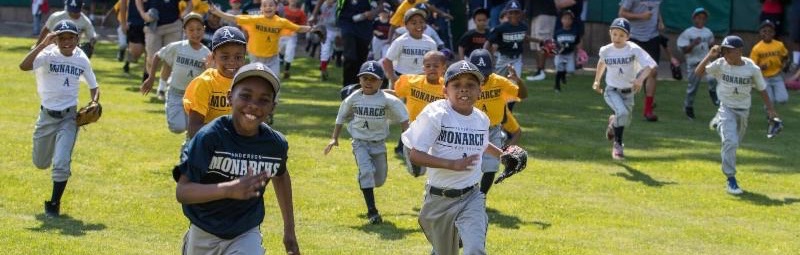
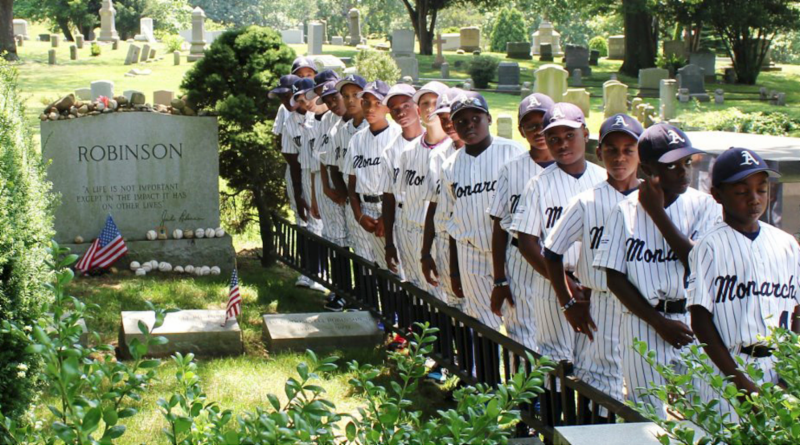
The lack of Black players in baseball - from the youth level all the way to MLB - is well documented. This lack of representation is part of why the Monarchs were founded back in 1995. Less publicized, but just as impactful, is the lack of diversity in Major League front offices and in key areas like scouting and coaching. Today we meet a lifelong Monarch who is working as a professional scout, a job he wasn't even aware existed when he was growing up in Philadelphia. Jahli Hendricks' story exemplifies why the access and opportunity the Anderson Monarchs provide to young athletes is so critical in challenging the lack of representation in baseball. Take some time to learn more about Jahli and his work, then help us continue to provide similar opportunities to future generations of Philadelphia youth.

Support the Monarchs 

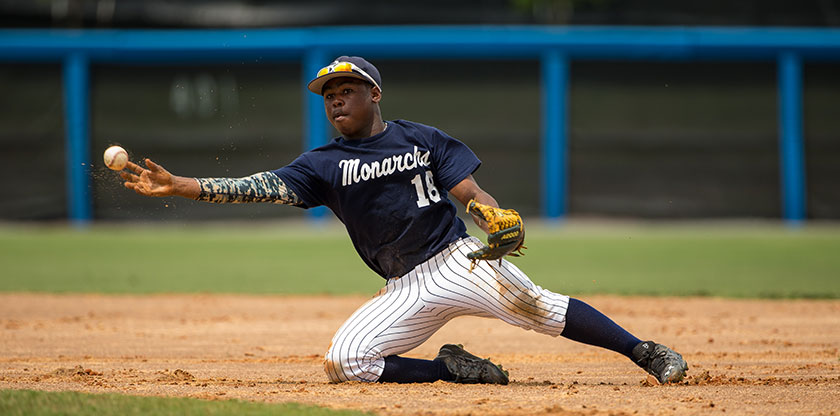
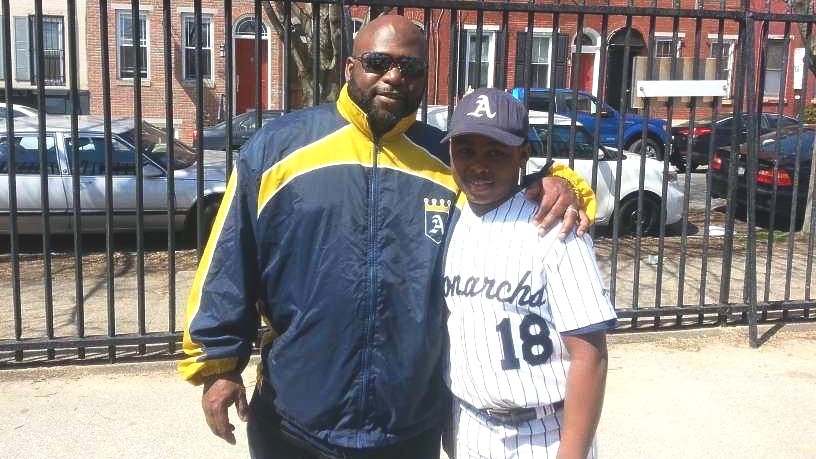
“Baseball was not a thing in my immediate family,” says Jahli Hendricks. “My interest in the game was sparked by playing for the Monarchs. We weren’t great when we started but soon we learned how to play the game the right way and outsmart our opponents. If you can understand the game at a high level when you’re young it makes it easy to love. And I fell in love with baseball.”


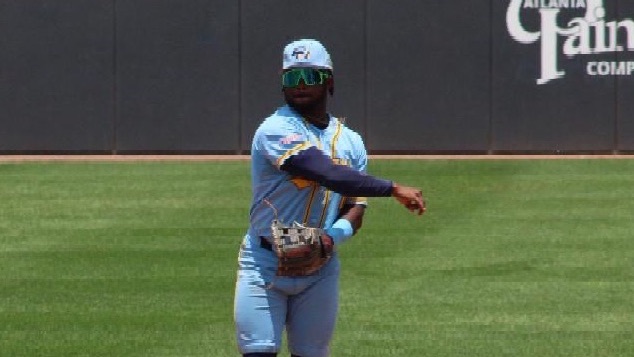
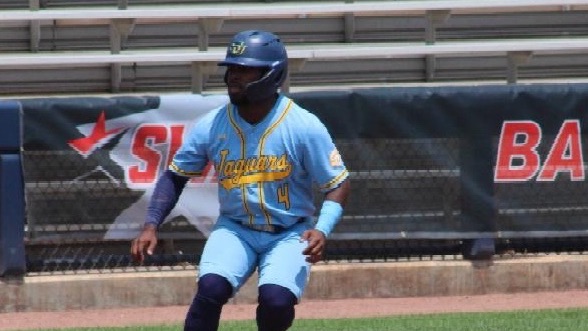
That love for the game is evident if you ever got a chance to watch Jahli play or coach. Now, at age 23, Jahli’s passion for baseball has taken him off the field and into the front office as a newly promoted Area Scout for the Chicago Cubs. Jahli was hired as a Video Scout for the Cubs in January 2024, and spent the past year traversing the country collecting video of top amateur prospects. He was recently promoted to Area Scout and given the prestigious Southern Texas and Louisiana assignment. The region is a hotbed for amateur baseball and includes college powerhouses LSU and Texas A&M, as well as Jahli’s own collegiate alma mater, Southern University in Baton Rouge, La.


We had a chance to catch up with Jahli recently to learn about his work as a scout, how his experience with the Monarchs influenced his baseball journey, and the power of representation and connection in baseball.

Tell us how you spent the past year and how your new role will be different:


As a Video Scout I did “call and respond” which means that Area Scouts across the country would request my presence if they needed to have video of a player to support the report they were doing. I was able to live in Philly but I was flying all over the country with no real set schedule. That was a challenge at first but I grew to enjoy it. I learned a ton being around different scouts and writing reports on players. The volume of reports I had to write took some getting used to for sure. 


In my new role I'll be living in Houston and I'll be responsible for all amateur baseball south of the I-10 Corridor in Texas and Louisiana. There’s a lot of great college and high school baseball in that area and I will be creating reports on players and prospects and making recommendations on who the Cubs should draft.


This job is more the traditional image you have of the scout sitting behind home plate taking notes in his notebook – although now it’s more likely the scout is using a tablet than a paper and pen! I’m very excited about this role. I’m familiar with the area from my time in college and I know how good the baseball is.


One of my mentors, a scout for the Cubs named Trey Forkerway is based out of Houston too, which made this an easy decision. He is someone who always pumps me with knowledge of the job and how I can carry myself in this game so I’m looking forward to being around him more and just getting better as a scout.


How did your time as a player with the Monarchs and then at Southern prepare you?


First off I’m from Philly, and I think especially being a kid in the city you are kind of always scouting. Scouting the people around you and what they are doing, scouting the environment and how you fit it. We’re all natural scouts because we have to be to get by.


Playing with the Monarchs I had the chance to get outside the city and interact with people from so many different background and environments. I learned how to relate to people from very different parts of this country. And I learned baseball was a shared language for a lot of different types of people. As a scout you need to build relationships with players, their families, coaches, other scouts, so you have to have those people skills that I learned through baseball. 


On the field, baseball teaches you how to face adversity and handle failure. Baseball is a short memory game and you have to learn to move on quickly. As a scout you’re going to miss on players. Someone you think is amazing will turn out to not be so great and someone you overlook might go on to be a star. And you have to be able to move on to the next player without beating yourself up over it. 


What got you interested in scouting in the first place?


As a player I never considered a scouting career or really even knew what it would consist of. Like everyone else I was so focused on getting to the next level. During college Tyrone Brooks, who is in charge of MLB’s diversity initiatives, would visit HBCUs and talk to us players about opportunities in pro baseball and I always made sure to speak with him and stay connected.


During my senior year he encouraged me to apply for a weeklong coaching and scouting seminar and boot-camp that MLB runs in Arizona each fall. So I applied and was accepted for fall 2023. After my last season at Southern I spent the summer of 2023 coaching with the Monarchs program so I actually thought my future would be in coaching. But there was no room at the workshop in the coaching track to so tried the scouting track. And I loved it.


My goal is to be a Major League General Manager, and after doing research I realized it would be critical to understand scouting if I wanted to be a GM.  Understanding how and why teams value players in certain ways, how they draft and acquire players, how they build their organization is all fascinating. Once I tried scouting I realized I love it and the Cubs have been a great organization to learn in.

We hear a lot about lack of diversity and representation in baseball. What has your experience been like in that regard?


If you don’t see people who look like you doing what you want to do you can’t hope or dream for that goal. It doesn’t feel realistic. That’s why it was so important with the Monarchs that we had older teams we could look up to and imagine being in their shoes one day. And that’s how I feel about scouting and any job in baseball.


Having gone to an HBCU, though, did give me access to a world of Black baseball scouts and lifers who are all deeply involved in the game and are all invested in mentoring my generation. Obviously the diversity and representation are not what we want them to be on the field or off but I also want to make sure we focus on the people who have dedicated their lives to the game and have made it better.


For my whole baseball life and still today there have been people telling me that I DO belong in this sport and I’ve been able to meet people who look like me who are involved in this game all over the country. I feel like I’m supposed to be here and I belong in this role. So that’s where I want to focus my energy, on making sure younger baseball players understand that there is a place for them in this world.

Tell us how you pass that message of belonging on to younger players and why that’s important to you:


My dad passed away suddenly in 2021 and that was a catastrophe. It led me to do a lot of reflection on his life and how I wanted to live mine. I began to appreciate how many people he had impacted in his life and continues to impact even when he’s gone. And I want to do that. Having that impact is so important to me. Passing on wisdom and mentorship is the most important thing I can do, even while I’m still doing so much learning of my own.


I didn’t have it as tough as some of my Monarchs teammates growing up but I was still an inner-city Black male and I had all the challenges that go along with that. I grew up in a family where baseball wasn’t a thing. And here I am today as close to the game as you can possibly be. I could be in the room on draft day 2025, I might have to make a case for why we pick a certain player. I have the opportunity to play a role in changing other people’s lives for the better on a day-to-day basis, whether it’s a little thing like a smile and holding the door or a big thing like helping them get drafted. This job is a vehicle to make a positive impact and I’m so grateful to be able to do that. 


Help the Anderson Monarchs invest in the next Jahli Hendricks by sharing our emails and donating below. Your support allows us to provide access and opportunity to deserving youth in 2025 and beyond!

Donate Today!