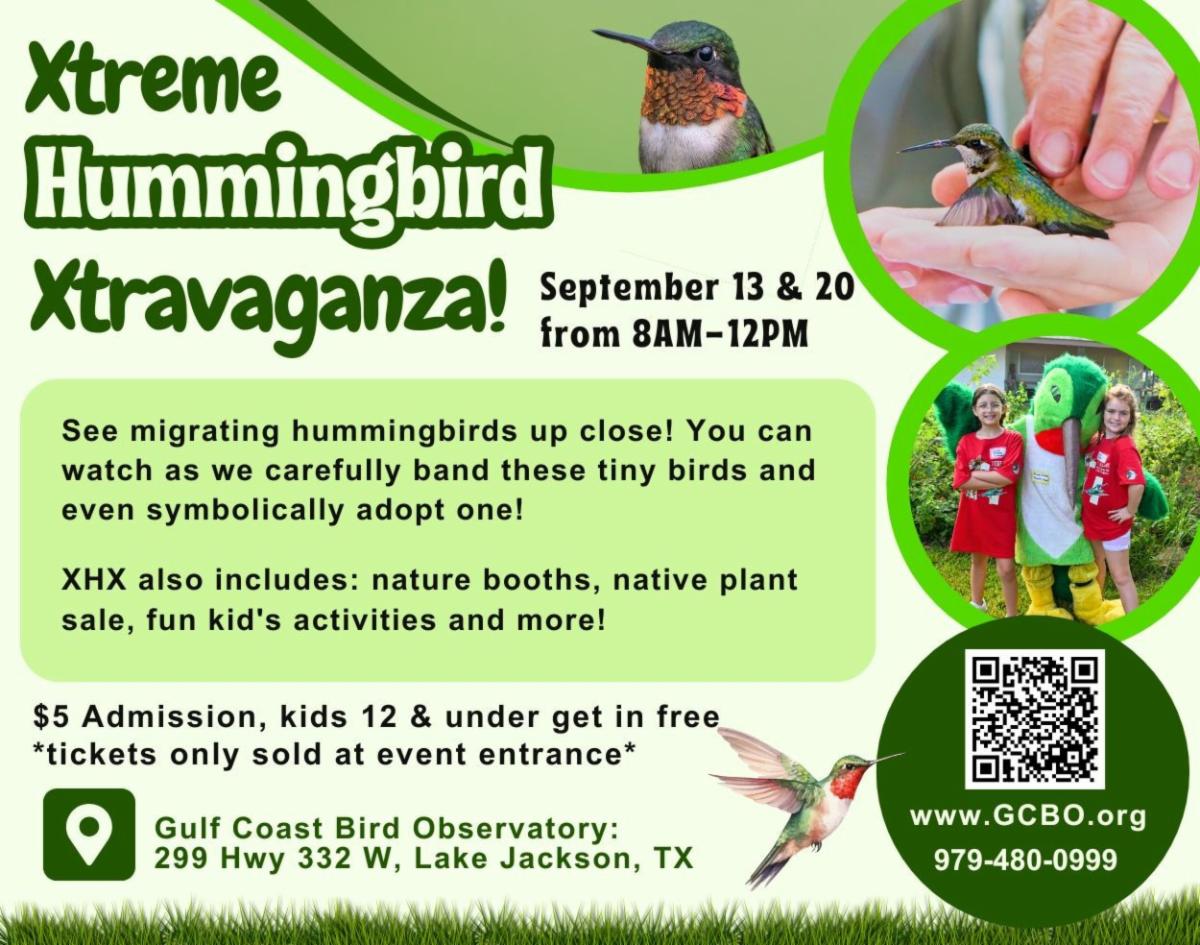
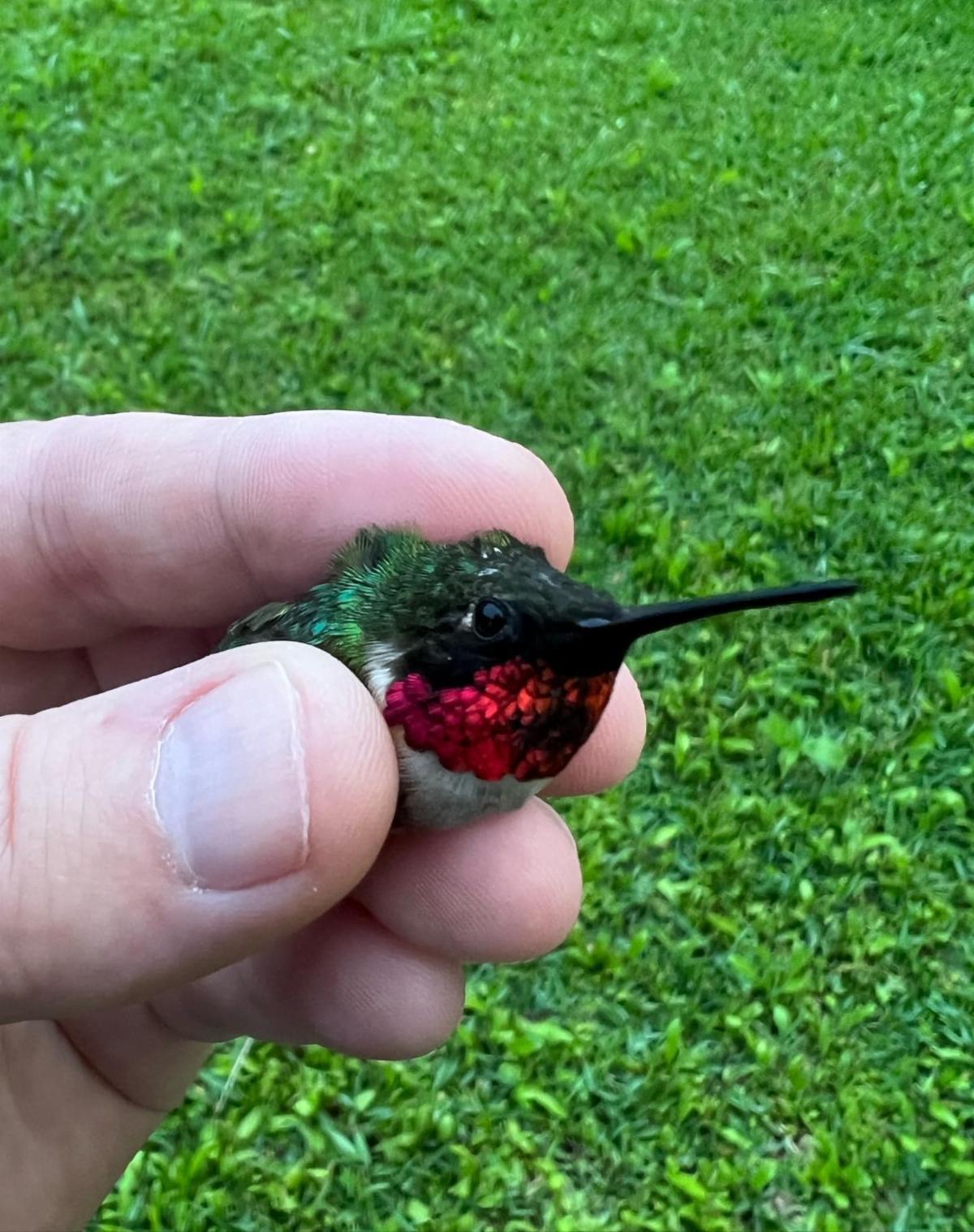
Gulf Coast Bird Observatory | 299 Hwy 332 West, Lake Jackson, Texas 77566 | | | Join us for our annual Xtreme Hummingbird Xtravaganza! Celebrate the peak of Ruby-throated Hummingbird migration in the fall. Click the link below to learn more. | | Galveston Bay Foundation Oyster Reef Restoration for Oystercatchers | |
GCBO has been monitoring American Oystercatchers in the Galveston Bay area and beyond since 2011, and we have consistently documented the decline in nesting pairs and available nesting sites.
Our data has pushed for habitat restoration for these birds, as habitat loss is a huge factor in their decline, due to erosion, reduced shell recruitment, and relative sea level rise. Estimates show that over 60% of Galveston Bay oyster reefs have been lost as a result of extreme weather events and historic exploitation.
Fortunately, Galveston Bay Foundation's Jones Bay Oystercatcher Habitat Restoration Project construction has officially begun!
Each of the restoration sites will involve the enhancement of the remaining islands to provide areas of higher elevations, which will allow for successful nesting of oystercatcher pairs. In addition, the enhancement and/or creation of an intertidal oyster reef will be conducted next to each island to provide foraging habitat for nesting oystercatchers and their young.
GCBO will be working with GBF to monitor the use of these islands by oystercatchers and other bird species, and we can't wait to see the results! This is a huge win for Oystercatcher conservation and we are thrilled to be a partner on the project.
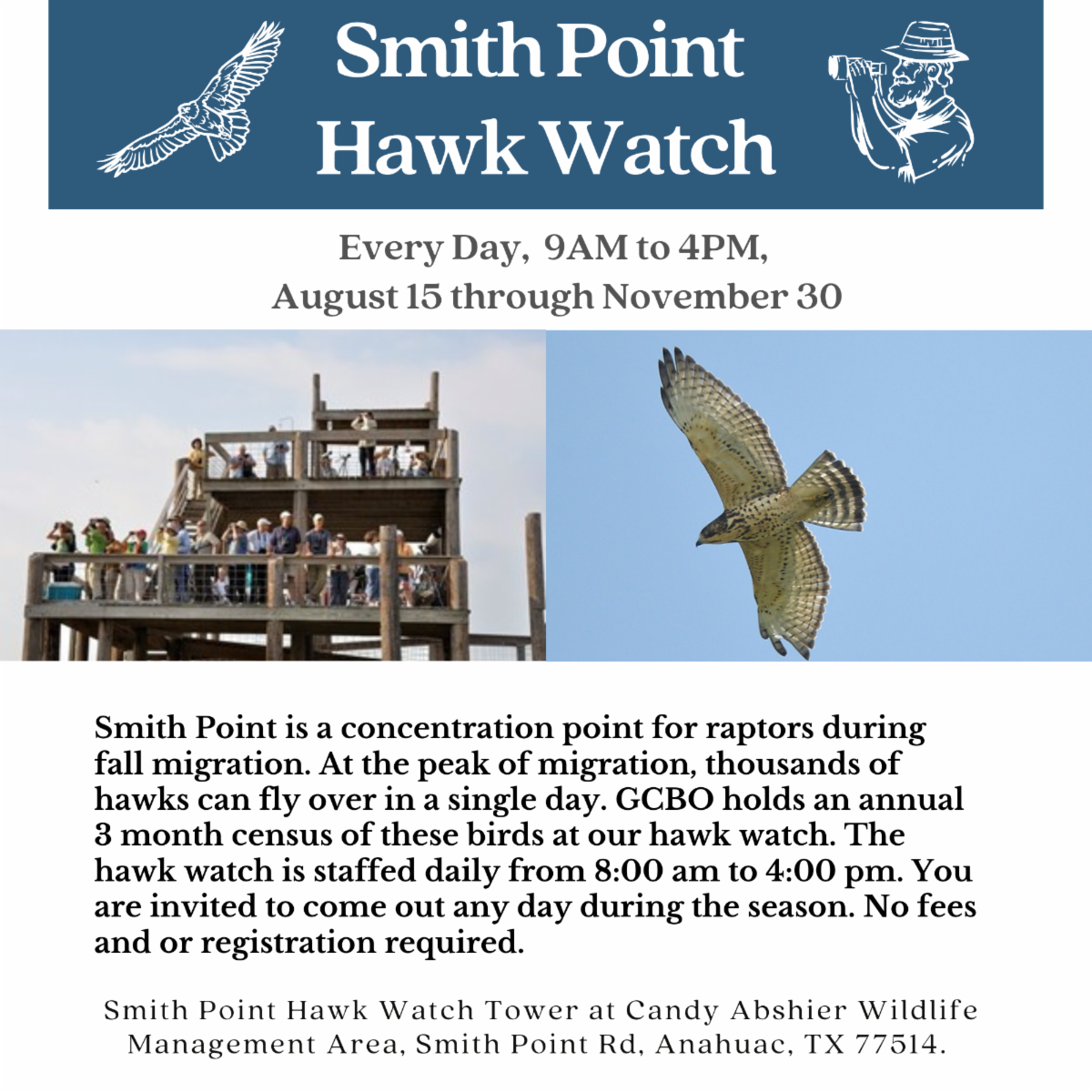
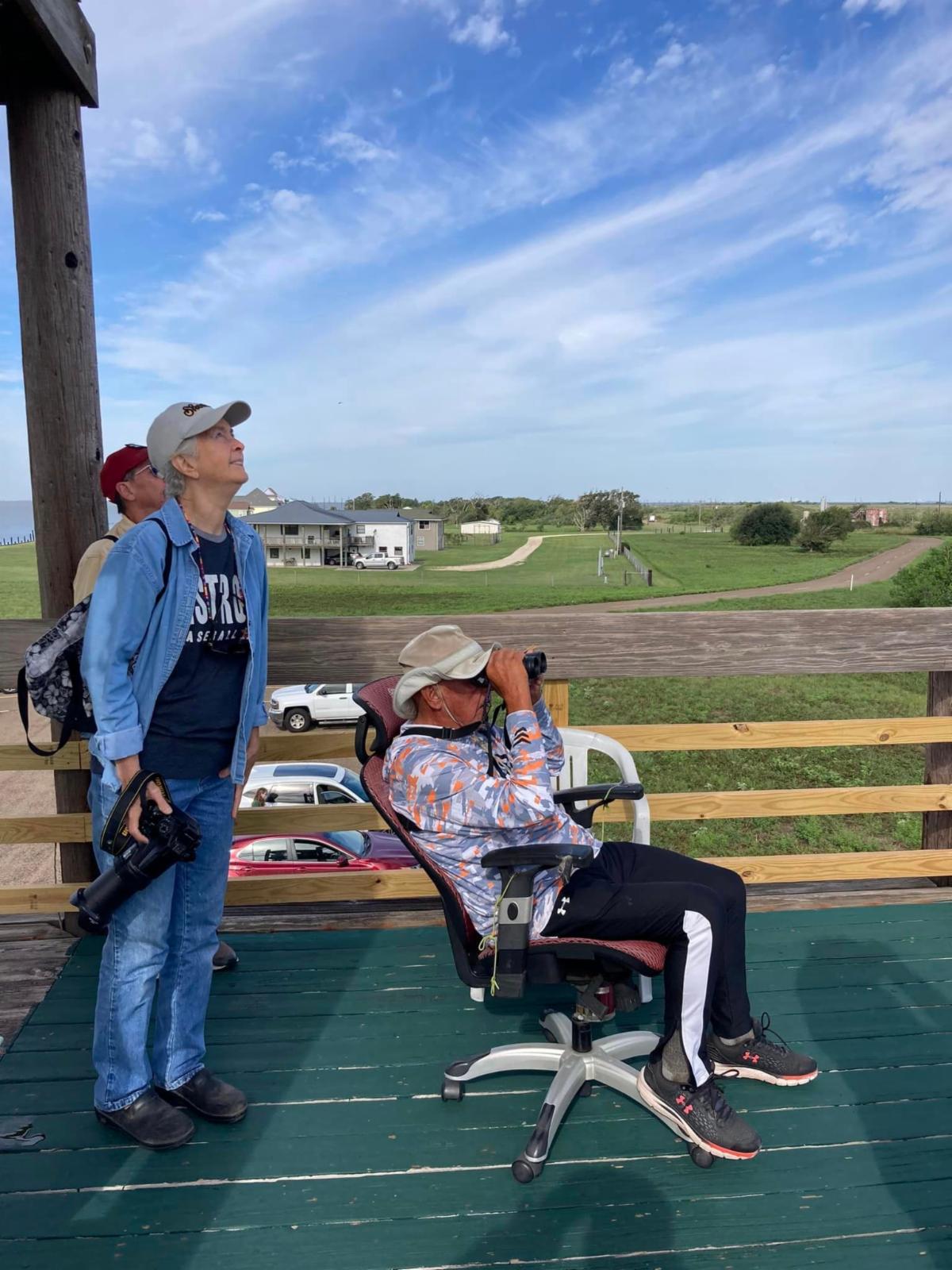
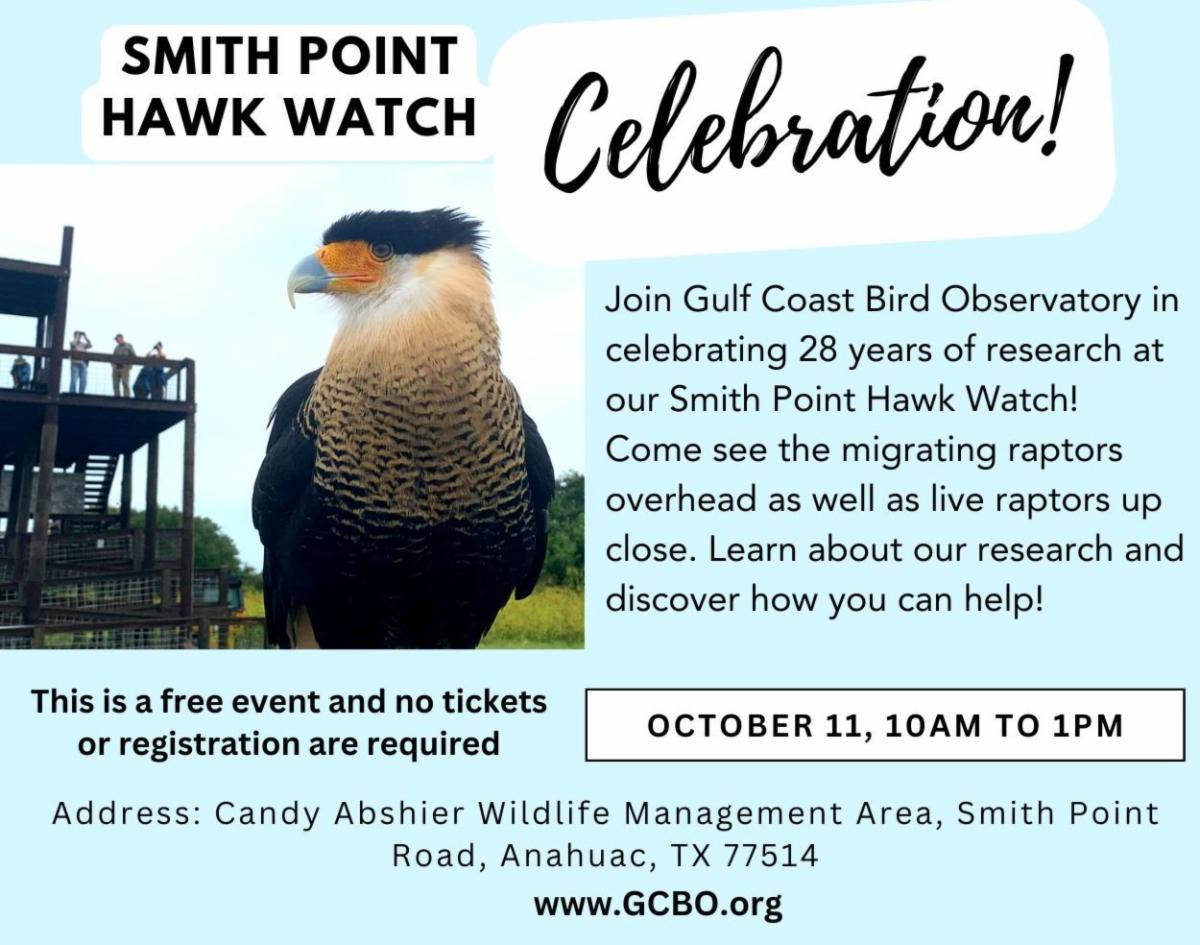
| | Support Smith Point Hawk Watch | | | | If you love Hawk Watch as much as we do, please consider making a donation to support our monitoring program. Our yearly hawk watch is held at Smith Point, on the edge of Galveston Bay. The Smith Point peninsula is located on a major raptor migration route and is a raptor stopover site. One of the largest and longest-running Hawk Watch sites, GCBO’s Smith Point Hawk Watch is critical for data collection that helped establish the population trends of 25 species of raptors, both locally and across North and South America. With your support, we hope to continue this important work! To make a donation, use the following link and choose “Smith Point Hawk Watch." | | |
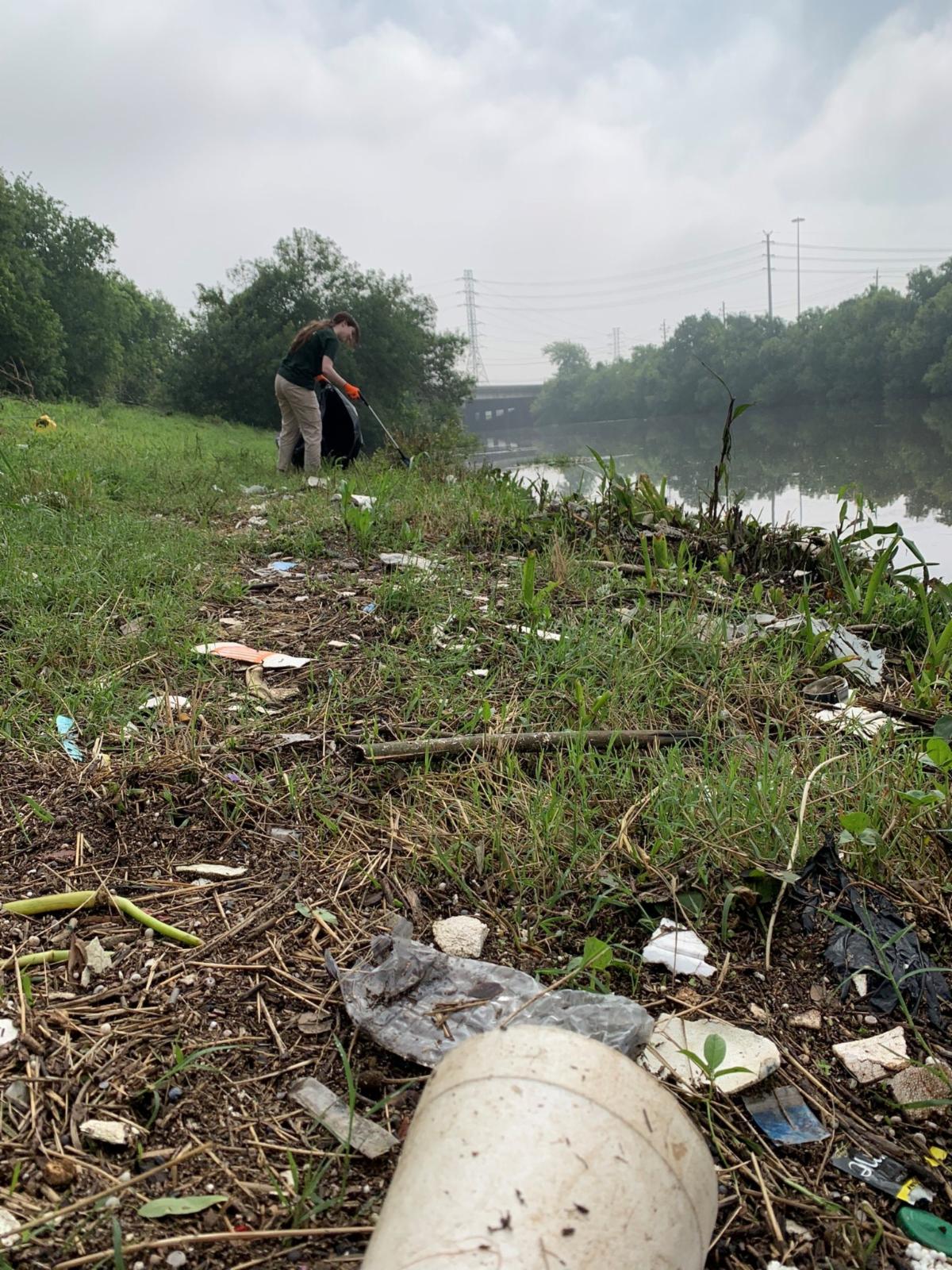
Join us on August 16th at Charles Milby Park in Houston for a cleanup in partnership with H-E-B's Our Texas, Our Future! Come clean the bayou for the water birds!
There's a whole lot of trash in the water and in the forest, so please be sure to wear long pants and closed-toed shoes.
To register and learn more, click the link.
| | | | | |
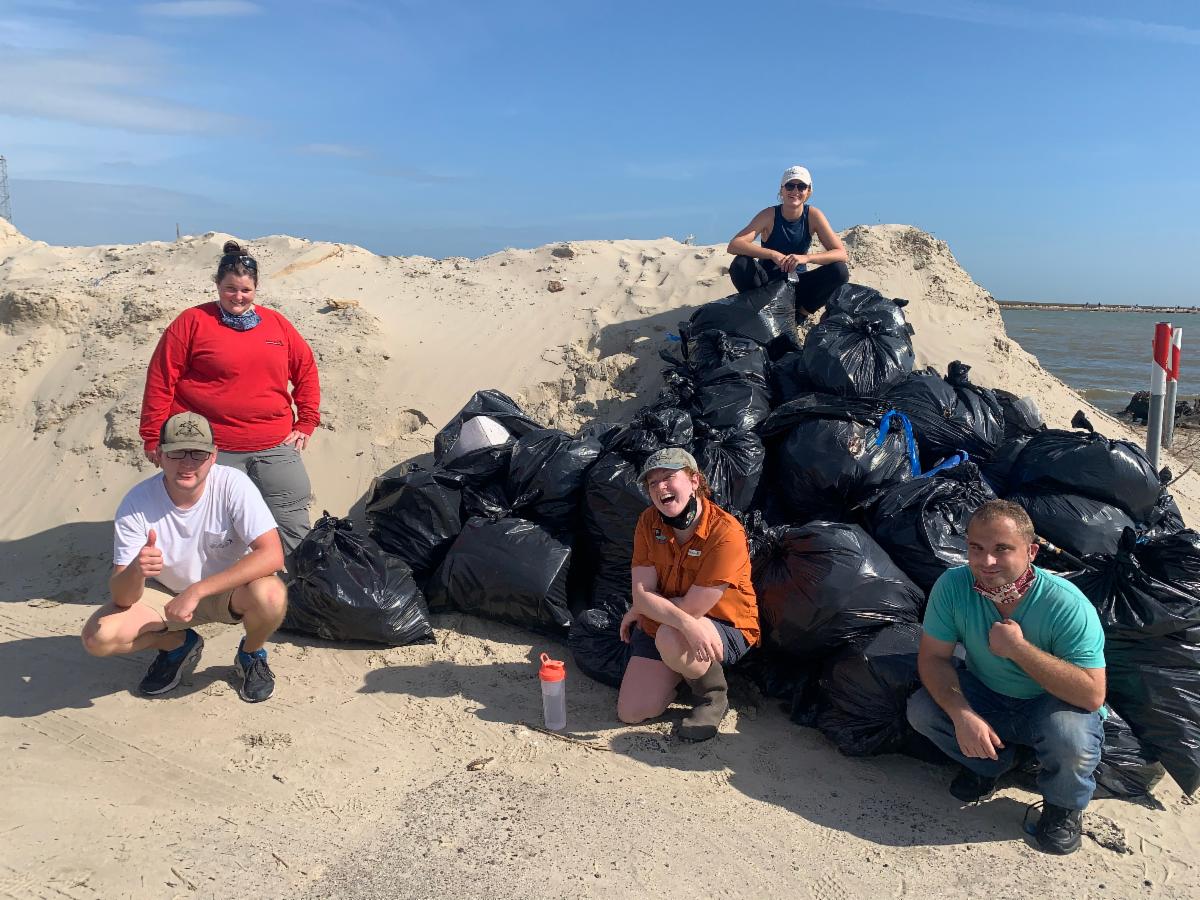
Join us for a cleanup at Bryan Beach on Quintana Island on August 23rd! This area is an important resting and nesting area for shorebirds and waterbirds. We've never done a cleanup at this exact location before, but we're looking forward to it!
To register and learn more, click the link. (It says "tickets," but it's a free event, you just need to register).
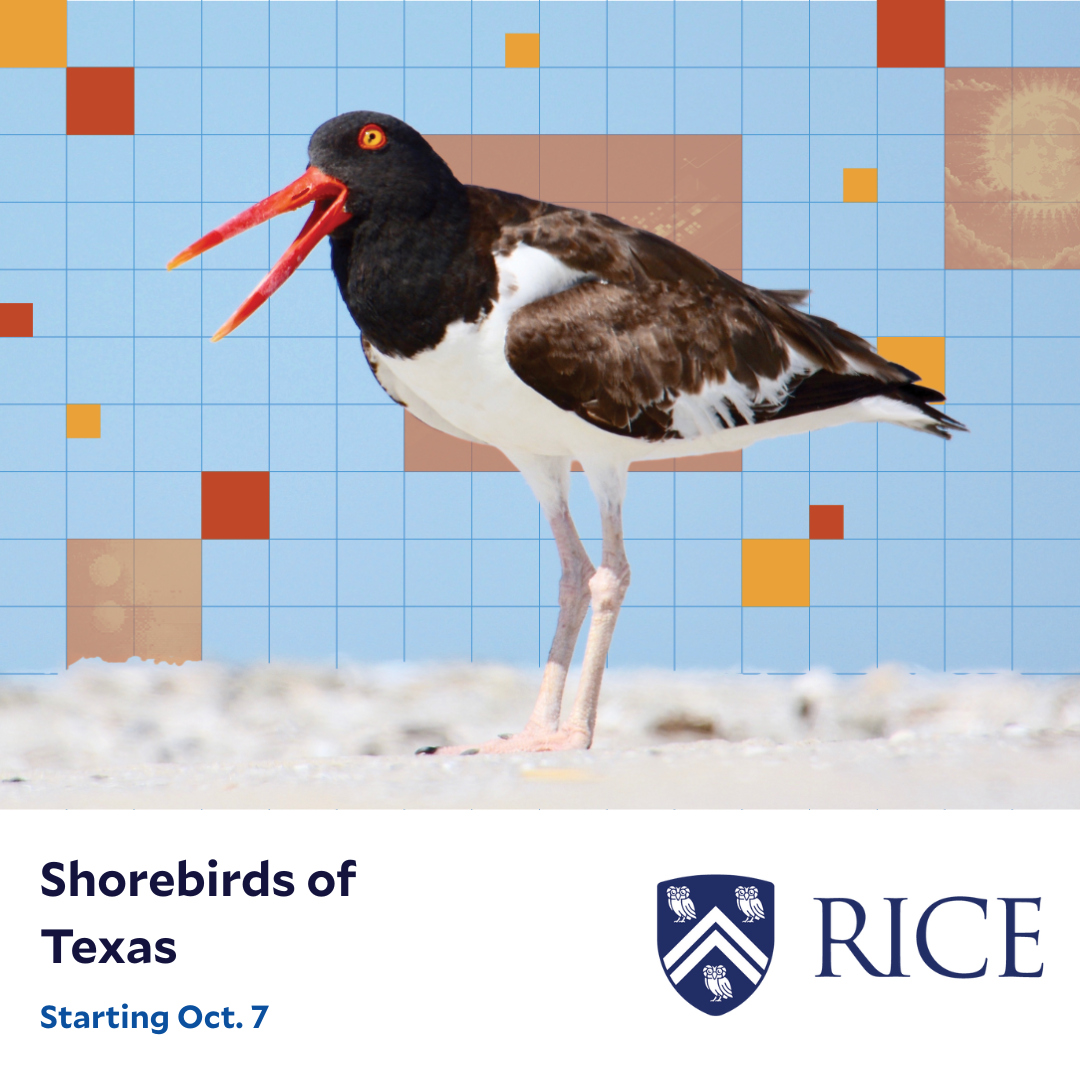
| | Shorebirds of Texas Course at Rice University | |
Join Rice's Susanne M. Glasscock School of Continuing Studies for the short, non-credit course, “Shorebirds of Texas” with Glenn Olsen this fall!
Shorebirds like peeps, pipers and plovers travel from as far as the southern tip of South America to the Arctic Circle and depend on habitats such as Bolivar Flats. Join Glenn Olsen to learn about shorebird identification techniques, migration patterns, breeding habits, habitats and the life history of shorebirds in the Gulf Coast and beyond.
This course is open to the public and delivered in person. Learn more here.
| | | Plant of the Month- by Chris Kneupper | | |
Porterweed, also known as False Vervain
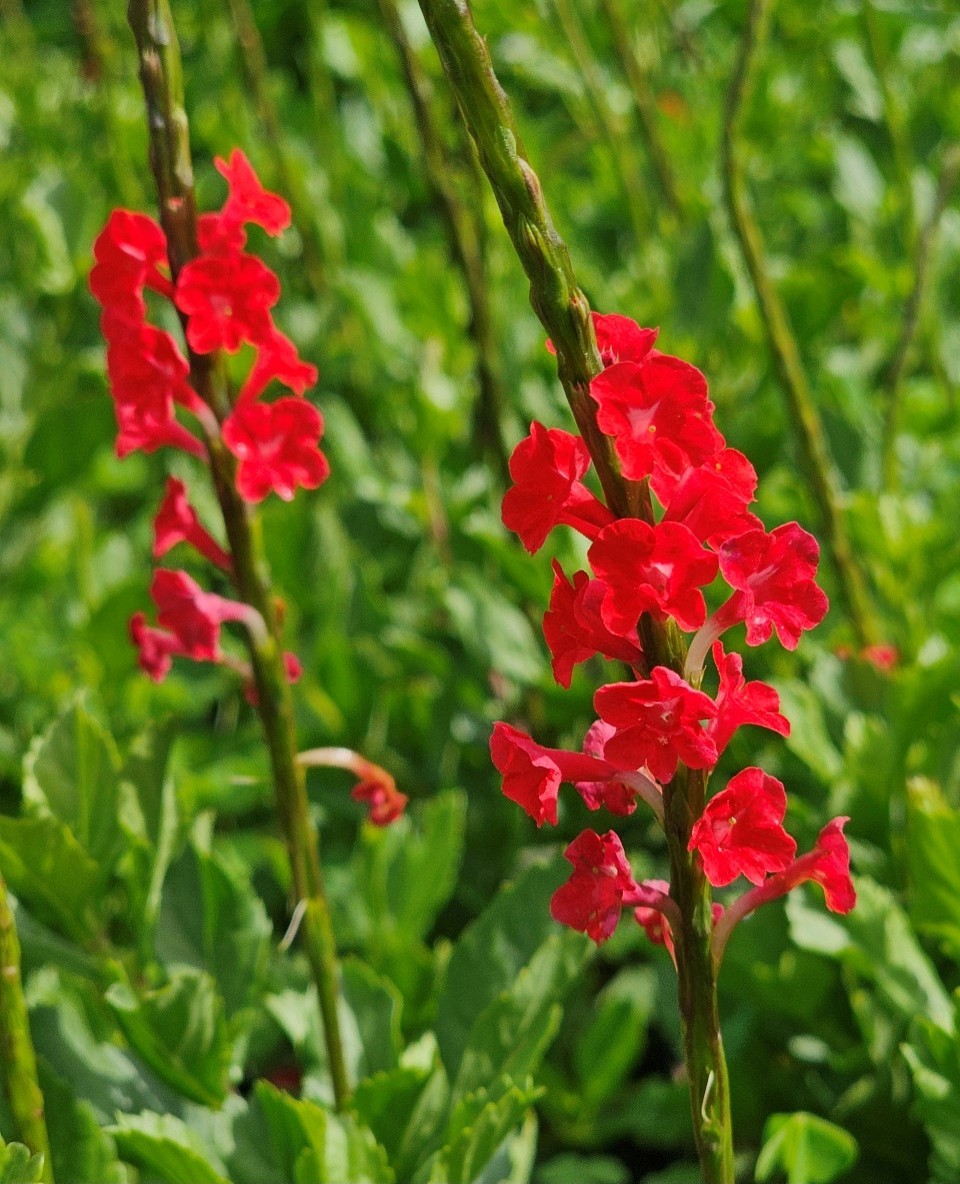
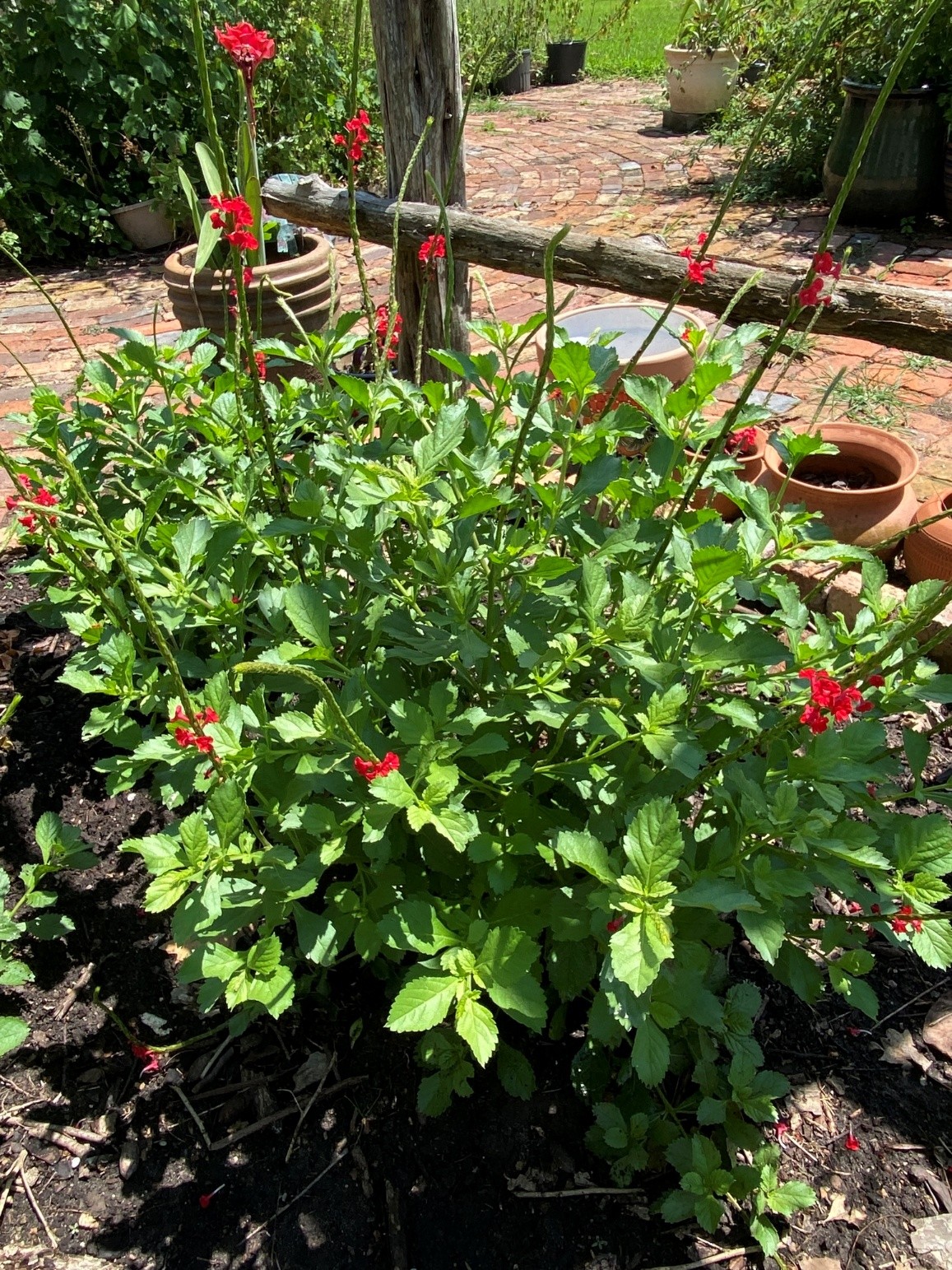
A relatively recent addition to the GCBO Nursery has been a truly red-flowered Porterweed, which is only rarely available commercially. Commonly known as Dwarf or Compact Red Porterweed (Stachytarpheta microphylla, aka S. sanguinea), our experience is that it is anything but dwarf or compact. The individual ¼” soft-red flowers are indeed on the small side, but the plant can grow to 5-6’ in height in our area, despite Internet information (and its name) suggesting it grows only to 2-3’. This species is native to a limited range of the eastern cape of Brazil. Stachytarpheta is a tropical genus in the Verbena family, and this genus’ taxonomy is not fully worked out. So, as a few types have been imported into the USA, and usually cultivated in the warmer USDA Zones 9b-11, there is often some confusion as to both the common and scientific names.
Our specimens in Brazoria County have grown vigorously into a densely-leafed bush, and then bloom from late spring until colder fall weather, but seem to survive poorly over our Gulf Coast winter. Although perennial in tropical regions, this type seems best cultivated as an annual here (or overwintered in a warm greenhouse or sunroom). Fortunately, this is not a problem as it reseeds prolifically, especially with a little help. The long flower spikes (called a rachis) typically have a small group (collar) of flowers each day, with the group progressing slowly upwards as the spike continues to grow. Like other Porterweeds, the nectar-rich flowers are a top favorite to butterflies, especially the smaller species, although I’ve seen Swallowtails feeding on them. Also attractive to hummingbirds, they seem especially useful when partnered with feeders, to draw them in with their downwind scent plume (as seen with Turk’s Cap), and cause greater crowds at the feeders. It is heat- and drought-tolerant, but thrives best in well-drained loamy soil in a sunny location with regular moisture.
| | Save the Date for Smith Point Hawk Watch Celebration! | | |
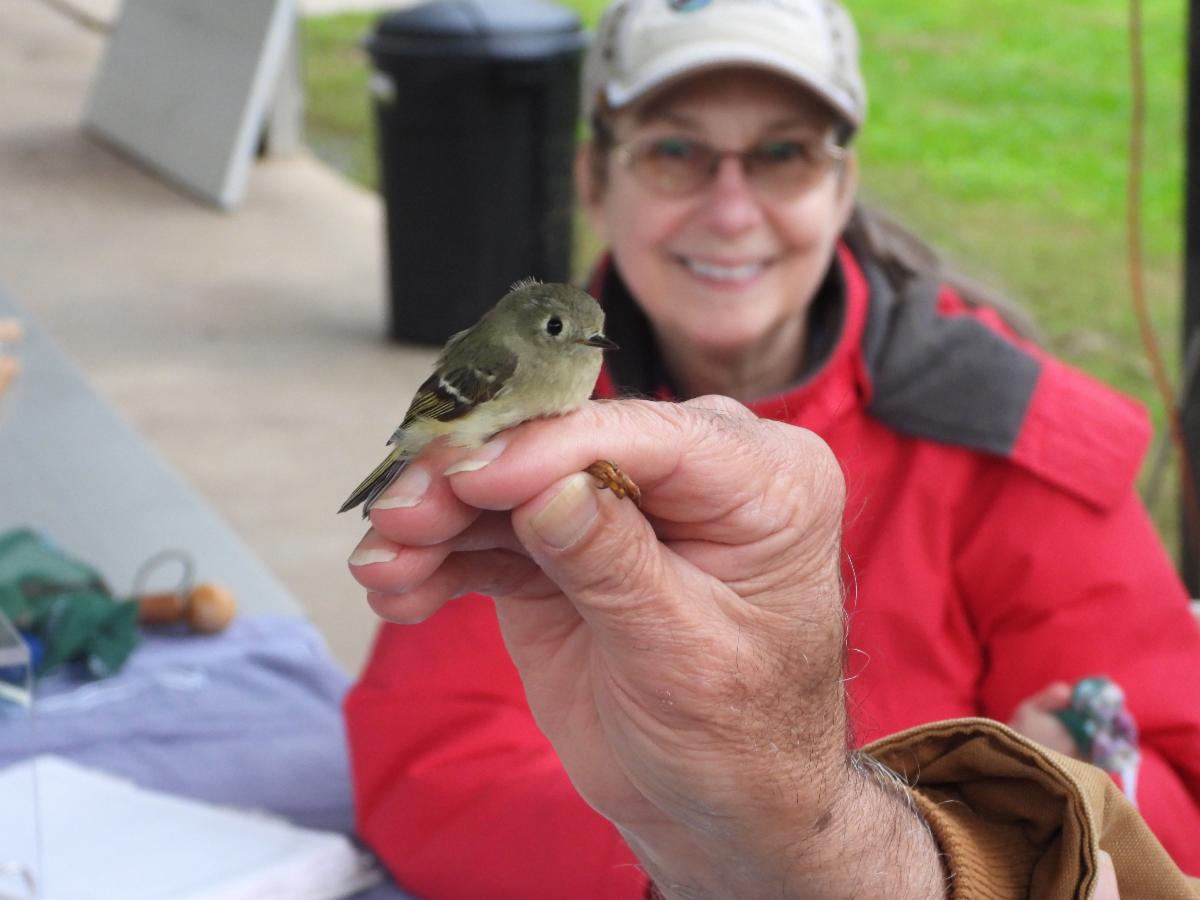
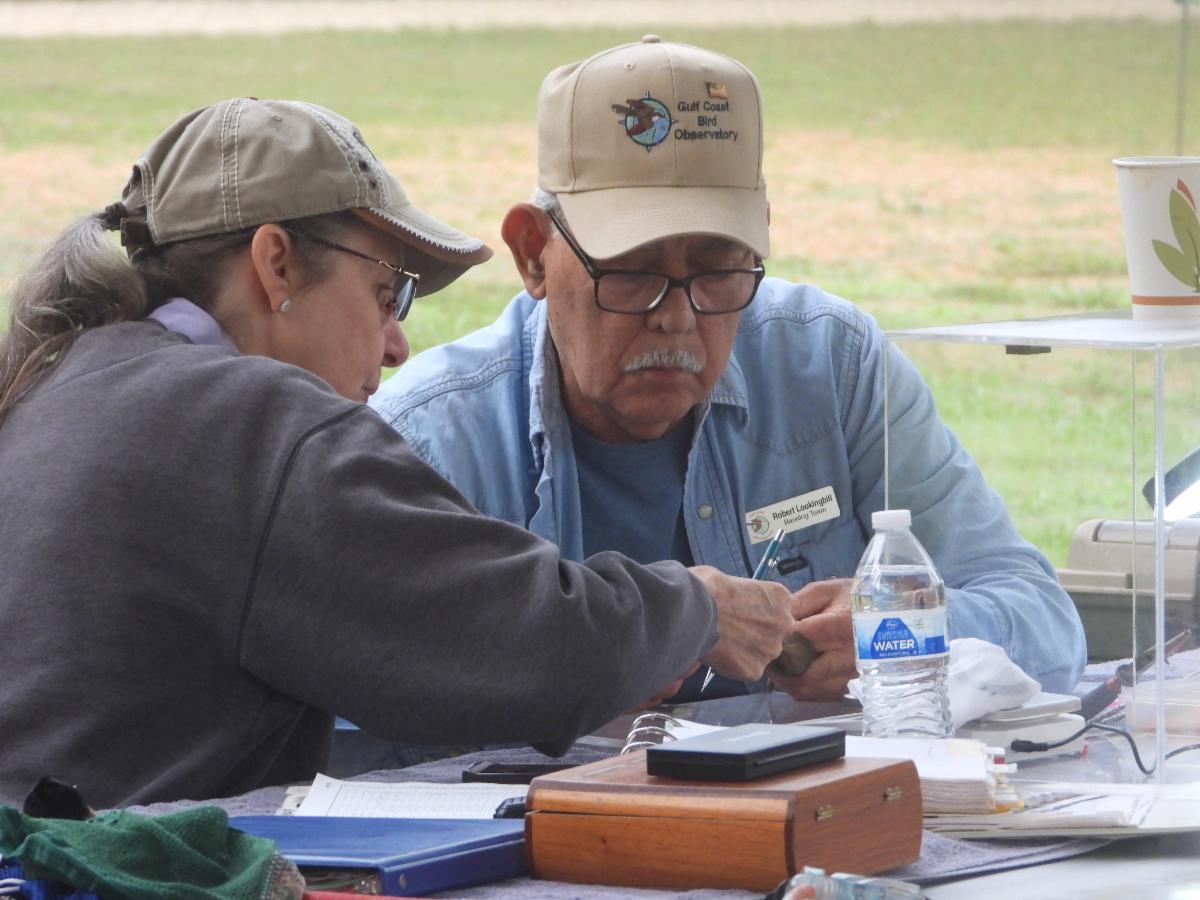
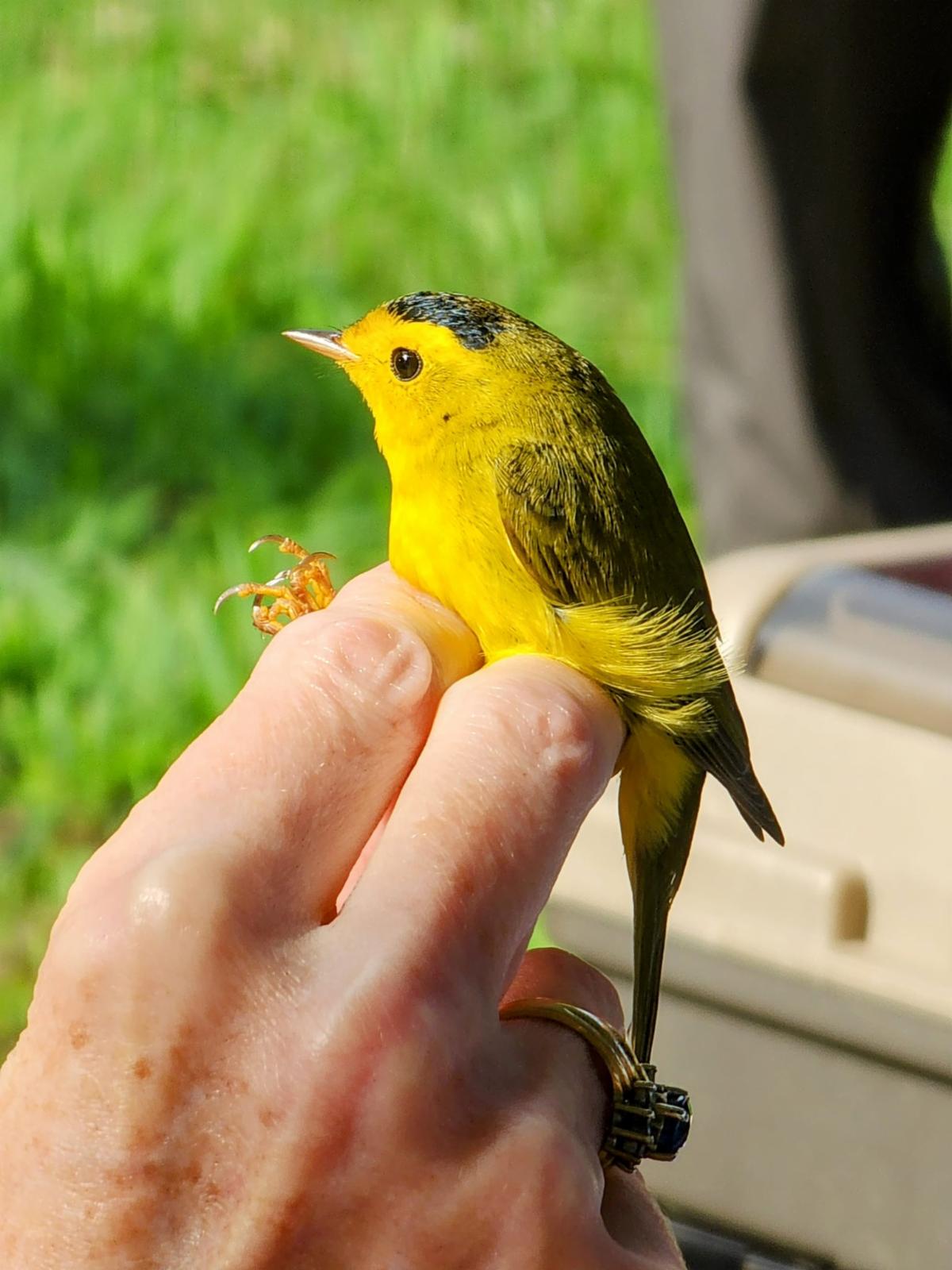
Join us once again for Bird Banding on August 16th from 8 am - noon at our headquarters in Lake Jackson. Come see birds in the hand and learn about the science of bird banding. The earlier you arrive the more birds you'll see. This event is free of charge.
And while you're here, why not wander our trails too? We even have picnic tables set up for an outdoor lunch -- It's the perfect nature outing for the family!
| | Come birding with GCBO and our Executive Director, Martin Hagne! Have a great time birding, exploring, enjoying some extraordinary scenery, dining on local cuisine, and of course seeing great birds! We always hook up with at least one local guide for the best experience. Here are our wonderful upcoming trips, but hurry, our trips are selling out fast!! You can also go to our website to check for trip information and to register. | | Make an in-kind donation to support our sanctuary needs. | | | | |
Donate your old t-shirts!
We're looking for donations of old kids' shirts (clean and in good condition) that are preferably nature/animal themed. We will use them to make into mist net bags for our bird banding. We'd love to get 20-30 total shirts. Thanks!
| | |
Black Oil Sunflower Seed and Chicken Scratch
We feed year-round here at GCBO, and during migration at Quintana. We stock our GCBO feeders to help augment natural foods, and this also helps our monthly banding research project.
Sugar
The hummingbirds are here and we are looking for granulated sugar for their sugar water. Please bring it by our headquarters: 299 Hwy 332 W Lake Jackson. Thanks!
Battery Packs & Small Solar Panels
We're looking for battery packs to charge phone and other electronics, and small solar panels to power them. Any help is much appreciated!
| | Corporate Matching Programs | | Did you know that many corporations have a matching program? Corporations can match their employees' volunteer hours and/or donations to nonprofit organizations like GCBO! These types of programs double your contributions to the causes that you care about! If you work (or are retired from) a corporation, ask about their matching program today! | | Recycle Your Old Technology and Help Birds | | |
The Wireless Alliance is a company that recovers and recycles cell phones, smart phones, tablets, and other consumer recyclables.
We will be collecting small electronic items for Wireless Alliance to keep them out of landfills as well as raise money for our conservation efforts. If you have old technology such as a phone, charger, tablet, or other accessories, consider bringing it to GCBO!
| | |
You can help support GCBO's mission in several important ways!
DONATE NOW on our website to support our conservation programs.
BECOME A MEMBER and receive our twice a year newsletter and a 10% discount in our nature store.
| | When you shop at Kroger, you can support GCBO! | |
GCBO is a registered charity through Kroger's Community Rewards Program. This means that you can register your Kroger Plus Card online and select GCBO as the organization of your choice. Every time you use your Kroger Plus Card, Kroger will donate a portion back to GCBO! This is an easy way to support GCBO while you shop - your donations help us continue to protect birds and birding habitat around the Gulf Coast and beyond. To register your Plus Card, click here. Our charity number is #DN782.
| | | | |