|
MassBays Newsletter
Spring 2025 (Vol 22, No 2)
| |  | | |
What’s it all about?
With our heads down, focusing on the day-to-day tasks and deadlines, it’s easy to lose track of why we do this work. For MassBays’ part, we try all the time to pause and ask, “how is this (project/investment/policy) advancing our goals?”
In 2024, EPA endorsed our 10-year Comprehensive Conservation and Management Plan, the result of a years-long community process to generate desired outcomes that direct our work. A central component of these are habitat targets, generated in collaboration with EPA’s Office of Research and Development and Office of Science Technology, and our own Science and Technical Advisory Subcommittee. The targets consist of both condition (healthy habitats) and extent (acres) for four coastal habitats:
The target for salt marsh and tidal flat extent is to match their acreage to the amounts recorded in June 2005. Due to sea level rise and development along the coastline, it is unlikely that these habitats will be able to exceed that, so MassBays’ work in salt marsh and tidal flats is focused on maintaining and improving the health of existing the habitat.
Eelgrass, a seagrass once abundant along our coasts, is in steep decline. We have hope, however, that dedicated restoration efforts can bring this important habitat back to levels seen in 1995, and improve its health as well.
Migratory fish habitat includes the restoration and improvement of access to historic migratory and spawning habitats for herring and smelt along coastal rivers. Our target is to improve and restore access by 105 migratory miles and 3,900 acres of spawning habitat.
Click here for more on how we developed this guidance; to see how habitats near you are faring, check out our Ecohealth Tracking Tool.
Pam DiBona, MassBays Director
| |
Gulf of Maine Monitoring & Research Symposium
April 8 - 9, 2025
| | |
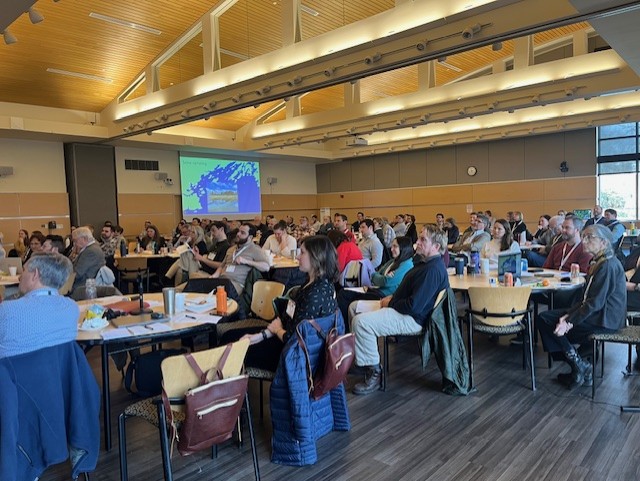
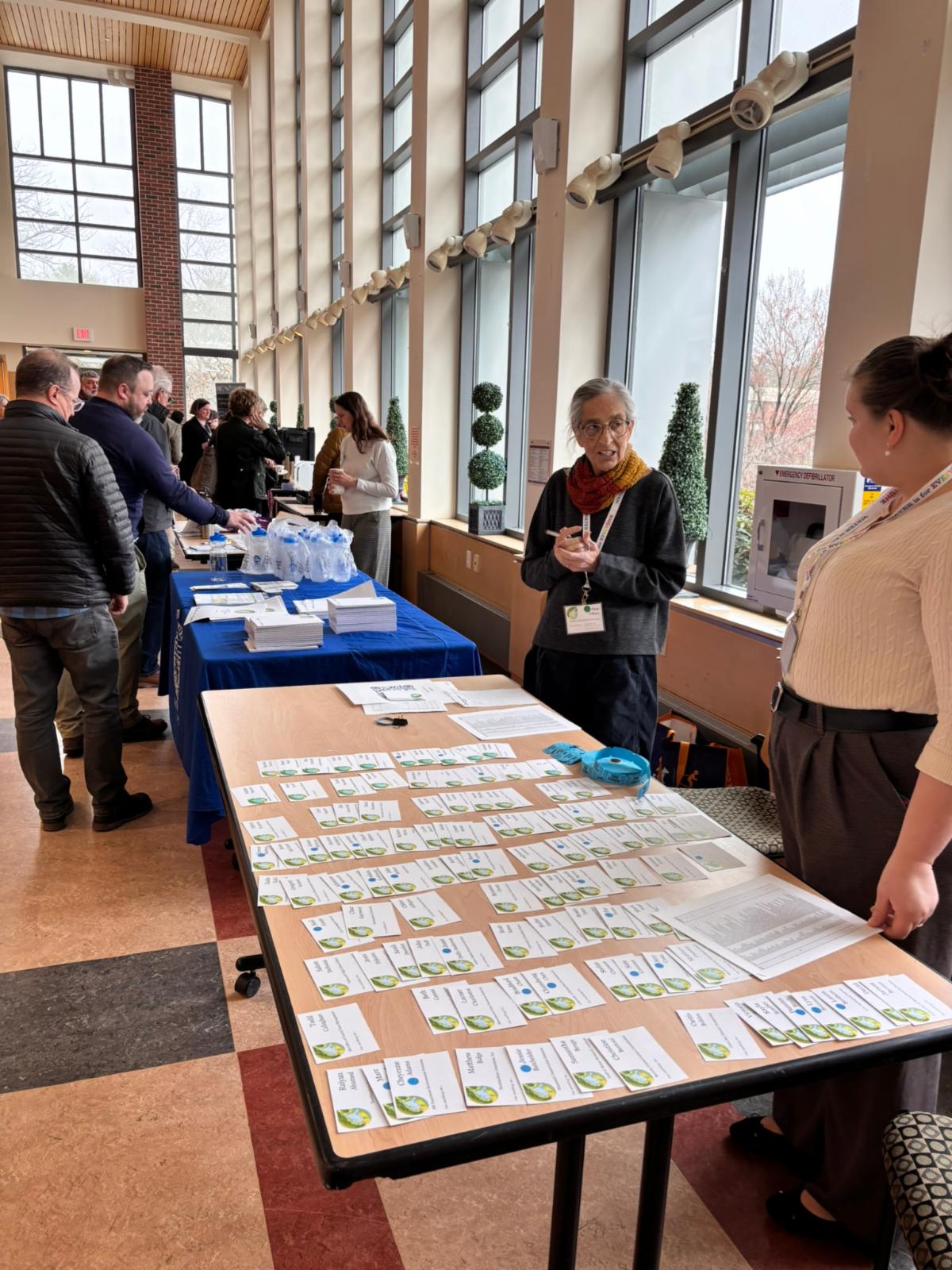
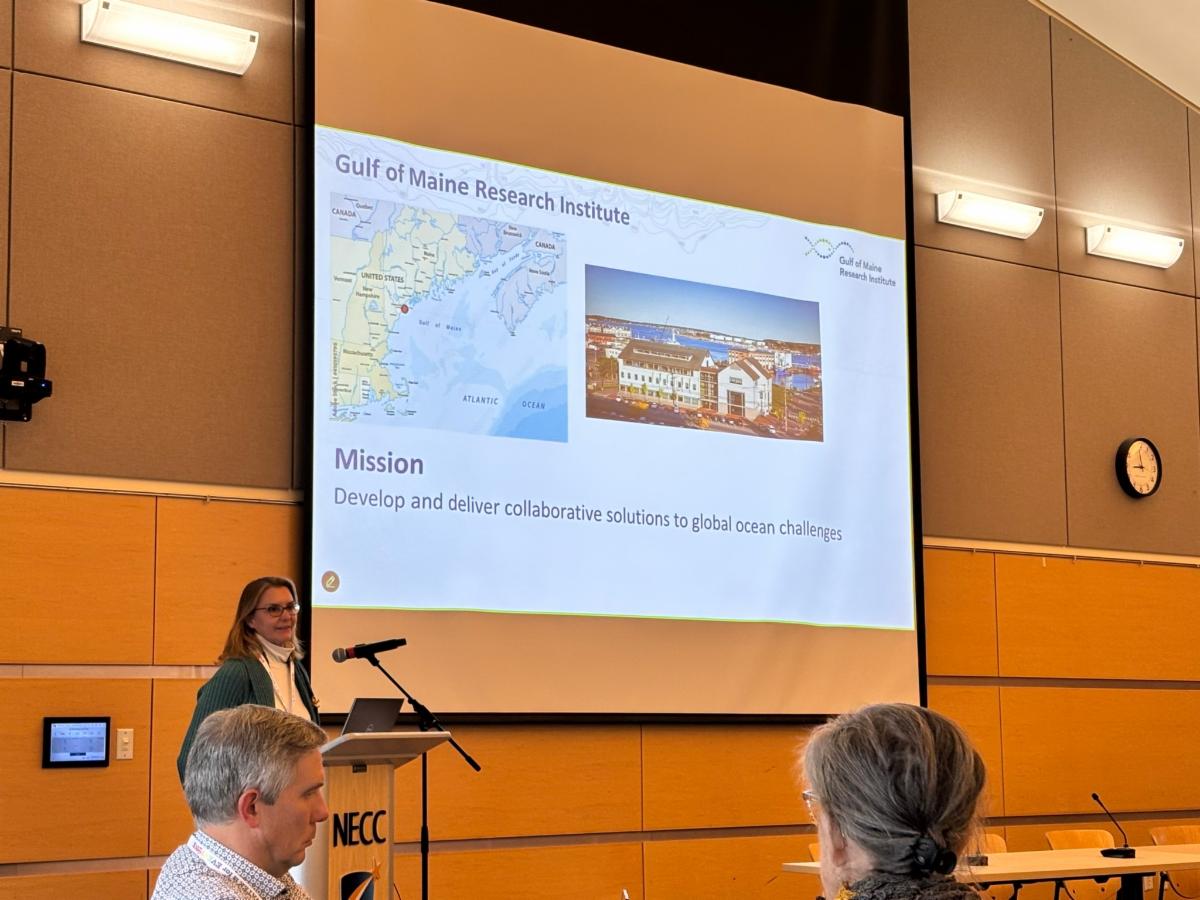
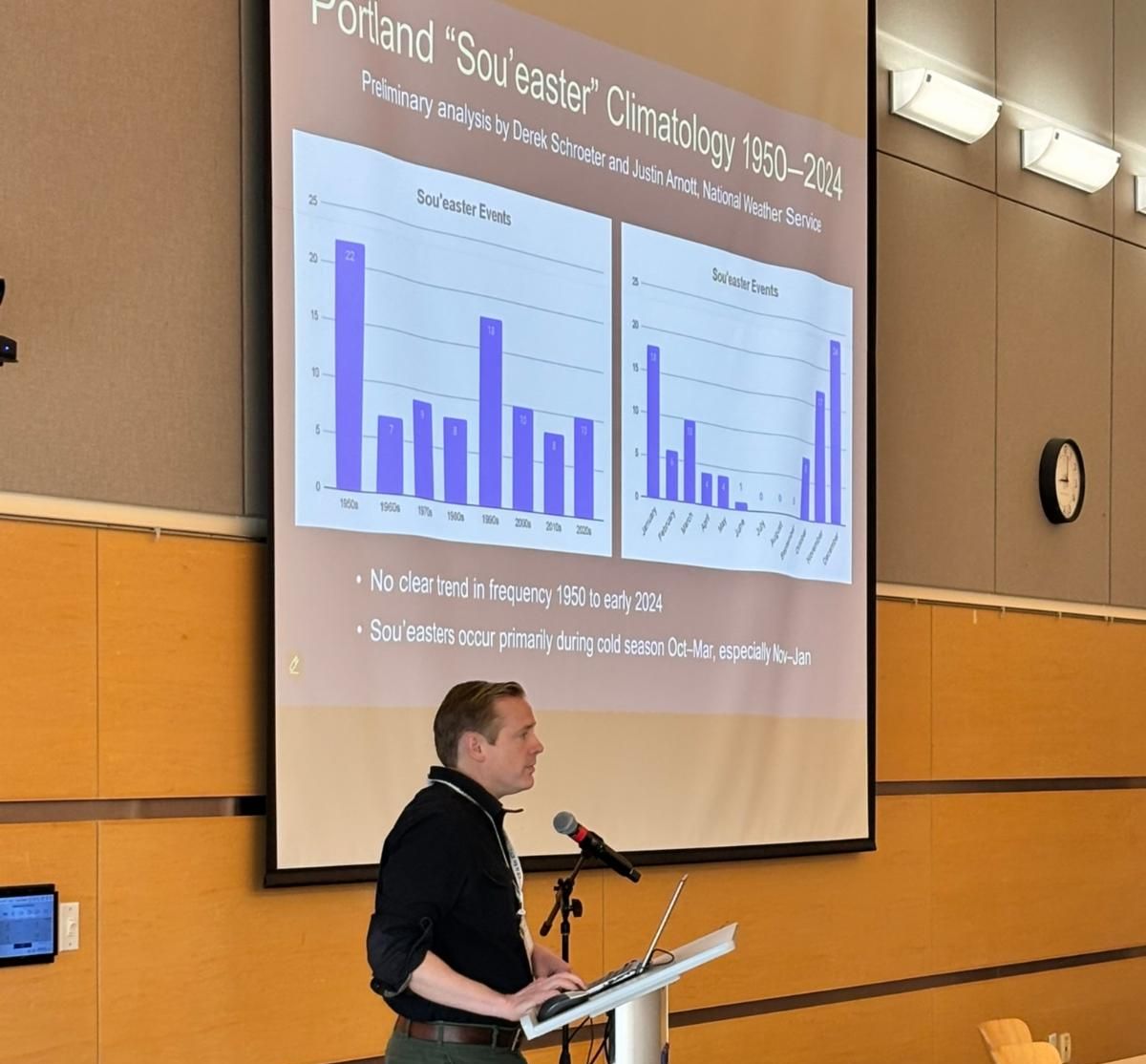
On April 8-9, more than 150 monitoring program coordinators and researchers, data-users, and policymakers gathered in Haverhill, MA, to learn about ongoing water quality and habitat monitoring and research in the Gulf of Maine.
The Symposium was hosted by MassBays, Massachusetts Water Resources Authority (MWRA), MIT Sea Grant, and the Northeast Regional Association for Coastal and Ocean Sciences (NERACOOS). Drs. Janet Duffy-Anderson from Gulf of Maine Research Institute and Damian Brady from the University of Maine provided keynotes about the drivers of change in the Gulf of Maine, setting the stage for a series of talks by nearly 40 speakers over two days, with panel discussions following each session. Topics ranged from water quality and habitat monitoring to research on the impacts of emerging contaminants and invasive species on local ecosystems.
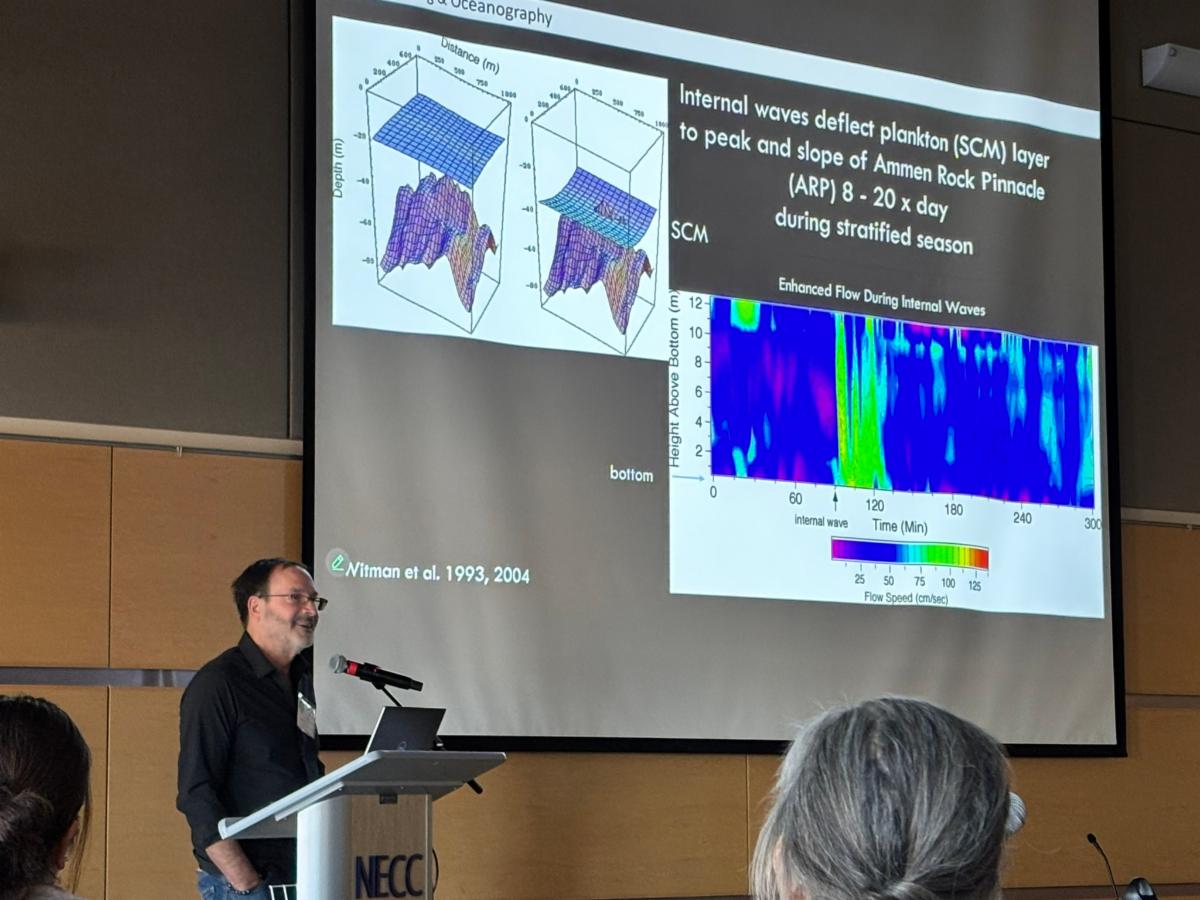
Sending attendees off on a high note, Dr. Jon Witman from Brown University, described how the rich ecosystem on Cashes Ledge, in the middle of the Gulf of Maine, has suffered losses in kelp and biodiversity over the past 60 years. However, in the past few years he and his team have seen a gradual return of the unique system. Watch this short clip from PBS NOVA's three-part series "Sea Change: The Gulf of Maine" created and produced by Brian Skerry.
Watch for Symposium outcomes and speakers’ slide presentations on MassBays’ website, coming in May.
2025 Gulf of Maine Symposium Agenda
| | |
Dr. Janet Duffy-Anderson
Gulf of Maine Research Institute
| | |
Dr. Damian Brady
University of Maine
| | |
Dr. Jon Witman
Brown University
| |
A WELCOME SIGN OF SPRING
RETURN OF THE RIVER HERRING
| |
North and South Rivers Watershed Association kickoff herring count season! Volunteers are still needed to help count.
MassBays' regional coordinator, The North and South Rivers Watershed Association (NSRWA) kicked off their volunteer herring counts on March 23. NSRWA volunteers help to monitor herring populations at five important locations in their watershed:
- Herring Brook, Pembroke
- South River, Marshfield
- Bound Brook, North Scituate
- First Herring Brook, Scituate
- Third Herring Brook, Norwell/Hanover
Although the counts are already underway, volunteers are still needed to sign up to help.
Read more and sign up here.
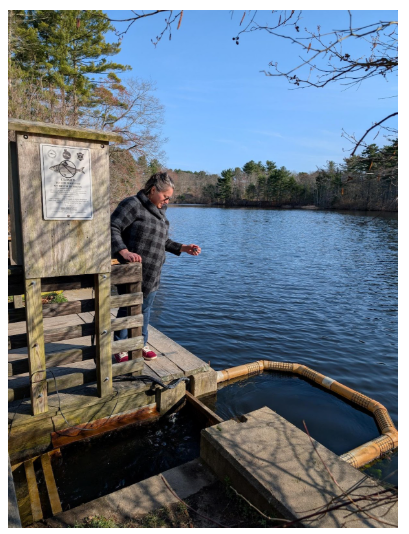
| | | River herring below the ladder in Herring Brook Pembroke, 4/20/25 | | | Erin Levitsky counts river herring at the fish ladder on Herring Brook in Pembroke | | |
Preserving and Protecting River Herring on Cape Cod: APCC’s River Herring Monitoring Program
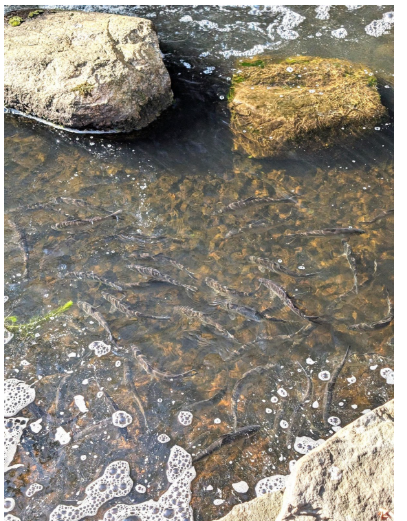
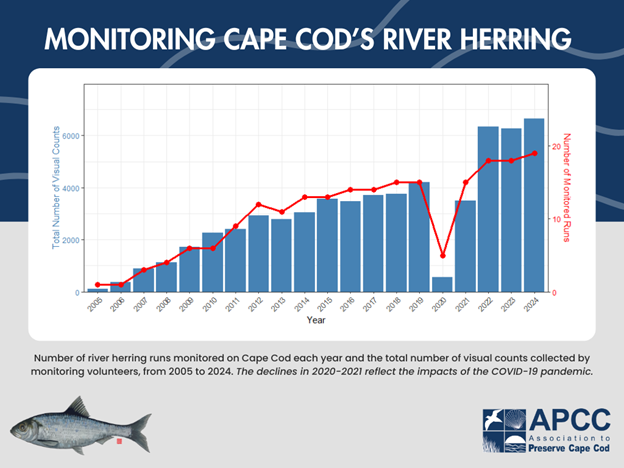
Each spring river herring, specifically alewives and blueback herring, migrate from the ocean’s expanse to swim upstream, navigating Cape Cod’s coastal rivers and streams to reach freshwater spawning habitat. This annual event is more than just a seasonal migration; it’s a vital part of our coastal ecosystem, sustaining larger fish, birds, and marine mammals that rely on these fish as a crucial food source.
For nearly two decades, the Association to Preserve Cape Cod (APCC), supported by MassBays, and in partnership with the Massachusetts Division of Marine Fisheries, has been a key player in tracking this critical migration on Cape Cod. The program relies on a dedicated network of volunteers who contribute valuable data for conservation and management efforts.
Dr. Jo Ann Muramoto, who successfully developed and led the program for many years, retired from APCC in 2024 and management of this program has been taken on by Mike Palmer, APCC’s new Restoration Ecologist and a fisheries scientist with over two decades of experience. Over the past two months, Mike has been working closely with nearly 20 local run coordinators to recruit and train volunteers. Training sessions covered essential topics such as fish identification, counting techniques, data recording, and best practices for observation. “Run coordinators” manage volunteer schedules and address site-specific challenges. APCC maintains the Herring Monitor Hub, a centralized online platform that consolidates training materials, historical data, and real-time data entry. By the time the river herring arrived in early April, Cape Cod's volunteer network was fully prepared to document the migration.
For more information on the Cape Cod Herring Monitoring Program, visit APCC’s website or contact Mike Palmer at mpalmer@apcc.org.
| |
MassBays' Metro Region Herring
(and rainbow smelt) Return
| | |
Fish are returning to the MassBays' Metro Region’s estuaries for spring spawning. All across Massachusetts’ east coast, the Massachusetts Division of Marine Fisheries (DMF), watershed associations, local municipalities, and other partners have worked for years to expand the length of rivers available for fish passage and this means our spring fish runs include some places in Metro Boston one might not expect:
-
Thanks to several fish ladder and fishway improvements, herring can now reach as far up the Mystic River as Horn Pond in Woburn! Learn all about this success story and get involved in Mystic River herring counts with the Mystic River Watershed Association. In-person monitoring slots are mostly full for the season, but volunteers can still assist by counting fish on underwater “fish cam” videos starting in May.
-
The Charles River Watershed Association will run its third annual Charles River Herring Count at Watertown Dam. Volunteer monitoring slots are still available.
-
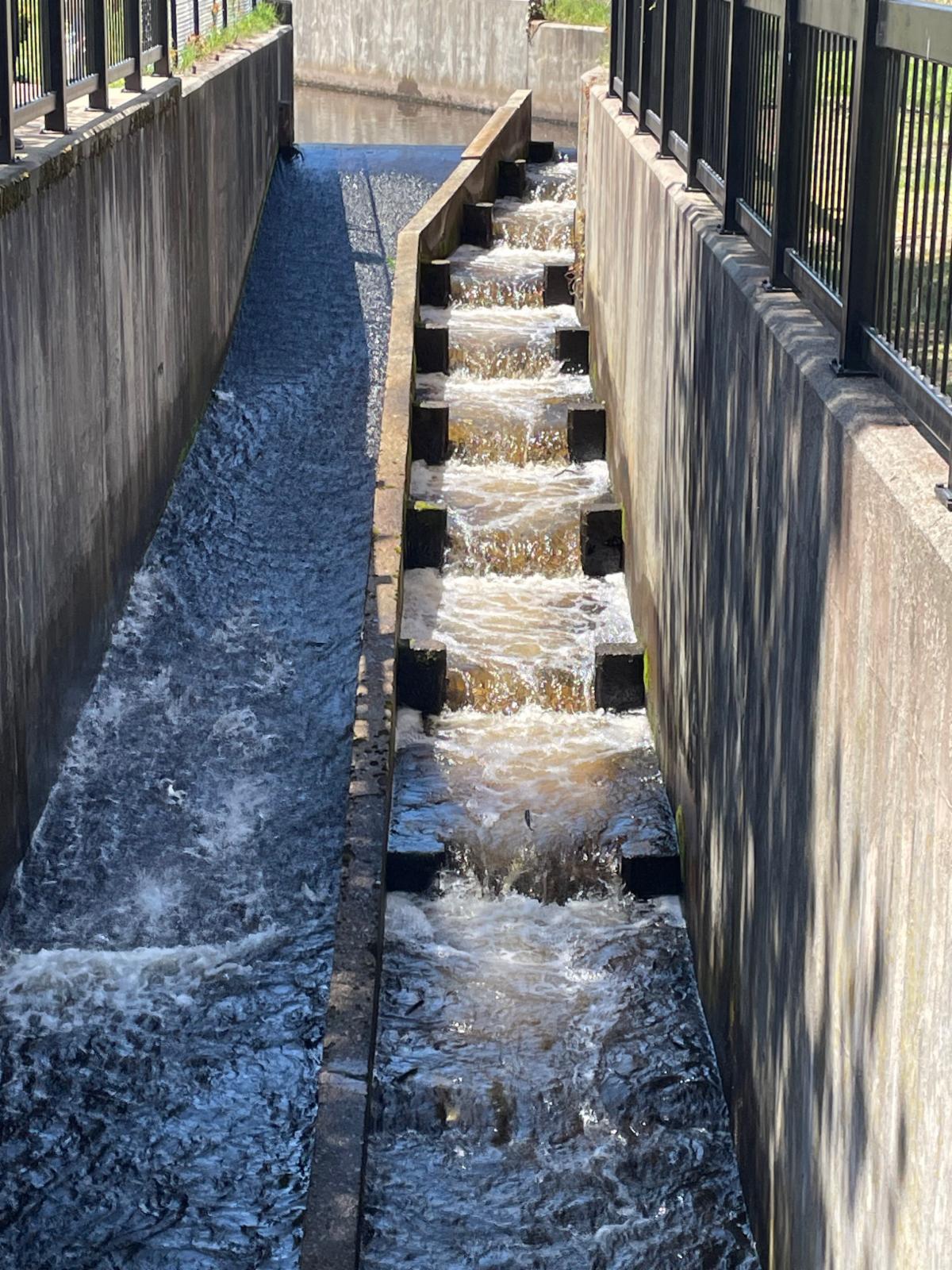
The Weymouth Back River supports one of the largest herring runs in Massachusetts. Visitors can observe fish pass a critical series of five fish ladders from Jackson Square to Whitmans Pond.
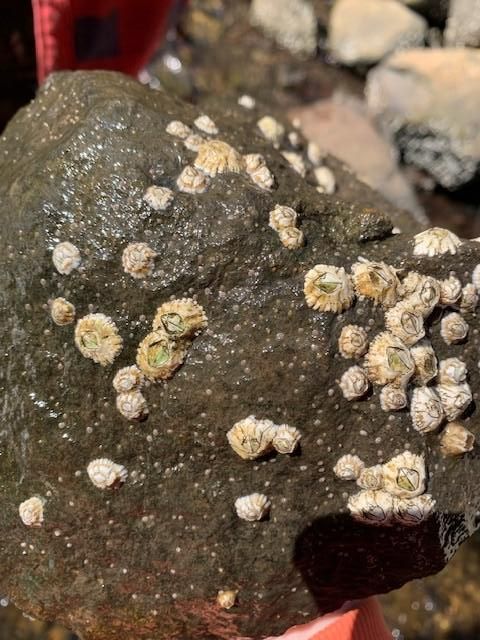
- It’s not just herring coming up the rivers! Rainbow smelt prefer to lay eggs in shallow, fast-flowing riffle habitat, which in the Metro Boston area includes some highly developed creek and river zones in the Saugus River and Fore River.
| | |
The Jackson Square fish ladder in Weymouth, MA, an excellent fish viewing location in May 2025.
photo credit: Diana Chin
| | | |
Smelt eggs (tiny white dots) and barnacles attached to a rock in the Fore River, March 2025.
photo credit: Andrew Hultin
| | | MassBays Earth Day & Community Events | |
|
Celebrate Coastal Green Spaces in Metro Boston Area
-
Charles River Watershed Association (CRWA), Earth Day cleanups,
click here
-
Neponset River Watershed Association (NepRWA), Spring cleanups,
click here
-
Mystic River Watershed Association (MyRWA), Macdonald Park cleanup, click here
-
Mystic River Watershed Association (MyRWA), Gateway Park tree planting, click here
-
GreenRoots, Chelsea and East Boston cleanups, click here
Urban Wetlands Lecture, April 27, 4:00 - 5:30 PM (in-person)
Join Dr. Sara Grady of Mass Audubon at the Boston Nature Center and Wildlife Sanctuary in Mattapan. For more information and to register, click here.
MassECAN Conference, May 1 (in-person)
The Massachusetts Ecosystem Climate Adaptation Network (MassECAN) will hold their 2025 conference on Mainstreaming Nature Based Solutions at Clark University in Worcester. For more information and to register, click here.
EBC Stormwater Summit, May 2 (in-person)
The Environmental Business Council of New England (EBC) will hold their annual stormwater conference, "The Challenges of Managing Stormwater in a Changing World", at the Residence Inn Natick. For more information and to register, click here.
DamBusters 201 Webinars, May 7 and so on, 12:00 PM (virtual)
Join the Mass Rivers Alliance, MA Division of Ecological Restoration (MA DER), and CRWA for their 2025 monthly lunchtime webinar series on dam removal topics. Registration is for the webinar series. To register for DamBusters 201, click here.
Climate Change and Health Webinar, May 8, 9:00 - 11:30 AM (virtual)
EBC will host a panel on "The Health Lens: Reimagining the Built Environment for a Changing Climate". For more information and to register, click here.
Watertown Dam Herring Festival, May 18, 11:00 AM - 3:00 PM
Join CRWA at Watertown Dam for a family friendly celebration of the annual migration of alewife, blueback herring, and American shad from the ocean up the Charles River! For more information and to register, click here.
| | | | | | |