The City College of New York

DIVISION OF

HUMANITIES

AND ARTS


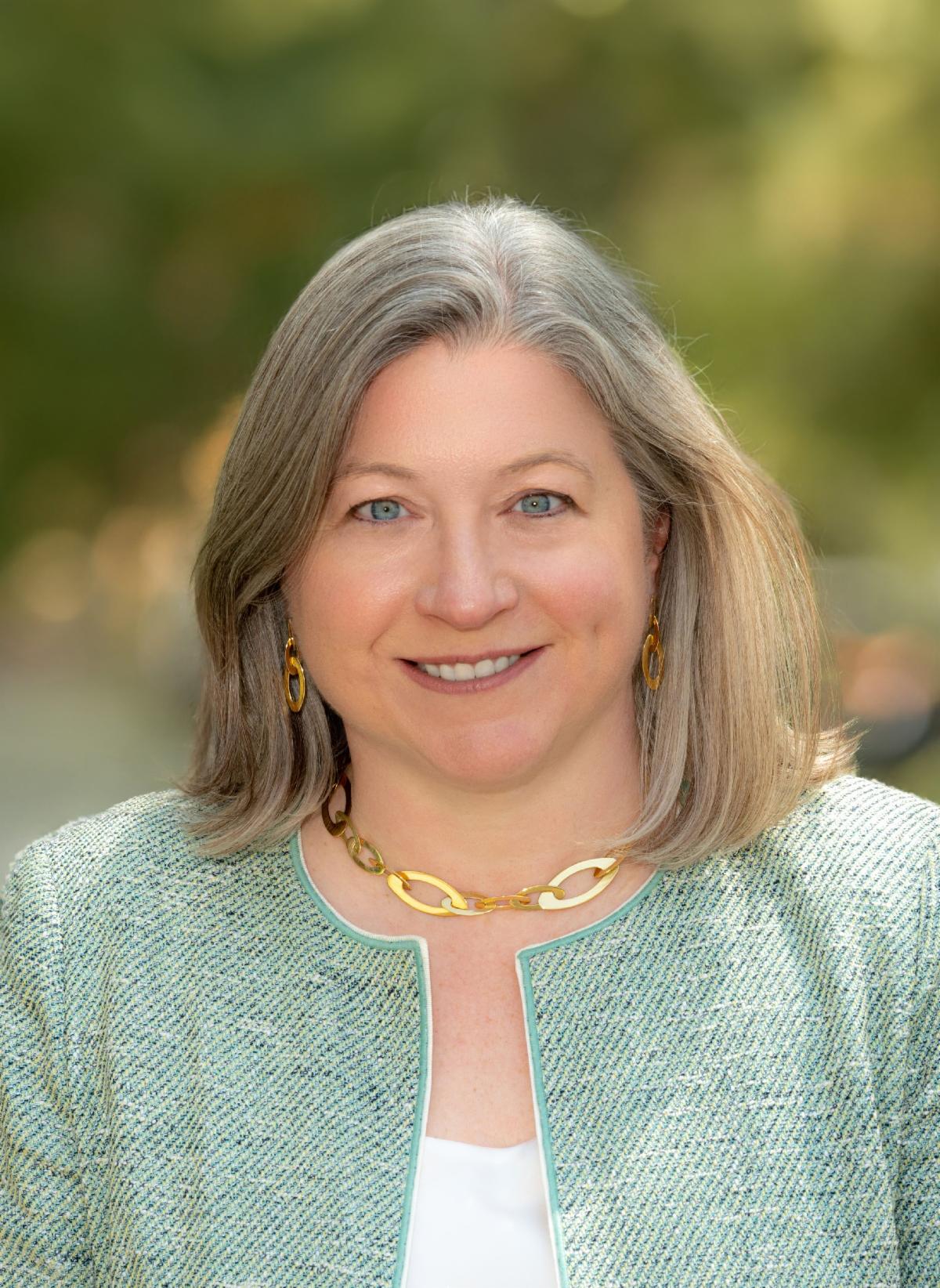
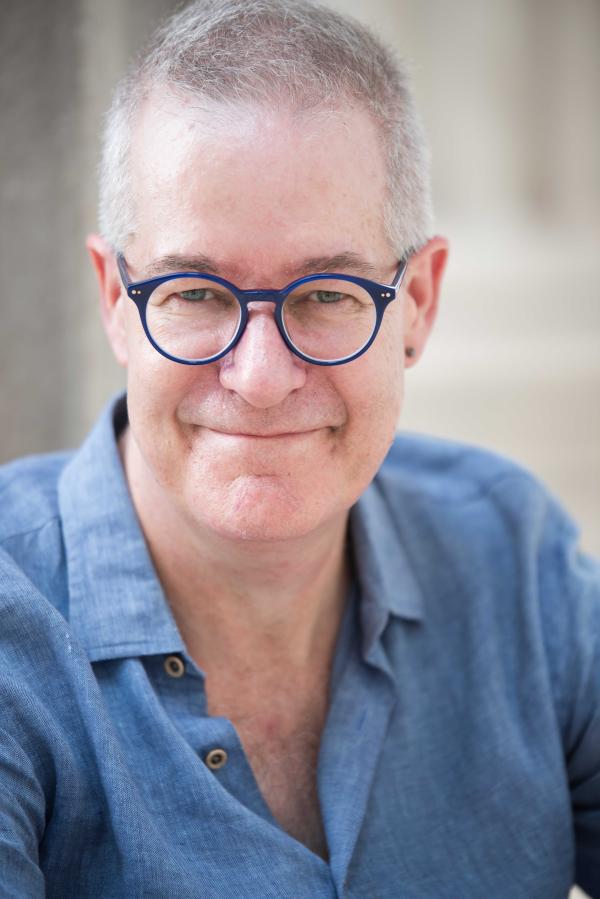
28 January 2026 | Renata Kobetts Miller, Dean


Dear Students, Faculty, Staff, and Friends,


In the Division of Humanities and Arts, we are real in an age of increasing artifice.


This is one of the things I said to our Spring 2026 new students in orientation this week, and here I’ll unpack what I meant by this. I welcomed our new students to City College, and I also expressed my gratitude to them, as I do to you, for choosing to join us, because it is through the contributions of each unique individual that City College constitutes a vibrant and stimulating learning community.


Individuality, expression, originality, and the exchange of ideas are among our core values in Humanities and the Arts, realized in our small classes, our hands-on learning environments, and the new ways in which we support learning that extends beyond the classroom and beyond campus.


We embrace the best of new technologies. As researchers, thinkers, and artists we are interested in how new technologies can enrich human experiences: how they can be used to advance communication, heighten expression, deepen our research capabilities to discern truth, and allow us to realize our truest selves. And artifice—that which is inauthentic or untrue—is not to be confused with art, or performance, or speculative creation, all of which enable us to explore more fully the range of human experience and potential.


I’m excited to welcome you, or welcome you back, to our community of learners, researchers, thinkers, and creators, and to get real with us. Or as Oscar Wilde said: “Be yourself; everyone else already is taken.”


Sincerely,


Renata Kobetts Miller

Dean

Division of Humanities & Arts

Photo credit: Chrys Davis


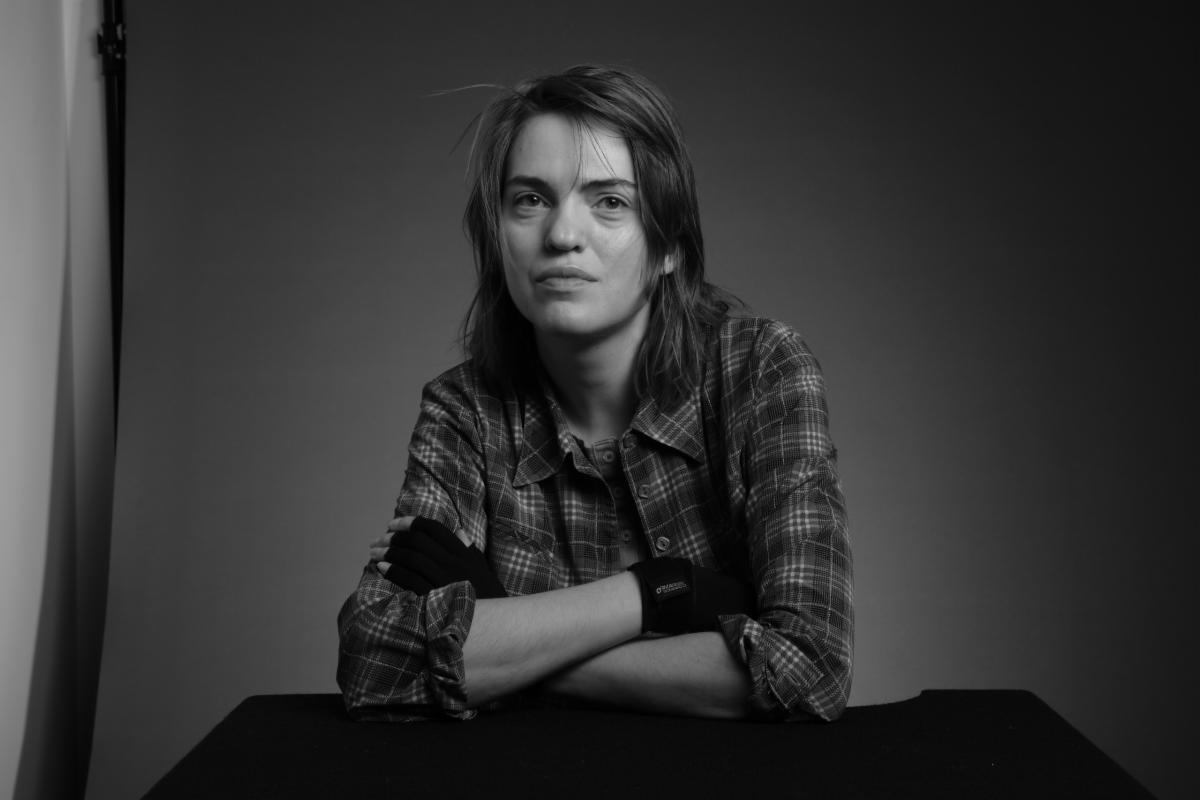
Learning How to See: H&A alum, Olga Ginzburg’s long way into photography

In 2025, CCNY alumna Olga Ginzburg (‘15) was selected for the esteemed Dear New York: Humans of New York exhibition in Grand Central Station for her community documentary project on Staten Island, Encounters. In addition to her documentary work, Ginzburg now works as a full-time freelance editorial photographer, with bylines and assignments for The New York Times, The Financial Times, The Washington Post, The Wall Street Journal, Bloomberg, NPR, and the New York Post


But her journey did not begin with early success, or even with a carefully mapped plan. It began with uncertainty. In early adulthood, photography was less a career trajectory than an anchor. Ginzburg came to photography well outside of academia. She had already dropped out of school and spent her early years searching for her voice. She found it in photography, long before she imagined it as a profession.” By the time she arrived at CCNY in her late twenties, photography had already become a way of orienting herself in the world. It is precisely this nonlinear path that gives Ginzburg’s work its particular richness. Her story, marked by detours, pauses, and returns, ultimately led her into a deeply fulfilling vocation that is far more than just a job.


Ginzburg fell in love with photography years before she ever picked up a camera. She wandered museums, flipped through photobooks, and immersed herself in cinema—experiences she now recognizes as her first teachers, even if she didn’t know it at the time. Photography, she says, has a way of changing perception. By steeping herself in great works, historical and contemporary, she learned how to see before rushing to make images of her own.


Her transition from looking to making was not as solitary as it began. She recalls her first photography class at Cooper Union around 2008–9 as a pivotal moment. After that color analog class, she was hooked and immediately continued her studies at the Educational Alliance, a rare, affordable, community-based art space. There, she expanded her technical knowledge through black-and-white wet darkroom courses, found mentorship with Azikiwe Mohammad, and soon transitioned from student to salon participant to instructor. When the Educational Alliance darkroom closed, she felt ready to pursue a more formal education, and that path led her to the Art Department at City College.


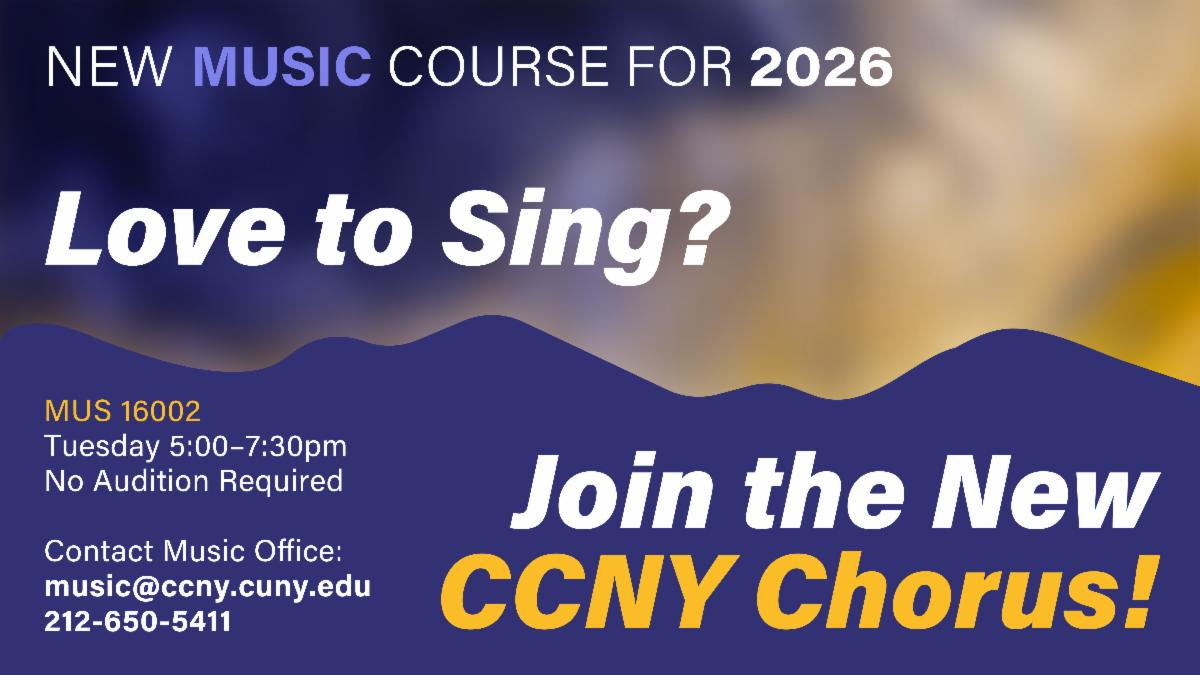
The City College Music Department relaunches the historic CCNY Chorus

The relaunch of the CCNY Chorus this spring marks a return to a long and meaningful musical tradition at the City College of New York, rooted in classical training, student musicianship, and public education.


The CCNY Chorus has long been a cornerstone of musical life at the City College, with roots stretching back to the late 1960s. For many years, the ensemble was led by Fritz Jahoda, a former opera conductor in Vienna and across Europe, who conducted both the Chorus and the City College Orchestra. Under his leadership, the Chorus built a strong classical foundation, performing works by composers such as Haydn, Schubert, Handel, and Brahms. After Jahoda’s retirement, the Chorus continued under several faculty conductors, maintaining its role as a central part of CCNY’s music culture, even as the orchestra eventually dissolved and the Chorus carried on independently.


A major revitalization came when David Bushler brought in John Motley, who came out of retirement after a distinguished career with the New York City Board of Education and All-City Chorus. Motley broadened the Chorus’s repertoire, deepened student engagement, and expanded its reach by founding a Community Chorus open to both CCNY students and local residents. Through combined performances and strong neighborhood partnerships, the Chorus once again became a vibrant musical and community presence on campus.


The Spring 2026 relaunch builds directly on this legacy—reviving not just a choir, but a living tradition of music, mentorship, and community at City College.


Open to all CCNY students, the relaunched Chorus requires no audition and welcomes singers of all experience levels who simply love to sing. Under the direction of Tyler Bassett, the new ensemble will explore a wide-ranging repertoire while building toward a culminating concert in May. The course (MUS 16002), meeting Tuesday evenings from 5:00–7:30 pm, marks an accessible and celebratory return of choral music to campus and invites students from across disciplines to take part in a shared musical experience.


Student Opportunities

Upcoming Events

Faculty News

Massimo Pigliucci | Philosophy

Philosopher Professor Massimo Pigliucci gives guidance from the ancient Stoics. Twenty-first century Indiana college athlete Fernando Mendoza takes the advice and brings it to his game.


Read the article: Indiana’s Fernando Mendoza deleted every app but LinkedIn — and it might explain everything

Student News

Samin Jabir | Journalism

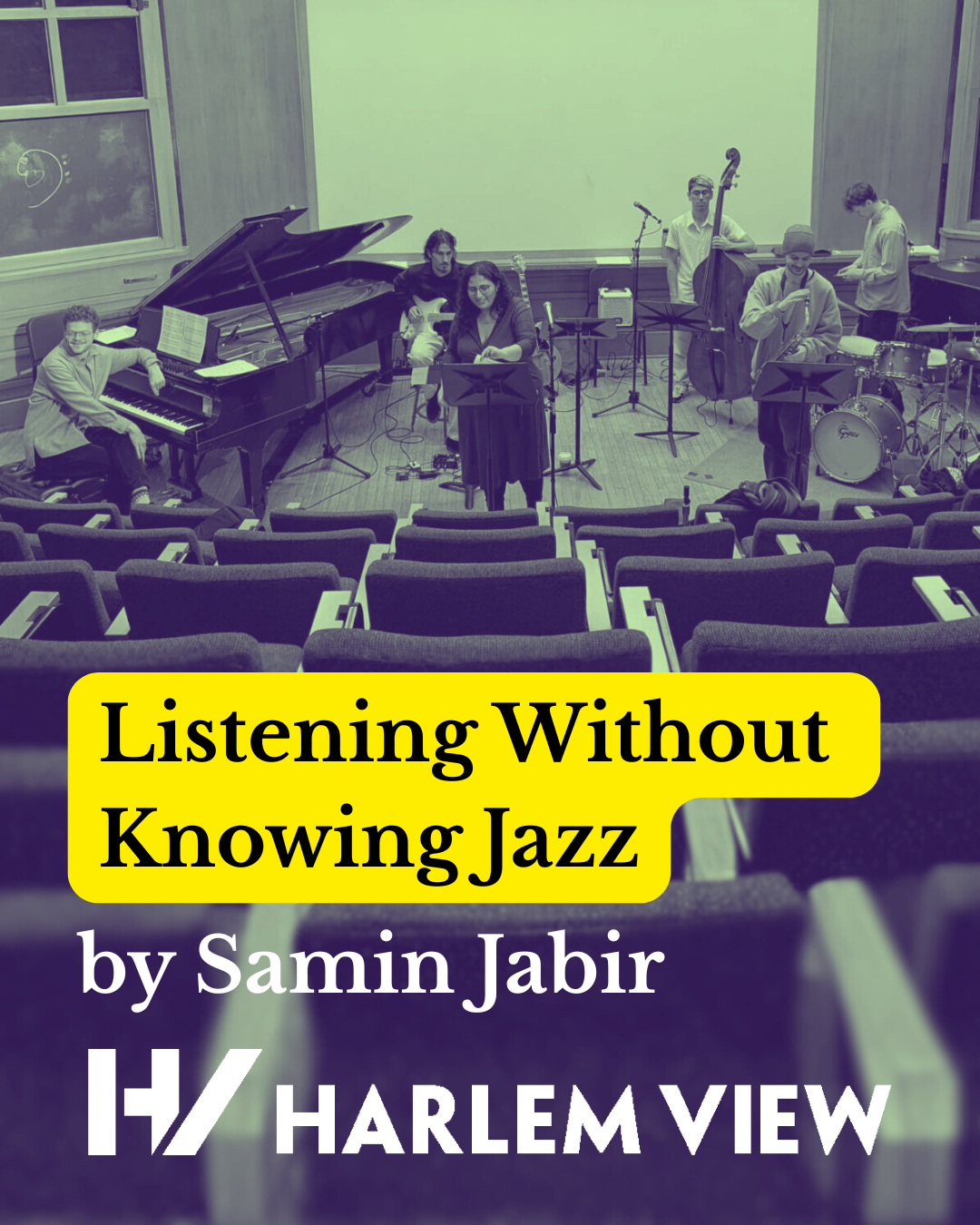
Samin Jabir's article offers an honest, sharp-eyed account of entering the CCNY Graduate Jazz Ensemble Recital as a newcomer: nervous, curious, and learning in real time what it means to listen closely. Through candid moments with faculty and musicians, the piece captures both the intimacy of the performance and the quiet labor behind it. It’s a thoughtful reflection on music, vulnerability, and finding your footing as a reporter in unfamiliar territory. Read the article!


About Harlem View:

Harlem View highlights often under-reported community issues in Harlem, Upper Manhattan, and neighborhoods across New York City where City College students live, work, and play. Produced by students in the CCNY Journalism Program, it offers reporting “from Harlem” and has been nationally recognized for innovation by the Online News Association.


Let's stay in touch!

If you are or will be using a different email address than this one, please use this link to update your information, and we'll take care to keep you in the loop!


Would you like to submit a professional accomplishment or publication?

Faculty and staff, please fill out a communications request here. If you are an alum, you are welcome to email your news to kpastore@ccny.cuny.edu

SUPPORT THE DIVISION OF HUMANITIES AND ARTS


Follow us!

Facebook  Web  Instagram  LinkedIn


Copyright © 2025 | Division of Humanities and the Arts , The City College of New York. All rights reserved.

Edited by Kylee Pastore Asirvatham

humanities@ccny.cuny.edu

The Division of Humanities and Arts-The City College of New York | 160 Convent Avenue NAC 5/225 | New York, NY 10031 US