June, 2026

H.O.T. Off the Press (Honest.Open.Transparent)

H.O.T. Off The Press (Honest.Open.Transparent)

H.O.T. Off the Press exists to keep community members informed about important County activities, initiatives, projects, opportunities, and upcoming decisions before action is taken. Our goal is to share information early enough for you to understand the issues, ask questions, provide input, and stay connected to the work being done on behalf of Northampton County.

Your Voice Matters!

Stop the Offshore Seabed Mining Proposal

Submit Your Public Comment to BOEM by July 23.


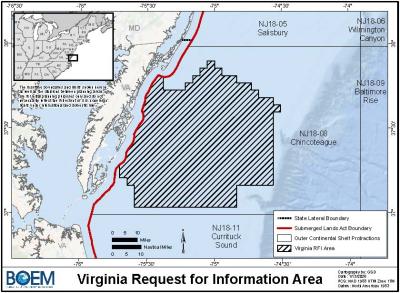
The federal government might let companies look for minerals and possibly mine off the Seaside only 3 miles east of the Barrier Islands. We have until July 23, 2026, to share opinions before BOEM decides if the project should move forward.


How to Contact BOEM & Submit Public Comments

The 30-day federal public comment window closes on July 23, 2026, at 11:59 PM Eastern Time.

  • Online Portal: Submit your statement directly via Portal by searching for docket BOEM-2026-0100 at this link.

BOEM VA Online Portal (instructions below)

  • Via Email: Send general inquiries, detailed feedback, or industry nominations to BOEM VA EMAIL. (address below)
  • Via Mail: Send hard-copy documents (with an accompanying USB drive for longer filings) to:

Bureau of Ocean Energy Management

Office of Strategic Resources, Marine Minerals Division

45600 Woodland Road

Sterling, Virginia 20166

Direct Agency Contact: Reach project lead Geoffrey Wikel at 703-787-1283 for administrative or procedural clarification.


See Full Federal Announcement

PUBLISHED PROJECT DETAILS

Technical & Operational Specifics of the Proposal

  • Originating Request: This stems from an unsolicited commercial lease request submitted on November 13, 2025, by Odyssey Marine Exploration
  • Geographic Scope: The requested RFI Area comprises 2,764 square miles of the Atlantic Outer Continental Shelf (OCS). This grid spans from just beyond the 3-nautical-mile state-federal boundary line out to 50 miles offshore.
  • Target Geology: Commercial focus rests heavily on the continental shelf's surficial sand layers, heavy mineral sands, and phosphorite deposits.
  • Chemical Commodities: Targeted elements include phosphate, titanium, zirconium, and various heavy rare earth elements (REEs) used in tech manufacturing.
  • Operational Extraction Method: Unlike deep-sea mining that use robotic tractor modules in the Pacific, this project would use a shelf dredging operation. Odyssey Marine intends to partner with Great Lakes Dredge & Dock Company to operate surface-controlled marine dredging vessels.
  • Preliminary Activities: If BOEM advances past this initial planning stage, the next step ("Area Identification") authorizes non-surface-disrupting preliminary assessments.
  • Other Possible Uses: Proponents suggest that after separating heavy minerals on surface vessels, the clean, beach-quality sand byproducts could be redirected toward regional beach nourishment and coastal resilience projects along the Eastern Shore and Virginia Beach.


POSSIBLE IMPACT

Destruction of Local Aquaculture & Shellfish Industries

Our economy relies heavily on pristine water quality for clam and oyster aquaculture. Industrial-scale hydraulic suction dredging vacuums up seabed sediment, creating massive underwater plumes. These sediment plumes block out sunlight and can drift into nearshore waters. As fine silt settles, it threatens to smother sensitive shellfish beds, clog biological feeding filters, and harm local seafood harvests.


Irreversible Harm to Barrier Island Conservation

The Eastern Shore's string of barrier islands serves as a critical, fragile buffer against intense Atlantic storms and sea-level rise. Seabed mining alters natural seafloor topography, which can shift offshore wave energy and change tidal currents. Even minor disruptions to these offshore dynamics risk accelerating coastal erosion, altering sand distribution patterns, and undermining ongoing barrier island conservation efforts.


Ecological Collapse & Acoustic Threats to Marine Life

Dredging physically obliterates the complex aquatic habitats that support the bottom of the marine food web. Additionally, the continuous low-frequency acoustic noise from heavy mining pumps disrupts critical navigation and communication corridors. This poses a severe acoustic threat to migrating marine mammals, including the critically endangered North Atlantic right whale.


Devastation of Offshore Sportfishing and Essential Fish Habitat

The targeted dredging will obliterate the very structures that define our regional Essential Fish Habitat (EFH). These features are crucial biological hotspots that aggregate forage fish, squid, and benthic organisms. Stripping these layers will cause a multi-year collapse of the local food web, driving prized coastal game fish—including striped bass, cobia, bluefish, and tuna—away from our traditional recreational fishing grounds.


When you reach www.regulations.gov (link above),

Type BOEM-2026-0100 in the search bar and hit enter.


The Public Comments button is located towards the bottom-right.


The email address to which you can send comments is: BOEMVAMineralLeaseSale@boem.gov


The USPS mailing instructions as well as a contact name and telephone number are provided above.


Your Voice is Powerful, and it Matters!

Facebook  YouTube  Instagram