December 2024


Welcome!

Welcome to this issue of the HEAL Data2Action (HD2A) Digest! Please share with colleagues, friends, and anyone else you know who might be interested in our work and encourage them to subscribe to our newsletter.

In the Spotlight

Acceleration Project Feature

The Use of Novel Linked Databases to Reduce Postoperative Opioid Use Among Patients Undergoing Inpatient Surgery  

Dr. Eric Sun

Stanford University

School of Medicine

Dr. Douglas Colquhoun

University of Michigan

About This Acceleration Project: 


Older adults receive more than half of all surgical procedures in the United States. Surgery unintentionally places patients at risk for misusing opioids, developing opioid use disorder (OUD), opioid overdose, and negative surgical outcomes. This project seeks to understand whether interventions to prevent negative opioid-related outcomes at the time of surgery (i.e., perioperative care) have an impact on persistent postoperative opioid use and associated risks. 


In their work, Sun and Colquhoun combine two data sources – the Multicenter Perioperative Outcomes Group (MPOG; a registry of electronic perioperative health records), and Medicare claims data – to develop and test a new dataset to determine if it can be used for understanding perioperative care interventions and opioid outcomes. 


The team will then use the dataset to evaluate whether surgery care interventions (e.g., opioid administration during the operation) and inpatient stay interventions to prevent long-term opioid use are associated with lower rates of persistent opioid use, OUD, and other negative outcomes. This research will inform additional studies using these two data sets, as well as perioperative care that reduces long-term opioid use and OUD. 


MPOG data currently is derived primarily from the anesthesia record. The researchers have used the first year of the project to build out the necessary infrastructure to allow MPOG to collect additional information regarding the entire hospital admission to better understand pain related care during the admission for surgery. They have developed partnerships with other groups seeking to improve pain management. They are excited to use the second year to test and roll out this data collection effort. 


Awards and Recognitions

Dr. Ginnie Sawyer-Morris receives a

NIDA Diversity Supplement Award for RASC! 

Dr. Ginnie Sawyer-Morris

Friends Research Institute

Congratulations to Dr. Ginnie Sawyer-Morris on her NIDA Diversity Supplement Award for groundbreaking work to address equity in addiction and pain research! With the mentorship of Drs. Mark McGovern, Faye Taxman, and Heather Gotham, Dr. Sawyer-Morris is leading the development of a taxonomy to identify and map the key factors influencing how research is implemented across underserved populations. The taxonomy will be built by drawing on two well-established frameworks—the Consolidated Framework for Implementation Research (CFIR) and the Health Equity Implementation Framework (HEIF)—along with a scoping review and expert feedback from RASC domain specialists. Dr. Sawyer-Morris will then use topic modeling, an advanced machine learning technique, to analyze HEAL Initiative research abstracts and uncover key themes related to equity. The results will refine the taxonomy and help create a publicly accessible tool for assessing equity determinants in future implementation research. 

Opportunities


HEAL Workshop: Health Economics Research to Address the Needs of Those with Serious Mental Illness, Substance Use Disorder, and Comorbid Conditions  


February 14, 2025, from 10:00 a.m. – 3:45 p.m. ET  


Please join us for a half-day virtual workshop cohosted by the NIH HEAL Initiative, the National Institute on Drug Abuse (NIDA), and the National Institute of Mental Health (NIMH). The workshop will provide a forum for partners to engage with health economics researchers to share priorities and identify an agenda for rigorous health economics research to help meet the service needs of those with both serious mental illness and substance use disorder.  


Topics include:  

  • Economic Evaluation Approaches  
  • Financing and Delivery Models  
  • Special Populations  
  • Integrating Treatment  
  • Partner Engagement and Lived Experience Methods  
  • Reflections on New Directions  


Several of our HD2A colleagues will serve as presenters and facilitators in this Workshop including representatives from: 

  • National Institute on Drug Abuse - Dr. Tamara Haegerich 
  • Innovation Projects – Dr. Erika Crable, Dr. Nasim Sabounchi, Dr. Yuhua Bao 
  • Research Adoption Support Center – Dr. Beth McGinty, Dr. Lisa Saldana 
  • Methodology and Economics Resource Center – Dr. Bruce Schackman 
  • Board of Partners – Dr. Ranga Krishnan 


See the Agenda 


Register Here  


Please mark your calendars for the 6th Annual NIH HEAL Initiative® Scientific Meeting!


Tuesday, Wednesday and Thursday, November 4‒6, 2025


The meeting will be held in-person at the Bethesda North Marriott Hotel and Conference Center in Bethesda, Maryland. It will include breakout sessions, workshops, poster sessions, and HEAL program-specific meetings to explore scientific/technical challenges, facilitate cross-disciplinary collaboration, and share research advances in prevention and treatment.


Additionally, we are excited to announce a portion of the 2025 annual meeting will be dedicated to the 20th Annual NIH Pain Consortium Symposium! More details to follow.


You are encouraged to invite your community partners/advisors to the meeting. Travel support may be available for these individuals.


Stay tuned for a call for symposia abstracts and workshop proposals, as well as a call for poster abstracts and HEAL award nominations. Information about meeting registration will be sent in Spring 2025.


Please email HEALmeetings@iqsolutions.com with any comments or questions.


We look forward to your participation at the 2025 HEAL Scientific Meeting!


Please note: This is an in-person meeting only, there will be no virtual meeting platform to support hybrid participation. Plenary sessions will be livestreamed via NIH VideoCast. Other sessions will not be available virtually.


Engaging Loved Ones in Recovery Processes to Enhance Recovery Capital and Outcomes (R61/R33 Clinical Trial Optional) 


Notice of Funding Opportunity RFA-DA-26-024 


A new funding opportunity addresses a critical gap in addiction research by focusing on the important role that family, loved ones, and support persons play in the recovery process for individuals with substance use disorders (SUD). Support networks are essential to recovery and can significantly impact outcomes. This initiative seeks studies that explore ways to better engage and support these individuals in six key areas: 


  • Enhancing well-being and coping skills: Developing interventions to improve the emotional well-being and coping strategies of support persons. 
  • Reducing stigma: Increasing knowledge of effective SUD interventions and addressing stigma, negative attitudes, and misconceptions among loved ones. 
  • Engaging support persons in treatment: Testing enhancements to existing evidence-based interventions by including support persons in the process. 
  • Training lay interventionists: Developing new interventions or adapting existing ones to train support persons as lay interventionists. 
  • Care navigation: Creating and testing care navigation tools, especially during critical care transitions. 
  • Dyadic approaches: Designing interventions that engage both individuals with SUDs and their support persons, particularly when both are in recovery. 


This funding opportunity aims to strengthen the recovery capital of individuals with SUDs, improve outcomes for patients, and empower their support networks. 

HD2A at AHSR 2024

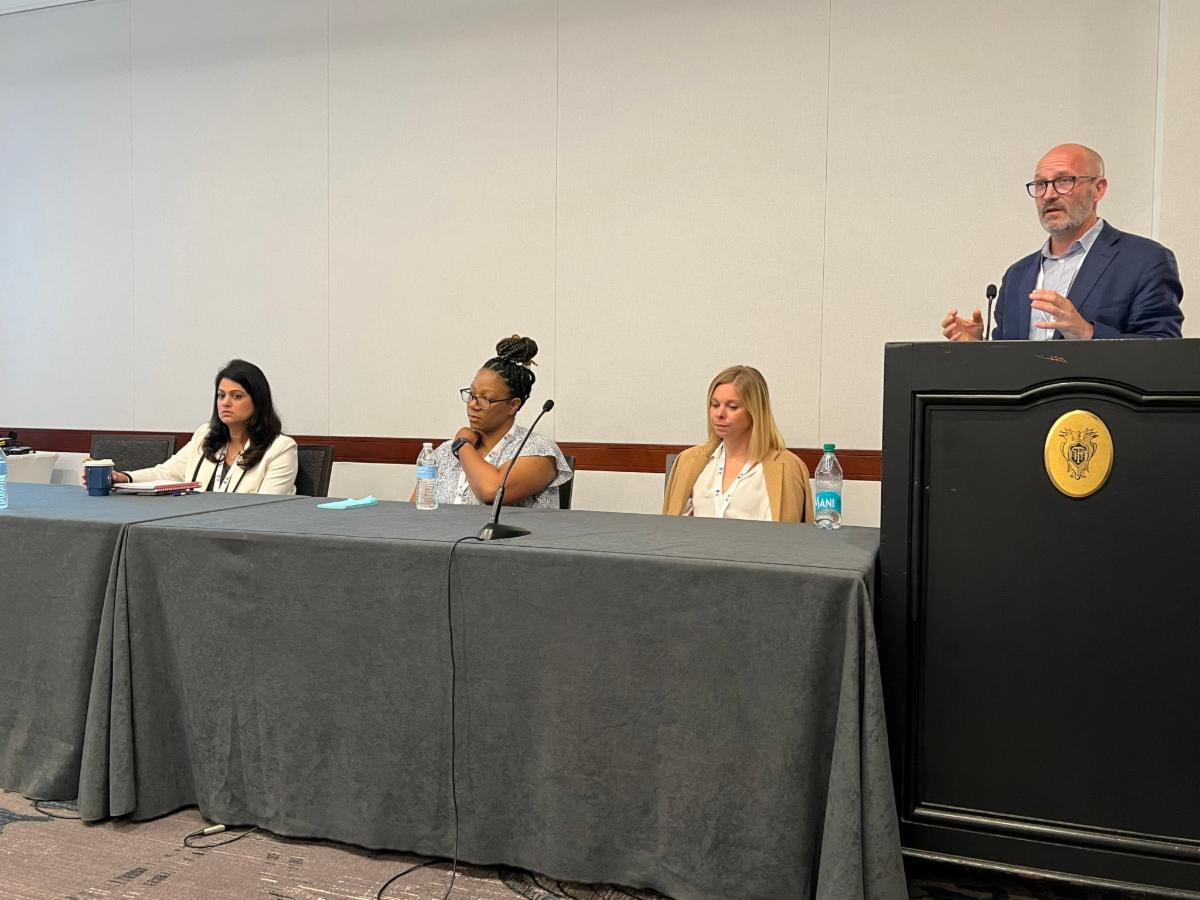
We were delighted to see so many members of the HD2A program at the Addiction Health Services Research (AHSR), hosted by the Stanford Center for Dissemination and Implementation in San Francisco, California. AHSR is a great forum for HD2A research and like-minded investigators. AHSR 2025 will be hosted by the University of Missouri-Kansas City in October. 


HD2A Posters and Presentations:


  • Patient Voice To Inform and Improve Family-Centered Clinic and Community Systems Related to Perinatal Opioid Use
  • Jennifer Marshall, Tara Foti, Rafaella Stein Elger, Maria Pacheco Garrillo, Chinyere Reid, Amandeep Ratta, Meghan Chambers, Jessica Hinckley, Collette Bailey Loucks, Christina Taylor, Haylee Maybie, Tanner Wright
  • Innovation Project: CADENCE: Continuous and Data-Driven Care


  • Improving Perinatal Opioid Use Disorder Identification Through Electronic Medical Records Utilization
  • Chinyere N. Reid, Chaitanya Chaphalkar, Jason L. Salemi, Jennifer Marshall, Laura Szalacha, Kimberly Johnson, Tanner Wright, Kimberly Fryer.
  • Innovation Project: CADENCE: Continuous and Data-Driven Care


  • What is the Potential "Implementability" of Your Research Proposal or Existing Project?
  • Briana Patrick, Heather Gotham, Helene Chokron Garneau, C. Hendricks Brown, Sara Becker, Will Becker, & Mark McGovern.
  • Affiliation: Research Adoption Support Center (RASC)

Allyson Dir and Matthew Aalsma of Fatal Overdose Review Teams – Research to Enhance Surveillance Systems (FORTRESS)

What We're Reading and Listening To


Subscribe

You are receiving this email because you either subscribed to receive updates from us or someone you know thinks you'd be interested in our work. If this email was forwarded to you, please subscribe to our newsletter to continue getting updates.

Get Connected

Instagram  X