Welcome to this issue of the HEAL Data2Action (HD2A) Digest! Please share with colleagues, friends, and anyone else you know who might be interested in our work and encourage them to subscribe to our newsletter. | | Introducing the EBP Navigator: Practical guidance for implementing proven treatments | | |
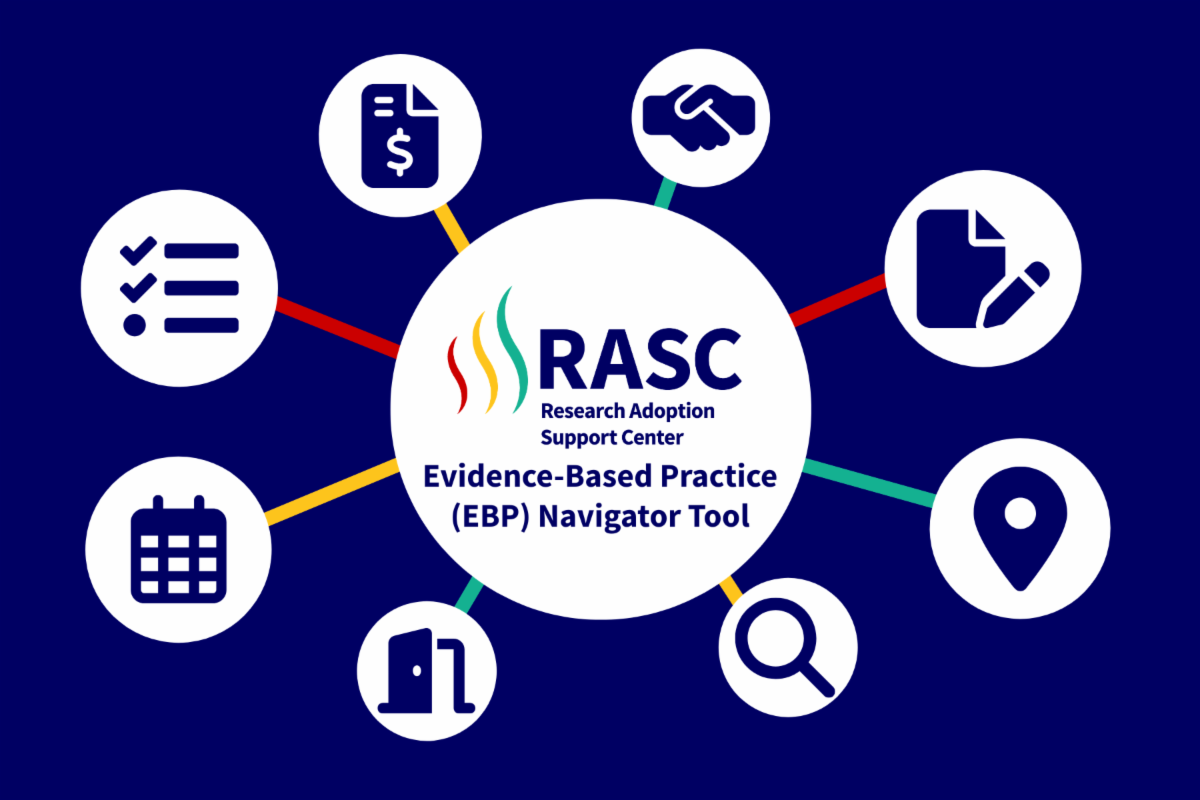
We are excited to share a new resource that will strengthen how our field brings proven treatments into real-world care. The Evidence-Based Practice (EBP) Navigator is an interactive tool designed to make implementation more straightforward by translating complex evidence into practical, actionable guidance.
Across systems, we often see the same challenge: even when we know what works for opioid use disorder and pain, putting that evidence into practice is anything but simple. Teams routinely face questions like: What barriers do we anticipate? Which strategies should we deploy to support implementation? What costs are involved? What outcomes can we expect if we implement this well? The EBP Navigator brings answers to these questions together in one place.
Each module breaks down an effective intervention into several essential components — delivery considerations, common barriers and facilitators, implementation strategies, implementation and health outcomes, and emerging research needs. Current modules include evidence-based approaches for opioid use disorder, such as buprenorphine, methadone, naloxone, contingency management, cognitive behavioral therapy, mindfulness-based interventions, and naltrexone. The tool also features evidence-based practices for chronic pain management, including buprenorphine, cognitive behavioral therapy, mindfulness-based interventions, interdisciplinary care, and chiropractic care.
Our goal is to help accelerate the adoption of effective treatments and improve outcomes for patients and communities. As new evidence becomes available, additional modules will be added in real time.
| | Building Smarter Pain Care With Data-Driven Clinical Decision Support | | |
Effectively treating pain while safely prescribing opioids to prevent misuse and overdose is a critical public health priority. Clinical Decision Support (CDS) offers a promising implementation strategy to operationalize evidence-based practices and maximize the value of routinely collected health data.
Jason Hoppe, DO, and colleagues at the University of Colorado lead the HD2A Innovation Project “Improving Pain Management and Opioid Safety Through a Systemwide Data-Driven Evaluation of the CDC Opioid Prescribing Guideline Best Practices and the Use of Clinical Decision Support.” This project employs user-centered design to develop acceptable, electronic health record-embedded CDS to facilitate CDC guideline-concordant care. By linking Prescription Drug Monitoring Program (PDMP) data, insurance claims, and mortality records, the team will evaluate patient outcomes and strengthen a data-driven learning health system.
The study uses a hybrid effectiveness-implementation trial to compare CDS-supported care with usual practice. Investigators will evaluate the effectiveness of CDS in promoting safer, evidence-based pain management and assess whether guideline-concordant actions improve patient outcomes. Findings will inform scalable strategies to reduce opioid-related morbidity and mortality using existing health data.
To date, the project team has worked with providers, informatics teams, and system leadership to develop three CDS tools. Naloxone co-prescribing (CDC recommendation No. 8) has been rolled out across the system in inpatient, outpatient, and emergency department settings. Opioid prescribing therapy transitions at 30 and 90 days (CDC recommendation No. 2) and initiation of medications for opioid use disorder (CDC recommendation No. 12) are in the final stages of validation before implementation in primary care settings for evaluation. Linkages with PDMP and mortality data using an honest broker have been approved, and the evaluation of naloxone CDS patient outcomes is underway.
-
Sommers, S. W., Tolle, H. J., Trinkley, K. E., Johnston, C. G., Dietsche, C. L., Eldred, S. V., Wick, A. T., & Hoppe, J. A. (2024). Clinical decision support to increase emergency department naloxone coprescribing: Implementation report. JMIR Medical Informatics, 12, e58276. https://doi.org/10.2196/58276
-
Lebin, J. A., Mitchell, K., Trinkley, K. E., Calcaterra, S. L., Lun, Z., Hensen, C., & Hoppe, J. A. (2025). Clinical decision support to increase naloxone co-prescribing from the inpatient setting. Journal of General Internal Medicine. Advance online publication. https://doi.org/10.1007/s11606-025-09772-4
| | Come Engage With Your Colleagues at D&I | | |
Join us at the upcoming 18th Annual Conference on the Science of Dissemination and Implementation in Health to explore cutting-edge research, connect with peers, and stay at the forefront of implementation science from Dec. 14–17, 2025.
Our colleagues across the HD2A community will present a wide range of sessions — from implementation strategies and cost analyses to innovative interventions. We’ve created a user-friendly program that highlights every HD2A-affiliated presentation, making it easy to support your peers and stay engaged throughout the event.
| | Join us in welcoming new faces to our network and celebrating transitions of our colleagues. | | |
Kelli Scott, PhD — Co-Director, RASC SUD Implementation Support Core
We are pleased to welcome Kelli Scott, PhD, as the new co-director of the Research Adoption Support Center (RASC) Substance Use Disorder (SUD) Implementation Support Core.
Dr. Scott is a clinical psychologist and implementation scientist, and an assistant professor in the Department of Medical Social Sciences at Northwestern University Feinberg School of Medicine. Her work focuses on scaling evidence-based practices in community settings using implementation science methods.
She is PI/MPI on two NIDA-funded studies implementing measurement-based care in community opioid treatment programs across Chicagoland and Pennsylvania. She has also served as an implementation science co-investigator on projects to improve care quality in health systems and community-based organizations, and she is the evaluator for the New England Addiction Technology Transfer Center, supporting the substance use treatment and recovery workforce.
| | |
Khairi Reda, PhD – MPI HD2A Innovation Project
Congratulations to Khairi Reda on his move from Indiana University to his new role as an associate professor of computer science at the University of Illinois Chicago. Dr. Reda is an MPI on the HD2A FORTRESS Innovation Project. Dr. Reda's research lies at the intersection of human-computer interaction and data science, with interests in visual analytics, visualization, and data cognition.
His work explores how visual data interfaces can be used to foster scientific discovery, engagement, and ultimately positive social change. Dr. Reda is a recipient of the National Science Foundation CAREER award.
| | |
Savanna Stromberg, BS — Associate Project Coordinator, RASC
We are excited to welcome Savanna Stromberg, BS, as an associate project coordinator at the Stanford Center for Dissemination and Implementation (CDI), supporting the RASC.
Stromberg recently received her bachelor’s degree in psychology from the University of Washington, where she conducted research on trauma and mental health outcomes in the honors psychology program. With a strong interest in substance use interventions and mental health, she is eager to expand her expertise in implementation research.
For the RASC, she supports project management, helps build and organize data, and assists with the development, communication, and design of research findings for internal and external audiences.
| | |
Thuy Hanley, MPH — Project Coordinator, RASC
We are excited to welcome Thuy Hanley, MPH, as a project coordinator at Stanford CDI supporting the RASC.
Hanley received her master of public health from Columbia University and holds a BS in human physiology and a BA in sociology from Boston University. Her work centers on uplifting communities and advancing health care quality and access.
At Stanford CDI, Hanley contributes to project coordination and cross-team support, helping strengthen RASC’s efforts to translate evidence into practice and drive improvements in behavioral health systems.
| | |
Cristina Chin, LMSW, MPH — Research Manager, MERC Support
We are excited to welcome Cristina Chin, LMSW, MPH, to HD2A.
Chin serves as a research manager in the Department of Population Health Sciences at Weill Cornell Medicine, where she supports multiple faculty-led studies aimed at strengthening harm reduction and improving health services for people who use drugs. Her work reflects a clear commitment to advancing evidence-informed, person-centered approaches across systems of care.
Within HD2A, Chin will support the work of the Modeling and Economic Resource Center (MERC), helping ensure teams have the data, structure, and coordination needed to meaningfully apply modeling and economic tools to real-world implementation challenges.
We’re excited to have her expertise and energy on board.
| | What We're Reading and Listening To | | |
Bao, Y., O'Grady, M. A., Hutchings, K., Hu, J. C., Campbell, K., Knopf, E., Hussain, S., Puryear, L., Lincourt, P., Jordan, A. E., & Neighbors, C. J. (2025). Payment and billing strategies to support methadone take-home medication: Perspectives of financial leaders of opioid treatment program organizations in New York State. Journal of Substance Use and Addiction Treatment, 168, 209547. https://doi.org/10.1016/j.josat.2024.209547
Cohen, I., Diao, Z., Goyal, P., Gupta, A., Hawk, K., Malcom, B., Malicki, C., Sharma, D., Sweeney, B., Weiner, S. G., Venkatesh, A., & Taylor, R. A. (2025). Mapping emergency medicine data to the Observational Medical Outcomes Partnership Common Data Model: A gap analysis of the American College of Emergency Physicians Clinical Emergency Data Registry. Journal of the American College of Emergency Physicians Open, 6(1), 100016. https://doi.org/10.1016/j.acepjo.2024.100016
Chhablani, C., Shahid, U., Parde, N., Muslmani, S., Hu, H., Thorpe, D., Afshar, M., Karnik, N., & Chhabra, N. (2025). Machine learning models to detect opioid misuse in emergency department patients at triage. medRxiv: the preprint server for health sciences, 2025.07.18.25331782. https://doi.org/10.1101/2025.07.18.25331782
| | You are receiving this email because you either subscribed to receive updates from us or someone you know thinks you'd be interested in our work. If this email was forwarded to you, please subscribe to our newsletter to continue getting updates. | |
This work is supported by grant 1U2CDA057717 from the National Institute on Drug Abuse, National Institutes of Health. |
| | | |