Welcome to this issue of the HEAL Data2Action (HD2A) Digest! Please share with colleagues, friends, and anyone else you know who might be interested in our work and encourage them to subscribe to our newsletter. | | |
S. Janet Kuramoto-Crawford, PhD, MHS, HD2A NIDA scientific lead
and DISC and MERC science officer
| | |
I am honored to succeed Tamara Haegerich, who recently retired from more than 20 years of federal service, as the new initiative lead and the Modeling and Economic Resource Center (MERC) and Data Infrastructure Support Center (DISC) science officer. Joining the team are Shannon Gwin Mitchell, PhD, as the new Research Adoption Support Center (RASC) science officer, and Lindsey Ann Martin, PhD, as the new National Institute on Drug Abuse (NIDA) program official for the support centers. They bring valuable expertise to our collective efforts. We are thrilled to welcome our new NIDA team members and be part of the initiative to deepen the impact of leveraging innovative, real-world approaches in advancing the field of drug addiction research.
We would also like to bring your attention to the following recent publications of potential interest:
We extend our sincere appreciation for your continued support. We look forward to working alongside you to further our shared goals.
Sincerely,
Janet Kuramoto-Crawford, PhD, MHS
Initiative Lead, HD2A
| | |
Shannon Gwin Mitchell, PhD, RASC NIDA Science Officer
Sean Lynch, PhD, LCSW, HD2A NIDA Program Official
Shannon E. Nicks, PhD, MPH, HD2A NIDA Program Official
Lindsey Ann Martin, PhD, HD2A NIDA Program Official
Tisha Wiley, PhD, HD2A Initiative Designer
| | From Data to Decisions: How Better Dashboards Can Strengthen Public Health Response | | |
As public health systems work to address complex challenges like the overdose crisis, dashboards have become a go-to tool for tracking outcomes, sharing data, and demonstrating accountability. But too often, dashboards fall short of their potential—not because the data is missing, but because the design doesn’t meet the needs of the people who rely on it.
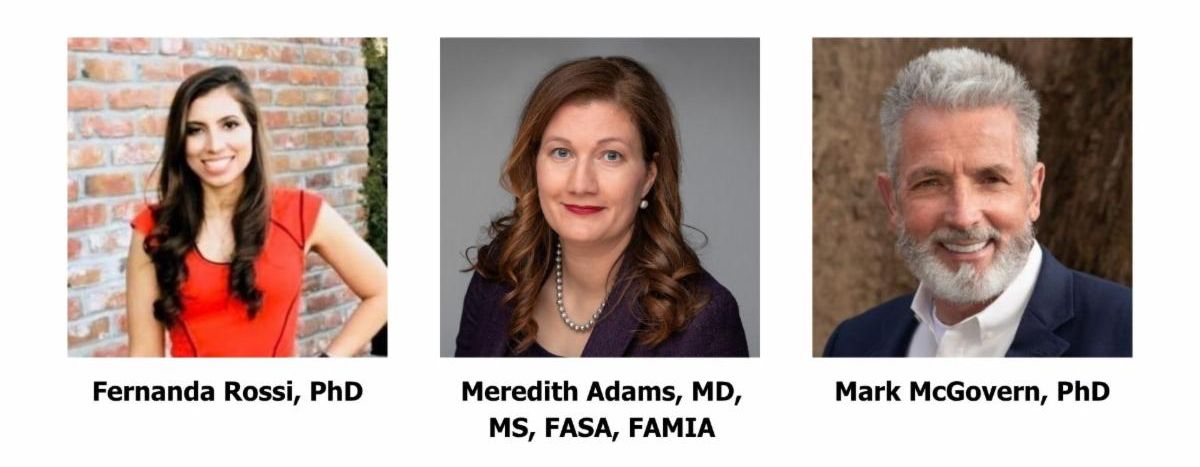
In their recent article, “From Glitter to Gold: Recommendations for Effective Dashboards from Design Through Sustainment,” C-DIAS/RASC investigator Dr. Fernanda Rossi and colleagues including Dr. Meredith Adams, director of the DISC, and Dr. Mark McGovern, director of the RASC Admin Core, outline a practical roadmap to make dashboards more than just reporting tools. Drawing from the EPIS framework (Exploration, Preparation, Implementation, Sustainment), Rossi and her co-authors detail how dashboards can be designed to actually support implementation efforts.
Their recommendations include:
-
Co-designing dashboards with frontline users, such as outreach workers and treatment providers, to ensure usability and relevance.
-
Embedding dashboards into daily workflows, so they are used as intended to maximize their impact.
-
Ensuring dashboards reflect the realities of all communities, not just those with the most data.
-
Planning for long-term sustainability, by aligning dashboard operations with funding streams, policy priorities, and local partnerships.
For public health systems navigating evolving crises—whether in addiction, mental health, or infectious disease—these principles are increasingly critical. Dashboards shouldn’t simply track progress; they should help drive it. That means maximizing their use by putting usability and sustainability at the center of design and implementation.
With growing investments in behavioral health infrastructure across the U.S., Rossi and colleagues’ work offers a timely, evidence-based guide for building tools that support real-world impact.
Read the article: From glitter to gold: recommendations for effective dashboards from design through sustainment (PMC12016087)
| | Stay Connected with the AHSR Community | | Although the Addiction Health Services Research (AHSR) Conference is paused for 2025, the momentum persists through a new six-part webinar series running from Fall 2025 to Spring 2026. This virtual series—Advancing AHSR—features leading researchers and practitioners discussing innovative topics in addiction health services, such as: | |
|
- Just-in-Time Adaptive Interventions (JITAIs)
- Psychedelic research
- Youth prevention strategies
- And more
Organized by the American Academy of Addiction Psychiatry, the University of Wisconsin, and the University of Utah, the series also includes a special Early Career Workshop in Spring 2026.
Webinars start August 2025. See the full schedule and register.
Stay engaged, stay informed, and continue advancing the field.
| | What We're Reading and Listening To | | Three new SAMHSA resources: | | | | |
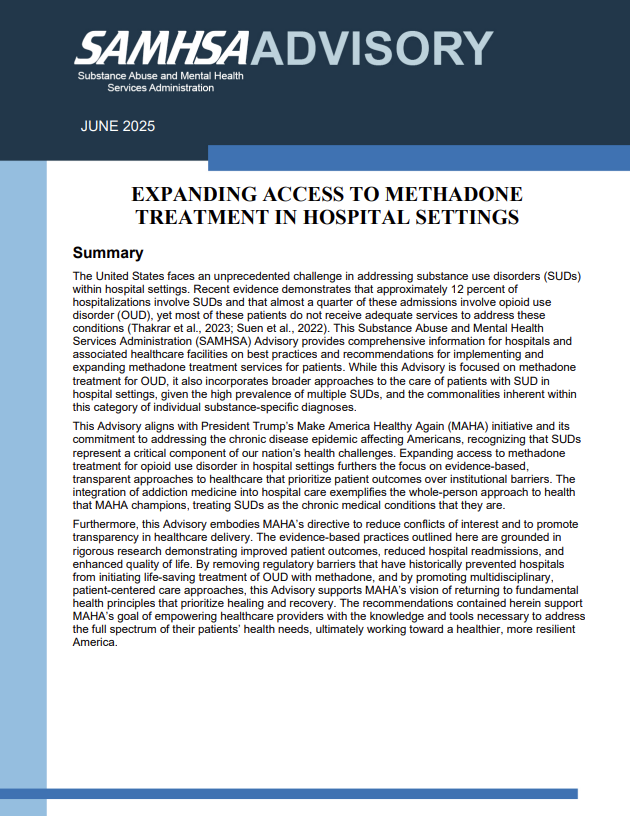
Expanding Access to Methadone in Hospitals
Practical guidance for hospitals to implement and scale methadone treatment for opioid use disorder.
| | | | |
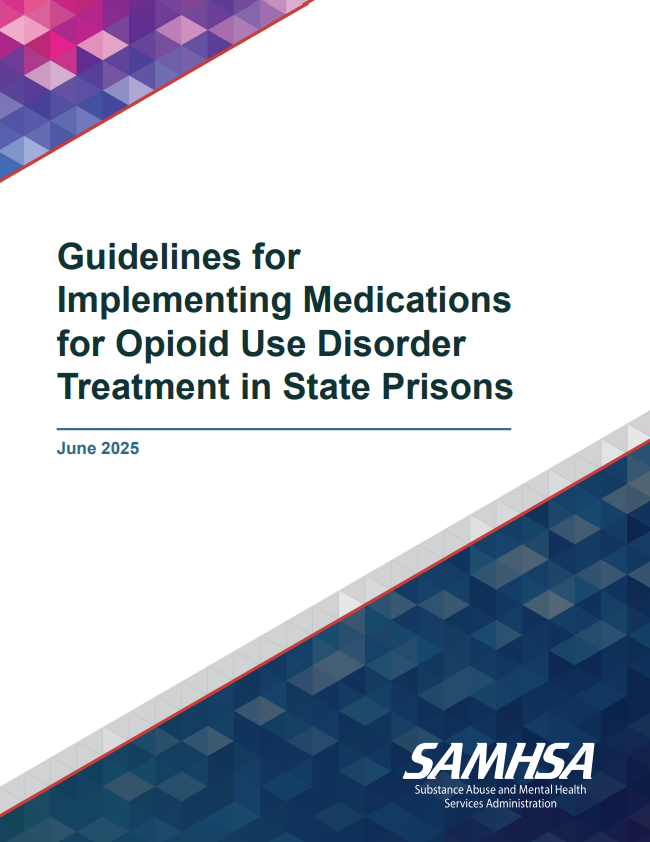
MOUD in State Prisons: Implementation Guidelines
Clear, actionable strategies for integrating MOUD in state correctional systems—covering service models, staffing, and regulatory needs.
Read more »
| | | | |
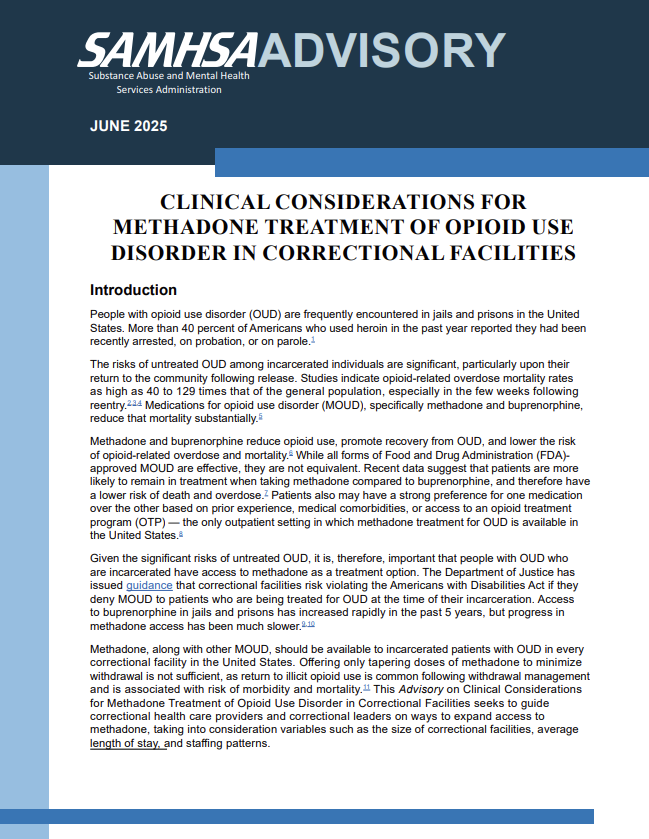
Methadone in Corrections: Clinical Considerations
Insights on safely delivering methadone treatment to incarcerated individuals with OUD, with models tailored to correctional settings.
Read more »
| | We’ve recently been tuning into two insightful podcasts at the intersection of research, policy, and practice: | | | | |
“That Implementation Science Podcast” (Mike Pullmann and Kevin King)
A fresh and accessible take on implementation science, this podcast explores real-world applications and emerging challenges with leading voices in the field. Great for anyone looking to deepen their understanding of how implementation works in practice.
Listen Here »
| | | | |
“Policymaking Is Not a Science—Yet” (Freakanomics Radio)
An engaging conversation on how data, research, and design thinking could radically improve public policy. A compelling listen for those interested in evidence-based decision-making.
Listen here »
| | You are receiving this email because you either subscribed to receive updates from us or someone you know thinks you'd be interested in our work. If this email was forwarded to you, please subscribe to our newsletter to continue getting updates. | |
|
This work is supported by grant 1U2CDA057717
from the National Institute on Drug Abuse, National Institutes of Health.
|
| | | |