| August 2026 |
| Volume 5, Issue 8 | | | Summer Safety and Community Wellness | | |
Welcome to the August edition of Happenings!
August brings plenty of opportunities to enjoy summer, from visiting local farmers markets in their peak fruit and vegetable season, to planning Labor Day gatherings with family and friends. This month, we’re sharing helpful health and safety tips for you, your family, and your community.
HDNW is recognizing National Breastfeeding Month, sharing ways to safely enjoy Northern Michigan’s increased bat activity, and offering simple food safety tips for Labor Day gatherings. We’ll also highlight the farmers markets throughout our region and provide an update on cyclosporiasis in Michigan, where reported cases are now showing signs of decline. Read on for practical tips and local health information to help you make the most of the rest of your summer.
| | |
Show Us Your Best & Brightest
If you're a shutterbug who would like to share one of your best photographs, please email it to Olivia at o.vanelslander@nwhealth.org for potential inclusion in the next edition of HDNW Happenings.
| | If you have questions about HDNW and the programs we offer, please reach out to us through our socials, calling staff at 800-432-4121, or by emailing media@nwhealth.org. | | Leadership in Public Health | | National Breastfeeding Awareness Month | | |
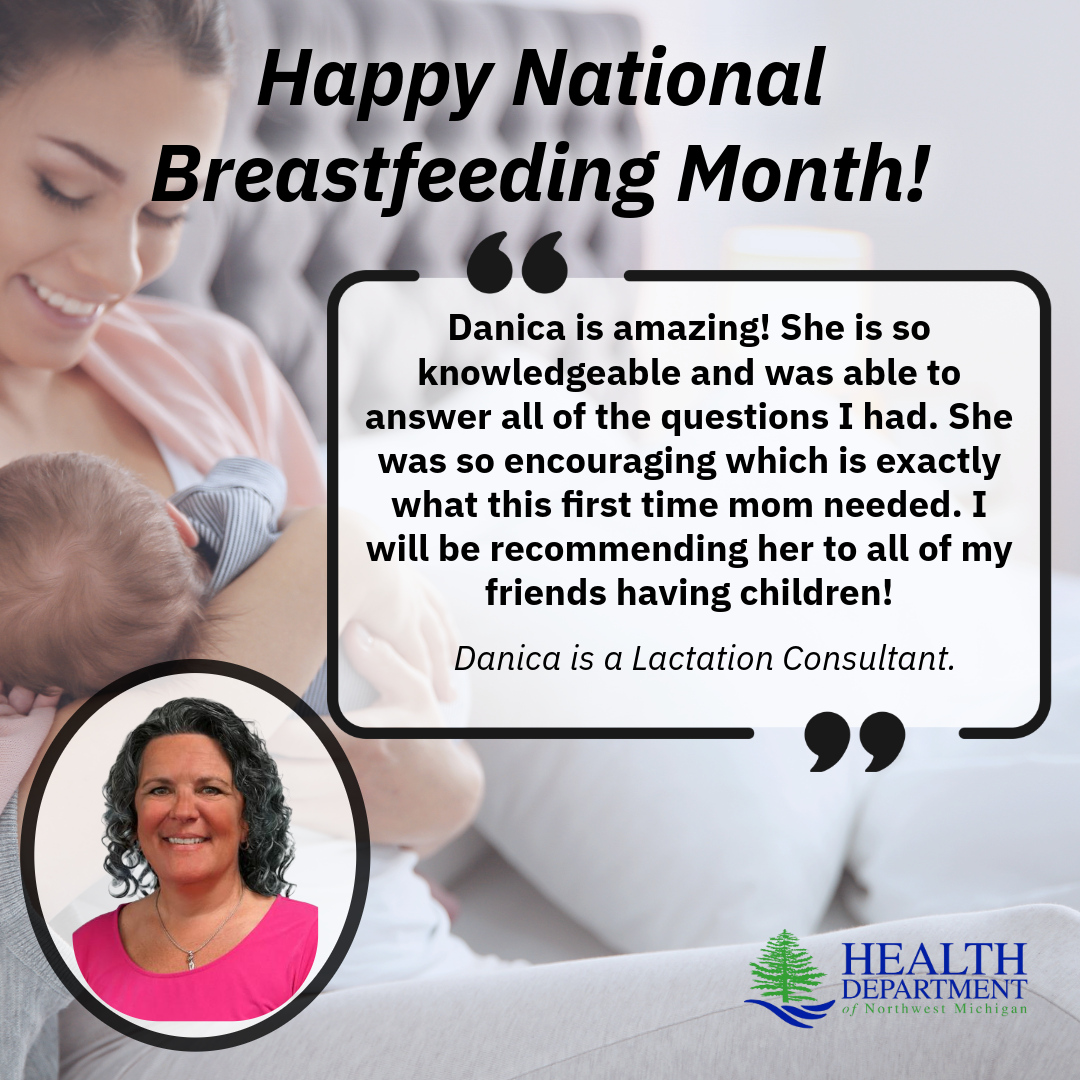
August is National Breastfeeding Month, a time to recognize the importance of breastfeeding support and the people, programs, and communities that help families reach their goals.
This year’s theme, RISE, represents Resilience, Interdependence, Self-Determination, and Empowerment. These principles highlight the strength of families and communities while emphasizing the continued need for supportive policies, systems, and environments that make breastfeeding support accessible to every family.
At HDNW, we’re here to support every mom, every step of the way. Our team provides breastfeeding education, counseling, tips, and helpful resources to support you and your baby.
Need breastfeeding support? Call us at 800-432-4121 to learn more about our breastfeeding services and how we can support you today!
| | Tips to Bat-Proof Your Home | | |
HDNW was notified on July 2 that a bat collected in Emmet County has tested positive for rabies. There have been no human cases of rabies associated with this incident.
How to Bat-Proof Your Home
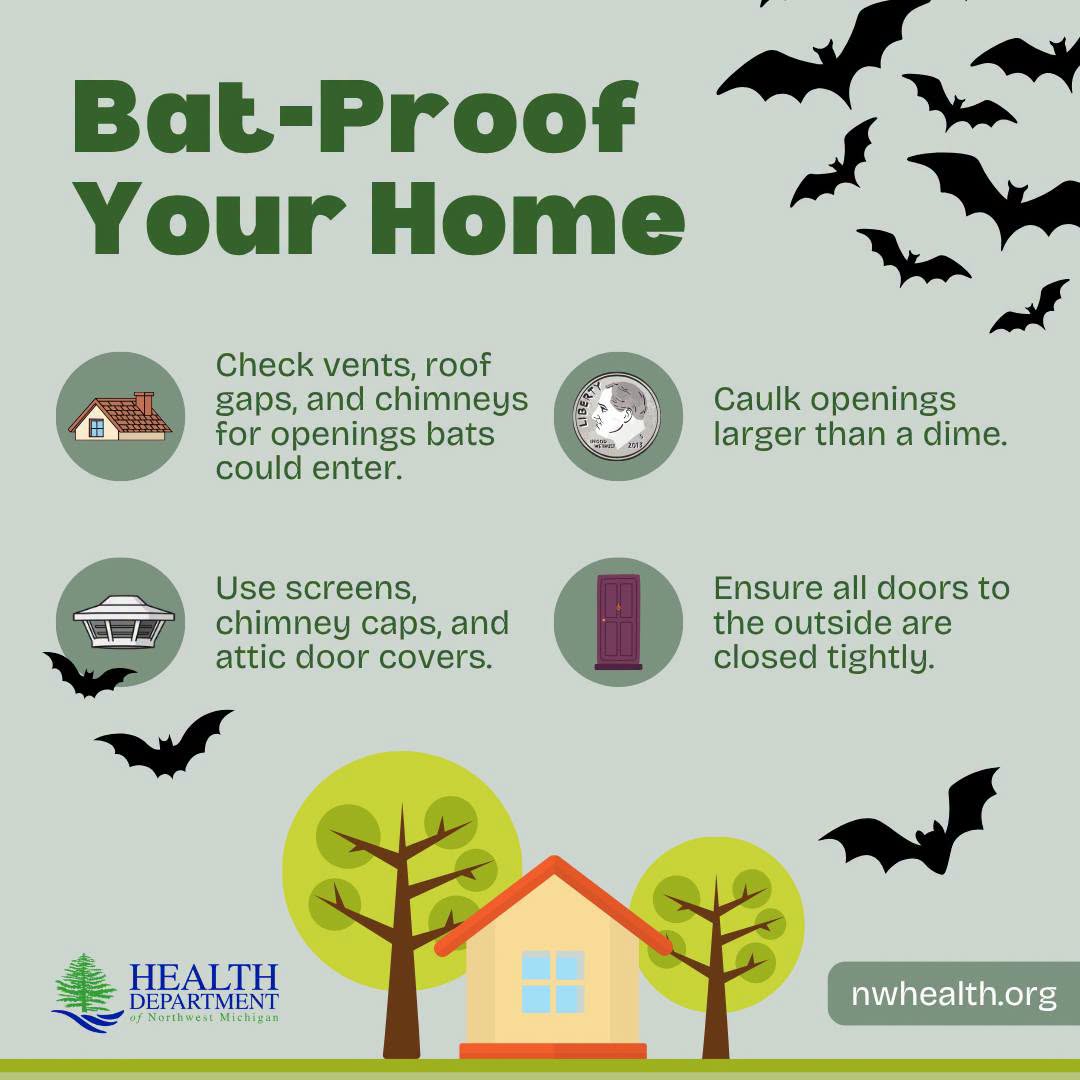
Bats can squeeze through surprisingly small openings. Take steps to bat-proof your home, helping to keep them outside.
- Check vents, roof gaps, and chimneys for openings bats could enter.
- Use screens, chimney caps, and attic door covers.
- Caulk openings larger than a dime.
- Ensure all doors to the outside are closed tightly.
Defining an Exposure
Bat bites and scratches can be small and difficult to detect, and an exposure may have occurred if a bat is found:
- In a room with a sleeping person
- Near an unsupervised child
- With a person who is mentally impaired or intoxicated
- In direct contact with a pet or person
If any of these situations occur, do not release the bat. Keeping the bat for testing may prevent unnecessary rabies treatment. Although rabies is nearly always fatal once symptoms appear, it is entirely preventable with prompt medical care after an exposure.
How to Safely Capture a Bat
If you believe a bat may have exposed a person or pet, safely capture it by following these tips:
- Put on thick leather gloves or work gloves
- Wait for the bat to land
- Place a plastic container or coffee can over the bat
- Slide a piece of cardboard or stiff paper underneath
- Secure/tape the cardboard to the container
- Avoid touching the bat with bare hands
Bringing a Bat in for Testing
Bats submitted for rabies testing must be humanely euthanized before being brought into a HDNW clinic location. To ensure accurate testing the bat’s head must remain intact and undamaged, keep the bat refrigerated until it can be dropped off, never freeze it. Bring the euthanized bat to any HDNW clinic location as soon as possible.
| | | | Bats can squeeze through openings as small as 1/4 inch, making even tiny gaps around your home potential entry points. | | Food Safety for the Holiday | | |
Holiday meals and family gatherings are a great way to celebrate, but foodborne illness can quickly spoil the fun. Follow these four simple tips to help keep your food—and your family—safe:
-
Clean: Wash your hands with soap and warm water for 20 seconds before and after handling food. Clean counters, cutting boards, and utensils after each use. Rinse fresh fruits and vegetables under running water.
-
Separate: Keep raw meat, poultry, seafood, and eggs away from foods that are ready to eat. Use separate cutting boards and plates when possible to help prevent the spread of germs.
-
Cook: Use a food thermometer to make sure foods reach a safe temperature. Color alone cannot tell you if food is fully cooked. Cook turkey and other poultry to 165°F.
-
Chill: Refrigerate leftovers and other foods that need to stay cold within 2 hours. Keep your refrigerator at 40°F or below and use leftovers within 3–4 days.
When in doubt, throw it out!
| | Double Up Food Bucks at Grain Train | | |
When you use your SNAP/Michigan Bridge card benefits to buy fresh and frozen fruits and vegetables, Double Up Food Bucks at Grain Train matches those purchases dollar for dollar up to $50 per day.
This makes getting fresh produce for your family more accessible while helping support local agriculture and strengthening our community food system.
For more information on Double Up Food Bucks, or to sign up for the program, click on the link below!
| | Farmers Market Season is Here | | |
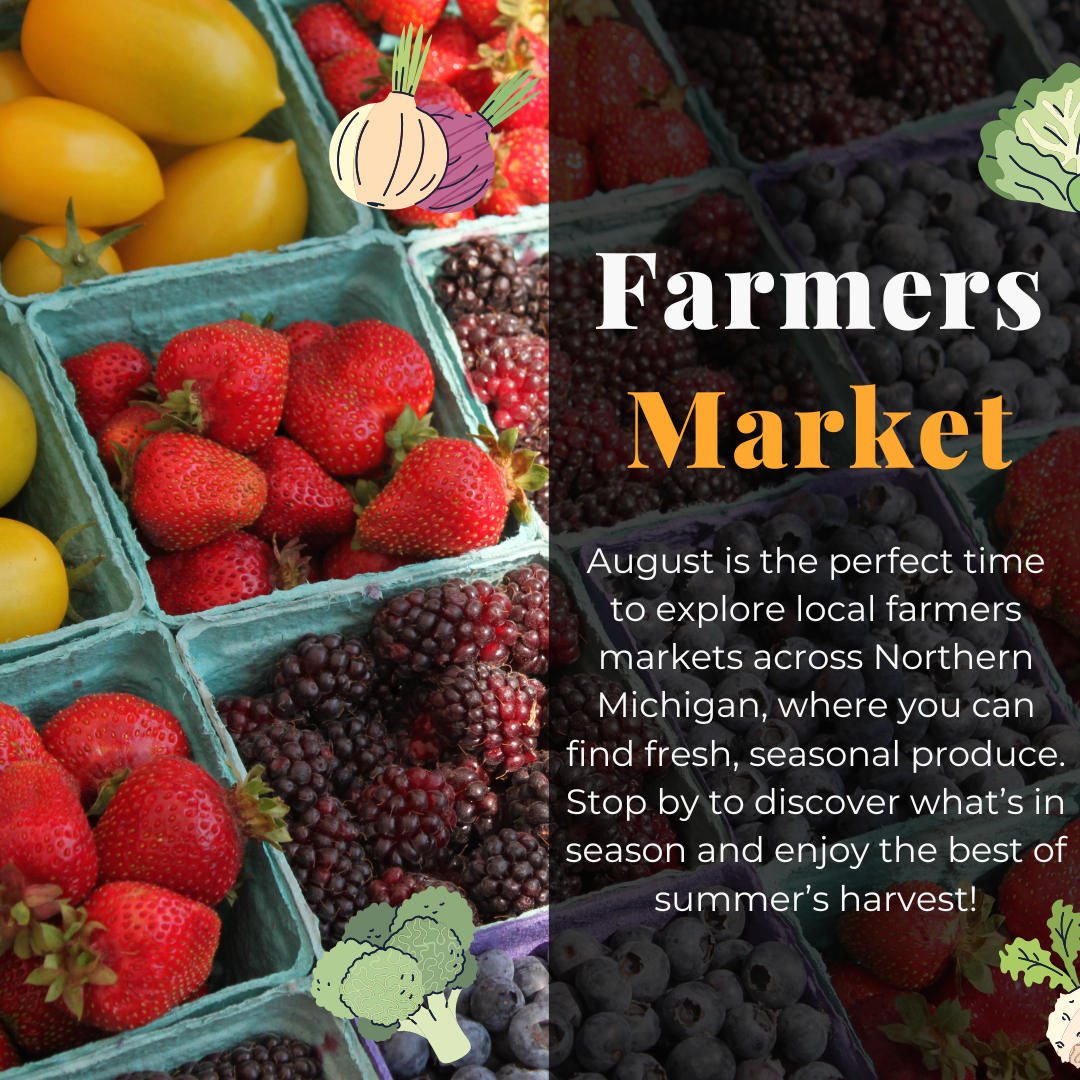
August is peak season in Northern Michigan for most fruits and vegetables. Visiting your local farmers market is a great opportunity to support both personal health and our local communities. Choosing fresh, locally grown fruits, vegetables, and other foods is one of the healthiest ways to nourish yourself and your family while supporting local farmers.
Whenever possible, consider walking or biking to your local farmers market instead of driving. Incorporating physical activity into your routine, even through simple daily choices, can improve heart health, reduce stress, and positively impact mental well-being.
Healthy eating and active living work together to support both physical and mental health, helping create a stronger, healthier community for all.
Check out local markets below:
| |
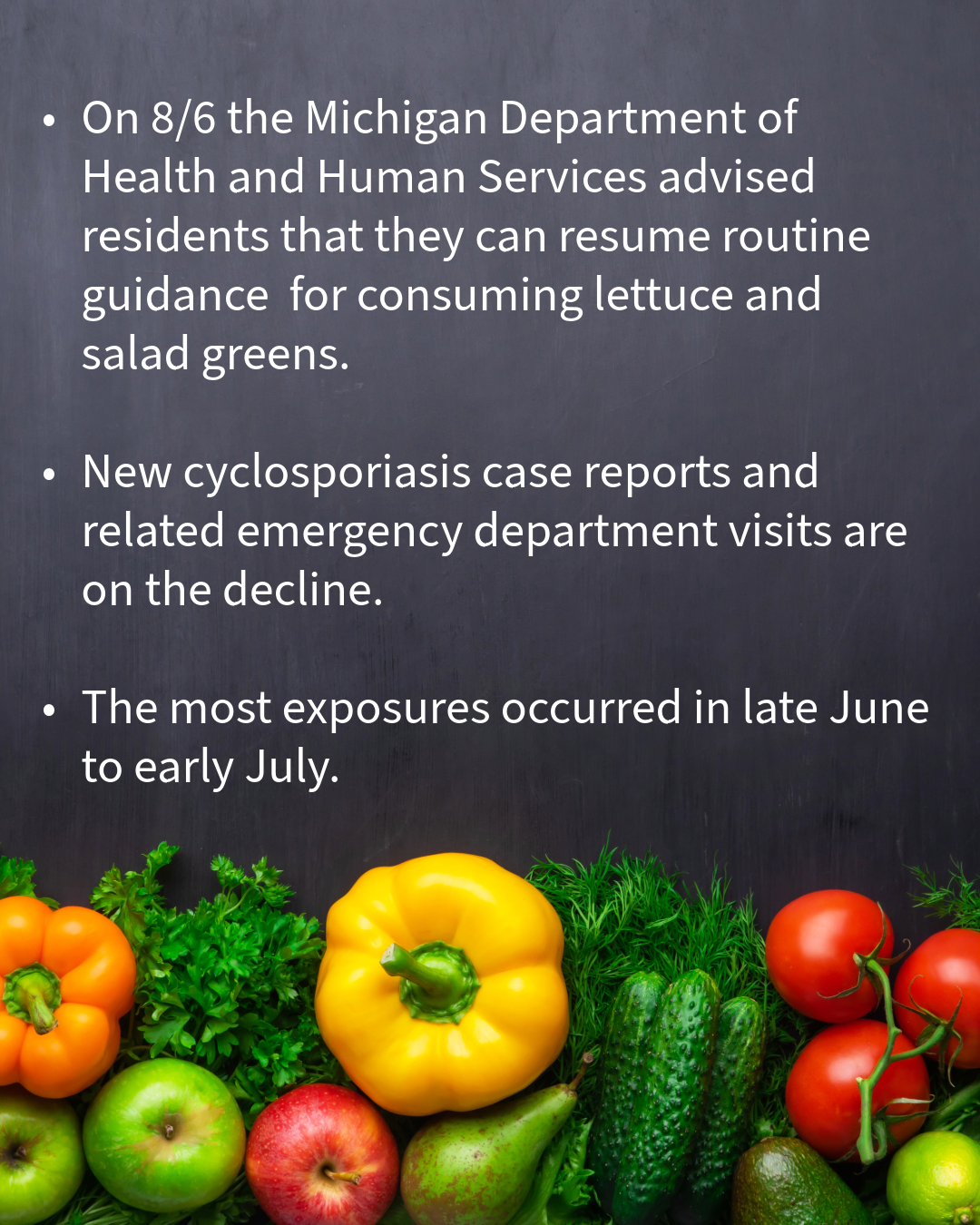
After reporting 12,485 cases of cyclosporiasis in Michigan since June, current data suggest that new case reports are slowing. A downward trend in diarrhea-related emergency department visits also indicates that the outbreak may be declining.
Health officials believe that most of the contaminated produce associated with the outbreak is no longer available for consumption. As a result, the broad, precautionary recommendation to avoid bagged salad mixes during the outbreak is no longer in effect.
Michigan residents may resume their usual food handling and produce consumption practices.
As a reminder, routine food safety practices can help reduce the risk of foodborne illness:
- Wash fresh fruits and vegetables under running water before eating, cutting, or cooking them.
- Keep produce separate from raw meat, poultry, and seafood.
- Wash hands, utensils, and food preparation surfaces regularly.
- Refrigerate perishable foods promptly.
The Michigan Department of Health and Human Services will continue to monitor cyclosporiasis activity and HDNW will provide updates as new information becomes available.
| | |
If you are looking for an exciting opportunity to make a meaningful impact on public health and well-being, then look no further than the Health Department of Northwest Michigan!
Whether you're an experienced healthcare professional, an aspiring public health advocate, or a dedicated support staff member, we offer a wide range of positions that cater to various skill sets and career aspirations. Come join our team!
| | |
Question: How long should you wash your hands with soap and water before preparing food?
| | Answer: 20 seconds! This helps to remove germs that can cause foodborne illnesses. | | Need help finding health insurance? Call 800-432-4121 | | | | |