| | |
February 2026 NEWSLETTER
| | RESEARCH HIGHLIGHT OF THE MONTH | | |
Epigenetic adaptation of beta cells across lifespan and disease: age-related demethylation is advanced in type 2 diabetes
Although the prevalence of type 2 diabetes (T2D) increases with age, most adults maintain normoglycemia despite rising insulin resistance, largely due to the adaptive capacity of pancreatic beta cells to meet increased metabolic demand. However, persistent insulin resistance can lead to beta cell dysfunction and T2D onset. Here, leveraging cell-type-specific methylome data from the Human Pancreas Analysis Program (HPAP; https://hpap.pmacs.upenn.edu/), we investigate the epigenomic basis of beta cell adaptation by mapping genome-wide DNA methylation patterns across the human lifespan. In healthy donors, we identify progressive age-related demethylation enriched in cis-regulatory elements at beta cell identity and function genes; in contrast, alpha cells show the opposite trajectory, with subtle, age-related hypermethylation. In T2D beta but not alpha cells we observed further demethylation compared to healthy controls, underscoring a unique capacity of beta cells to respond to changes in metabolic demand. Together, our findings suggest that DNA methylation remodeling in healthy beta cells reflects a long-term adaptation to metabolic demand, which in T2D is accelerated as part of a compensatory response that ultimately fails under sustained insulin resistance.
Manuscript Information: Epigenetic adaptation of beta cells across lifespan and disease: age-related demethylation is advanced in type 2 diabetes. Manduchi E, Descamps HC, Liu J, Schug J, Da T, Lahori D, El-Mekkoussi H, Lee M, Feleke E, Bernstein D, Liu C, Naji A, Glaser B, Kaestner KH, Avrahami D. Nature Metabolism (accepted). 2026. PMID: 40631278
| | |
NIH STANDARDIZED ORGANOID
MODELING (SOM) CENTER
| | |
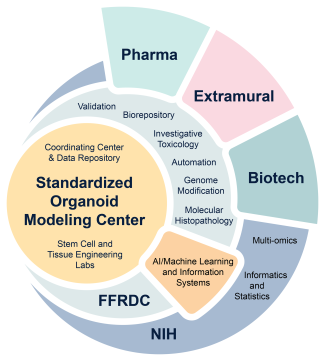
The SOM Center aims to serve as a neutral scientific hub for standardization, developing organoids that are reproducible, reliable, and easily accessible for medicinal and biological research. By establishing protocols tested directly on models that replicate the structure and function of human organs, the center will reduce reliance on animal testing, generate more precise results, and minimize variability in outcomes.
At the heart of the SOM Center is a powerful combination of:
- Artificial Intelligence (AI) and Machine Learning (ML) to mine scientific literature and experimental data to optimize protocols in real time.
- Advanced Robotics and Imaging to scale organoid production and analyze over 100,000 samples daily.
- Heterogeneous Human Cell Sources to ensure organoids reflect real-world biological differences, including age, sex, and genetic ancestry.
- Open-Access Digital and Physical Repositories so scientists can access standardized protocols, data, and living organoids everywhere.
The center will initially focus on organoid models of the liver, lung, heart, and intestine, with plans to expand into the brain, thymus, and other disease-specific models.
The SOM Center is designed to serve a wide range of users:
- Scientists and Researchers across academic institutions, industry, and government.
- Regulatory Agencies (e.g., FDA) looking for reliable, reproducible human-relevant models for safety assessments.
- Clinicians and Precision Medicine Experts seeking patient-specific models.
-
The Broader Scientific Community, including intramural (within NIH) and extramural (outside NIH) researchers, industry partners, and educators.
Learn more HERE.
| | |
The Mammalian Adipose Tissue Knowledge Portal (MATKP): An Open Community Portal for Multi-Species Adipose Biology
The Mammalian Adipose Tissue Knowledge Portal (MATKP) is an open-access, community-driven resource designed to accelerate discovery in mammalian adipose biology. MATKP integrates multi-species datasets across a range of adipose tissue depots and cell types, with an initial focus on human and mouse transcriptomic datasets. The portal currently provides bulk, pseudobulk, single-cell, and single-nucleus RNA sequencing data alongside interactive visualization tools, including a Single Cell Browser and Differential Gene Expression Browser. MATKP harmonizes datasets using standardized ontologies to enable cross-study interoperability and integrates genetic association results, functional annotations, and pathway enrichment analyses to connect molecular data with metabolic disease phenotypes. The platform also features a public Data Registry to support community data submission. This webinar will introduce the latest updates to the MATKP, including expanded mouse datasets, interactive features to explore the adipogenesis process, and inferred gene programs across adipose tissue cell types.
The top 3 key questions that the MATKP can answer:
1. How do specific genes influence adipose tissue biology and related metabolic phenotypes?
2. Which adipose tissue signatures, pathways, and gene programs are associated with metabolic disease phenotypes?
3. How do cell type-specific expression patterns contribute to disease mechanisms?
Presenter: Julie Jurgens, PhD, The Broad Institute of MIT and Harvard
Date/Time: Friday, Feb. 27, 2026, 11 am - 12 pm PST (Pacific Standard Time)
Register HERE.
| | |
27th NIH Tissue Chip Consortium Meeting + Complex In Vitro Model (CIVM) Qualification Framework Public Workshop
Please join us at the 27th National Institute of Health (NIH) Tissue Chip Consortium Joint Meeting with C-Path’s predictive safety testing team. The Complex In Vitro Model Workshop will be held on March 5-6, 2026 at the National Cancer Institute in Rockville, Md. Over the past 13 years, the NIH has brought together members of the NIH Tissue Chip Consortium, including funded academic investigators, members of the pharmaceutical industry, and government agencies to accelerate the use, adoption, and ultimately dissemination of tissue chip technology across the United States.
This year, NIH has partnered with C-Path’s Predictive Safety Testing Consortium, a recognized global leader in drug development, to put together a joint meeting at no registration cost focused on accelerating the employment of tissue chips within the drug development pipeline. Day 1 (March 5) will focus on Contexts of Use for Today and Tomorrow and Evidentiary Considerations for MPS, while Day 2 (March 6) will focus on Integration of In-Silico NAMs, including tissue chips.
Meeting Dates: March 5 - 6, 2026
Learn more HERE.
| | |
Maximize Your Keystone Symposia Experience: University of Colorado Anschutz Medical Campus Pre-Conference Workshop
This interactive, hands-on session prepares participants to:
- Network confidently and build professional relationships at scientific meetings
- Craft and share their research stories with clarity and impact
- Engage effectively with peers, funders, publishers, and potential collaborators
- Late arrivals due to travel are welcome, and registration is available as an add-on during conference signup.
Details:
-
Monday, March 16, 2026, from 12:00 – 3:00 pm Mountain Time
- Fee: $85 (includes box lunch and shuttle to the conference venue)
Learn more HERE.
| |
The Immunology of Diabetes Society (IDS) Congress
The 21st Immunology of Diabetes Society (IDS) Congress, will be held in Brisbane, Australia in 2026! The IDS Congress is the premiere meeting for the international community of researchers, clinicians and industry representatives studying the pathogenesis and treatment of type 1 diabetes. Every 18 months, members of IDS convene to share the latest in cutting edge research, debate big questions in the field, and catch up with old and new colleagues. The Brisbane conference is sure to be another memorable IDS meeting, and we look forward to your participation.
Early Bird Registration Deadline: March 9, 2026
Meeting Dates: April 20 - 24, 2026
Learn more HERE.
| | |
Microphysiological Systems World Summit
Microphysiological systems (MPS) comprise a number of bioengineering breakthroughs that reproduce organ architecture and function in vitro. Fueled by stem-cell technologies, a broad variety of especially human models and test systems have emerged, which make relevant experimental tools broadly available through international and multidisciplinary collaborations.
Our vision is to accelerate the use of MPS to improve health, welfare, and the environment. The vision is achieved through:
- Research (strengthen the society as the hub for MPS research and increase its impact)
- Education (empower current and future society members with the knowledge and resources needed in biomedical research)
- Community (cultivate a diverse, inclusive and engaged community by increasing access and opportunities for interaction)
- Increased awareness and understanding of the utility of MPS in biomedical research, its impact on health, environment and economy, and emphasize the need for funding
Meeting Dates: May 26-29, 2026, Washington, DC
Learn more HERE.
| | HIRN EMERGING LEADER FUNDING INITIATIVE | | |
We are proud to announce the HIRN Emerging Leader funding initiative, aimed to provide support and protected time for senior postdoctoral
fellows seeking to pursue studies that will enhance their transition toward independent research careers. Applications are sought from experienced postdoctoral fellows with a minimum of two years of ongoing postdoctoral experience who intend to continue research careers in scientific areas supported by the HIRN. This opportunity is designed specifically for applicants proposing research that does not involve leading an independent clinical trial, a clinical trial feasibility study, or an ancillary study to a clinical trial that is itself comprised of a clinical trial intervention.
Learn more HERE.
Key Dates:
Posted Date:IIIIIIIIIIIIIIIIIIIIIIIIIIIIFebruary 16, 2026
Letter of Intent Due Date:IIIIIIIIApril 15, 2026
Application Due Date:IIIIIIIIIIIIIIMay 1, 2026
Start Date:IIIIIIIIIIIIIIIIIIIIIIIIIIIIIIIJune 1, 2026
Expiration Date:IIIIIIIIIIIIIIIIIIIIIIIMay 2, 2026
| | NIH FUNDING OPPORTUNITIES | | |
RFA-DK-26-009: New Investigator Gateway Awards for Collaborative T1D Research (R03 Clinical Trial Not Allowed)
The New Investigator Gateway Award in T1D Research is designed to support a robust pipeline of innovative projects and talented new investigators in T1D research. Embedding awardees within an established scientific framework in one of the HIRN consortia will provide unique opportunities for New and Early Stage Investigators to increase their understanding of key questions in the field, to network, and to establish unique and potentially long-lasting collaborations that will propel their careers forward. Bringing New and Early Stage Investigators into existing collaborative research networks also will benefit the networks by infusing novel ideas and perspectives. (Foreign applications not allowed).
Application due date: March 6, 2026
| | |
RFA-DK-26-306: Engineering Improved Stem Cell-Derived Islet Cells for Replacement Therapies (R01 - Clinical Trial Not Allowed)
This funding opportunity is designed to support research in understanding how to engineer intrinsic characteristics of stem cell-derived islet cell products that can result in improved cell replacement therapy outcomes. Unlike cadaveric human islets, stem cell-derived islet cell products are generated from well-defined and highly controlled cell bank sources. Their banking, manufacturing, and quality control processes can be used to instill optimized cell characteristics resulting in more resilient and durable graft viability and function. This funding opportunity aims to stimulate studies on targets and pathways amenable to such engineering approaches and to encourage preclinical testing and validation of such strategies. This NOFO is associated with the Special Diabetes Program which funds research on the prevention, treatment, and cure of type 1 diabetes and its complications, including unique, innovative, and collaborative research consortia and clinical trials networks. (Foreign applications not allowed).
Application due date: March 7, 2026
| | OTHER FUNDING OPPORTUNITY | | |
Complement-ARIE Reduction to Practice Prize Competition
The NIH Common Fund has launched the Reduction to Practice Challenge, a prize competition that invites innovative New Approach Methodologies (NAMs) solutions from teams who can successfully demonstrate implementation of integrated human-based solutions in a practical and usable form within a three-year period. This is a three-phase challenge:
• Phase 1: Proof of Concept and Feasibility Studies
• Phase 2: Prototype Development and Milestone Achievements
• Phase 3: Prototype Delivery for Validation and Qualification
The total cash prize purse for this competition is $7,000,000 to be shared among the winners
Submit your ideas by: March 1, 2026
To accept the challenge visit here,
Join the Complement-ARIE listserv,
If you have questions, visit here.
| | |
In vitro Disease Modeling: Type I Diabetes-on-a-Chip Platforms for Translational Research
The In vitro Disease Modelling: Type I Diabetes-on-a Chip Platforms for Translational Research RFA directly addresses this need by supporting the validation and refinement of advanced organoid and organ-on-a-chip platforms that integrate human β cells in combination with immune cells, vascular and/or lymphatic elements to model T1D pathogenesis and therapeutic response. Breakthrough T1D encourages applicants to design projects with regulatory relevance in mind, generating data that could support future NAM-based preclinical evaluation. Specifically, projects that contribute to the following FDA-recommended steps will be viewed favorably:
• Mapping critical endpoints: NAM-based models should aim to replicate key human-relevant safety and efficacy outcomes, such as β-cell toxicity, immune response, engraftment, and pharmacodynamics of cell- or disease-modifying therapies;
• Supporting NAM development: Proposals that refine or validate organoid- or organ-on-chip systems to predict human response directly contribute to FDA’s roadmap for NAM adoption;
• Establishing validation and qualification pathways: Projects should focus on rigorous benchmarking against clinical data, demonstrating reproducibility, mechanistic insight, and predictive power, critical elements for potential FDA qualification.
Full Proposal deadline: March 11, 2026
Learn more HERE.
| | |
The Leona M. and Harry B. Helmsley Charitable Trust, is delighted to share an exciting opportunity.
Cold Spring Harbor Laboratory on Long Island will host a course focused on Hypoglycemia and Diabetes on June 10 – 17, 2026. Instructors will include Shareen Forbes from University of Edinburgh, David Piston from Washington University in St. Louis, and Patrik Rorsman from University of Oxford.
Applications are due March 13, 2026, and are invited from medical and graduate students, postdoctoral fellows, and faculty. With support from Helmsley, funds are available for full support of tuition, board and lodging AND reimbursable economy travel.
Hypoglycemia in diabetes is a major health risk affecting patients in both the short- and long-terms. There is a need for increased research in this area that bridges basic and clinical perspectives. The primary objective of this course is to provide an intensive discussion of the fundamentals, state-of-the-art advances and major gaps in our understanding of hypoglycemia in diabetes.
Broadly targeted at both trainees and experienced investigators, the course will combine formal presentations and informal discussions around the biochemistry, cell biology, physiology, and clinical implications of hypoglycemia. The course will stress the recent research into the role of glucagon dysregulation during diabetes, and how this counter-regulatory hormone not only exacerbates the disease but also represents a potential new therapeutic target.
Attendees will be able to interact with senior investigators on a one-to-one basis in an informal environment. Topics will include the patient perspective, clinical assays, animal models and physiology, cellular mechanisms, and experimental design.
More information and the application are available on the Laboratory’s website.
| | Below is a summary of the most recent job postings by category (Faculty, Research Staff/Admin, Postdoc). Visit the HIRN Website for a full listing of job opportunities. | | |
Assistant or Associate Professor
Benaroya Research Institute (BRI) in Seattle, WA seeks to recruit several outstanding investigators for new faculty positions at the Assistant or Associate Member level, equivalent to Assistant or Associate Professor. We seek candidates who use innovative experimental and/or computational approaches to study immune system function in health and disease, with a particular emphasis on autoimmune and immune-mediated diseases. Qualified candidates should send an application package comprising a single pdf document including their curriculum vitae, a summary describing their research plan and goals, a cover letter describing how their research fits with the focus of BRI, and the names and contact information for at least 3 references here.
| | |
Professor or Assistant Professor
A position as senior researcher combined with a professorship in molecular mechanisms of type 1 diabetes at the Bartholin Institute, Department of Pathology, Centre for Diagnostics, Rigshospitalet, Copenhagen University Hospital. The position is combined with a position as professor or associate professor with special focus on translational type 1 diabetes research at the Biotech Research and Innovation Centre, Faculty of Health and Medical Sciences, University of Copenhagen. Interested applicants should submit a CV, a list of publications, and a research plan outlining how they envision contributing to the Bartholin Institute. Please send all materials to Anders Lund.
| | |
Scientist Position
The You/Mallone/Scharfmann joint Laboratory is opening a position for an early/intermediate career scientist wishing to establish an independent research group. The joint Laboratory is looking for an early/intermediate-career investigator with an attractive scientific track record and a project interfacing with the of their joint Laboratory, i.e. immune-endocrine pancreas cross-talks in diabetes. The newly recruited Research Group Leader will benefit from the support of the joint Laboratory and their research infrastructure, appropriate laboratory space and an initial startup package. She/he is expected to compete for national and international research funding and yearly calls for permanent research positions. Applicants should send a CV with publication list and a short 1-2-page description of the research project to Dr. Roberto Mallone.
| | |
Research Associate II
The laboratory of Dr. Melanie Shapiro at City of Hope is seeking a Research Associate to investigate the genetics and immunology of type 1 diabetes. Current projects include investigating germline genetic variants predicting response to immunotherapies as well as somatic variants in the pancreas and immune cells of organ donors. A master’s or bachelor’s degree and laboratory experience required. Additional experience in immunology, molecular biology, and bioinformatics preferred, but not required. Interested candidates should send a CV and brief description of research interests to
Dr. Melanie Shapiro.
| | |
Postdoctoral Position
A Postdoctoral Associate position is available immediately at the Arthur Riggs Diabetes and Metabolism Research Institute (ARDMRI) at City of Hope National Medical Center. The position involves collaborative research with multiple faculty members at ARDMRI on projects involving genomics data analysis using single cell RNA-seq, CHIP-seq/ATAC-seq, spatial transcriptomics, HiC/HiCHIP, RIBO-seq and next generation long reads sequencing from Oxford Nanopore. The prospective candidate will participate in the development of new computational methods for downstream analysis of genomics data and multiomics integration. Interested candidates should apply by emailing their CV and a cover letter describing background and research interests to
Dr. Supriyo Bhattacharya.
| | |
Postdoctoral Position
A postdoctoral scientist position is available in the laboratory of Dr. Remi Creusot at the Columbia Center for Translational Immunology. The research will focus primarily on funded projects utilizing mice with human immune system in which novel antigen-specific immunotherapies for T1D will be evaluated. This position offers a unique opportunity to work in a highly multidisciplinary environment interfacing immunology, diabetes and immuno-engineering. A successful candidate will have a recent PhD in Immunology or related field and will have some experience with flow cytometry, in vitro / ex vivo immunoassays, and animal procedures (including surgery). Inquire by sending an email to Dr. Remi Creusot.
| | |
Postdoctoral Position
Drs. Amish Asthana and Giuseppe Orlando are recruiting a Postdoctoral Fellow to join a highly collaborative, translational research team at the Wake Forest Institute for Regenerative Medicine, focusing on 3D bioprinting and tissue-engineered pancreatic organoids. The ideal candidate will have strong skills in cell culture, biomaterials, and 3D tissue fabrication, with experience in islet biology, organoid development, or rodent diabetes transplantation models considered a plus. This position offers the opportunity to contribute to translational research aimed at improving vascularization and engraftment of biofabricated tissues. WFIRM offers access to world-class facilities and a dynamic, interdisciplinary environment. Start date is December 15, 2025. To apply, please send a cover letter, CV, and contact information for three references to Dr. Amish Asthana and Dr. Giuseppe Orlando.
| | |
Postdoctoral Position
The Kaestner lab is looking to fill two fully-funded postdoctoral positions for research projects related to the Human Pancreas Analysis Program (HPAP), which investigates the pathogenesis of both type 1 and type 2 diabetes. Preferred applicants will have: Strong research and development (R&D) skills, experience with laboratory skills and conducting in vivo experiments, expertise in islet biology and molecular genetics, Ph.D. in biology, or a related field, 0-3 years of experience in postdoctoral research. Please send a cover letter and curriculum vitae, including the names of three references, to: Dr. Klaus Kaestner.
| | |
Postdoctoral Position
Dr. Maike Sander at the Max Delbrück Center for Molecular Medicine (MDC) in Berlin is seeking a highly motivated and talented Postdoctoral Researcher (m/f/d) to join the group of Professors. This position offers an exciting opportunity to contribute to a deeper understanding of how transcription factors shape beta-cell maturation by applying state-of-the-art multi-omic approaches in an international, vibrant, and collaborative research environment. The Sander lab combines single-cell genomics, human stem cell models, and bioengineering approaches to investigate transcriptional and cell–cell signaling mechanisms underlying type 1 and type 2 diabetes. Please send a cover letter and curriculum vitae, including the names of three references, to: Dr. Maike Sander.
| | |
Postdoctoral Position
The Dr. Jeffrey Millman laboratory at Washington University School of Medicine is seeking a motivated postdoctoral researcher to join the team. This researcher will lead an exciting new project focused on vascularized stem cell-derived islets for diabetes disease modeling and cell replacement therapy. Qualified candidates are encouraged to email Dr. Millman with their CV and cover letter.
| | |
Subscribe to the newsletter | |  |
Email us your newsletter suggestions | | | | |