Greetings from the DC Clinical Trials Unit

Dr. Manya Magnus Appointed as Chair of Epidemiology Department at George Washington University

On January 2nd, The Milken Institute School of Public Health at the George Washington University (GW) announced that Manya Magnus, PhD, MPH, had been named Chair of the Department of Epidemiology.


We wish Dr. Magnus a warm congratulations on her new appointment and look forward to her continued leadership of the DC Clinical Trials Unit. Dr. Magnus also serves as Co-Director of the DC CFAR, a multi-institution research consortium advancing HIV-related research efforts here in the District. Dr. Magnus wears many hats in advancing HIV prevention and treatment research here in the District and it is exciting that George Washington University will continue to benefit from her expertise and leadership in new ways.


Dr. Magnus received both her PhD and her Master of Public Health in Epidemiology from Tulane University. As an undergraduate, she majored in social psychology at the University of California, San Diego and became a licensed practical nurse (LPN) at the College of the Redwoods; Dr. Magnus continues to hold an active LPN license in Virginia.


For more than 30 years, Dr. Magnus has conducted applied epidemiologic research that focuses on innovative biomedical and structural interventions to prevent HIV transmission. Her work has contributed to prevention strategies for those at greatest risk of HIV, developing and evaluating unique community-based programs, and increasing outreach and engagement to highly affected subpopulations with the ultimate goal of removing structural barriers and promoting health equity.


Magnus has authored 139 peer-reviewed scientific publications and manuscripts, three epidemiologic textbooks, and one lay health book.


Dr. Magnus's expertise includes clinical trials research, biomedical and structural interventions to prevent HIV transmission, advanced epidemiologic methods and analysis, research design, implementation, and regulatory coordination, program evaluation, and community engagement in HIV research. She is truly an expert in the field.


Please read the full story here. Congratulations to Dr. Magnus!

New Publications from the DC CTU

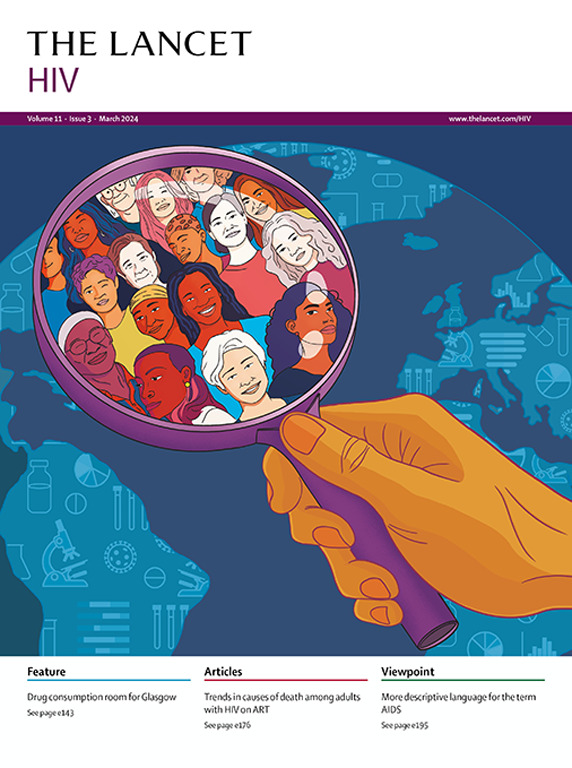
Efficacy and safety of long-acting cabotegravir compared with daily oral...1 year after study unblinding: a secondary analysis of HPTN 083 controlled trial


HPTN 083 is a clinical trial that showed that injectable PrEP works to prevent HIV. An earlier article reported the main results from the blinded part of the study, when participants didn't know whether they were getting injectable PrEP or oral PrEP. This article follows up on the previous report with data from the first year of the unblinded part of the study, after participants were informed whether they had received injectable or oral PrEP. In this additional year of data, the researchers found that injectable PrEP was still highly effective in preventing HIV. This reaffirmed the results from the previous report. Of 2246 participants enrolled in the injectable PrEP group, there were 30 new HIV infections. HIV infection when getting on-time PrEP injections was rare, but was associated with delays in diagnosis and drug resistance. Read more here.

Overcoming structural barriers to diffusion of HIV pre-exposure prophylaxis

In an article published in the Journal of Medicine Access, team members from the GW CRS wrote on PrEP as a critical tool to halt the HIV pandemic. Unfortunately, however, there are still many barriers to PrEP access. Understanding these barriers now can help in planning the drug-development process rather than waiting for proof that the medication works. Dr. Magnus and her co-authors wrote, "We can start overcoming barriers to PrEP access if we think of them before the drugs are developed rather than waiting until they are on the market. The purpose of this article is to propose core considerations to include in the drug-development process for future PrEP methods." The authors conducted a literature synthesis examining key barriers to PrEP uptake in the United States. Based on the published literature, the authors divided challenges into three main categories: (1) provider and clinic characteristics; (2) cost considerations; and (3) disparities and social constructs. Potential solutions are provided for each. Read more here.

Dr. Irene Kuo (GW) and the multi-site team behind HPTN 094 recently published a paper titled “Delivering integrated strategies from a mobile unit to address the intertwining epidemics of HIV and addiction in people

who inject drugs: the HPTN 094 randomized controlled trial protocol (the INTEGRA Study).”


The article describes the methods for this study which is intended to test the efficacy of a “whole-person” care model that provides integrated HIV prevention, testing and treatment with treatment for opioid use disorder for people who inject drugs in a mobile health delivery unit.


To read more about the study and its methods, use the link here.

Stay tuned for a community input survey we will circulate to gain feedback on programming you would like to see from the DC Clinical Trials Unit.

HPTN & ACTG Joint CAB Meeting 

April 11, 2024 at 1pm Virtual

We are having a "Protocol 101" session to inform community how to approach reading official protocols and informed consent forms. This event will be co-moderated by members of our CTU research community. We will also discuss HPTN 102, a study of long acting injectable PrEP among cisgender women at risk for HIV, as it will launch soon here in DC.


Register in advance for this meeting:

Register Here

DC CTU | Website

Facebook  Twitter  Instagram