Andrea's Story: Securing the Right School Placement for Her Mental Health Needs | |
Andrea is a bright nine-year-old student from Hampden County who loves arts and crafts. Andrea was in preschool when Covid-19 hit, so when she began kindergarten in 2022, she was eager to meet and socialize with kids her age. At first, she really loved school. She had a wonderful teacher and got along well with the other students. But Amanda, Andrea’s mother, noticed a change in Andrea’s attitude towards school partway through the year following the abrupt departure of her teacher and a change in classrooms. Andrea came home from school some days and told her parents that she didn’t feel safe at school. Amanda heard from her teachers that Andrea was frequently trying to escape the classroom.
Amanda had long suspected Andrea was on the autism spectrum. After years of waiting for an evaluation, Andrea finally received an educational diagnosis for autism spectrum disorder (ASD), attention-deficit/hyperactivity disorder (ADHD), and hyperlexia. Her school arranged an individualized education plan (IEP) meeting to discuss Andrea’s diagnoses and appropriate services for her. The school recommended that Andrea join a specialized, substantially separate program in the school district that was designed for kids who are keeping up with their peers academically, but needed more support developing social and emotional skills. After touring the program, Andrea’s parents agreed that it seemed like a good fit and decided to enroll her.
However, Andrea became more reserved and anxious when she started attending the new program. Her anxiety and dysregulation manifested in unsafe behaviors towards her teachers and herself. Her teachers frequently called crisis services and used restraints on her. The school filed a 51A complaint with the Department of Children and Families (DCF) because they suspected her behavior was due to issues at home. Andrea’s parents tried to implement additional supports for her at home like in-home therapy and medication, but these measures didn’t help her in school.
“The in-home therapist discharged us because the behaviors that were happening at school simply weren’t happening at home,” Amanda explained.
Over the following school years, Andrea’s behavior continued to escalate. After one episode caused Andrea to be psychiatrically hospitalized, Amanda started keeping Andrea home because she didn’t trust that her daughter was safe in school.
Frustrated by the school's lack of communication and worried for her daughter's safety, Amanda searched for additional help. She spoke with an intensive care coordinator who helped her call Health Law Advocates’ Mental Health Advocacy Program (MHAP) for Kids. MHAP for Kids Staff Attorney Rebecca Bruton, who is based in Hampden County, took on Amanda and Andrea's case.
The family was at risk of further DCF involvement due to Andrea’s absences, so Rebecca quickly jumped in to facilitate half-days at school for Andrea. With the help of Paralegal Trisha Kini, Rebecca requested and reviewed Andrea’s records to learn more about her situation and build a case for a new placement.
“Rebecca really did the work to figure out what was going on,” Amanda said. “She made us feel heard for the first time. The school finally took us seriously.”
Rebecca attended an IEP meeting with Amanda to discuss how Andrea’s needs weren’t met in her current placement. When the school continued to downplay the severity of Andrea’s behavior, Rebecca asked probing questions to uncover more details about Andrea’s behavior. She laid out her argument about Andrea’s significant mental health needs, lack of educational progress, and the danger she posed to others and herself in her current environment. Rebecca also raised the option of Andrea doing an extended evaluation at an out-of-district therapeutic day school that would better fit her needs. Due to Rebecca’s strong advocacy, the school district agreed to the extended evaluation.
Rebecca toured the therapeutic school with the family and helped them collect the necessary documents to enroll Andrea in the new school.
Andrea started at her new placement in May and has been thriving. She now comes home from school happy and excited to tell her parents about her day. She no longer displays unsafe behaviors at school and is making real academic progress. Toward the end of the 45-day evaluation period, Andrea was doing so well that the school district agreed that she could stay in her new placement.
“The services MHAP provides have been life-saving,” Amanda emphasized, “We would not have our happy child back without the work Rebecca did.”
MHAP for Kids is supported by funding from the Mass. Department of Children and Families, and grants from the Klarman Family Foundation, the Mabel Louise Riley Foundation, the Blue Cross Blue Shield of Massachusetts Foundation, the Massachusetts Bar Foundation, the Nord Family Foundation, and the Boston Bar Foundation. The Peter and Elizabeth C. Tower Foundation, Boston Children's Hospital, and Hagens Berman Sobol Shapiro have also provided generous support to MHAP for Kids over the years.
| | Seamless HLA Collaboration Prevents Discharge from Pediatric Nursing Facility | | |
Bernardo* is a 14-year-old Massachusetts resident who was born with cerebral palsy. He had been living in a pediatric nursing facility for a year when his family received notice that he would be discharged in 30 days. Vanessa*, Bernardo’s mother, described the facility as an “incredible place.” The staff surrounded Bernardo with people who spoke his first language, Portuguese, and helped him attend the school attached to the facility. But after Bernardo abruptly lost his MassHealth coverage and the facility wasn't paid for several months of Bernardo's stay, the family received a discharge notice.
“I was completely lost,” Vanessa said, “I didn’t know what to do.”
Before Bernardo started at the pediatric nursing facility, Vanessa took care of Bernardo on her own. As he grew older, his needs exceeded what the family could safely provide at home. Their home was not big enough to fit the medical equipment Bernardo required. Faced with the possibility of Bernardo being discharged, Vanessa was worried about being able to properly care for Bernardo at home.
Vanessa got in touch with her local Family Resource Center (FRC) to see if she had any other options for her son. The FRC staff referred her to HLA Staff Attorney Eva Conroy, who is embedded in their FRC. Eva quickly began researching what options the family had to ensure Bernardo could continue receiving care. As she investigated the case and identified the complexity of Bernardo’s immigration status, she reached out to her colleague at HLA, Andrew Cohen, Director/Lead Attorney of HLA’s Access to Care and Coverage (ACC) Practice, for additional help discerning what health care coverage options were available for Bernardo. Andrew reviewed Bernardo’s documents and determined that he should be considered PRUCOL (permanently residing under color of law), which meant he was eligible for a MassHealth plan that would cover his long-term care in the nursing facility. Andrew guided Eva on drafting an affidavit for MassHealth that explained Bernardo’s PRUCOL status. Eva worked with the staff at the nursing facility to submit the affidavit and other relevant documentation to MassHealth.
Within two weeks, MassHealth approved Bernardo for its CommonHealth coverage type, allowing him to receive care at the nursing facility for the foreseeable future. MassHealth also agreed to retroactively pay for the months when the facility did not receive payment.
“It was such a relief,” Vanessa said, describing the moment she heard that Bernardo could stay at the nursing facility, “(HLA) opened a door that we thought was completely closed.”
“Bernardo probably would’ve ended up in the emergency room and may have become a stuck patient in the hospital,” Andrew said when describing what could have happened if Bernardo was discharged home after the 30-day deadline. Because of the tight timeline of the case, the efficient collaboration between Eva and Andrew was essential for ensuring continuity of care for Bernardo.
“Having quick access to someone with so much knowledge about MassHealth coverage options was the only reason we were able to succeed in this quick turnaround time,” Eva emphasized, “The effective collaboration between HLA's MHAP for Kids and ACC teams was the reason we were able to get a resolution so quickly for this family.”
*Names changed for privacy.
HLA's Immigrant Health Care Access Initiative is supported by grants from The Health Foundation of Central Massachusetts, the Klarman Family Foundation, the Blue Cross Blue Shield of Massachusetts Foundation, the Massachusetts Bar Foundation, the MetroWest Health Foundation, the Greater Lowell Community Foundation, the Nord Family Foundation, and the Boston Bar Foundation.
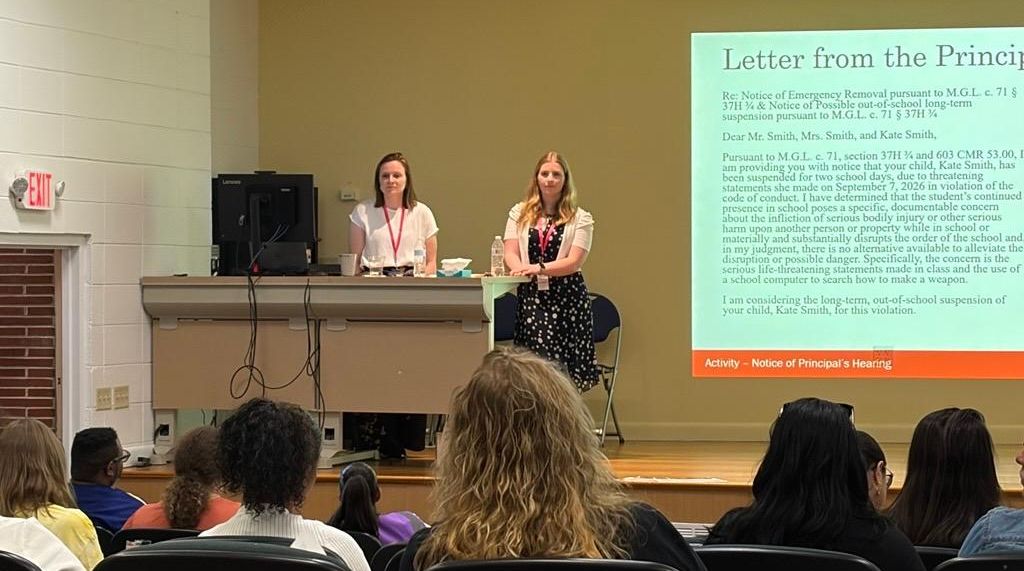
| | HLA Presents New Data on School Discipline Advocacy Program at Youth at Risk Conference | Elaine Marshall (left) and Isabel Redman (right) presenting at the 26th Annual Youth At Risk Conference on May 20th. | | |
On May 20, Elaine Marshall, HLA's School Discipline Advocacy Fellow, and Isabel Redman, Research Project Coordinator at the Boston University School of Public Health (BUSPH), presented on HLA's School Discipline Advocacy Program (SDAP) at the 26th Annual Youth at Risk Conference. To a room of over 50 attendees, they shared data about SDAP and trends in school discipline alongside practical information about navigating the school discipline process.
SDAP is a project within HLA’s Mental Health Advocacy Program (MHAP) for Kids. The project aims to curb the school-to-prison pipeline by providing free representation to families of children with mental health concerns who facing school discipline issues because they have experienced barriers to mental health services. As HLA’s School Discipline Advocacy Fellow, Elaine attends school discipline hearings and manifestation determination review meetings, as well as advocates for educational supports and services while students are suspended or expelled.
Isabel is one of the lead researchers on the BUSPH team that has been evaluating the work of MHAP for Kids for more than 10 years. Isabel and her team collect data by conducting surveys with clients after MHAP for Kids attorneys conclude their work with families. The evaluation team has recently focused on analyzing data specifically collected from SDAP cases to map out trends and understand the efficacy of SDAP.
Analysis of the demographic data of SDAP cases indicates that the project effectively reaches populations that are disproportionately impacted by school discipline. In Massachusetts, Black and Latino students, and students with disabilities represent a higher proportion of disciplined students. In the 2024-2025 school year, Black students represented 11% of enrolled students, but 19% of students disciplined, and students with disabilities represented 40% of students disciplined despite only comprising 22% of total enrollment. In a sample of 141 SDAP cases, 18% of the students were Black and 88% had been diagnosed with at least one mental health condition and/or learning disability. Elaine also works with students who are in the early stages of their mental health journey and who don’t necessarily have a formal diagnosis or mental health services yet but may still need additional mental health support.
SDAP is also engaging with kids at a critical age. Of the sampled SDAP cases, 70% are students between the ages of 12-17 years old. The amount and severity of school discipline starts to pick up when students enter secondary school. Students can also start picking up delinquency charges as young as 12 years old. It’s important to catch issues that students are facing at this age before they snowball into larger disciplinary situations and lead youth down the school-to-prison pipeline.
“The Band-Aids that may have patched up issues when students were younger will no longer hold,” Isabel explained, “These mental and behavioral health issues will continue coming up and they need to be addressed.”
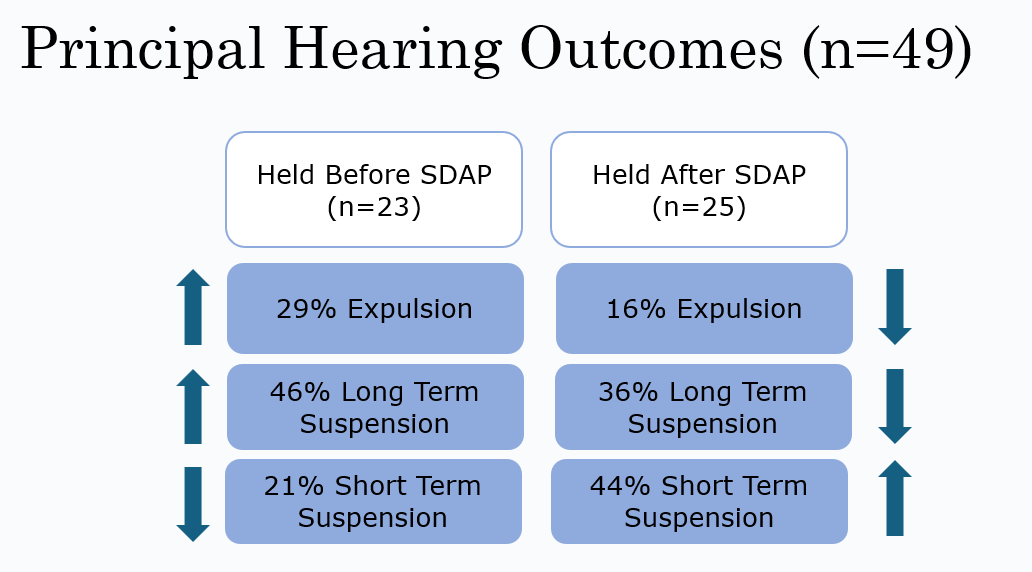
In addition to finding that SDAP is reaching its intended populations, Isabel and her team found a trend in the outcomes data: when SDAP is involved, students are excluded from school for less time. In cases where the principal hearings happened after SDAP was involved, suspensions or expulsions were shorter, as shown in the chart below. This data was based on a small sample size, but it is a positive signal that SDAP involvement may shorten suspension lengths.
| | Slide from Elaine and Isabel's presentation, "Why Isn't Liam in School? Understanding School Exclusion and How You Can Respond" on May 20, 2026. | | |
“The positive results we’ve found so far have made us really excited to dive into more SDAP data and continue measuring other areas of school discipline,” Isabel said.
Decreasing the amount of time children are excluded from school is key to improving mental health and educational outcomes. Kids who experience school discipline are at greater risk for worse mental and physical health outcomes, worse academic outcomes, and involvement in the juvenile justice system. The preliminary data showing SDAP is reaching disproportionately impacted populations and shortening the length of school exclusion are promising indications that the model is curbing the school-to-prison pipeline.
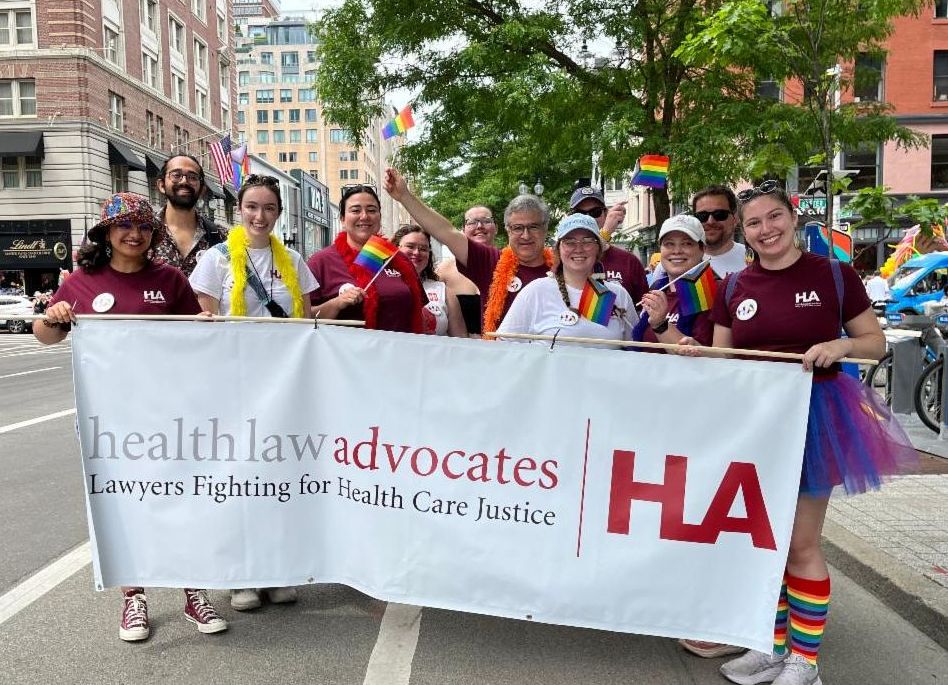
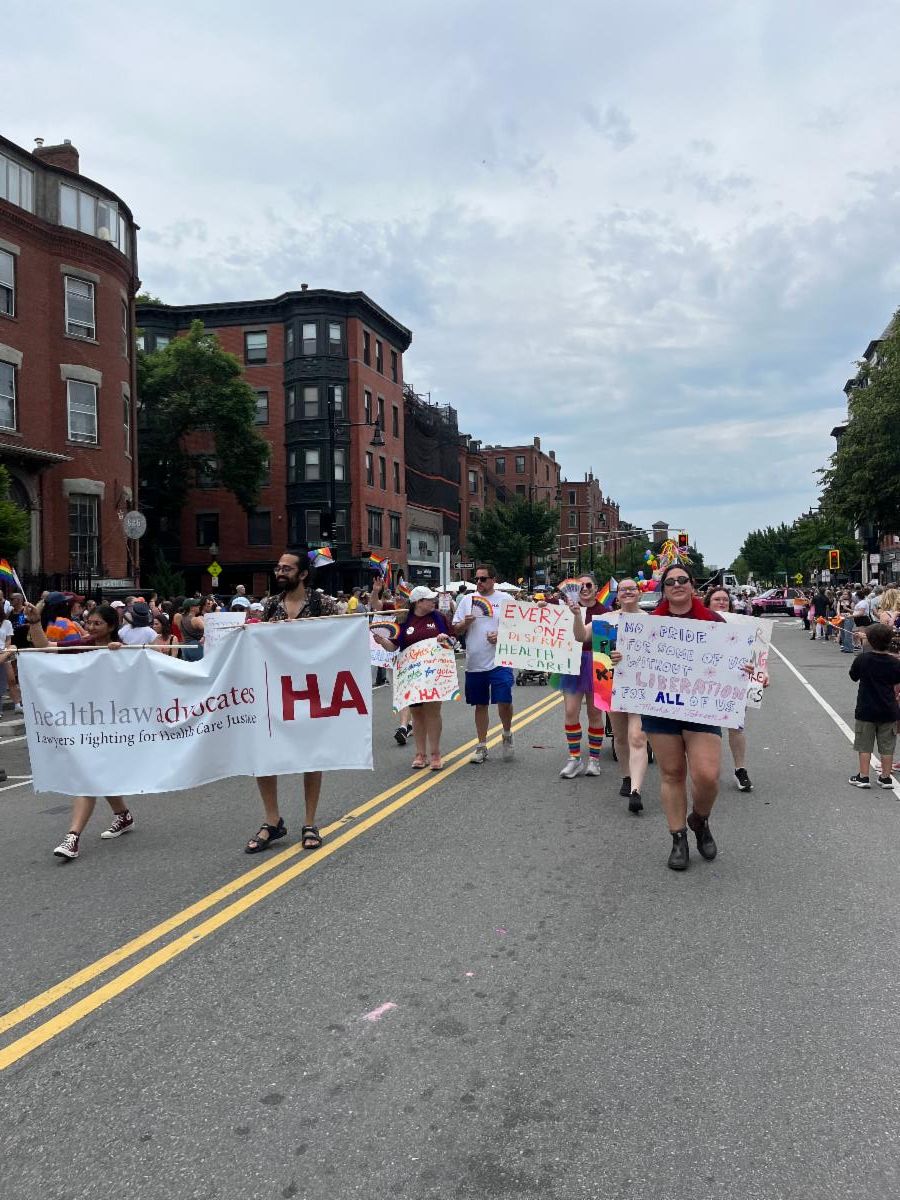
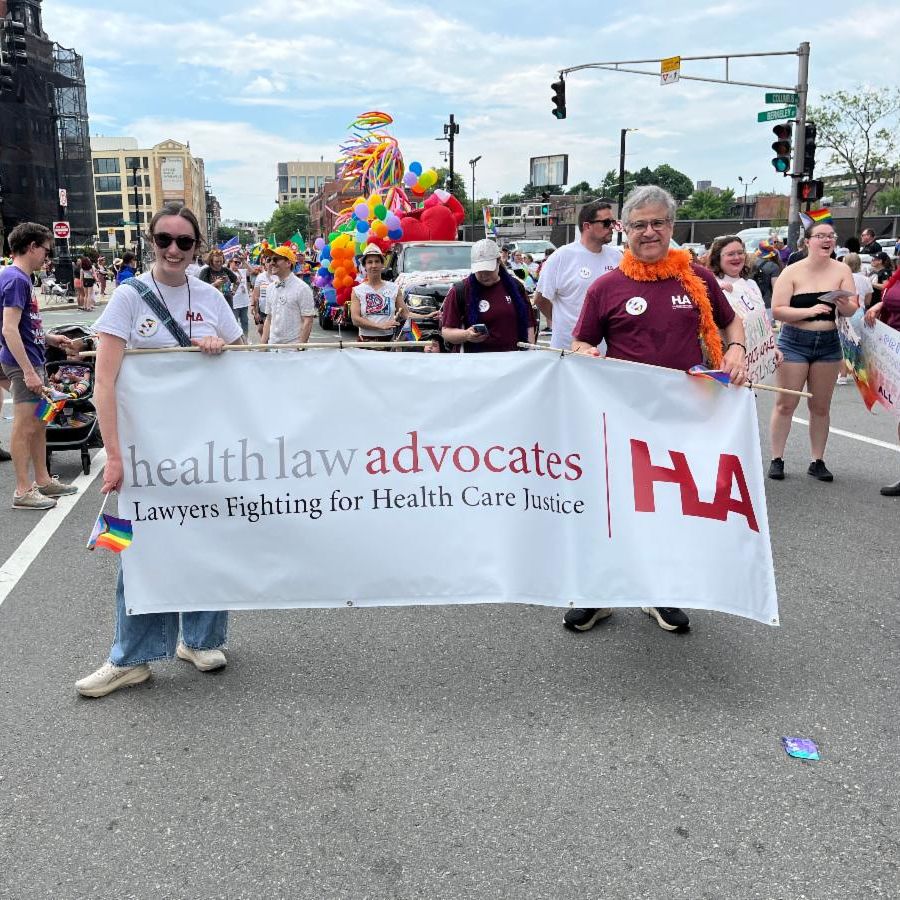
| | A New Threat to Health Care Access: Medicaid Community Engagement Requirements | | Are you a MassHealth member wondering if you will be affected by federal policy changes? Check out the button below for information on who will be impacted by the new community engagement requirements and other federal changes, and how to keep your coverage. | | HLA Marches in Boston Pride! | | HLA staff and their friends and family prepare to march in the Boston Pride for the People Parade on June 6th. | | |
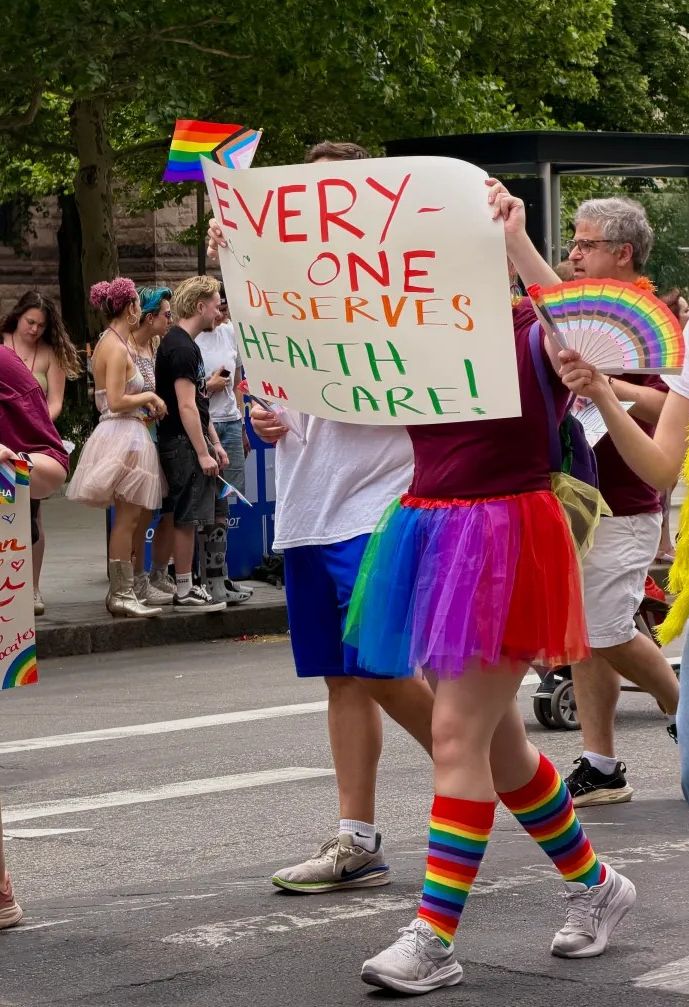
On Saturday, June 6, HLA marched in the Boston Pride for the People Parade for the first time. We marched alongside friends, family, and hundreds of other organizations in celebration of the LGBTQ+ community. Thousands of supporters lined the streets of Boston to cheer, wave, and dance.
In addition to celebrating the LGBTQ+ community, Pride is an opportunity to unite together against attacks on LGBTQ+ rights. The federal Administration has launched countless attacks on the LGBTQ+ community, including on access to gender-affirming care. HLA is working to protect access to gender-affirming care through our policy advocacy and individual legal representation. At the parade, we distributed postcards with information about HLA's Gender-Diverse Health Care Access Initiative, which helps break down barriers to health care that people experience because of their gender identity. Our team can help with appealing insurance denials for gender-affirming care, correct errors in MassHealth coverage created by legal name changes, and represent clients in overcoming other barriers to gender-affirming health care.
It was incredibly uplifting to be part of a day full of inclusivity, joy, resistance, and pride. Our team looks forward to marching again next year!
HLA's Gender-Diverse Health Care Access Project is supported by a grant from The Equality Fund of The Boston Foundation.
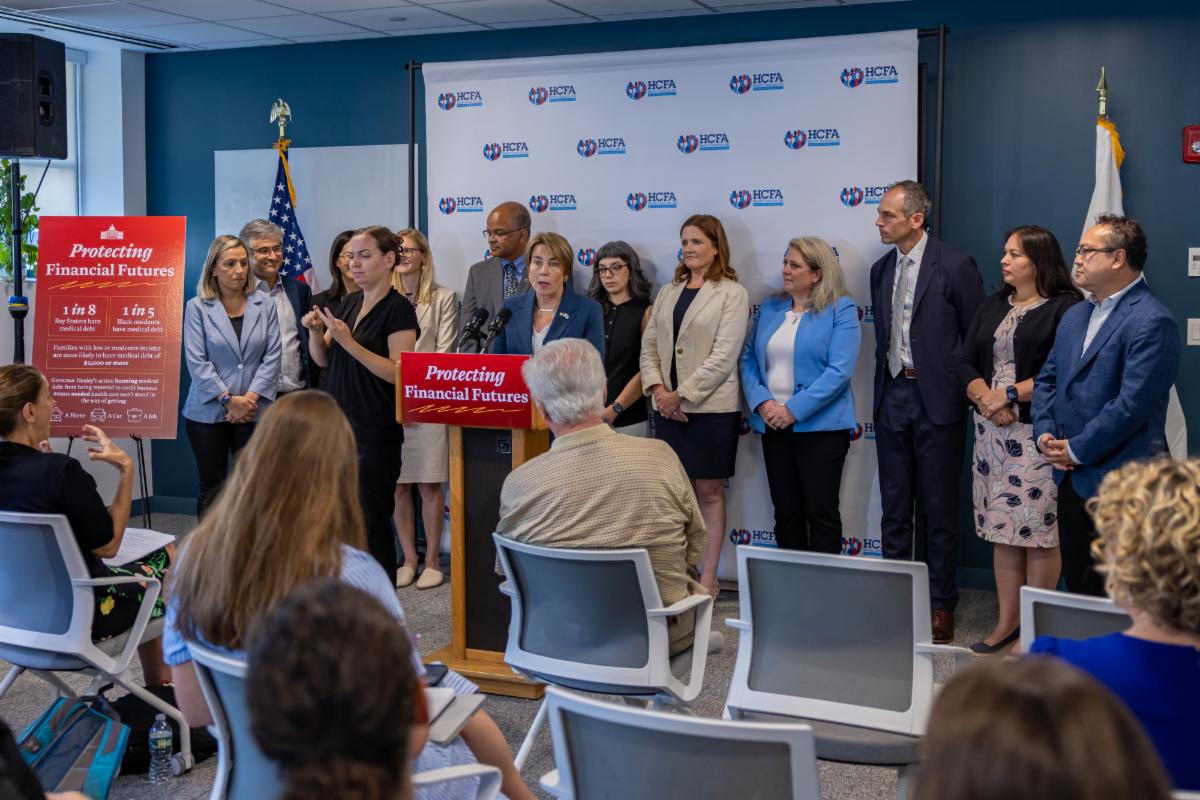
| | Photo credits: NBC10 Boston | | | Visit from Governor Healey | | HLA and HCFA Host Governor Healey for Medical Debt Press Conference | | HLA Executive Director Matt Selig stands alongside partners as Governor Healey announces new action to prevent medical debt from appearing on consumer credit reports. Photo credits: Josh Qualls, Director of Photography, Office of Governor Maura Healey | |
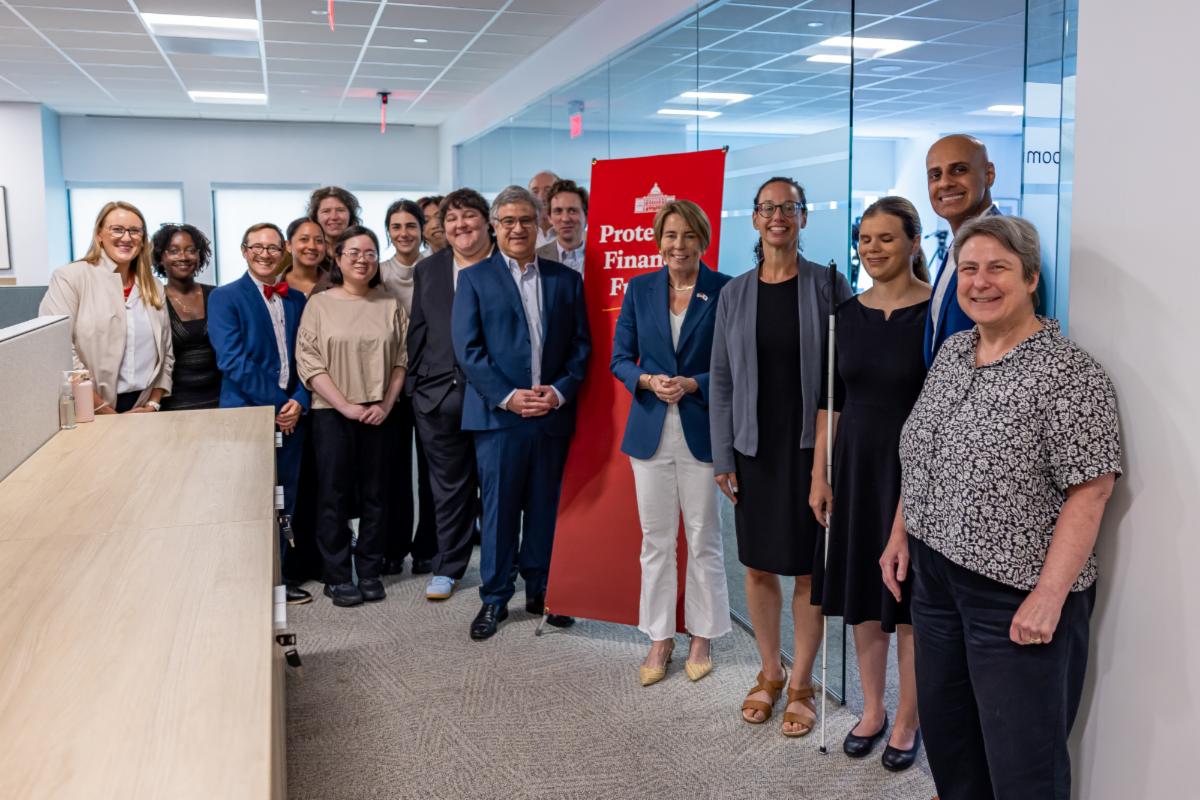
On Tuesday, June 30, we had the honor of hosting Governor Maura Healey for a press conference at our office alongside our partner organization Health Care for All (HCFA). Executive Director Matt Selig stood behind Governor Healey as she announced new action to prevent medical debt from being reported to consumer credit agencies in Massachusetts.
Medical debt, stemming from improper billing and unaffordable medical bills, prevents consumers from seeking medical care and can have a devastating and lasting impact on families' financial situations. The Healey Administration's action to ban medical debt from credit reporting is an important step in easing the financial burden of medical debt and improving access to care for consumers across the Commonwealth.
"This is gonna provide huge relief for the people that we serve," Matt shared in a new WGBH article about the press conference, "There's no reason why somebody should have a harder time renting an apartment, or trying to get a car loan, just because they were sick and they had to incur medical debt."
HLA represents hundreds of clients each year from consumers dealing with improper medical billing and collections practices. Our team works to eliminate medical debt in several ways. We represent individual clients, collaborate with community partners to build their capacity to assist residents with medical debt, and advocate for policies that lessen the financial impact of medical debt. In 2025, our team eliminated nearly $1.3 million in medical debt.
Learn more about our Medical Debt Initiative here.
HLA's Medical Debt Initiative is supported by a grant from the Atrius Health Equity Foundation.
| Governor Healey with HLA staff. Photo credits: Josh Qualls, Director of Photography, Office of Governor Maura Healey. | | Save the Date for the 31st Annual Benefit Breakfast! | | |
We are thrilled to share that our featured speaker for the 31st Annual Benefit Breakfast is award-winning author Tayari Jones! We hope you can join us on November 20 for an inspiring conversation with Tayari.
Friday, November 20, 2026
Sheraton Boston Hotel
39 Dalton Street
Boston, MA 02199
Coffee Hour 7:00 a.m.
Main Event: 8:00 a.m.
We hope to see you there!
Co-Chairs of the 31st Annual Benefit Breakfast
| | |
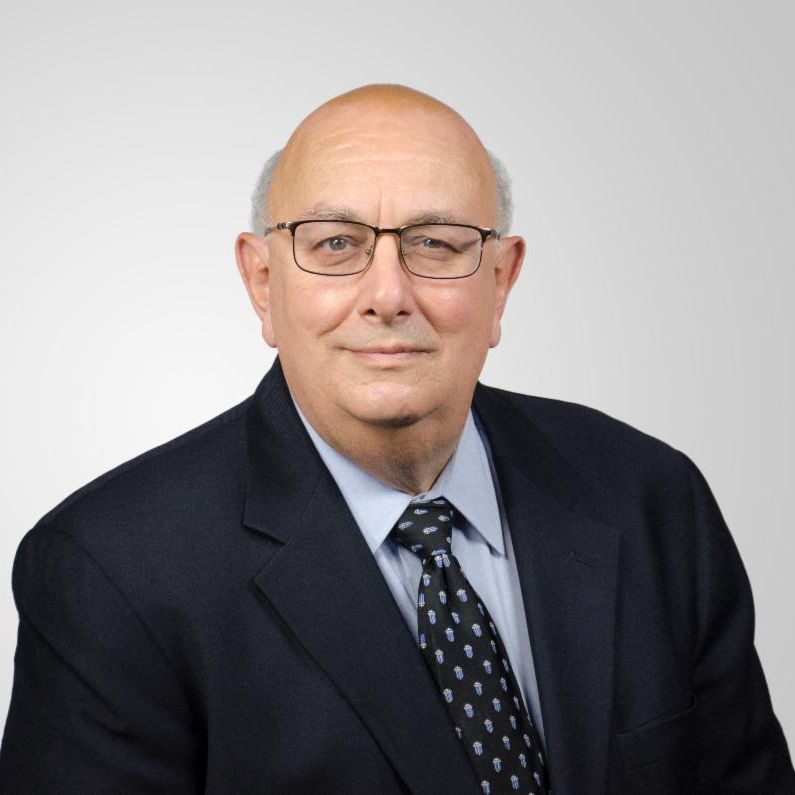
Steve Tringale
President
Mass General Brigham Health Plan
| |  | |
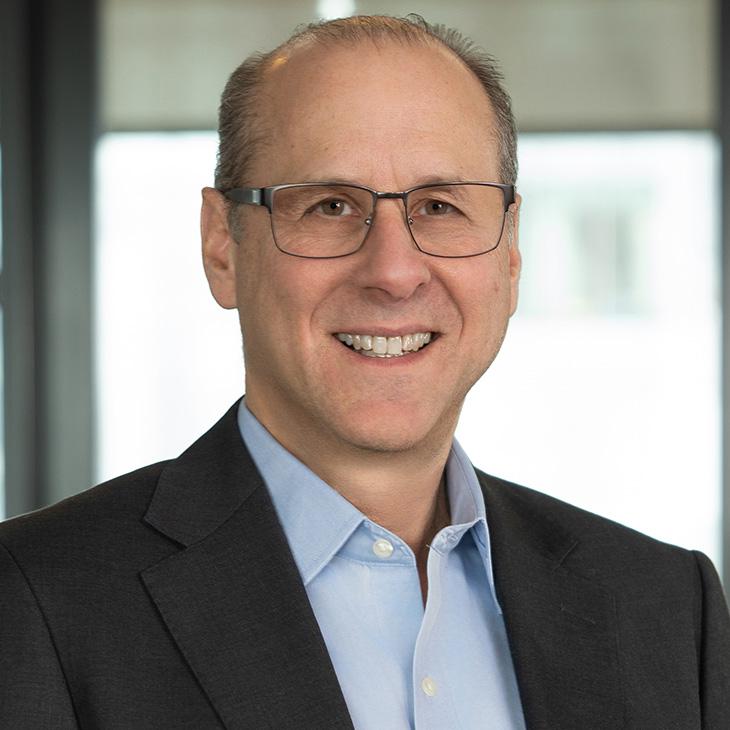
Doug Brown
Partner
Manatt
| | |
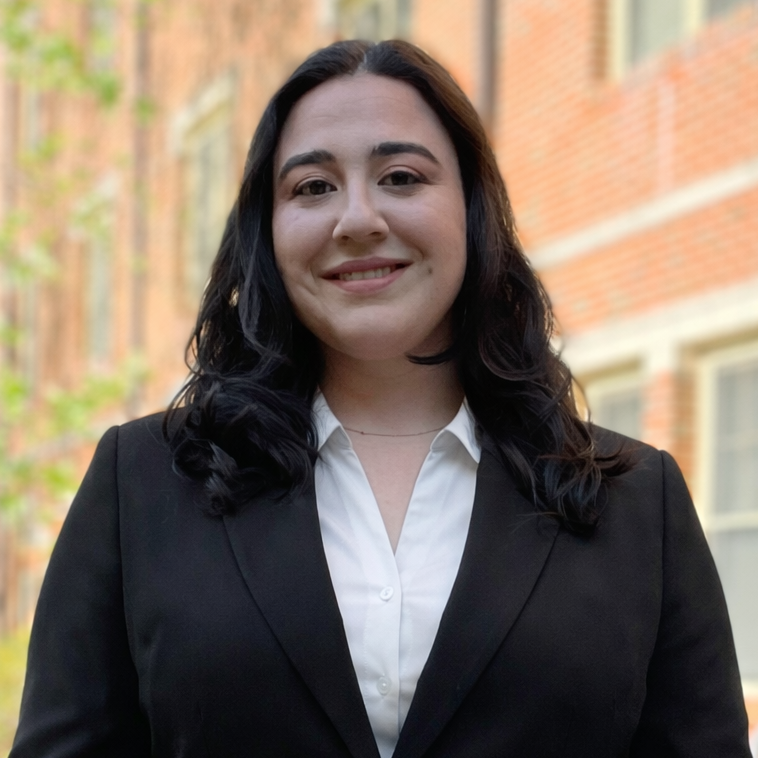
Hannah Llende
Staff Attorney
Hannah is a Staff Attorney with MHAP for Kids based in the Brockton Family Resource Center. Prior to joining HLA, Hannah earned her Juris Doctor at Boston University School of Law. During law school, Hannah participated in the Mental Health Litigation Practicum representing individuals facing commitment and involuntary treatment petitions and the Consumer Economic Justice Clinic representing individuals in matters related to debt collection and unfair and deceptive business practices. Prior to law school, Hannah volunteered with a mental health crisis hotline, providing individuals with confidential emotional support and community resources. She also earned a B.A degree in History and a B.S. degree in Political Science from Florida State University.
| |
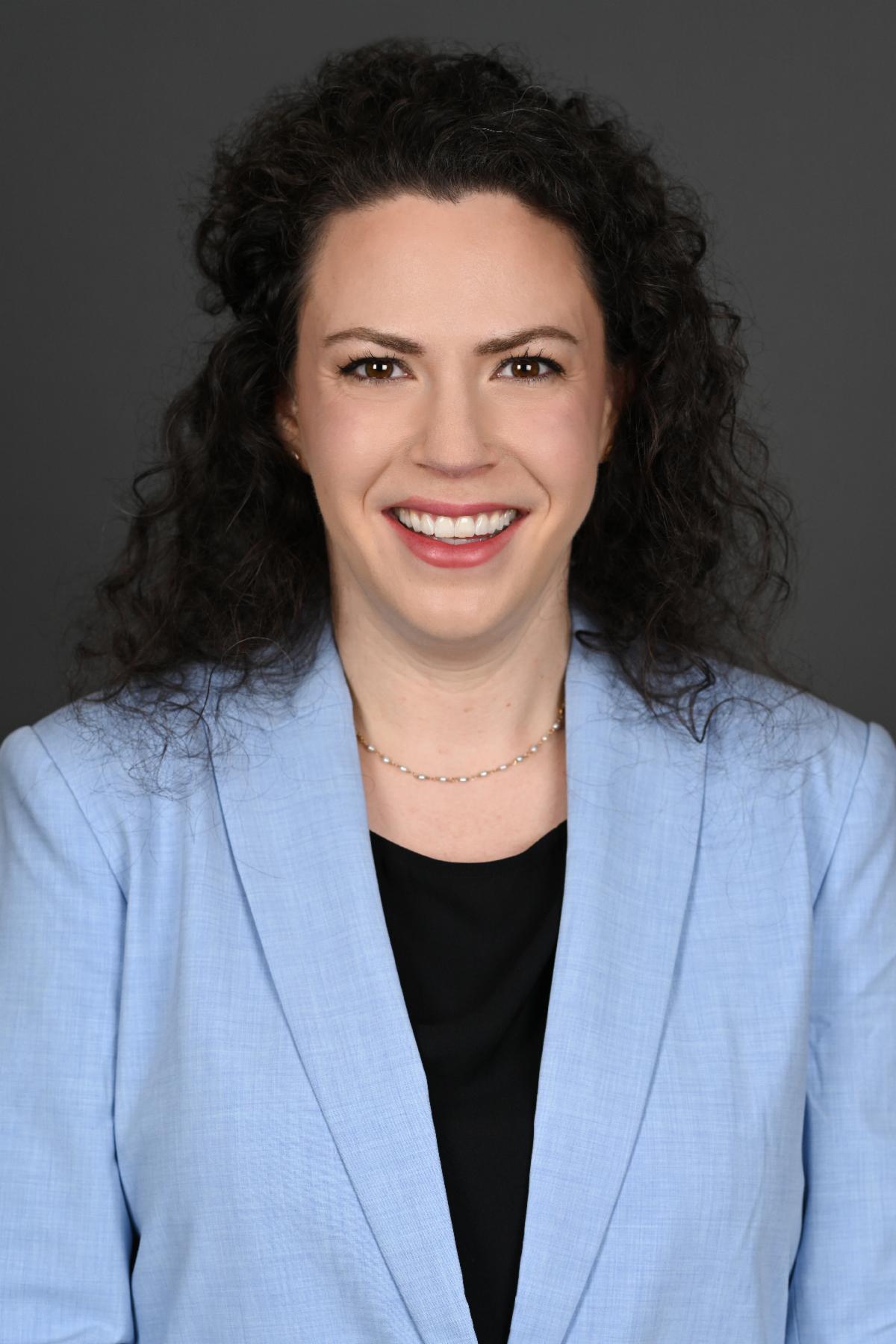
Tailayah Macklin
Staff Attorney
Tailayah is a Staff Attorney with MHAP for Kids. She is based at the Quincy Family Resource Center. Prior to joining Health Law Advocates, Tailayah worked in family law, representing clients in matters involving custody, support, and domestic relations. She also served as an Assistant District Attorney, where she gained extensive courtroom experience and worked closely with victims, families, and law enforcement. Earlier in her career, she was a Victim Witness Advocate, supporting individuals navigating the criminal legal system and connecting them with resources during difficult and often traumatic circumstances. Through her work, Tailayah has developed strong advocacy and communication skills, particularly in supporting individuals navigating complex and emotionally challenging situations. She earned her J.D. from Suffolk University Law School.
| |
Andrew Kirtley
Litigation Director
Andrew has spent his legal career helping consumers, small businesses, and others vindicate their legal rights in court, including in class actions and other complex litigation. Over his career, he has represented hundreds of clients in all phases of litigation, including as the lead attorney on dispositive motions, trials, and appeals.
Before joining HLA in 2026, Andrew was a member of the California Access to Justice Commission and a partner in the San Francisco Bay Area office of the national plaintiff firm Cotchett Pitre & McCarthy, where he specialized in federal consumer class actions and socially just commercial and constitutional litigation. His accomplishments have included a $500 million win for small farmers, a California Lawyer Attorney of the Year (CLAY) award, and defeating constitutional challenges to a first-of-its-kind firearms regulation. Prior to that, Andrew practiced in the District of Columbia at the D.C. Tenants’ Rights Center, the D.C. Bar Pro Bono Center, and a boutique law firm specializing in federal civil rights. During law school, he did externships with a federal judge in the Southern District of New York (New York, NY), the U.S. Department of Justice (Washington, DC), the Navajo Nation Department of Justice (Window Rock, AZ), and the Human Rights Law Network’s Reproductive Rights Unit (New Delhi, India).
Andrew’s degrees are from Northeastern University School of Law (JD 2014) and Berklee College of Music (BM 2011). He lives with his family in the Boston neighborhood of Jamaica Plain.
| | |
Meet Andrew Kirtley,
HLA's New Litigation Director
| |
What drew you to HLA?
I’ve known about HLA for years, originally from a law school friend who joined HLA out of law school. So I knew the organization did great work, and when the litigation director position came up, it seemed like the perfect fit. I had just moved from California back to Boston, and I was looking for a public interest litigation position where I could leverage my prior impact litigation experience. So the position seemed perfect on paper, and then when I started calling some mentors and asking around in the legal community, it seemed like everyone knew about HLA and had good things to say. When I met with Matt (HLA’s executive director) and some members of the board, everything just clicked and I knew this what I wanted to do.
What are some of your goals for the Litigation Director role?
HLA has a ton of practice areas and helps a lot of different populations, so I’m excited to get up to speed on that and assess where there are currently opportunities for impact litigation to remove barriers to healthcare access in Massachusetts. At the same, we are living in unprecedented political times. The federal government is taking so many illegal regulatory and executive actions with enormous negative impacts for many of the populations we serve, including immigrants, LGBTIQ+ individuals, people of color, and people with low incomes. So I think there’s a real opportunity for HLA to identify federal government actions in the healthcare access space that, in many cases, are turning our clients’ lives upside down, and see what opportunities exist for HLA to challenge those actions in court.
What role do you see litigation playing in HLA's strategy for combatting challenges to health care access?
Litigation isn’t the answer to every problem, or even most problems. But of course there are times when you’ve tried everything else to fix an issue, and litigation is the only option left. In the world of impact litigation, we’re often challenging illegal policies and practices that the government or a private company is systematically applying to a large group of people, and so there’s an opportunity to remove a barrier to health care not just for one person, but for a hundreds or thousands of people, with a single lawsuit. I’m excited to work with fellow HLA attorneys and staff to identify impact cases that could do the greatest good for the greatest number, and then figure out strategically the best way to bring those cases and get them resolved as quickly as possible.
Why is fighting for health equity important to you?
Access to health care is such a basic human right. Along access to food, water, and shelter, few things are more compelling to me, as an attorney, than helping people overcome the legal barriers that are preventing them from getting the basic healthcare that they need to survive and have a reasonable quality of life. I think this is especially important for historically marginalized or politically disfavored populations that have really been treated poorly by our society, including to the point of society imposing or being indifferent about these populations facing systemic barriers to accessing the basic healthcare they need, and should be entitled to as human beings.
Can you share a little about your legal background and how you think your previous experience will inform your approach to your role?
I have been an attorney for 12 years and spent my career representing consumers, tenants, small businesses, and others enforce their legal rights in court after something illegal, and often terrible, has happened to them. I’ve done everything from representing individual tenants in the fast-and-furious world of local eviction court, to representing tens of thousands of consumers in federal class actions and arguing appeals before state supreme courts. I think it’s all been important in shaping how I approach being an attorney and hopefully given me the skills to be successful in this role.
| | Announcing New Members of HLA's Board of Directors! |
Dr. Mohammad Dar
Board Member
Dr. Mohammad Dar, MD (MoDar) serves as the Chief Medical Officer for C3 (Community Care Cooperative), an accountable care organization dedicated to serving Federally Qualified Community Health Centers (FQHCs) in multiple states. C3 is both founded and governed by FQHCs and is focused on improving the health of safety net populations via integrated and local community-based care. Dr. Dar has worked on implementation of the Affordable Care Act at the Obama White House Office of Health Reform, volunteered with public health initiatives in rural Uganda, and served as a Visiting Fellow on Innovation at the Massachusetts Health Policy Commission.
|
Allie Shalom
Board Member
Alexandra (Allie) Shalom is a health care attorney at Foley & Lardner LLP and co-chair of the firm’s Payor Provider Convergence Area of Focus. She advises stakeholders across the health care sector ranging from health systems, medical groups and long term care facilities to investors and entrepreneurs on complex transactional, regulatory compliance, and value based care matters. Allie currently serves on the Anti-Defamation League’s New England Regional Board and is a member of Beth Israel Deaconess Medical Center’s Leadership Board and Compliance Committee.
| |
Call to join HLA's Pro Bono Legal Network!
Our staff attorneys work hard to represent every client who needs our help, but the demand for our services is high. Help us reduce the waitlist and ensure anyone who comes to HLA for help has access to an attorney. For free.
Learn more about becoming a member of the Pro Bono Legal Network.
| | | | | |