|
President's Report
by Katherine Bouton
| | |
Welcome back after a long summer! If you live in New York and are a member of our chapter, you’ll know what a whirlwind the first three weeks of September have been. Our board met on September 7 and discussed our revised bylaws, which will be presented to the membership at another board meeting. The existing bylaws date from 2015, which superseded the bylaws of SHHH Manhattan Chapter dated June 1999.
Our Peer Support Group, led by Sophie Racine and Nina Raman, had its first meeting. Sophie has created a schedule of talking points for the first three meetings: Building Our Community (introductions, overview of HLAA), Self-Advocacy Without Apologizing, and Hearing Devices: What's Working, What's Not. If you are new to hearing aids, or new to HLAA, or just struggling with your hearing, consider joining the group. You can express your interest and find out more by emailing info@hearinglossnyc.org. In the email, please tell us a little about yourself and your hearing loss. Space is limited, but we currently have room to expand.
Our September chapter meeting included speaker Barbara Kelley, executive director of HLAA’s national organization, and two colleagues. It provided valuable insight into HLAA’s policies on a national scale. A recording of the meeting is posted on our website, and a description of the meeting is below. Finally, our annual Walk4Hearing was on Saturday September 19, and a good time was had by all. We raised funds for HLAA’s national agenda, and for the chapter. For more information, see the next article in this newsletter.
| | |
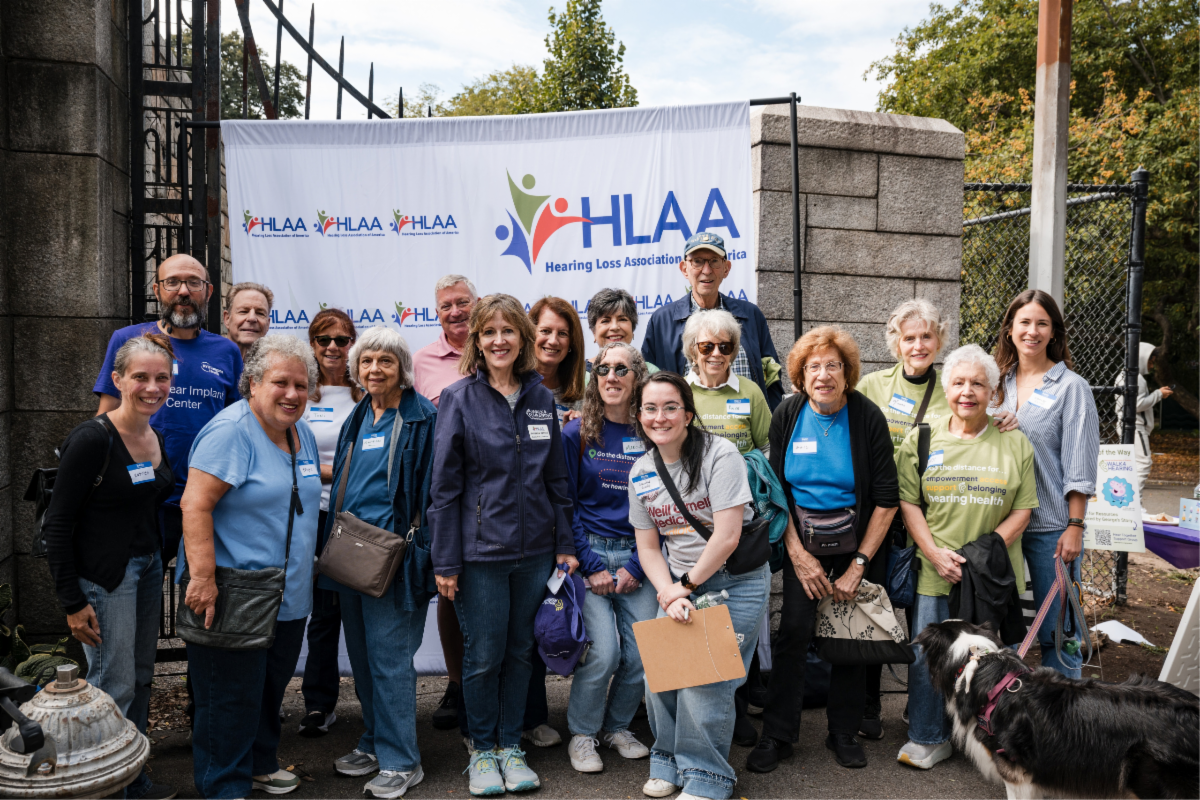
The NYC Walk4Hearing, held on Sunday, September 19 in Riverside Park, was everything a Walk should be — joyful, energetic, inspiring, and filled with the wonderful sense of community that happens when so many people come together for something they truly care about.
To everyone who walked, donated, volunteered, sponsored, cheered, stopped by a table, brought family and friends — or simply showed up to be part of the fun — THANK YOU!
There were smiles everywhere, and an incredible feeling of connection. And, of course, we walked! But more importantly, we came together to celebrate our hearing loss community and to stress that we do not have to navigate hearing loss alone.
To the Walk participants (including the HLAA-NYC Board members seen in the photo): Your enthusiasm, generosity, and support are what make this event so special year after year. Our HLAA-NYC Chapter team raised over $7,000, ensuring that we can continue our monthly programs for people with hearing loss. Check out our website, or read the article below, to see what’s coming up in the 2026-2027 season.
We hope each walker had a lot of fun — and went home with tired feet, a big smile, and wonderful memories.
| |
September Meeting Recap
HLAA Beyond New York
| |
Our September meeting featured three people from our national office, who shared how HLAA works nationally for people with hearing disabilities.
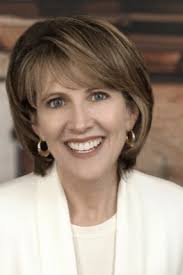
The main speaker, Barbara Kelley (seen in the photo), has been Executive Director and CEO of HLAA since 2016. She has had a long involvement with HLAA, starting as editor of the magazine “Hearing Life.” In addition to serving on a number of boards, Barbara advises the National Institutes of Health (NIH) director regarding policies, including disability health. Barbara makes sure our voices are heard.
During her talk, Barbara enumerated the many strengths HLAA has developed during it’s almost five-decade existence (Rocky Stone founded the organization 47 years ago The NYC chapter was formed in 1988). Barbara emphasized that HLAA has much staying power due to its mission of support, advocacy, and education for people with hearing loss. She explained how HLAA is helping not only adults with severe hearing loss, but also those with mild loss, as well as children and young adults, and parents of hearing-impaired children. HLAA is the voice stressing that hearing health is part of everyone’s overall well-being, both physically and mentally.
Barbara applauded the many volunteers who make HLAA heard and support the cause by working toward greater advocacy of hearing loss through chapter meetings, the Walk4Hearing, and national and state meetings. She also applauded the NYC chapter’s efforts to make the city hearing accessible and make HLAA’s presence known. In addition, Barbara shared ongoing strategic plans—expanding HLAA’s engagement; seizing technology options; broadening advocacy and influence; stewarding financial resources; and building a movement toward greater hearing health. She discussed legislation that is in the works to update the Communications and Video Accessibility Act, and she proudly mentioned HLAA’s role in updating accessibility laws, reaching new coalition partners, providing more access to TV captioning, and improving communication in healthcare facilities.
The next speaker, Dan Reiner, HLAA’s Director of Communications and Marketing, provided a behind-the-scenes look at how his team is working to increase the support the national staff provides to local chapters. According to Dan, HLAA’s mission is communicated via social media, newsletters, website updates, blog posts, and the magazine "Hearing Life." Dan and his team are coordinating, implementing, and distributing a new, centralized database that will consolidate the functionality and information of different systems into one.
The third speaker, Melissa Kruse, the Chapter Engagement Manager, has led initiatives across nonprofit organizations for more than twenty years. Her role is to support HLAA’s local chapters and develop new groups and chapters. She is also working on the new contact management system that will make it easier to get lists and resources, and connect with people across the HLAA community.
To watch a captioned video of this meeting on YouTube, click here.
| | |
HLAA National Meeting
The AI Revolution in Hearing Health
| |
For the first time in six years, HLAA gathered its hearing loss community online for a national virtual meeting, hosted by Roxana Rotundo, Holly Cohen, and Shari Eberts. The evening included a recap of the research symposium from the recent HLAA Convention in Louisville, "The AI Revolution in Hearing Health: Smarter and Greater Access," as well as community sharing.
Shari dialogued with Dr. Jan Blustein — physician, health services researcher, person with hearing loss, and the symposium's moderator — to unpack the big takeaways from the three symposium speakers: Dr. Nicholas Lesica (bioengineer, University College London), Cole Morris (co-founder of hearing aid maker Fortell), and Dr. Samantha Robler (audiologist and public health researcher).
The conversation demystified what AI actually is (a tool for finding patterns in data), why simply "having AI" in a hearing aid means little on its own, and what really matters for understanding speech in noise — improving the signal-to-noise ratio and solving the tricky "intent" problem of knowing which voice you want to hear. They also explored how AI could expand access to care in rural and underserved communities, how to see through marketing claims, and the privacy questions worth keeping in mind.
A lively community sharing session followed, where attendees reflected on the “Silver Linings” or unexpected gifts of living with hearing loss. Examples included the strength and warmth of the hearing loss community itself, the development of deep empathy and caring for others, as well as the many tools, including meditation, that people use to live well with their hearing loss.
Missed the meeting or want to listen again? Click here.
If you want to watch the entire HLAA Research Symposium, click here.
| |
Upcoming (Virtual) Chapter Meetings
Save the Dates
CART provided by Lauren Schechter of Total Caption
| |
October 20. Cochlear Implants. Dr. Katrina Stidham, Director of the Cochlear Implant Center and the Balance Center at Westchester Medical Center, will provide basic information about cost, eligibility, and procedure for people new to implants. She will also discuss advances in implants, including new-on-the-market fully implantable devices, and the role of AI in cochlear implants.
November 17. Hearing Aids. Drs. Michelle Kraskin and Haley Bruce, Director of Audiology and Senior Audiologist at Weill Cornell Medical Center, will talk about advances in hearing aids, including AI for speech in noise. What does this mean and how widespread is it? They’ll also cover the basics for people new to hearing aids: Where you should start (answer: with an audiologist) and how do you proceed? If you choose an audiologist, what is the process for fittings and the window for returns? If you choose to go the over-the-counter route, where should you go, how much should you pay, what are return policies, and how do you know what to buy?
December 15. Our annual music program. Speaker will be Charles Mokotoff, a guitarist who had sudden hearing loss at age 14. Program details TBD.
January. No meeting.
February 16. Auditory Rehab. Caroline Ruocco is a speech-language pathologist at Weill Cornell Medicine, where she serves on the cochlear implant team and sees pediatric and adult patients with hearing loss. She has bilateral hearing loss for which she wears hearing aids. She will speak from the perspective of both the provider and the patient. She’ll also talk about practicalities: getting started with rehab, center-based and at-home practice, treatment timeline, cost (and who pays for it), and what you should expect in terms of outcomes. Caroline is a member of our Board of Directors.
March 16. Tinnitus and Hyperacusis. Dr. James Henry is a longtime researcher clinician in the forefront of treatment for recalcitrant tinnitus, primarily through his work with the VA. Now retired, Dr. Henry was a principal or co-principal investigator for 43 funded research grants and projects, with a total funding of $28 million, and he has authored or co-authored over 246 publications on tinnitus and hyperacusis. Tinnitus is the single most common service-connected disability among U.S. veterans, and affects many others as well.
April 20. The Emotional Aspects of Hearing Loss. Speakers TBD.
May 18. Scholarship meeting. Speaker TBD.
| | |
News about Winners of the
Albert B. Chen Scholarship
| | In the last issue of News & Views, we reported on the achievements of Lawrence Goldfeld, the third winner of the Albert B. Chen Scholarship. Here are some updates on other previous winners. | | |
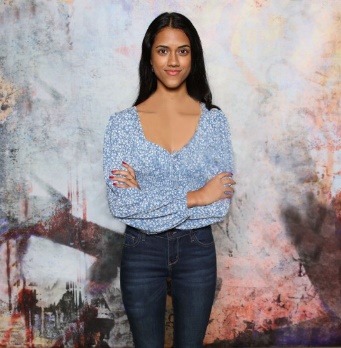
Our first winner, Nicole Varghese, graduated last year from Hunter College with a bachelor’s degree in Economics and a minor in Human Rights. During her time at Hunter, she was involved in the pre-law program and completed internships at a law firm, at the District Attorney’s Office, and at the Richmond County court where she gained firsthand experience in legal research and public service. She is excited to be starting the next chapter of her academic and professional journey this fall at Seton Hall Law School.
| |
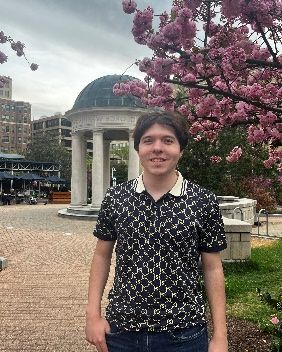
| |  | This spring Jonesy Strell, the second scholarship winner, earned a B.A. in Political Science at the George Washington University Columbian College of Arts & Science. He reports that he has been working on the finance and field organizing team for Representative Josh Riley's campaign. This includes handling fundraising and knocking on doors through Representative Jamie Raskin’s Democracy Summer program. Dealing with what was the most expensive House race in 2024, and the most rural district in America held by a Democrat, has been a whirlwind, but it’s giving him a massive jumpstart in professional campaign finance. He’s glad to be building on the experience he gained from chairing the GWU Student Government Finance Committee. On top of the campaign work, he has been heavily involved in disability and mental health advocacy and recently joined the new Disability Caucus branch of the College Democrats to help push for key initiatives. This builds on the work he started last spring with Students for Mental Health Action, where he met with multiple House and Senate staffers to advocate for mental health reform. Specifically, they have been pushing to add the 988 lifeline number to college ID cards, a cause that is deeply personal to Jonesy as a disabled student with hearing loss
| | |
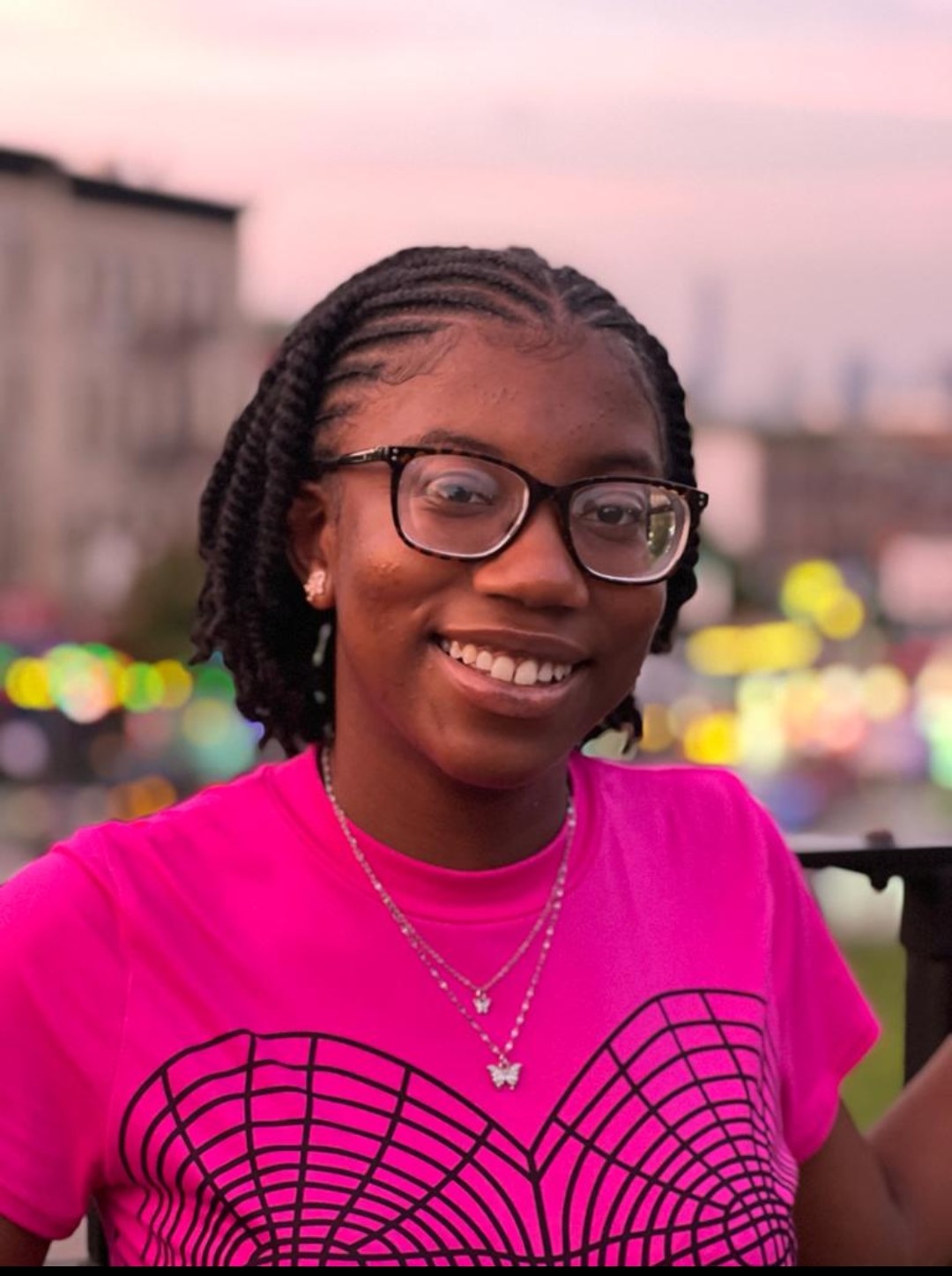
In September, the fourth winner, Kiana Clercin, will enter her junior year at John Jay College of Criminal Justice, where she is majoring in Human Services with a minor in social entrepreneurship. This summer she worked as a summer camp intern in the NYC Summer Youth Employment Program. She recently attended the Department of Health Services field day for students with hearing loss, and the Brooklyn Cyclones baseball game for the NYC Deaf and Hard of Hearing Education Services education community.
| | |
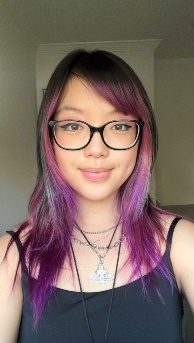
The 2025 winner, Madelyn Kim, is a student at Rutgers where she is a Genetics major and will be Secretary for Rutgers’ Associate of Undergraduate Geneticists Club. This semester, she is working in a lab and is an ambassador/mentor for her major. She reports that she takes every chance to educate her friends about hearing loss and to answer their questions. She has found that now that she is in college people are more curious than judgmental. Most people tell her, “Wow you’re so lucky” because the accommodations Rutgers offers for students with disabilities are great. She has recommended that people apply for accommodations because any help is better than none. In addition, her audiologist has referred her to a genetic doctor who specializes in hearing loss. Her main goal is to combine her hearing loss journey with her professional career in genetics.
| | |
Ruth Bernstein
Travel Tips for People with Hearing Loss
Despite the passage of time, travel rules of the road have not changed for people with hearing loss. We encounter the same problems all the time. The good news is technology has improved a lot, making it easier to cope. We have access to captioning apps on our smart phones (e.g., Google's Live Transcribe, Apple's Live Captions). Airline apps notify travelers online when flights are delayed. There are captioned movies on some flights. Hopefully, onboard announcements will be captioned soon. Read more of this post.
Katherine Bouton
How I "Hear" Music
I’m a total amateur when it comes to music. I can’t play an instrument. I can’t carry a tune. I can’t even dance if it involves learning steps. But I do love music and one of the major losses that came with my deafness was music. Over the years, I’ve discovered some strategies and workarounds. I don’t actually hear music better, but the tricks make me think I do. I was reminded of this when I went to see Paul Simon at Tanglewood early this summer. Read more of this post.
Shari Eberts
LivingWithHearingLoss.com
What I Told a Room Full of Hearing Scientists
Last month I stood in front of a room full of PhD-level hearing scientists and told them what hearing loss actually feels like from the inside — something they spend their careers studying but that many of them may never fully experience. These are the people studying the hair cells, synapses, and biological machinery of hearing—the researchers whose work may one day lead to treatments and cures that people like you and me can only dream about. Read more of this post.
Gael Hannan
Hearing Aids: Visible Signs of Healing
What do our hearing aids tell other people about us? It should be just one thing – the devices help us hear. Not that we’re broken, or lesser than – in fact, just the opposite. Using hearing aids should indicate that we have identified a problem and have taken steps to address it. The adjective ‘broken’ means damaged or no longer working properly. When we develop hearing loss, our auditory system may be broken but we, as people, are not. Read more of this post.
Toni Iacolucci and Peggy Ellertsen
Healthcare with Hearing Loss
Reflection
I have been thinking about what was for many years my default reaction to the all-too-common patient experience of working with healthcare systems that fell short of integrating my communication needs during an appointment or procedure. Almost always, I would feel tense and aggravated, my reaction routinely rooted in the perception that I was placing demands on my providers for which they were not prepared. Often, I felt that my provider had unintentionally relegated my hearing loss to the back burner of our appointment. Read more of this post.
Visit to see our latest resources and sign up for our mailing list to receive updates, new content, and insights that are shaping the future of accessible healthcare.
| | Open-Captioned Broadway Shows | | |
Join TDF Accessibility Programs (TAP) for discount tickets to open-captioned performances at NYC theaters. Here are upcoming offerings. Look for an email from TDF/TAP with ticket information a month before the show.
Good Time Charlie (OC/AD) Wednesday evening, October 14
Buena Vista Social Club Thursday evening, October 15
Good Time Charlie Saturday matinee, October 17
Maybe Happy Ending Wednesday evening, October 21
School Girls Saturday matinee, October 24
Benjamin Button Saturday matinee, November 7
Stranger Things: The First Shadow Friday evening, November 13
The Verge (OC/AD) Saturday matinee, November 14
We'll See (OC/AD) Saturday matinee, November 21
Christmas Spectacular Tuesday, December 15 at 5 pm at Radio City
The Fantasticks Sunday matinee, January 10
If you would like to sponsor open captioning for one of these shows, please contact Kate Garst, Associate Director of Individual Giving and Events at kateg@tdf.org. You will also find the latest theater information on the chapter's Facebook Page.
| | |
Those who are hard of hearing or deaf, have low vision or are blind, who cannot climb stairs, who require aisle seating or wheelchair locations, who are on the autism spectrum or have other developmental or cognitive disabilities, can find out everything they need to know to choose a show, buy tickets, and plan their trip to Broadway by visiting Theatre Access NYC.
| | Having Trouble with Closed Captioning on TV? | | |
Closed captioning (CC) gives people with hearing disabilities access to television programming—and provides a critical link to news, entertainment, and information—by displaying the audio portion of broadcasts as text on the television screen.
If you are a Spectrum Cable customer and experience captions missing on a program or channel, please report it. Spectrum now has a direct phone number to a disability specialist that bypasses the recorded prompts on its general phone number: 844-762-1301. A cable company is unlikely to know of captioning failures, and remedy these failures, if they're not reported.
And if you're unhappy with the quality of the closed captioning on a specific program, make your voice heard by filing a complaint with the FCC. Be sure to cite the channel, network, and time of outage. It only takes a few minutes. Click here.
After you file a complaint, please let us know at info@hearinglossnyc.org.
| | |
BECOME A MEMBER: As the nation's leading organization for people with hearing loss, we provide information, education, support, and advocacy for the millions of Americans coping with hearing loss. To become a member, click here.
DONATE: Searching for the perfect way to observe a loved one's birthday, anniversary, or special occasion, OR to honor the memory of someone special? Please consider making a gift to HLAA-NYC Chapter to support our efforts. You can donate on our website, at hearinglossnyc.org, by credit card or by Zelle (email donations@hearinglossnyc.org for details). Or you can mail a check (payable to HLAA-NYC) to HLAA-NYC Chapter, P.O. Box 602, Radio City Station, New York, NY 10101. Please include your name and address as well as the name of the person you're honoring. An acknowledgement will be mailed. Donations are tax deductible.
| | |
Do You Have Hearing Aids
You're No Longer Using?
| | Consider donating them to the House Institute. For more information, go to the HLAA-NYC website, www.hearinglossnyc.org, and click on RESOURCES. | | Mention of goods or services in this newsletter does not mean HLAA-NYC endorsement, nor should exclusion suggest disapproval . | | | | |