HOMERuN Collaborative: SPOT On Trial: Continuous Pulse Oximetry vs. Intermittent Spot Pulse Oximetry Checks in Hospitalized Medical Patients | | The Hospital Medicine Reengineering Network (HOMERuN) is a rapidly growing collaborative made up of more than 50 Hospital Medicine groups from academic and non-academic hospitals across the United States. | | Organizers and Focus Group Facilitators: Valerie Vaughn, Julia Szymczak, Andrew Auerbach, Victoria Tiase, Stephanie Edwards | | Use of continuous pulse oximetry (CPox) has become increasingly routine for hospitalized patients. While there are obvious benefits for select indications (post-operative monitoring, known hypoxia), it is less clear whether expanded use of CPox more broadly in general medicine patients is justified given the lack of evidence of benefit. Hospital leaders requested our help in prospectively evaluating whether it is reasonable and safe to de-implement CPox for most patients and to identify any subgroups who SHOULD receive CPox — but data on how CPox are used nationally are sparse. Thus, we discussed this topic on a HOMERuN Collaborative call. We present the key findings from guided discussion in 5 small breakout sessions. | | Variability in Standard Practice for Oxygen Monitoring of Floor Patients Across and Within Hospitals | | |
We asked HOMERuN participants, "What is standard practice for oxygen monitoring of floor patients at your hospital?" There were reports of structured use and monitoring targeted at specific situations that varied across hospitals. These included specified: units, floors (e.g., pulmonary), patient groups (e.g., hypoxic, receiving opioids), and nurse:staff ratio.
CPox ordering practices were also varied and ranged from built-in admission order sets to ad hoc practices. Generally, hospitalists placed the order, but it was noted that sometimes CPox was implemented without orders, e.g., if nurses were concerned clinically. While some felt CPox was used appropriately and discontinued as patients stabilized, others noted that once started, CPox was difficult to stop.
| | "The CPox monitoring orderset is usually followed; sometimes patients are placed on continuous pulse ox without an order." | | Tradeoffs Between Reassurance vs the Burden Placed on Patients | | |
Clinicians discussed the pros and cons of CPox.
Pros included:
- Earlier recognition of hypoxia or deterioration
- Reassurance gained from overnight monitoring or for patients in isolation
- "Peace of mind" for nurses caring for potentially unstable patients
In some cases, family members and patients preferred added monitoring.
| | |
Cons included:
- Downsides related to patient experience (discomfort, frustration from being tethered, sleep disruption, and limited mobility)
- Clinical workload (time to respond to false positives, alarm fatigue)
- Effects on patient care (delayed oxygen weaning, discharge on unneeded home oxygen, worsening delirium, and missed signs/symptoms due to focus on alarm responses)
There was an overall sense that CPox is often used out of caution or anxiety rather than based on clear, standardized criteria
One patient's comment is below.
| | "It blows my mind that this is such a tangled issue; it should be something that's just cut and dry, not complicated." | | |
The discussion of important outcomes focused on understanding the impact of CPox on providing useful data to improve patient care, the effect on patient experience, and costs. Most agreed that concrete data on the following would help inform CPox practices and policy.
- Percentage of alarms that are "real" and led to a change in clinical decisions or rate of alarms/patient day that change management
- Subanalysis of groups that benefit more from CPox
- Impact on patients (LOS, sleep, delirium)
- Effect on oxygen weaning (i.e., if CPox good, will lead to turn off O2)
- Costs of nursing time, telemetry outcomes/cost
| | Participants in this HOMERuN session completed an online survey assessing CPox use and policies at their hospitals. | | | What percentage of general medicine (floor) patients at your hospital do you estimate are on continuous pulse oximetry on any given day?
Mean (range) |
38% (8% - 98%) | | What percentage of continuous pulse oximetry alerts represent true hypoxemia?
Mean (range) |
33% (0 – 75%) | | | Please indicate your level of agreement with the following statements: | | |
| Strongly Agree/ Agree | Unsure | Disagree/ Strongly Disagree | | Continuous pulse oximetry is overused at my hospital
|
16 (59.3%) |
6 (22.2%) |
5 (18.5%) | | Continuous pulse oximetry is overused generally |
21 (77.8%)
|
4 (14.8%) |
2 (7.4%) | | Continuous pulse oximetry improves patient care |
15 (55.6%) |
7 (25.9%) |
5 (18.5%) | | Continuous pulse oximetry harms patients |
7 (25.9%) |
10 (37.0%) |
10 (37.0%) | | Continuous pulse oximetry leads to alarm fatigue |
23 (85.2%) |
2 (7.4%) |
2 (7.4%) | | Continuous pulse oximetry detects hypoxia earlier |
15 (55.6%) |
7 (25.9%) |
5 (18.5%) | | | | Are nurses allowed to wean oxygen at your hospital?
Yes (%) |
26 (96.3%) | | | |
| Always/ Usually | About half the time | Occasionally/ rarely | | If yes, do they? | 5 (18.5%) | 7 (25.9%) | 14 (51.9%) | | | | "It depends on the nurse. Some will be very active, some you have to constantly ask them." | | "Usually they do but over long periods of time. I would prefer weaning to be aggressive." | | "Titrate orders are placed, but on the floor there is no trigger for this behavior." | | | | Does continuous pulse oximetry monitoring require an order?
Yes (%) |
22 (81.5%) | | | |
| Always/ Usually | About half the time | Occasionally/ rarely | | If yes, is the order followed? | 18 (66.7%) | 0 | 4 (14.8%) | | | | "It is a policy to have continuous pulse ox for PCA users and this is followed very strictly." | | "Often done even without order." | | "Depends on the unit capabilities." | | | |
Conclusion
In summary, CPox practices appear to be largely driven by local culture, workflow, and clinician preference rather than consistent institutional guidelines. While most acknowledge its value for selected higher-risk patients, many questioned whether current use is always aligned with situations where monitoring is most likely to improve patient outcomes. There is a need for data to determine whether the benefits of CPox outweigh the costs for general medicine patients in different contexts.
| | |
Investigators from the POINT Study have published a multicenter study examining the prevalence and characteristics of potentially avoidable Inter-Hospital Transfers (IHTs) among hospitalized medical patients.
Among 1,560 medical patients transferred across 16 U.S. referral hospitals, nearly one-quarter of transfers were classified as potentially avoidable. Most of these transfers involved patients whose care needs could have been managed at the transferring hospital, and many could have been addressed through alternatives to transfer. Teleconsultation emerged as the most frequently identified alternative, suggesting a promising strategy to expand access to specialty expertise while reducing unnecessary transfers.
Potentially avoidable transfers were more common among patients with lower illness severity, transfers delayed more than 24 hours, and transfers driven by care continuity or patient and family preferences rather than the need for specialized care. These findings highlight opportunities to improve transfer decision-making, strengthen regional care delivery systems, and expand telehealth-based approaches that allow patients to receive appropriate care closer to home while preserving access to specialty expertise when needed.
Mueller SK, Singleton S, Mutte M, Yoon C, Lee T, Harris A, Auerbach A, Schnipper J. Prevalence and Characteristics of Potentially Avoidable Interhospital Transfers. JAMA Netw Open. 2026;9(9):e2636614.
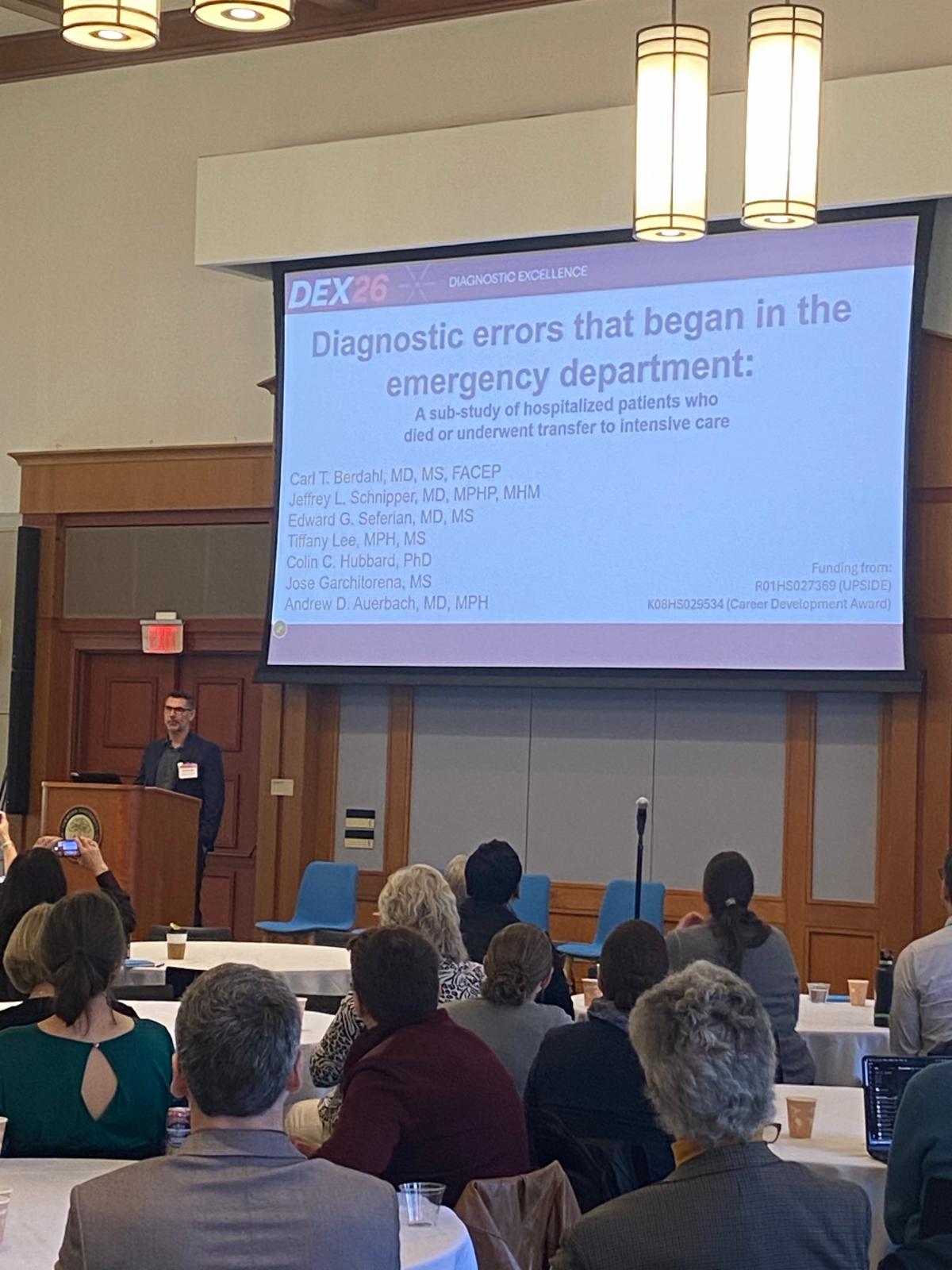
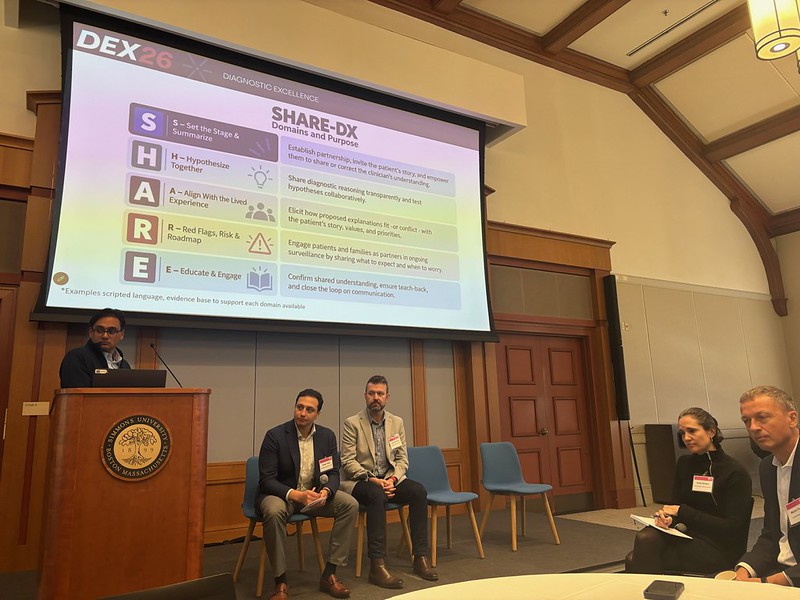
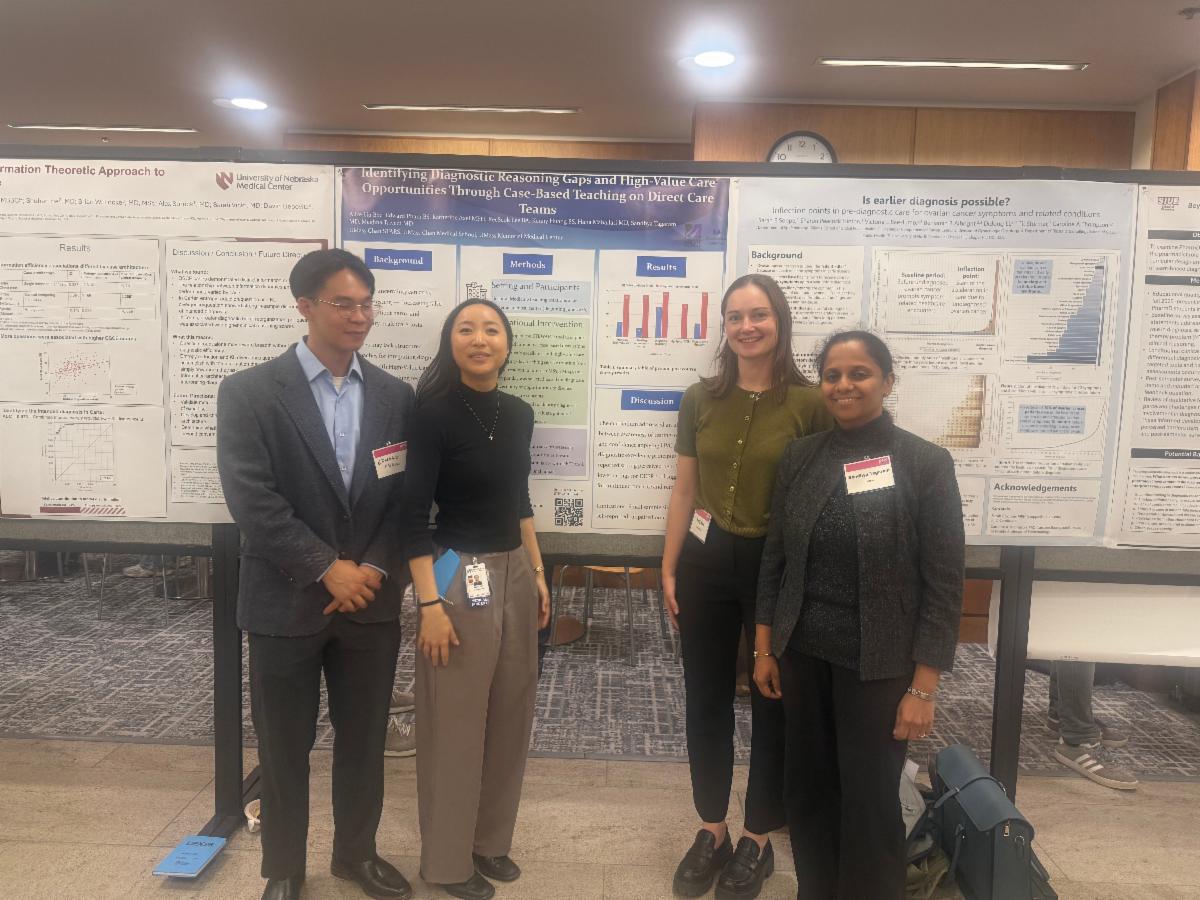
| | Carl Berdahl (Cedars-Sinai) presented his UPSIDE substudy "Diagnostic Errors That Began in the Emergency Department" on the Plenary stage as a "Best of the Abstracts." | | James Harrison (UCSF) and Kieran Patel (WUSTL) presented the ADEPT "SHARE-DX Framework To Engage Patients and Families in Co-Producing Diagnoses at the Bedside" at the Shark Tank. | | Sandhya Tagaram and team members (UMass Memorial) presented their ADEPT poster "Identifying Diagnostic Reasoning Gaps and High‑Value Care Opportunities Through Case‑Based Teaching on Direct Care Teams." | |
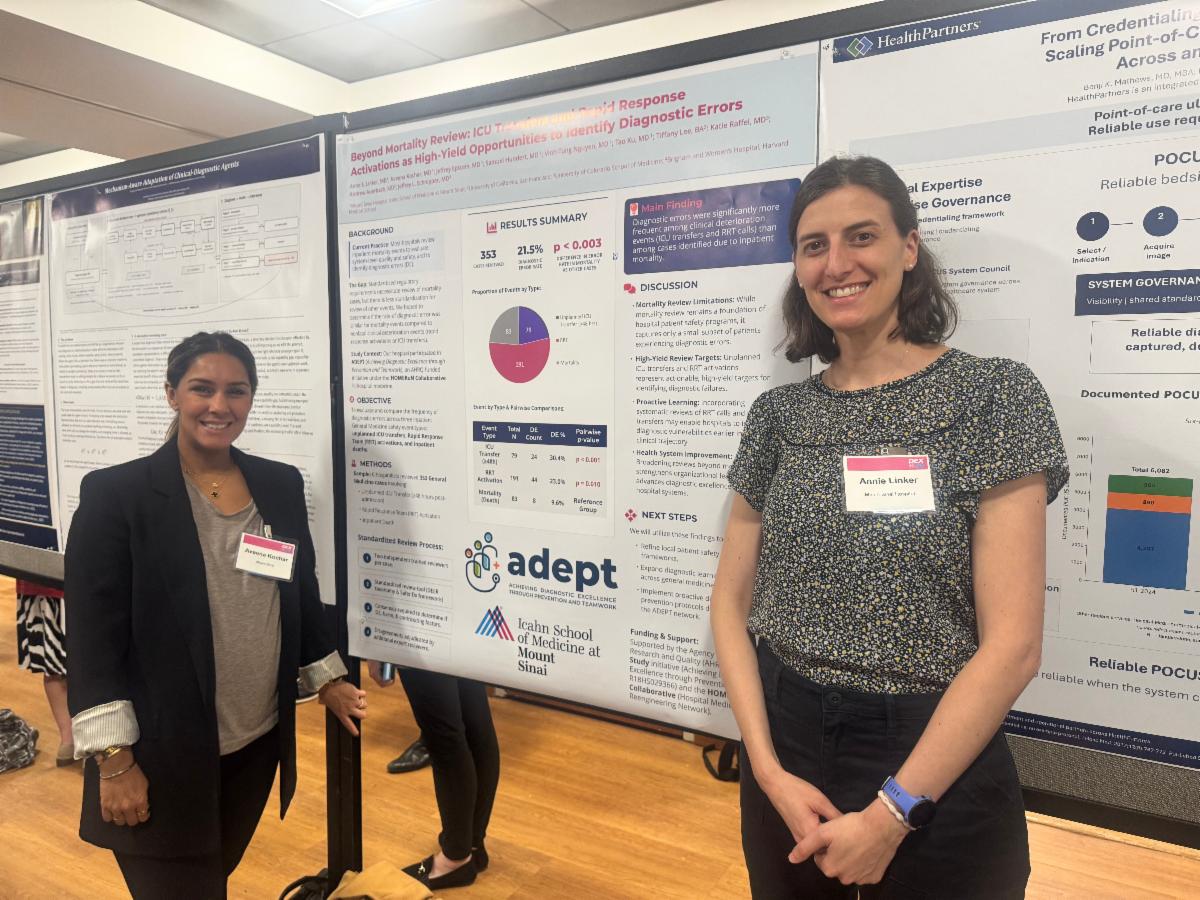
Aveena Kochar and Annie Linker (Mount Sinai) presented their ADEPT poster "Beyond Mortality Review: ICU Transfers and Rapid Response Activations as High-Yield Opportunities to Identify Diagnostic Error." | | Our next HOMERuN meeting will be on November 6, 2026. | | Image Attributions: Icon images from https://www.flaticon.com and https://www.vecteezy.com. | |
If you would like to join the HOMERuN Collaborative calls, please reach out to Tiffany.Lee@ucsf.edu.
| | | | |