HRAF News Vol. 2023-07
HRAF Summer Institute Participant Wins Award
HRAF is pleased to announce that Dithapelo Medupe, a 2022 participant in the NSF-supported HRAF Summer Institute on Cross-Cultural Anthropological Research, was announced as the New Investigator winner at the Human Behavior & Evolution Society 2023 conference for her Royal Society publication on intensive agriculture. We also congratulate HRAF Research Anthropologist Stephen Glazier who has published a Oxford Bibliographies entry for anthropologist Vincent Crapanzano. ln anticipation of the eHRAF legacy applications being discontinued on July 31, we continue to offer monthly webinars for librarians and faculty. This month's featured HRAF Global Scholar, Dr. Antonio Velasco, is engaged in comparative research focused on the anthropology of the paranormal and the psychology of moral reasoning.
Dithapelo Medupe, a Ph.D. student in the Department of Anthropology at Penn State University, was announced as the
the New Investigator winner at the 2023 annual conference for the Human Behavior & Evolution Society. The Summer Institute instructors provided stimulating discussions and training relating to this work.

The Royal Society article titled "Why did foraging, horticulture and pastoralism persist after the Neolithic demographic transition? The Oasis Theory of agricultural intensification" is co-authored by Dithapelo Medupe, Seán Roberts, Mary Shenk, and Luke Glowacki. According to the article, "Despite the global spread of intensive agriculture, many populations retained foraging or mixed subsistence strategies until well into the twentieth century. Understanding why has been a longstanding puzzle." Intensive agriculture may be difficult or impossible to develop in certain ecologies. The authors conclude that "generally lower rainfall and biodiversity is favorable for its emergence."

HRAF Research Anthropologist Stephen Glazier has published a bibliographic entry for anthropologist Vincent Crapanzano with Oxford University Press.

Crapanzano received his A.B. in philosophy from Harvard in 1960 and his Ph.D. in Anthropology from Columbia in 1970. He taught at Princeton (1970–1974) and Queens College (1974–1979). He has served as Distinguished Professor of Anthropology at the Graduate Center City University of New York since 1990.

Glazier writes, "Crapanzano recognized the importance of portraying the 'humanity' of those he studied—even when those studied had been widely vilified." Among his many ethnographic subjects, Crapanzano covered the controversial issue of apartheid in South Africa.

According to Glazier, Crapanzano "understood the writing of ethnography as a process, and he recognized his obligation to accurately represent the moral ambiguity of his informants."

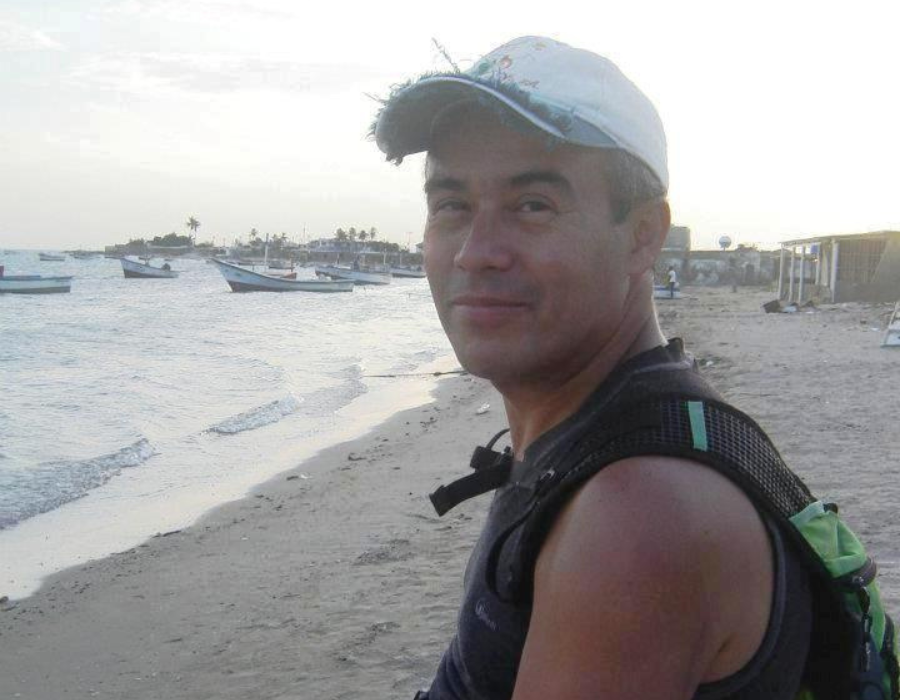
This month we are pleased to feature HRAF Global Scholar Antonio Velasco. Velasco is a practicing lawyer in Venezuela and an adjunct instructor at Universidad de Los Andes where he earned a Ph.D. in Education.

Antonio is utilizing eHRAF World Cultures for ethnographic research on two topics: the anthropology of the paranormal (rituals, beliefs, and structures) and the psychology of moral reasoning. He is analyzing the rituals of the paranormal in different cultures in order to compare their elements in common, their mechanisms, and change over time.

HRAF is honored to welcome Dr. Antonio Velasco as a HRAF Global Scholar for 2023.

ln anticipation of the eHRAF legacy applications being discontinued on July 31, 2023, HRAF is offering a series of monthly webinars. These webinars are designed specifically for librarians and faculty who need assistance in preparing for the application switchover.

Each webinar will take place via Zoom and will last approximately one hour, with training followed by time for questions and answers.
 
Here is the webinar schedule:

Wednesday, July 26, 1 PM EST 
Wednesday, Aug 23, 11 AM EST  
 
To register for one of the scheduled webinars, please click the link below.

HRAF at Yale University|hraf.yale.edu