Visit HSRMs Reorganized Website | | |
Last year we received feedback on a customer satisfaction survey that our website was at times difficult to navigate and resources were not centralized as well as they could be. As a response to this feedback, we recently reorganized the HSRM website. While the content has remained largely the same, there are several elements of the website that have been reorganized. Here are a few key changes:
-
All content related to research safety has now been centralized on the Research Safety webpage. Here you will find information on biological safety, chemical safety, radiation safety, controlled substances, shipping hazardous materials, field research safety, laser safety, exposure monitoring, and lab moves.
-
All of HSRM’s fact sheets, guidance documents, compliance programs, safety alerts, etc. have been centralized on the Document Library webpage.
-
There is now a centralized reporting webpage to report injuries (required to be completed by employees for all injuries) and safety concerns (e.g., report hazardous conditions, safety improvement suggestion, compliance violations).
We hope that you find these changes helpful and welcome any feedback that you may have.
| |
National Fire Prevention Week
October 5-11, 2025
| | |
To recognize Fire Prevention Week, we’d like to remind everyone about the importance of maintaining fire safety in the workplace. While fires are relatively rare at the University, considering the dynamic environment in which we work (e.g., dense populations, shared living spaces, laboratories), maintaining fire safety is critical. Knowing your role in fire prevention and preparedness is essential for protecting yourself and the entire campus community.
Most campus fires are preventable. Focus on these prevention measures:
-
Be smart with cooking: Never leave cooking food unattended, even for a moment. Ensure appliances like toasters, microwaves, and kettles are used properly and away from flammable materials.
-
Check electrical safety: Avoid overloading outlets. Use surge protectors instead of extension cords where possible and never run cords under rugs or across doorways where they can be damaged. Unplug small appliances when not in use. Do not use extension cords as a permanent means of wiring.
-
Buy only listed products: When buying a product that uses a lithium-ion battery look for a safety certification mark such as UL, ETL, or CSA. This means it meets important safety standards.
-
Charge devices safely: Always use the cords that came with the product to charge. Follow the instructions from the manufacturer. Buy new chargers from the manufacturer or one that the manufacturer has approved.
-
Charge your device on a hard surface: Never charge a battery on a bed or other soft surface. Don’t overcharge your device. Unplug it or remove the battery when it’s fully charged.
-
Recycle batteries responsibly: Don’t throw lithium-ion batteries in the trash or regular recycling bins because they could start a fire. Recycle your battery by placing it in a battery recycling bucket located throughout University buildings.
-
Keep corridors clear: Hallways, stairwells, and exits must be kept completely free of storage, trash, and personal items. These are your escape routes in an emergency.
-
Preparedness and response: If a fire alarm sounds, treat it as a real emergency every single time.
-
Evacuate immediately: Do not stop to gather belongings. Feel closed doors with the back of your hand; if they are hot, use an alternate escape route.
-
Use the stairs: Never use elevators during a fire.
-
Know your exit: As soon as you move into a new campus building, identify at least two evacuation routes from your room, classroom, or lab.
-
Go to the rally point: Proceed directly to the designated assembly point for your building as detailed in your Building Emergency Plan.
-
Call for help: Once in a safe space, call 911.
-
Report all fires: Fires which have been extinguished should be reported to your supervisor and/or building manager.
Additional Resources:
| |
Preventing Slips, Trips, and Falls
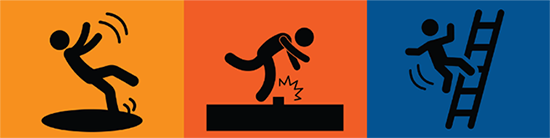
With winter right around the corner, we thought it would be a good idea to remind you of how serious slips, trips, and falls can be and provide a few tips to prevent injuries. Slips, trips, and falls account for approximately 15% of all work-related injuries at the University. A few of the most common risk factors include wet, snowy/icy conditions, uneven walking surfaces, cluttered walkways, poor lighting, and improper footwear.
Here are a few tips to prevent or at least reduce slips, trips, and falls:
- Promptly report icy patches and other hazards to Facilities Management (612-624-2900).
- Wear slip-resistant footwear, especially during the winter season.
- Pay attention to your walking routes and plan your route accordingly.
- Use handrails on stairs and avoid distractions like phones while walking.
- Slow down and take extra caution during inclement weather and use marked pedestrian paths.
- Keep workspaces and walkways free from clutter, cords, or other obstacles.
- Do not stand on chairs, tables, or other surfaces on wheels.
- Never carry equipment or loads in your hands when climbing ladders.
- Store frequently used items in areas that are easily accessible.
Additional Resources:
| |
Vehicle Safety
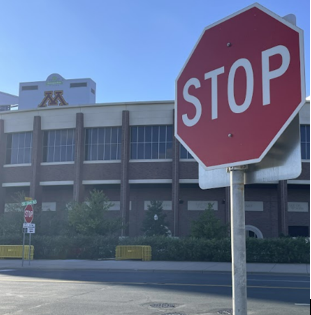
Navigating campus requires awareness and responsibility. With a constant flow of pedestrians, cyclists, and fellow drivers, it's crucial for motorists to wear a seatbelt, obey posted speed limits, and watch out for surroundings. University Public Safety responded to over 80 vehicle incidents last year on the Twin Cities campus. The most frequent type of vehicle accident on campus involves a vehicle backing into a stationary object. Traffic accidents ranged from minor fender benders to wrecked vehicles and injuries. Accidents also happen when employees are traveling across the state or even country on University business. According to OSHA, 38.7% of workplace fatalities between 2018-2022 were transportation related. Here are a few tips to prevent accidents:
-
Always wear your seatbelt: Not only is it the law and a University requirement, but it also saves lives.
-
Put down that cell phone: MN law does not allow handling a phone while driving, you must be hands-free.
-
Stay alert: Watch out for unexpected movements from pedestrians or cyclists, stay especially alert during peak hours when students are heading to or from class.
-
Always yield to pedestrians in a crosswalk: Never count on the other person paying attention, they might be distracted.
-
Park safely: Park only in designated areas and avoid blocking traffic or bike lanes.
-
Maintain a safe following distance: Leave 2-3 seconds of space between you and the vehicle in front of you.
-
Practice defensive driving: Use turn signals and follow all traffic signs and obey speed limits; driving too fast or too slowly is unsafe.
-
Do not drive too long: Take breaks every 2-3 hours, do not drive when tired.
-
Follow the University policy: Using Vehicles for University Business
By practicing these tips and staying aware, everyone contributes to a safer campus community.
| |
Safety Training Consortium
We are excited to announce that the University of Minnesota has joined the Safety Training Consortium (STC), which is a higher education membership organization founded by research universities for the purpose of developing safety training for the research community. This membership allows us to use content from other STC members (e.g., University of California, Yale, Harvard, University of Florida, etc.) and offers training on a broad range of topics such as laboratory safety, biosafety, and workplace safety. Our first STC course, Electrical Safety for Labs (UHS659), was published in Training Hub last month. We plan to use STC content to create several additional safety courses in the near future, such as PI Responsibilities, Pressure Vessel Safety, and Managing Pyrophoric Compounds. If there is a specific training topic that you are interested in, please let us know in the HSRM Feedback Survey.
| |
HSRM 2025 Client Satisfaction Survey
HSRM recently sent a request to the University community to complete a client satisfaction survey. Our goal is to use your feedback to make improvements to our programs and services. If you have not yet completed the survey, we would greatly appreciate it if you would take a few minutes (less than 5 minutes) to complete our short client satisfaction survey. Thank you.
| |
HSRM is here to help!
-
Ergonomics: Would you like to have an ergonomic evaluation conducted? Visit our Ergonomics web page and schedule an appointment to visit our Ergonomics Showroom.
-
Regulated Waste: Have questions about how to properly dispose of regulated waste (biological, chemical, radiological)? Visit our Hazardous Waste Disposal web page or contact our Regulated Waste team directly at hazwaste@umn.edu.
-
Hazard Assessment: Have questions about how to properly handle a hazardous chemical, proper PPE, or need a laboratory safety consultation? Contact our Research Safety team.
-
Health and Safety Training: Interested in learning more about the health and safety courses that HSRM offers? Visit our Training website to view the online training courses that we offer.
-
Safe Campus: Want to learn more about additional safety resources offered by the University such as public safety and personal well-being resources? Visit the Safe Campus web page.
Please feel free to contact us anytime at:
hsrm@umn.edu
(612) 626-6002
| | | |
| |
Suggest a topic for a future newsletter or provide feedback to HSRM
Is there a topic that you would like us to include in a future HSRM newsletter? Would you like to provide HSRM with feedback on this newsletter or more broadly on our services? If so, please go to the HSRM Feedback Survey.
| | | | Have a question for HSRM? | | | | |