HUPOST Editor: Aleksandra Nita-Lazar | Staff Editor: HUPO Office | July 2026 | | |
HUPO 2026: Connect, Learn & Advance Your Career
With HUPO 2026 just weeks away, delegates can look forward to five days of scientific discovery, professional development, and opportunities to connect with colleagues from around the world.
Highlights include:
• Mentoring Sessions covering topics such as moving from postdoc to PI and navigating different career paths
• Early Career Researcher opportunities, including the 3-Minute Thesis Competition and ECR Manuscript Competition
• Pre-Congress Workshops & Training Courses covering emerging technologies, computational approaches, drug discovery, AI, and more
• Flash Talks & Poster Sessions providing opportunities to share your work and connect with researchers working across the field
• Bioinformatics Hub sessions exploring AI, data resources, reproducibility, spatial proteomics, and emerging computational approaches
• Day of the Research Initiatives, bringing the community together to explore the future direction of proteomics
Explore the Full Scientific Program: https://2026.hupo.org/scientific-program/
Connect Beyond the Science
HUPO 2026 offers plenty of opportunities to build connections outside the scientific sessions, including the Welcome Networking Reception, Friends of HUPO Poster Reception, and Early Career Researcher Networking Night (Ticketed Event).
The HUPO Gala Dinner at Gardens by the Bay (Ticketed Event) will bring delegates together for an evening of dinner, dancing, and networking inside Singapore's spectacular Flower Dome.
Gala Dinner tickets are almost sold out, with only 21 tickets remaining.
Learn More & Purchase Tickets Now: https://2026.hupo.org/registration/
Accommodation Selling Fast
Official HUPO 2026 accommodation is filling quickly. The Pan Pacific Singapore and PARKROYAL COLLECTION Marina Bay offer particularly convenient access, with direct connections to Suntec Singapore Convention & Exhibition Centre, the venue of HUPO 2026. The Carlton Hotel Singapore is approximately 10 minutes from the venue.
View Accommodation Options: https://2026.hupo.org/accommodation/
We look forward to welcoming you to Singapore for HUPO 2026 | September 27–October 1, 2026 under the theme:
Proteomics Plus: Transforming Lives
| | |
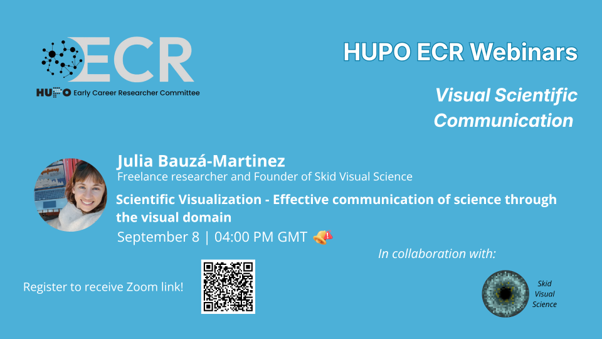
Upcoming HUPO ECR Webinar in September!
Did you know that nowadays, research is not just about doing science?
Today, scientists must develop a wide range of transferable skills, including scientific communication. The ability to effectively communicate your science and insights is an essential skill for any researcher. Do you want to design figures that not only look great but communicate your science with clarity and impact?
These and many other topics will be covered by our speaker Julia Bauzá Martinez in the Visual Scientific Communication webinar, hosted by the HUPO ECR Committee in collaboration with Skid Visual Science.
We look forward to seeing you there!
#HUPO #EarlyCareerResearchers #ScientificWriting #OralCommunication #VisualCommunication #Proteomics
| | |
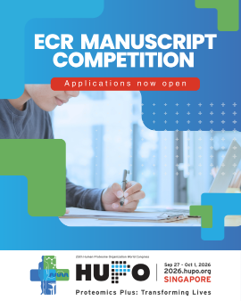
HUPO ECR Manuscript Competition Finalists!
The HUPO Early Career Researcher Committee would like to thank everyone who submitted their work to the HUPO 2026 ECR Manuscript Competition. We are grateful for the strong participation in this year's competition and are pleased to celebrate the researchers selected as finalists.
Three finalists have been selected and will present their work in a dedicated session at HUPO 2026 in Singapore on Tuesday, September 29, 2026. The winner of the ECR Manuscript Competition will receive a cash prize of USD $1,000, while the two runners-up will each receive USD $500. We invite all conference attendees to join us for this exciting session!
We would like to introduce this year’s finalists and highlight the outstanding research that brought them to the competition stage:
| | |
Claudia Ctortecka
As a CLP Translational Proteomics Fellow at Northwestern University, she works with Neil Kelleher’s team to develop top-down proteomics approaches that complement single-cell bottom-up workflows, with an emphasis on kidney tissue heterogeneity and brain tumor progression.
Previously, she was a postdoctoral researcher in Steve Carr’s lab at the Broad Institute of MIT and Harvard, where she advanced single-cell proteomics and immunopeptidomics workflows using the timsTOF platforms. Her Ph.D. at the Vienna BioCenter, under Karl Mechtler and Sasha Mendjan, centered on the development of the first commercially available single-cell proteomics approach with the proteoCHIP and profiling of cardiac organoids.
As Chair of the Single Cell Initiative at the Human Proteome Organization, she advocates for reproducibility and collaboration across the proteomics community.
As of mid-2026, she is transitioning to Amsterdam UMC and Vrije Universiteit Amsterdam to establish a unit dedicated to single-cell and spatial proteomics, with a focus on the intersection of neurobiology and oncology.
| | | |
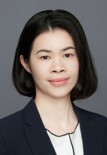
Yingqin Li
Yingqin Li, Ph.D., M.D., is a Junior Researcher at Sun Yat-sen University Cancer Center in Guangzhou, China. She earned her PhD under Prof. Jun Ma at Sun Yat-sen University, focusing on molecular subtyping-based precision therapy for nasopharyngeal carcinoma (NPC) and bridging molecular stratification with clinically actionable biomarkers. In close collaboration with Prof. Fuchu He's team at the National Center for Protein Sciences, Beijing, she delineated the multi-omic landscape of response to induction chemotherapy, uncovered novel cross-level molecular mechanisms underlying therapeutic vulnerabilities, and developed a new proteomic-subtyping system to predict therapeutic outcomes in NPC. Her work represents a promising strategy to classify NPC populations based on their varying chemotherapy responses and further guides additional anti-PD-1 therapy to improve therapeutic efficacy.
| | |
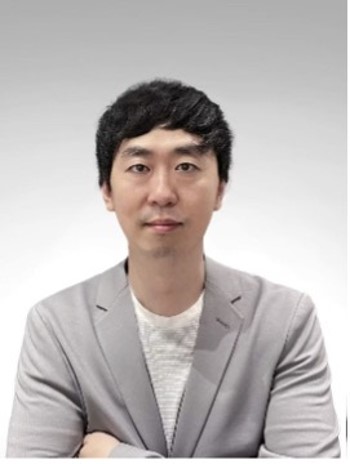
Jinjun Gao
Dr. Jinjun Gao is an Assistant Professor and Manager of the AI for Life Science Platform at Peking University Shenzhen Graduate School. He obtained his Ph.D. from Peking University in 2019 under the mentorship of Prof. Chu Wang, specializing in chemoproteomics and computational proteomics. Dr. Gao then pursued postdoctoral training at The University of Chicago under the guidance of Prof. Yingming Zhao, expanding his expertise into wet-lab proteomics and histone PTMomics.
Throughout his doctoral training, Dr. Gao developed several innovative chemoproteomics tools, including SESTAR for high-sensitivity targeted proteomics, CIMAGE as first tailored quantification software for activity-based protein profiling (ABPP) data, and rdTOP-ABPP for triplex quantitative chemoproteomics. He also developed CHiMA for comprehensive histone mark identification during his postdoc research and advanced the understanding of protein lactylation by demonstrating that L-lactylation is the predominant form induced by the Warburg effect and hypoxia, highlighting its potential as both a hypoxia biomarker and a therapeutic target. These studies have led to (co-)first-author publications in journals such as ACS Central Science, Science Advances, Nature Chemical Biology, and PNAS. Dr. Gao also serves as a Youth Committee Member of CNHUPO and reviewer for journals including Nature Computational Science, Nature Chemical Biology, Nature Synthesis, and JACS.
Since establishing his independent lab at PKU Shenzhen in 2024, Dr. Gao has focused on driving technological innovations in chemoproteomics by harnessing the power of AI. His lab utilizes these advanced methods to systematically explore the diverse landscape of protein PTMs through three interconnected directions:1) Discovering novel types of lysine acylations to illuminate the "dark proteome"; 2) Decoding the regulatory mechanisms and biological functions of lysine acylations; and 3) Profiling clinical samples to discover novel biomarkers and drug targets.
| | | We would also like to thank Taylor & Francis for their continued support of the HUPO ECR Manuscript Competition. | | |
HUPO ECR Mentoring Sessions
Looking for practical career advice, insights from experienced researchers, and strategies to thrive in academia? This year’s Mentoring Sessions bring together experts to provide their perspectives on some of the most important transitions and challenges in a scientific career.
Join us for three engaging sessions designed to help you plan your future, succeed in research, and navigate the road to academic independence.
PhD Priorities for Different Career Paths: How to Get Where You Want to Go
What should you focus on during your PhD to achieve your career goals? Whether you see yourself in academia, industry, or beyond, this session will help you identify the skills, experiences, and priorities that matter most. Learn what employers are looking for in the industry, what makes a strong academic researcher, and how to make strategic decisions that support your future success.
Being a Scientist: Balancing Research, Teaching, Administration, and More
Modern researchers wear many hats. Beyond conducting great science, they are teachers, mentors, managers, administrators, and grant writers. How do successful scientists handle these competing demands while maintaining productivity and well-being? Hear from world-class researchers as they share practical strategies for managing responsibilities, staying focused under pressure, and building a sustainable academic career.
From Postdoc to PI: Navigating the Path to Research Independence
The transition from postdoctoral researcher to principal investigator is one of the most exciting—and challenging—steps in academia. How do you establish your scientific identity, secure funding, build collaborations, and launch your own research program? Join this session to gain valuable insights into the journey toward research independence and learn about the opportunities and challenges that await along the way.
Speaker announcements and session schedules will be revealed in the next HUPOST —stay tuned!
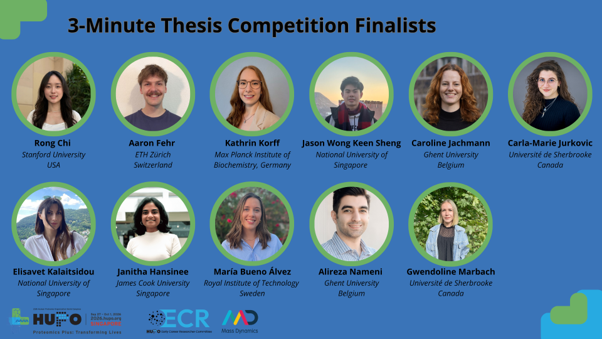
3-Minute Thesis Competition Finalists!
| | |
Pick up fresh inspiration from out-of-the-box stories.
The Three-Minute Thesis Competition will take place at the HUPO World Congress in Singapore on Monday, September 28th. Eleven young scientists from diverse proteomics fields will transform complex science into simple words with just one slide! Three minutes - three prizes, sponsored by Mass Dynamics.
| | |
Kick off HUPO 2026 with the ECR Networking Evening @ OverEasy!
| | |
Calling all Early Career Researchers! Ready to make connections that last a lifetime—minus the awkward formal pressure? Before the massive conference hall hustle begins, come mingle with your peers in the coolest, most relaxed spot in town.
Join the HUPO ECR Committee for an evening of casual vibes, great conversations, and stunning waterfront views. Whether you’re looking for a future collaborator, a postdoc mentor, or just someone to grab coffee with between sessions, this is where it starts.
The Details
● Where: OverEasy, Singapore (541 Orchard Rd / One Fullerton)
● When: Sunday, 27 September, 2026, 7:30 PM til late
● Who: All HUPO Early Career Researchers (Seasoned pros are also welcome 😀)
● Vibe: Relaxed, friendly, and totally informal.
Why you should be there:
● Break the Ice Early: Set a confident, connected tone for the rest of the HUPO conference.
● Expand Your Circle: Meet fellow researchers from all corners of the globe who are at the exact same stage of their careers.
● Unwind: Enjoy great food and drinks at Singapore’s ultimate American diner-concept hotspot.
Spaces are limited! Secure your spot when registering for the conference. See you there!
| | Highlighting a member of HUPO, we invite a diverse group of researchers from different career stages, disciplines, geographical locations, and ethnicities to submit a profile for our monthly spotlight. This initiative aims to improve visibility of HUPO members, advertise research, and enhance the HUPO community. This month we are featuring: | |
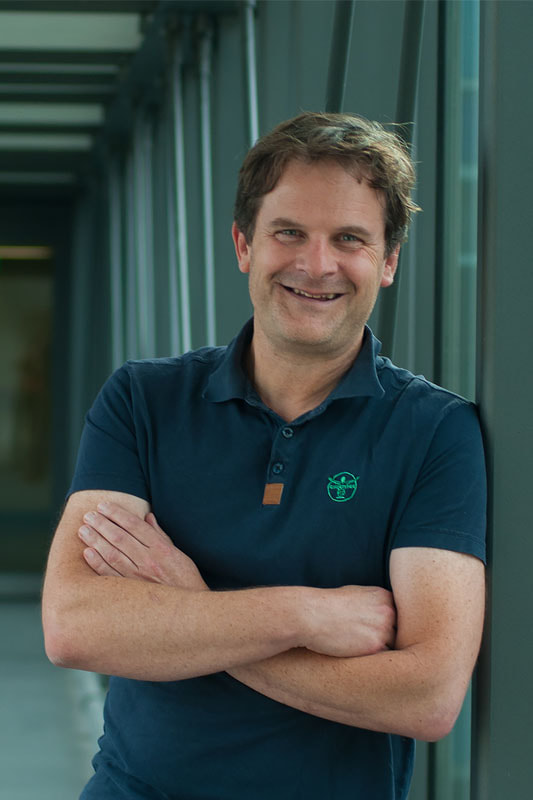
Dr Gunnar Dittmar, Luxembourg
What is your current position and location?
I am a research group leader at the Luxembourg Institute of Health (LIH) and an affiliated professor for proteomics at the University of Luxembourg. My laboratory is based in Luxembourg, a small country at the heart of Europe, and our work spans four areas: the development of novel mass spectrometry methods, biomarker discovery, large-scale interactomics using our PRISMA technology - which maps where proteins bind to a target by running hundreds of parallel peptide pull-downs - and the study of post-translational modifications, with a particular focus on ubiquitin and ubiquitin-like modifiers.
How did you get started in the field of proteomics?
During my time as a post-doc at Harvard Medical School, I got interested in mass spectrometry-based identification of proteins. This interest evolved further when I started my first laboratory and led to me setting up the first proteomics core facility at the Max-Delbrück Center for Molecular Medicine in Berlin, Germany.
Read Full Article...
| | |
The job board on the HUPO website is a valuable resource for both employers and individuals seeking ideas and opportunities.
If you have a job posting and would like to advertise it, send your information to office@hupo.org. For more information and job listing details - visit the website here.
| | Disclaimer: HUPOST provides general information for subscribers. Submissions are welcomed from HUPO members. Articles are to be submitted to HUPO office by 20th of each month (date subject to change without notice) for review by the Editor for suitability. HUPO assumes no liability for errors or omissions in the contents. | | | | |