|
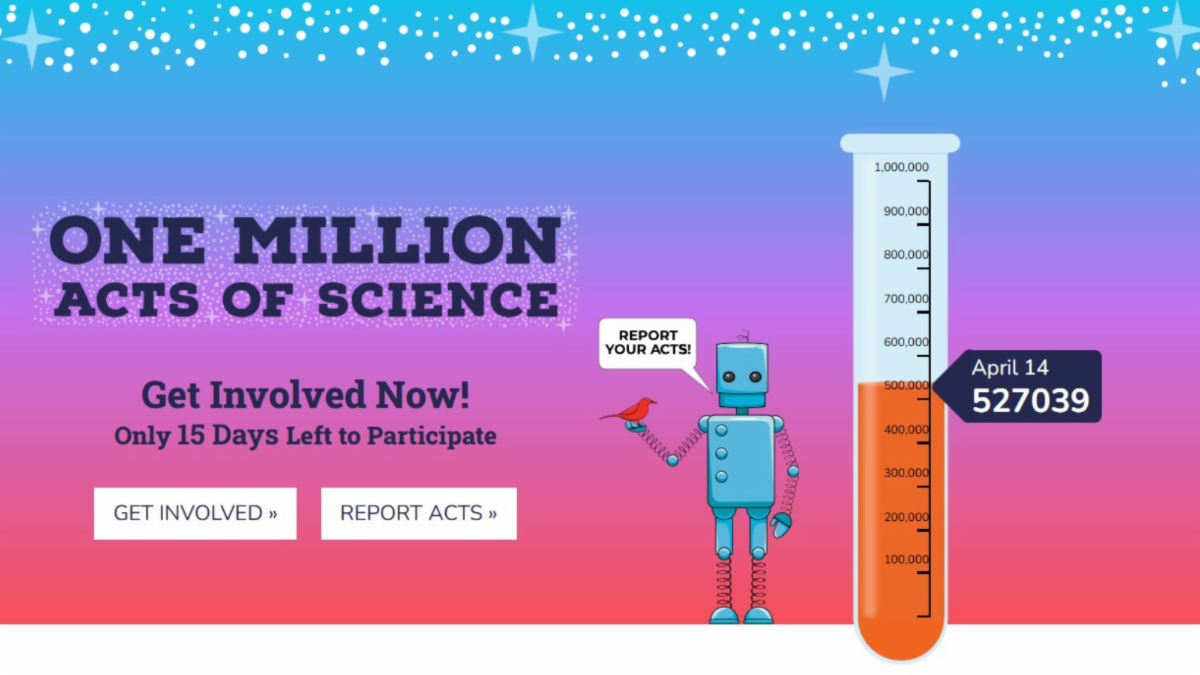
🎸 "Oh, we're halfway there!" 🎸We’ve hit the midpoint of our Citizen Science Month challenge to reach One Million Acts of Science! In addition to all the individual participants, the Girl Scouts have added thousands of Acts to help accelerate research on Alzheimer's, service members and veterans are engaging in NASA citizen science projects, and Europe has joined the challenge in a BIG way this year.
Find more awesome examples by scrolling the Wall of Fame on CitizenScienceMonth.org. Post your own Act of Science — whether you've attending a citizen science event or logged data for a project — with the hashtag #OneMillionActsofScience, and you might be featured, too!
There's still time for you to find and do a project or event, then report your Act of Science for a chance to win prizes! You'll find everything you need, including step-by-step instructions on CitizenScienceMonth.org.
Cheers,
The SciStarter Team
| | | |
|
Every Act counts! An Act of Science is any contribution to real research—snapping a nature photo, analyzing images, tracking air quality, attending a citizen science event, and more.
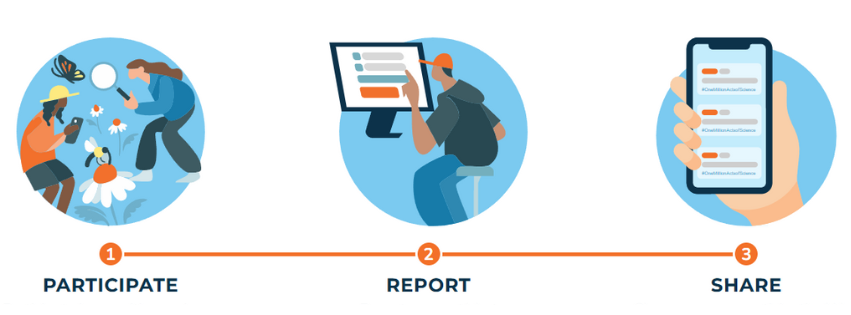
This April, we challenge the global community to once again reach One Million Acts of Science. It’s as easy as 1, 2, 3: Participate, Report, Share. Let’s make an impact together!
Location: Global
| | | |
| | |
Looking to move up on the One Million Acts of Science leader board? Check out these powerhouse projects where every click, report, or observation can add up to thousands of Acts of Science:
-
CoCoRaHS: Report daily rain, hail, or snow from your backyard to support climate research and forecasts.
-
Project Sidewalk: Make cities more accessible by mapping sidewalks and curb ramps, all from your computer.
-
Zooniverse: Help researchers explore space, history, and nature through dozens of online projects — one click at a time.
Location: Global
| | | |
| | |
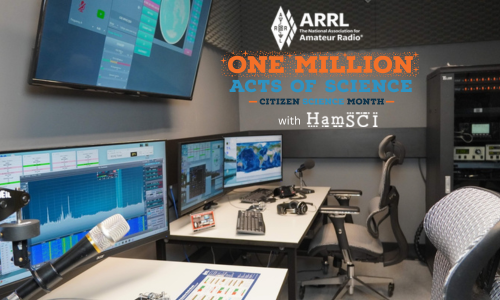
Attend a Ham Radio Open House event this month to explore how amateur radio helps scientists study the Sun and Earth’s atmosphere. Tune in, test antennas, decode real signals. 📡
Location: USA
| | | |
| | |
Join us online April 16 for two live citizen science sprints—led by SciStarter Ambassadors, trained volunteers who’ll guide you through a new project every 30 minutes.
Drop in for the Afternoon (12–2:30 PM ET), Evening (6–10 PM ET), or both. No experience needed—just curiosity and an Internet connection!
Location: Global
| | | |
| | |
Light pollution affects stargazing, migrating birds, and even human health — but you can be part of the solution! Join the Globe at Night project by heading outside after sunset, finding the featured constellation, and reporting what you see to map light pollution across the globe.
Location: Global
| | | |
| | |
On April 22 at 6 PM ET, join a free, online, interactive Earth Day event with SciStarter and STAR Net. Discover citizen science projects about plants, birds, migration, and more through quick lightning talks and a live Q&A with experts.
📍 Host a watch party at your library or join from anywhere!
Plus...no better way to commemorate Earth Day than by participating in one of the many SciStarter affiliate environmental projects. Find some of our favorites on the calendar.
Location: Global
| | | | | | |
Earn Badges and Prizes!
Between April 1-30, 2025, create a SciStarter Account and participate in any SciStarter Affiliate project to earn the One Million Acts of Science badge and become eligible for prizes! Shirts, hats, tote bags, citizen science tools, and more are all available while supplies last!
| |
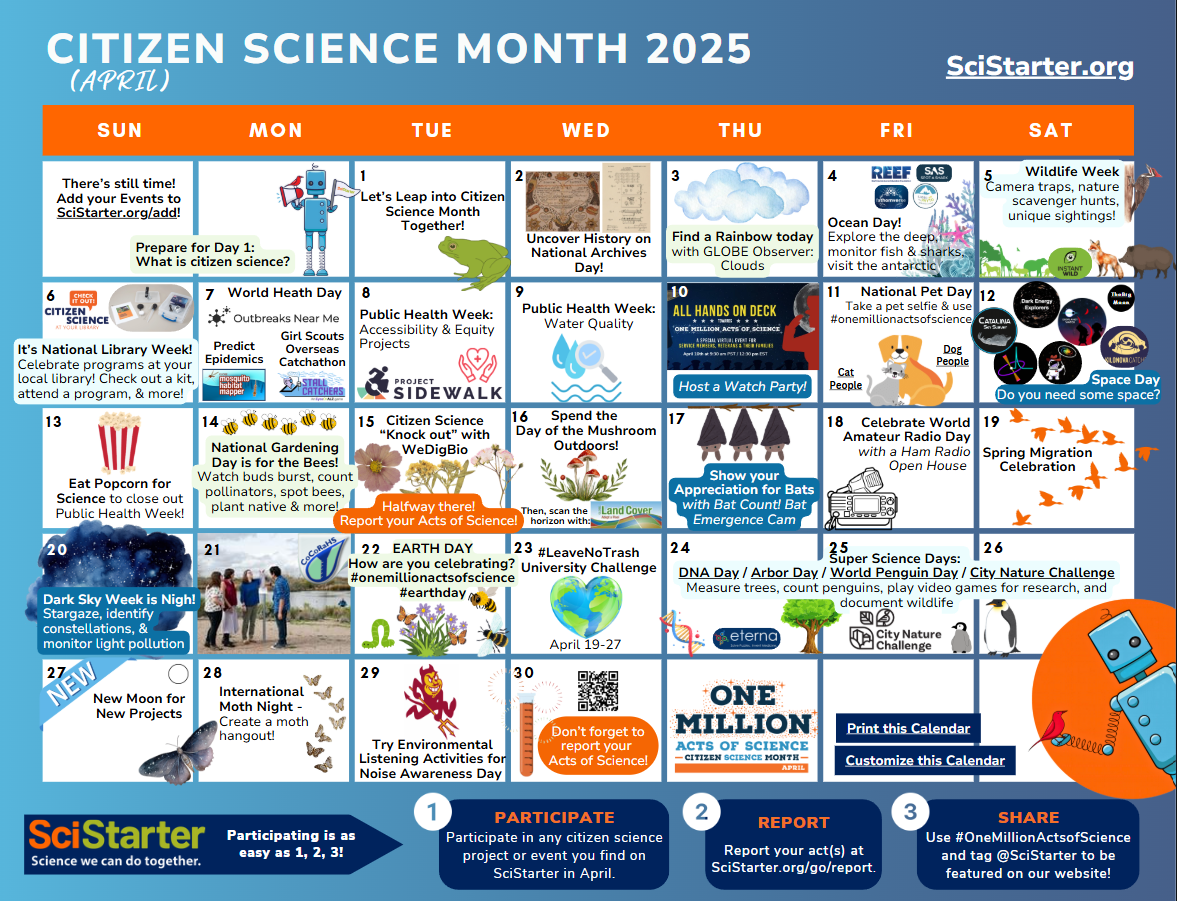
April is packed with citizen science events and programs!
Check out the online, printable calendar.
| | |
New projects featured on SciStarter:
| | |
For practitioners:
Planning activities or events for Citizen Science Month? Consider inviting a SciStarter Ambassador to help! Check out the SciStarter Ambassador Directory to see if there's an Ambassador near you. New cohorts are being added, so check back frequently.
| | | | |