|
Daily Transportation News
March 2, 2026
| | | Hanoi Sets Target for Fully Green Taxi Fleet by 2030 | |
|
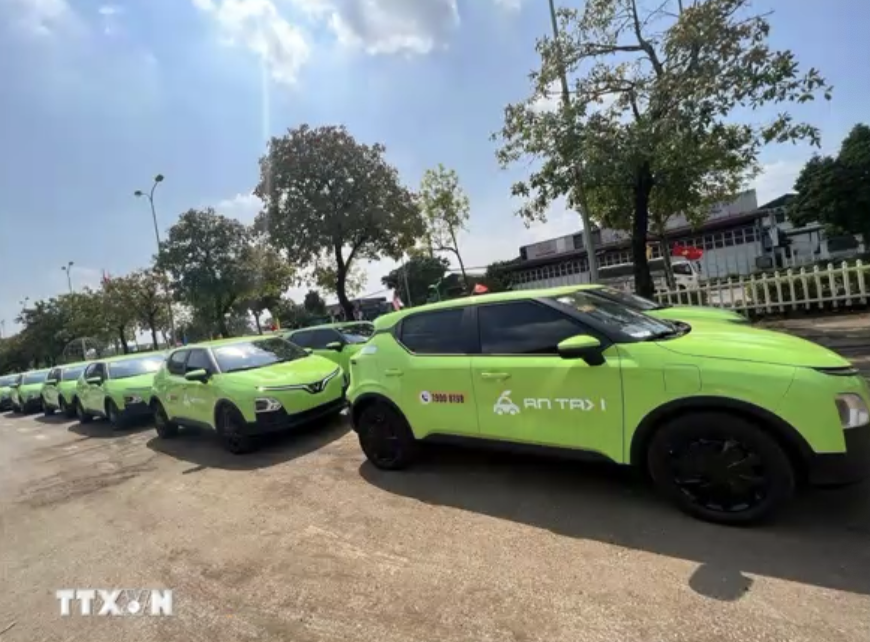
Hanoi aims to convert 100% of its petrol- and diesel-powered taxis to electric and green-energy vehicles by 2030 under a plan issued by the municipal People’s Committee on February 27.
The roadmap outlines specific targets for 2026–2030. The share of taxis using electric and green energy is expected to reach 63–64% in 2026, 68–70% in 2027, 74–77% in 2028, 88–96% in 2029, and 100% by 2030.
Between 2026 and 2030, the city will finalise mechanisms and policies to support taxi operators in switching from fossil fuels to clean energy. Communications campaigns will be intensified to build public consensus, while the construction of charging stations at taxi parking areas will be accelerated.
After 2030, Hanoi will focus on maintaining stable operations of electric and green energy-fueled taxis, prioritising access to charging infrastructure, pick-up and drop-off points, and traffic arrangements suited to clean-energy vehicles.
Relevant departments will review and adjust regulations on charging station planning, power grid connectivity, parking and stopping points, and the application of management technologies in line with technological advances and practical demand. The goal is to optimise operational efficiency while ensuring safe, convenient services consistent with the capital’s sustainable urban transport strategy.
Source: Vietnam Pictorial
Click Here to Read More
| | Taxi Drivers in Czechia Must Pass Czech Language Test Under New Law | |
|
Foreign drivers operating for ride-hailing platforms in Czechia are facing a new hurdle as a looming legal amendment will soon require a basic command of the Czech language.
In anticipation of the change, Bolt, one of the country’s largest transport services, has launched specialized language courses to help its drivers meet the upcoming standards.
The proposed amendment to the Road Transport Act, currently being finalized by the Ministry of Transport, aims to ensure that all taxi and platform drivers can communicate effectively with passengers and authorities.
"The main goal is to ensure that drivers...demonstrably command the Czech language to the extent necessary for communication with customers," Ministry spokesperson František Jemelka told Novinky.cz.
The shift follows a dramatic surge in the number of taxi licenses. In Prague alone, the number of drivers has grown from 5,000 a decade ago to approximately 16,000 today.
Data from the Prague Magistrate shows that only about half of these drivers are Czech citizens. The second largest group is Ukrainians, who number approximately 6,000, followed by significant numbers of drivers from Uzbekistan and Nigeria.
Source: Expats CZ
Click Here to Read More
| | |
Lyft Offers Rides to Trans Kansas Residents as Driving Licenses Voided
After Kansas brought in a law banning trans people from using driving licenses that align with their chosen identity, Lyft is offering the community discounted rides. The sweeping anti-trans bill, SB244, bans trans and non-binary Kansans from using public toilets and locker rooms consistent with their gender identity and invalidates state-issued driver’s licenses, identification cards and birth certificates for holders whose gender marker does not mark their sex assigned at birth. Researchers have said that the ID ban in Kansas, one of the first states to invalidate state-issued identification documents that were legally obtained, will have huge health and social consequences.
Click Here to Read More
MARTA Is Rolling Out aMajor Bus Network Overhaul and a New On‑Demand Rideshare Service
The biggest MARTA bus system overhaul in decades is about to change how thousands of metro Atlantans get around. Starting on April 18, the transit agency will launch its redesigned NextGen Bus Network, which will dramatically increase bus frequency on high‑demand routes while shifting low‑ridership areas to a new on‑demand service called MARTA Reach.
Click Here to Read More
Tesla’s Robotaxi Hits Paperwork Problem: Zero Miles, Zero Permits — But Tesla Never Even Applied?
State DMV records, previously unreported, reveal that Tesla logged exactly zero miles of autonomous test driving on California roads in 2025 — the sixth consecutive year of inactivity. California’s regulatory path for robotaxis is straightforward but demanding. Companies must work through a series of permits before they can run a driverless ride-hailing operation like Alphabet’s Waymo. Logging test miles on public roads is a non-negotiable part of that process.
Click Here to Read More
| |
Lack Of Public Transit Limits Access to Education, Work for Youth in Montreal's East End, Report Finds
Youth in Montreal's east end are more susceptible to social isolation, financial precarity and issues accessing higher education because of a lack of public transit services in the area, a recent report suggests. The report, entitled Oubliés au terminus, was tabled by the Rivière-des-Prairies–Pointe-aux-Trembles youth council earlier this month. It highlights the realities of youth in the borough who regularly find themselves having to sit in a bus and metro for more than an hour to arrive anywhere near the downtown area.
Click Here to Read More
More than 1,500 OC Transpo Bus Trip Cancellations Last Week
OC Transpo says there were more than 1,500 bus trip cancellations in the third week of February. New data released Friday shows there were 1,527 bus trip cancellations for the week of Feb. 15 to 21, accounting for 3.4 per cent of all planned trips that week. Nearly 400 trips were not delivered on Feb. 20, when 11.6 cm of snow fell. This is lower than the week prior, which saw more than 2,000 trip cancellations, but is part of an ongoing pattern of bus service delivery falling below OC Transpo’s own reliability targets.
Click Here to Read More
'A Silent Menace': E-Scooter, E-Bike Debate Hits Another GTA City
It’s a debate Ontario municipalities have been facing down for years, particularly in large urban centres like Toronto – what to do with e-bikes and e-scooters showing up on sidewalks, in bike lanes and on the roads, particularly as the mode of transportation becomes more popular. That debate showed up in Mississauga on Wednesday as Coun. Dipika Damerla brought forth a motion, calling on the Ford government to regulate e-scooters and e-bikes like other motorized vehicles, specifically to look at licensing and registration.
Click Here to Read More
| |
Flying Taxis to Be Rolled Out This Year, but Will Dublin Have One?
We are getting closer and closer to the concept of flying taxis, following a test carried out in the United Kingdom just last year. Flying taxis will be a reality in just a few short years, with the concept set to arrive in Dubai as early as this year.
Click Here to Read More
Zeus Mobility acquires Superpedestrian Europe
Irish micromobility operator Zeus Mobility has acquired Superpedestrian Europe, marking another round of restructuring for the shared e-scooter company. The deal follows Superpedestrian’s acquisition by Oslo-based Surf Beyond in 2024, after the company wound down its U.S. operations in 2023.
Click Here to Read More
Chinese EVs Cost Up to 3x More to Insure than European Rivals, Data Reveals
British drivers are facing insurance premiums up to three times higher for new Chinese electric cars compared to European rivals, with some insurers refusing cover altogether. A lack of repair data and long waits for parts are driving costs up, with one model recently quoted at over £2,200 per year. British motorists tempted by the attractive prices of new electric cars from emerging Chinese brands are being hit by an unexpected and costly insurance wall. The latest data reveals that premiums for some of these models are soaring to nearly triple those of established European counterparts, with some major UK insurers refusing to offer quotes at all.
Click Here to Read More
| |
South Africa’s Minibus Taxi Industry Runs on Social Bonds – Reform Must Accept This
South Africa’s minibus taxi industry is the backbone of the country’s public transport system. Every day, millions of commuters rely on it. In many low-income and peri-urban communities, there is no real alternative. They account for roughly 70% of daily public transport trips in the country. Yet despite its scale and significance, the industry remains largely informal. It is governed less by formal contracts and clear regulatory systems than by relationships, trust, and unwritten rules.
Click Here to Read More
New Law in Georgia Could Push Foreign Drivers out of Taxi and Courier Jobs
Georgia has introduced new rules that bar foreign nationals without permanent residence permits from working as couriers, taxi drivers, and tour guides. The change, effective from March 1, 2026, comes as part of the government’s broader effort to tighten labor controls and crack down on illegal migration. This represents a significant shift with far-reaching consequences for those working in transportation and delivery sectors.
Click Here to Read More
Gauteng Roads Department Warns Motorists and Taxi Operators over Non-Compliance
The Gauteng Department of Roads and Transport (GDRT) has issued a stern warning to motorists and public transport operators who continue to disregard traffic regulations and defy law enforcement directives on Gauteng’s roads. The Department stated that it has observed with serious concern the persistent noncompliance with key legislative requirements, including driving without a valid driver’s licence, operating public transport vehicles without a Professional Driving Permit (PrDPs), operating without a valid operating licence, and driving unroadworthy vehicles on public roads.
Click Here to Read More
| | Uber Expands Options for Riders with IDD | |
Image: Karl Mondon/Bay Area News Group/TNS | |
Uber is rolling out new features aimed at making it easier for people with intellectual and developmental disabilities to get from one place to another more independently.
The ride-sharing service said this week that it is launching a self-booking option so that riders with disabilities can arrange transportation on their own, even if it’s being paid for through a health care provider or disability service organization.
Previously, providers could schedule and book rides through Uber Health for individuals with disabilities. With the new option, however, disability service providers can set a budget and other parameters such as a limit on the number of rides, the trip distance, or the types of destinations. Then users can book and manage rides themselves.
“We understand the challenges health care organizations face when it comes to transportation, and know that Uber Health’s scale and reliability can help address them head-on,” said Jen Shepherd, global head of Uber Health. “Rider self-booking offers riders more autonomy and control while giving health systems, providers, I/DD organizations, and Financial Management Services a simpler and more reliable way to manage their transportation programs without the administrative stress.”
Uber said that individuals with developmental disabilities can use the new self-booking option to arrange trips to jobs, community centers, appointments, to run errands, and more.
Source: Disability Scoop
Click Here to Read More
| |
|
Message from IATR President Matthew W. Daus
At the International Association of Transportation Regulators (IATR), our regulators are at the forefront of addressing both the challenges and opportunities facing the mobility paradigm. Our IATR members, partner organizations, and regulated industries will continue on our shared quest to fulfill the mission of our non-profit educational organization - to bring about Multi-Modal Mobility Innovation for All! This mission can best be accomplished through information sharing, collaboration, identifying and promoting best practices, and educating our membership. These educational updates and electronic media clips are affectionately known as “IATR snips” and endeavor to cover all aspects of mobility around the globe - especially news and developments involving safety, technology innovation, multi-modal integration, automation, sustainability, electrification, accessibility, regulatory modernization, and equity.
If you would like more information about the IATR, you can visit our website at www.iatr.global. Current members can renew their memberships when you log in to your IATR portal on the top right-hand side of our website, or click here. If you forgot your membership password, please email our Membership Director, Eric Richardson, at erichardson@iatr.global.
| | | | | |
|
RENEW YOUR MEMBERSHIP FOR 2026:
Weekly news snippets
Access to the membership database
Videos and files from recent conferences
Discounted rates for future conferences, and more!
Renew your membership at http://www.iatr.global or email info@iatr.global for any questions!
| | | | |