|
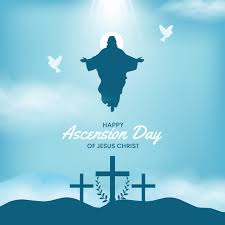
Happy Ascension Day!
Something different for us (American Lutherans) is the observation of the Ascension of Our Lord (of the Feast of the Ascension) as a religious service. While we will be observing this day on the Sunday following, some background is appropriate to describe what we are celebrating and why.
Easter, Ascension, and Pentecost represent a theological timeline in Christian tradition that spans fifty days, starting with the resurrection and culminating in the promised indwelling of the Holy Spirit. These events constitute a 50-day period (often termed the "fifty days of joy") that connects the Exodus story of Passover to the birth of the Church.
Passover/Easter celebrates liberation -- of the Israelites from slavery in Egypt as well of humanity from enslavement to sin in the resurrection of Jesus Christ. Jesus was tried and crucified during the week of the Passover commemoration, with his resurrection occurring on the second day of the festival. For the Jewish faith, this day marks the start of the "counting of the omer," which occurs fifty days after the Passover.
Ascension celebrates Jesus’ ascending to Heaven after spending time with his disciples, marking the completion of his earthly ministry (both Matthew and Luke describe this taking place). This was important for, in his resurrected body, he walked and talked and ate with those he appeared to, demonstrating that he was physically alive. He also commanded his disciples to remain in Jerusalem to await the gift of the Holy Spirit, his Advocate. In Luke’s narrative, this period was specified as being forty days. From a place outside of Jerusalem, Jesus was seen rising to the right hand of God the Father.
Pentecost (which is Greek for “fifty days”) is a festival known as the "Feast of Weeks" (Shavuot) in the Old Testament, celebrating both the spring grain harvest as well as the giving of the Law (Ten Commandments) on Mount Sinai, which according to Exodus took place on the fiftieth day after crossing the Red Sea. In the New Testament, it marks the promised descent of the Holy Spirit upon the Apostles and disciples in Jerusalem and is often considered the birth of the Christian Church.
The ten days period between Ascension and Pentecost was spent in prayer by the apostles and other followers in Jerusalem, a time of transition and waiting.
Both Pentecost and Passover have direct roots in Jewish tradition (Exodus/Harvest) that are reinterpreted in the New Testament to align with the ministry of Jesus. The events move from liberation (Passover), to empowerment (Ascension), to the strengthening of the Church (Pentecost).
However, this puts the Feast of the Ascension on a Thursday, which is an unusual day for a worship service in modern America. Yet, in certain countries in Europe and South America, the Day of Ascension is a really big celebration.
While we often acknowledge the Ascension of Jesus in Sunday School, it is a significant event in the life of faith – that Jesus was truly physically resurrected from death to life. This is important for us in that, when we doubt or are challenged by others as to whether Jesus really rose from the tomb, we can have some confidence that this remarkable, irrational occurrence demonstrated God’s faithfulness and power over all things, even death itself.
Shalom.
Pr. Mark
|