May 2025 | Rooted in Community | |
Tsundoku
Tsundoku is Japanese for the act of acquiring reading materials and letting them pile up in one’s home. We thought it a perfect heading for this section, as we’ll feature books that are new or popular in the store. If you’re like us, tsundoku is a constant state of being.
Fight Like Hell by Kim Kelly - new @ $19.99
If you are new to understanding the history of the US labor movement, this book is for you. Kelly shares the stories of labor victories that beat the odds as well as stories of valiant fights waged and lost. I appreciated that many of the stories shared were of groups often left out of the history books - stories of farm workers, domestic workers, sex workers and even prison labor.
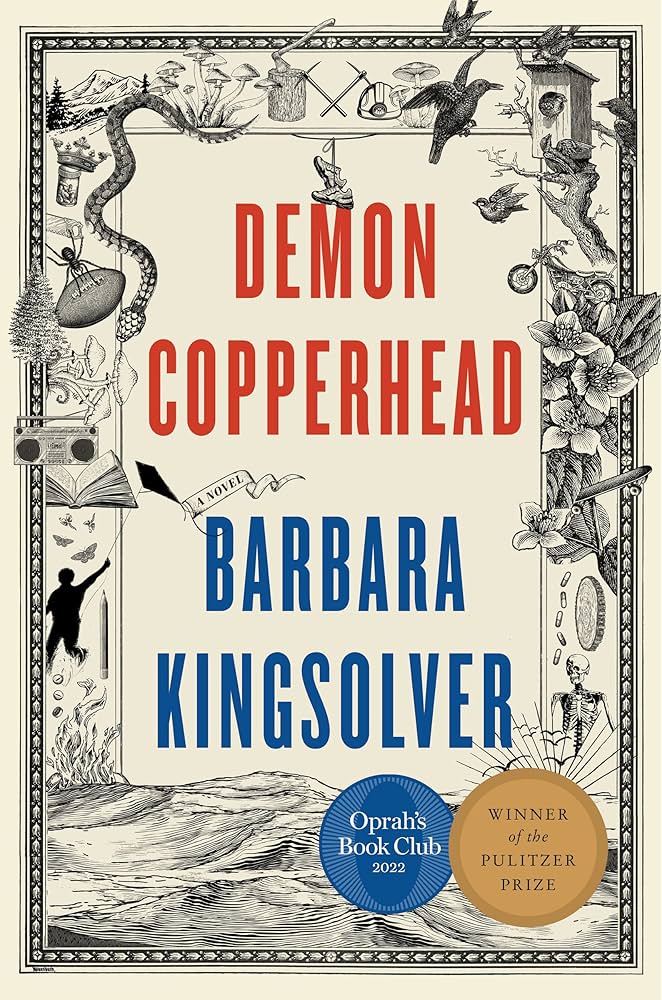
Demon Copperhead by Barbara Kingsolver - new @ 21.99
If you haven't read this award winning novel yet, I highly recommend that you do. Set in the mountains of southern Appalachia, it tells the modern day story of what poverty looks like, sounds like and feels like in the USA. For me, it was one of those books I couldn't set down once I started it and I am still carrying it around in my head.
Germinal by Emile Zola - new @ 11.00
This 19th century French classic is an epic of class struggle. Based on an actual French mining disaster, it tells the story of a young miner and his rise in the revolutionary war with the exploitive capitalistic system. Unfortunately, while the story is historic, it still feels relevant today.
The Women of the Copper Country by Mary Doria Russell - new @ 18.99
This inspiring and historical novel is about Annie Clements who had seen enough to know that the world was unfair and how she stands up for herself and the entire community of Calumet, Michigan against the largest copper mining company in the world. It is an authentic and moving portrait of the 20th Century labor movement in the USA.
The Road to Wigan Pier by George Orwell - new @ $16.99
This was the first nonfiction book I read by Orwell and feel like it is a must addition to this month's offerings. Written in the 1930s, it documents the poverty and mass unemployment in the industrial north of England. His account of the many "normal and decent people" he met on his journey while investing the book, deeply changed what he believed would end poverty. One account he described has stuck with me. He broke down the stereotype of "dirty miners" after realizing the impossible living/bathing conditions of these miners and their families and how incredibly inexpensive the situation would be to resolve. Yet, landlords and mining corporations refused to add decent/inexpensive bathing facilities in order to exploit even deeper.
The Selected Works of Eugene V Debs - by Eugene V Debs - new @ $36
In my humble opinion, no list of labor books is complete without a mention of Eugene Debs. This happens to be the only book we have right now in the store of his writings and speeches. The 1890s were a grim time for workers in the USA and Debs was a key leader in the labor/union movement. His role and story is worth noting.
| | |
|
Sam's Staff Pick - to NOT read sometimes
Recently I visited a buddhist monastery in Iowa with a couple of friends from the bookstore. We drove out on a Thursday evening, along the Mississippi and then into the hills and up to the monastery where we sat in silence, the three of us lined up facing the wall. The only sounds I noticed were our gurgling stomachs and a bird-like call coming faintly from outside the meditation hall. But I also started to notice sounds coming from my mind that my friends couldn't hear. These sounds often took the shape of words and sentences strung together to form an internal monologue. These sounds were "louder" than our gurgling stomachs and the bird-like call, at least in the beginning. The longer I sat the quieter the monologue sounds became. The gaps between the words became larger and the distinction between the inner monologue and the outer sounds began to disintegrate. There were even short instances of no monologue sound. How refreshing I find this to be!
Words are so important to our daily lives. Everyday we are reading the words that help us navigate our experiences and move in some meaningful way. Books hold these words. Thank you books for doing this! But I have found that it is also important to put words down for some period of time. So everyday for a period of time I have been putting down the words found in books, online, in conversation, and from my own internal monologue. After a while I can take the words back up and they feel less heavy and burdensome. This is why I think it is important to take the time not to read.
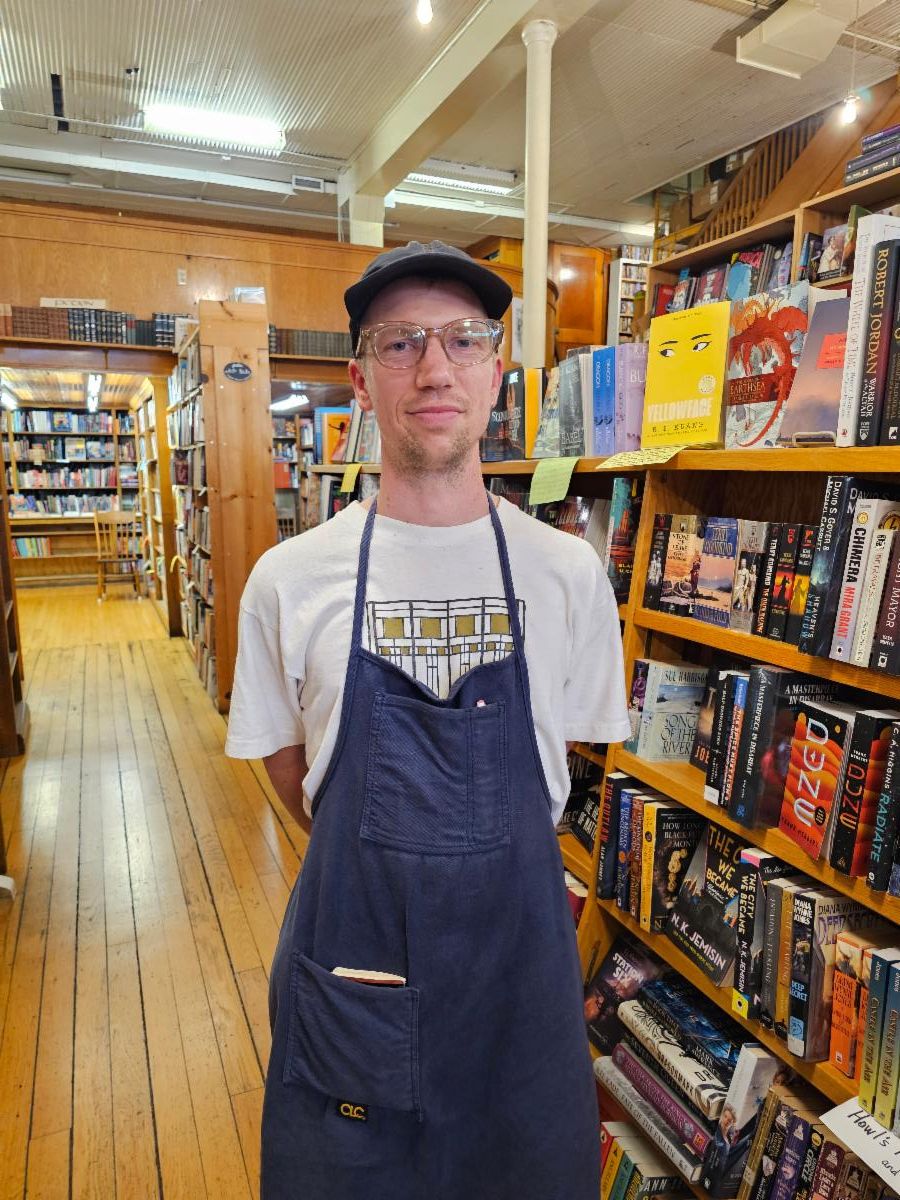
Image: Booktender Sam standing by bookshelves at Pearl Street Books.
| |
Monthly Pearl from Ope!
Quick shout out to all who came to Ope!’s Riding Over Land reading here at the bookstore last month. I (Rachel) get very nervous in front of a crowd, but it is so much worse to balance those rattling nerves against a bunch of empty chairs, so again: a big giant thank you for supporting Ope! I loved hearing other train/transit stories beyond my own.
We are currently at a crossroads of new projects to dive into, and it’s entirely possible we will take all roads, which will make things a little wild behind the scenes, even if we go a bit quiet on the print end. Although I do have to mention: we recently released a group-effort children's book, two years in the making. It's a book on pollinators and pollinator gardens, comic-book/graphic-novel style, with art by Viroqua artist Pete Hodapp (petehodapp.com, go have a look, he's great). The book is Pollinator Parade, and you can find it at The Nature Place in La Crosse.
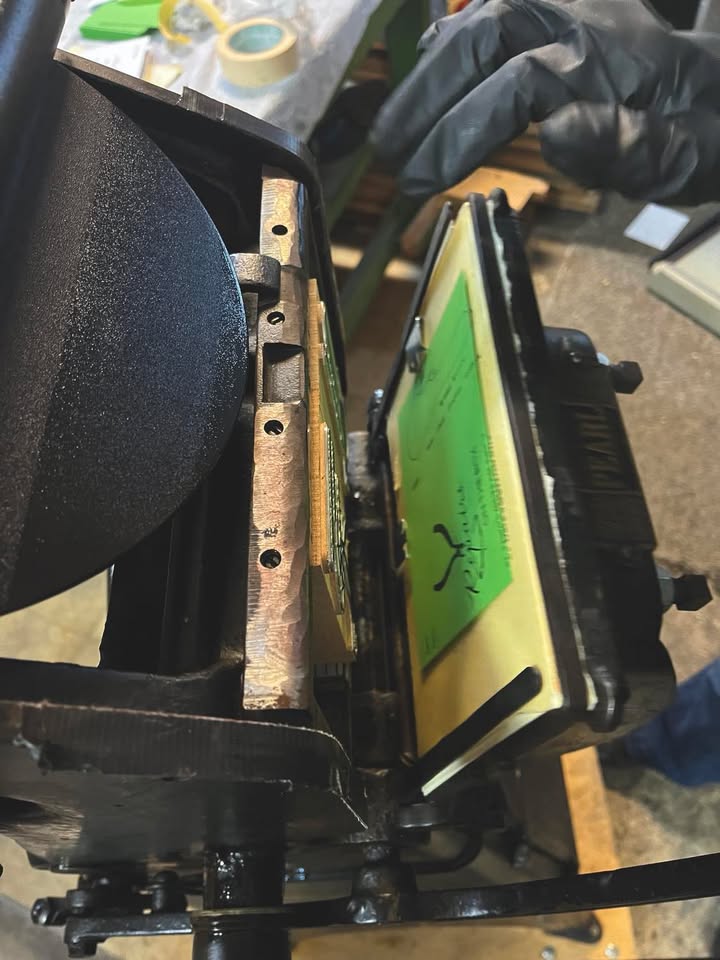
Publishing aside, Roxanne and I spent a few hours in our dank cavernous machine space a few weeks ago, working with Pearl, one of our hundred (ish)-year-old printing press machines. We've worked far more with Gordon, so we wanted to better acquaint with Pearl (these are given names; if you google Pearl Improved No. 11, you'll get images in the likeness of our Pearl, and you can find Gordon's likeness with a search for Gordon Platen Press).
For a while, we messed with the mechanism that spins the ink plate to evenly distribute the ink; we never mastered it, but we got it workable. Then we spent even more time getting the press plate locked into the right position with the wooden furniture and the metal keys (I could never work these machines without Roxanne, but I do love the machine lingo). Eventually, we attached the rollers, inked the press plate, and pressed the image to some paper, but it didn't come out as sharp and clean as we had hoped; it became a day of learning and tinkering rather than work accomplished. Someday, though, we'll figure out how to make pearls with Pearl. Someday.
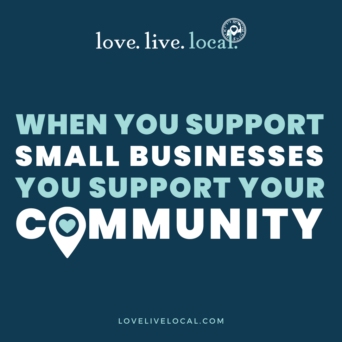
Images of Pearl, our printing press--one photo of an overview of the machine and the other photo a side view of the wheel in motion; and a poster When you support small businesses you support your community!
| |  | |
Customer Corner with Wendy and Jim
Books. Reading. Libraries. Bookstores. These things have been an integral part of the fabric of our lives. Jim grew up in a house full of books. I have fond childhood memories of visiting my local library and the summer bookmobile that would stop at my school.
When we raised our own family, these four words were the source of wonderful experiences. We took our children to local library story times and frequently spent time
at whatever bookstore was open and nearby. We listened to favorite children’s authors read from their latest books. And then had them sign our new books. Peter Spier,
Steven Kellogg, Tamara Pierce. Books were gifts for birthdays, Christmas, the first day of school. During the Harry Potter craze, we helped our local small-town library stage a Harry Potter party attended by 100+ patrons, complete with actors from the local theater
company and live owls from the nearby environmental learning center. And we finished up one family vacation with a one-day drive from Montana to make it to our closest bookstore for a midnight release of the latest Harry Potter book.
Our family’s love of books and reading continued as our children grew. We continue to exchange books as gifts, we regularly share our latest favorite read, and book
discussions are often common mealtime conversations, both with our children and our grandchildren. It is such a wonderful pastime to share.
After 47 years and 12 different homes, Jim and I landed in a lovely valley just west of La Crescent and are thrilled to have Pearl Street Books as our nearest independent
bookstore. We love the welcoming atmosphere that Beth and her staff have created and truly appreciate the bookstore and its collaborations with other downtown businesses.
While we don’t catch as many special events as we would like, we walk away from each one that we attend with a new perspective, a new idea, a new book to seek out, and a wonderful sense of community.
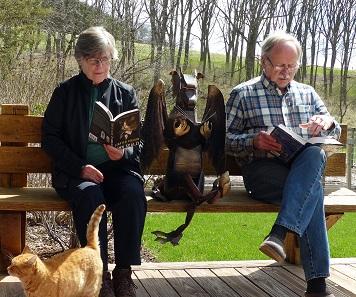
Image if Wendy and Jim with their dragon friend reading on a bench in nature.
| | | | | | | | | |